Tag Archives: People’s Protection Units

Trump Might Continue Obama’s Dangerous Syria Policy

Originally published at The Henry Jackson Society

By Kyle Orton (@KyleWOrton) on November 24, 2016
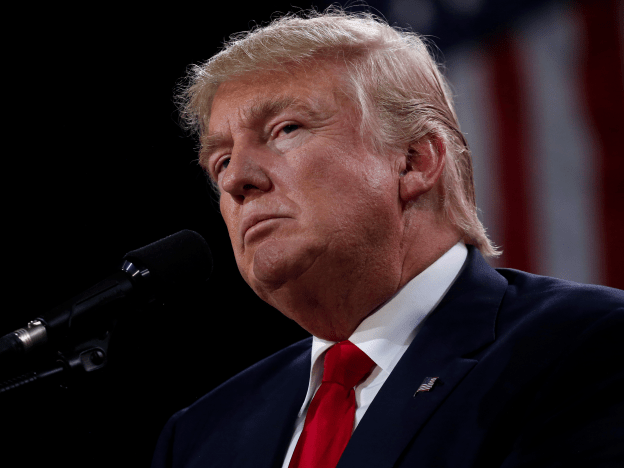
There is not yet any clarity with regard what Donald Trump would do about Syria once he becomes President. Virtually everything about the incoming administration is in the “wait and see” phase. Still, on the current evidence, Trump’s Syria policy would appear to be a continuation of President Barack Obama’s policy of prioritizing the threat of the Islamic State (IS) and other non-state Sunni jihadist groups, while effectively aligning with the pro-regime coalition, made up of Russian air power and a ground force led by the Islamic Republic of Iran, stitched together out of the battered remnants of Bashar al-Assad’s army and his sectarian militias, Iranian paramilitary and regular forces, and foreign Shi’a jihadist groups under Iran’s control. The only potential difference is that Trump may formally repudiate the anti-Assad forces. The effect of this would be to destroy the mainstream Syrian opposition and empower al-Qaeda, but it would not bring stability to Syria. There are hints, however, that Trump is recruiting senior officials who will alter this policy. Continue reading
Turkey Continues to Protest the Coalition’s Syrian Kurdish Allies

By Kyle Orton (@KyleWOrton) on November 22, 2016

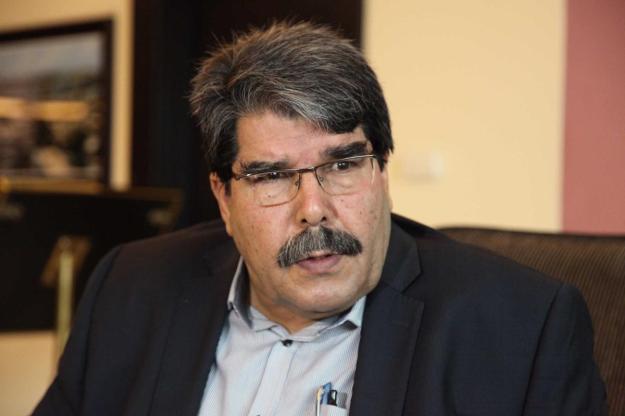
Saleh Muslim Muhammad

This morning, Turkey issued arrest warrants for forty-eight members of the Kurdistan Workers’ Party (PKK), which has fought a forty-year war against the Turkish state. The PKK is listed as terrorist by Ankara, Britain, the European Union, NATO, and the United States. Among those being sought is Saleh Muslim Muhammad, the leader of the Syrian branch of the PKK, known as the Democratic Union Party (PYD), whose armed wing—the People’s Protection Units (YPG)—happens to be the favoured Western instrument in combatting the Islamic State (IS) in Syria. The West has long denied or obfuscated the fact it is working with an organization that a NATO partner considers its nemesis and a long-standing threat to its national security. The Turks, it seems, are not content to let this ambiguity stand, and there are good reasons of Western self-interest why the alliance with the PKK deserves another look. Continue reading

The Coalition’s Flawed Endgame Strategy for the Islamic State

By Kyle Orton (@KyleWOrton) on November 6, 2016

After some (perhaps wilful) confusion over the timing, the operation to expel the Islamic State (IS) from Raqqa City, its Syrian capital, got underway this morning, running concurrent with the effort to evict IS from its Iraqi capital, Mosul. There are deep concerns about the methods adopted in both cases. The ground forces the U.S.-led Coalition has chosen to support in Raqqa cannot lead to sustainable stability in Syria, something that is essential to defeat IS. While the Mosul operation has proceeded generally to plan, there are increasing signs of trouble within the operation itself and the most troubling aspect—the aftermath—still appears to be unplanned. Beyond this is the continued assault on Aleppo City by Bashar al-Assad’s regime and its Russian and Iranian patrons that is systematically destroying the forces needed if there is to be any settlement to Syria’s war that ends the space given to international terrorists. Continue reading

Of Kurds and Compromises in Syria

By Kyle Orton (@KyleWOrton) on September 2, 2016

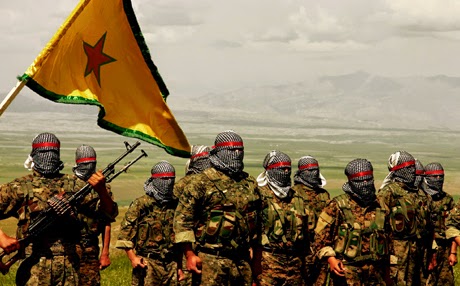
PYD/YPG soldiers

PYD/YPG soldiers

Having written extensively about the authoritarian structure in the areas run by the Democratic Union Party (PYD), the Syrian branch of the Kurdistan Workers’ Party (PKK), in northern Syria, and the problems of media, local and Western, in covering this, it was very interesting to see a report in The Wall Street Journal underlining some of these points.

The Journal notes that the PYD and its armed wing, the People’s Protection Units (YPG), have engaged in a ruthless consolidation of power within a single party, despite claims to be governing in a democratic way. This has included: heavy pressure on all non-pro-PYD media via various Soviet-style accusations of subversion; demographic engineering by a refusal to allow Arab inhabitants to return to homes or actively expelling them; forced conscription, including of children; the imposition of an ideological curriculum in schools; and the suppression and/or expulsion of all opposition. Continue reading

One Man’s Terrorist …

By Kyle Orton (@KyleWOrton) on August 30, 2016

Polat Can, 2014, head of the YPG's information centre (source)

Polat Can, 2014, head of the YPG’s information centre (source)

Over the last twenty-four hours, as fighting has escalated between Turkey and the Kurdish People’s Protection Units (YPG), the armed wing of the Democratic Union Party (PYD), in northern Syria, an YPG/PYD operative has taken to Twitter to protest. Polat Can is the YPG’s representative to the American-led international coalition ranged against the Islamic State (IS), and his missives have sought to inform the coalition who and what terrorism is, which can be broadly summarized as: the Turkish government. Can himself, however, might easily be considered a terrorist since he is an allegedly-former member of the Kurdistan Workers’ Party (PKK), a registered terrorist organization by the United States, European Union, and Turkey. Continue reading

Turkey’s Intervention in Syria Improves the Prospects for Peace

By Kyle Orton (@KyleWOrton) on August 25, 2016

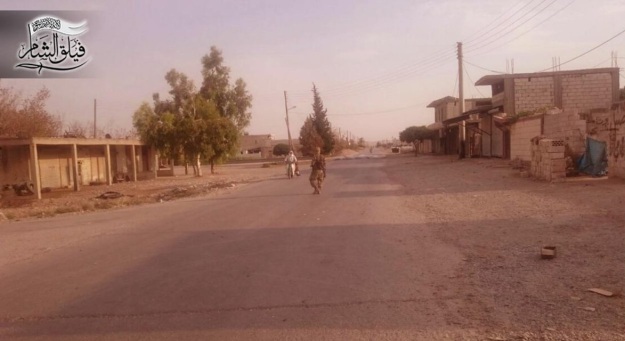
Picture put out by Faylaq al-Sham of Jarabulus soon after the Islamic State was expelled (Telegram, 24 August 2016)

Picture put out by Faylaq al-Sham of Jarabulus soon after the Islamic State was expelled (Telegram, 24 August 2016)

After a horrific suicide bombing by the Islamic State (IS) at a Kurdish wedding in eastern Turkey had slaughtered more than fifty people on Saturday, Turkey moved to expel IS from Jarabulus in eastern Aleppo Province at about 4 AM on Wednesday morning. IS was swept from this last major border town in Syria, a key gateway for resources to the outside world, around ten hours later.

Operation EUPHRATES SHIELD saw Turkey put troops and tanks over the border publicly for the first time, and allow the Free Syrian Army (FSA)-branded and other mainstream Syrian rebels who have been battling IS for years to use Turkish territory to launch the assault. It was supported by airstrikes from the international anti-IS coalition.

For Turkey, this is a strong indication of a change in her threat-perception vis-à-vis IS, but it is also about a (correctly) perceived threat of what was to follow IS. Continue reading

The West’s Kurdish Allies in Syria Can’t Escape Their Authoritarian Legacy

By Kyle Orton (@KyleWOrton) on August 13, 2016

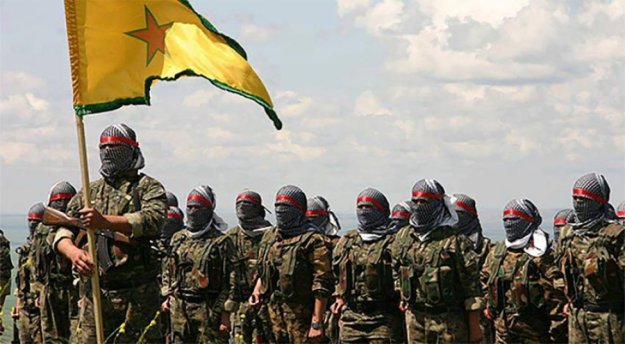
PYD/YPG fighters

PYD/YPG fighters

The Islamic State (IS) was driven from the city of Manbij yesterday, a key supply route to the Turkish border in northern Syria, the conclusion of an operation launched on 31 May by the Syrian Democratic Forces (SDF), a front-group for the Kurdistan Workers’ Party (PKK), represented in Syria by the Democratic Union Party (PYD) and its armed wing, the People’s Protection Units (YPG). The SDF was backed by U.S. airstrikes. It is difficult not to see the defeat of IS as a positive development. It is, however, worth more closely examining the forces that are being enabled by Western power to fasten their rule across northern Syria, whose vision is deeply problematic—even in narrow terms of the fight against IS. Continue reading

America Picked the Wrong Allies Against the Islamic State

By Kyle Orton (@KyleWOrton) on February 17, 2016

Article published at NOW Lebanon

PYD/PKK fighters after they took over the Mannagh airbase on February 10, 2016.

PYD/PKK fighters after they took over the Mannagh airbase on February 10, 2016.

Over the last six weeks the regime of Bashar al-Assad—which by this point means in most areas Iranian-run ground forces and Russian air power—have made territorial gains in northern Syria that threaten the existence of the armed opposition in the area. This threat has been compounded by the Kurdish Democratic Union Party (PYD) and allies, which have also drawn on Russian airstrikes to attack the rebellion in the same areas. The U.S.-led coalition against the Islamic State (ISIS) has made the PYD its main proxy inside Syria—the only force that can call in coalition airstrikes. This policy was obviously flawed given the view of the PYD by necessary anti-ISIS allies like Turkey and the demographic realities of ISIS, which require Sunni Arabs to be able to police their area, and ensure that ISIS begins to look like a protector of Sunnis if Kurds occupy Arab areas; the PYD now attacking the crucial anti-ISIS demographic in alliance with the regime underlines that fact. Continue reading

Islamist Clerics Reject Abu Muhammad al-Maqdisi’s Stance on Islamic State

By Kyle Orton (@KyleWOrton) on August 30, 2015

1

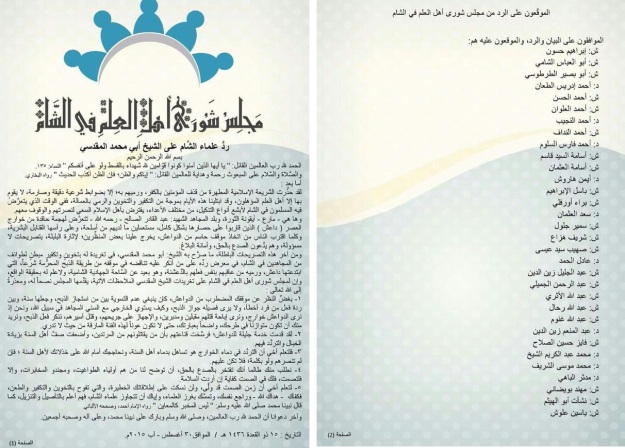
A council of ulema (clerics), some within Syria and some abroad, al-Majlis Shura Ahl al-ilm fil-Sham (Advisory Council of the People of Knowledge in Syria), was formed late last month. Its first statement was to condemn the 25 July assassination of the Faylaq al-Sham commander Mazin al-Qassum by Islamic State (IS) operatives with Jund al-Aqsa, and to demand that all groups clarify their stance on IS and expel IS agents and sympathizers from their ranks. A fatwa early this month said it was permissible to work with Turkey against IS and the Kurdistan Workers’ Party (PKK), which in Syria operates politically under the name of the Democratic Union Party (PYD) and militarily as the People’s Protection Units (YPG).

Among the leading names associated with this new council are three foreign Islamist scholars: Umar al-Hadouchi, a Moroccan jihadi-salafist; Muhammad al-Hassan Ould al-Dedew al-Shinqiti (not to be confused with Abu al-Mundhir al-Shinqiti), a Mauritanian more closely aligned with Sururism than outright jihadism; and Abdallah al-Muhaysini, a Saudi jihadist who is inside Syria and a member of al-Qaeda in everything but name. Prominent Syrians involved include Dr. Ayman al-Harush, associated with Ahrar al-Sham, and another Ahrar member, a shar’i, Mohamed Ayman Aboul-Tout (Abu Abbas al-Shami), who fought against the Assad regime during the revolt in the 1980s as part of the most extreme Islamist splinter from the Muslim Brotherhood, the Fighting Vanguard. There is also the son of Abd al-Karim, an important figure in the Hama branch of the Muslim Brotherhood, Sa’ad al-Uthman; a follower of the ideas of Muhammad Surur that mix Salafism with political agitation, Ahmad al-Salum, and many others.

Majlis Shura Ahl al-ilm fil-Sham put out a statement today, “Response of the Ulema of Sham to Shaykh Abu Muhammad al-Maqdisi”. Al-Maqdisi’s real name is Issam al-Barqawi; he is based in Jordan and is the most influential jihadi-salafist cleric. The Council attacks al-Maqdisi for what they perceive as his softness toward IS. The statement, translated by @nasrshahada, is reproduced below. Continue reading

America Abandons the Syrian Revolution

By Kyle Orton (@KyleWOrton) on August 14, 2015

1

In the last week, two events have provided further evidence that the United States has effectively sided with the Assad regime in Syria, acting effectively as the regime’s air force, and that America’s alliance with Assad is part of the broader policy of détente with Iran, facilitated by the nuclear deal, which has ceded Syria to Iran as a sphere of influence. Continue reading