Tag Archives: PKK

America’s Kurdish Allies in Syria Can’t Counter Iran

Published at The Arab Weekly

By Kyle Orton (@KyleWOrton) on 11 February 2018

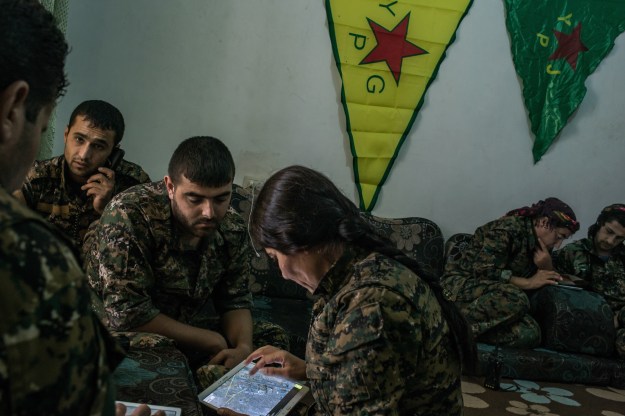
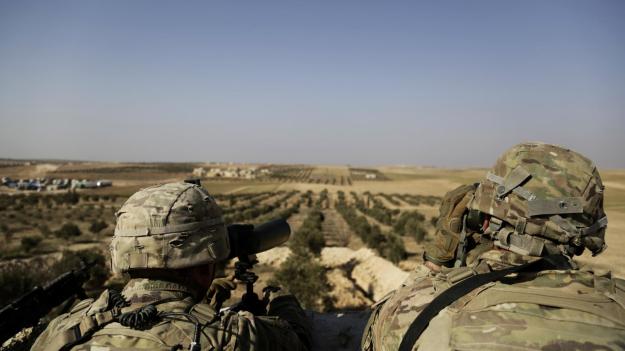
US Secretary of State Rex Tillerson laid out the Trump administration’s vision for Syria, making clear that, contrary to the expectations of many, the United States will stay in Syria beyond the collapse of the Islamic State’s (ISIS) self-proclaimed caliphate, holding the jihadists at bay and establishing an order compatible with US interests.

Crucially, Tillerson—in a sharp break with US President Donald Trump’s predecessor—specified that countering Iranian influence within Syria was a central US objective. The problem with the strategy is that it seems to rely on repurposing the United States’ anti-ISIS Kurdish militia allies against the Iranian revolution. Continue reading

The End of the Line for “The Beatles” of the Islamic State

By Kyle Orton (@KyleWOrton) on 9 February 2018

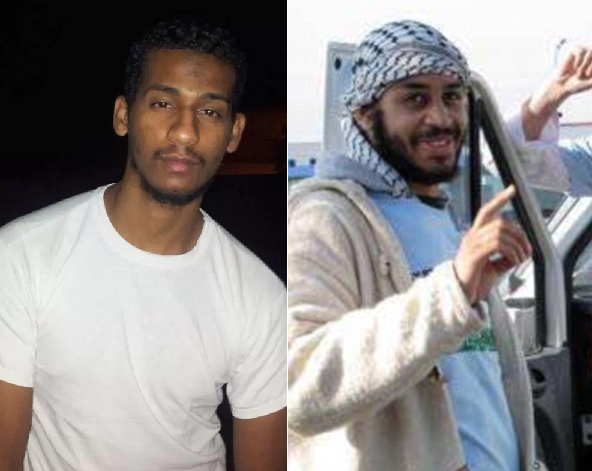
El Shafee Elsheikh (image source) and Alexanda Kotey (image source)

Last night, The New York Times reported and Reuters confirmed that two British Islamic State (IS) jihadists, El Shafee Elsheikh and Alexanda Kotey, both of them designated terrorists by the United States, have been arrested in Syria. Kotey and Elsheikh, along with the late Mohammed Emwazi (Abu Muharib al-Muhajir) and Aine Davis, formed a four-man cell that has become known as “The Beatles”—hence Emwazi being near-universally known as “Jihadi John”—that guarded, abused, and murdered hostages for IS from before the “caliphate” was founded in 2014. Continue reading

American Intelligence Acknowledges Anti-ISIS Coalition’s Kurdish Partner is a Terrorist Group

By Kyle Orton (@KyleWOrton) on 27 January 2018

YPG/YPJ fighters raise the banner of the PKK leader Abdullah Ocalan in Raqqa city on 19 October 2017 (YPG Press Office)

The Central Intelligence Agency has publicly recognized that the Kurdish partner force the United States-led Coalition against the Islamic State (IS) has been working with in Syria is a subsidiary of the terrorist-designated Kurdistan Workers’ Party (PKK). Continue reading

Turkey’s Afrin Offensive and Russia’s Policy in Syria

Originally published at Ahval

By Kyle Orton (@KyleWOrton) on 21 January 2018

Turkey’s president, Recep Tayyip Erdoğan, threatened on Jan. 13 to begin a military operation “in about a week” to evict Kurdish militants from Afrin in northwestern Syria. Erdoğan has repeatedly threatened to “cleanse” Afrin of the fighters over the last two years. It turned out he really meant it this time: on Jan. 20 Turkey commenced Operation Olive Branch against Afrin.

Kurdish forces, affiliated with the Kurdistan Workers’ Party (PKK), have constituted an important element of the Coalition’s ground force in Syria against the Islamic State (ISIS) since late 2014, expanding their “Rojava” statelet by capturing vast swathes of territory from ISIS in northern and eastern Syria that is connected to Afrin under a deal with the pro-regime coalition—Bashar al-Assad, Iran, and Russia.

Any Turkish government would see this situation as a threat, and be angry at the United States for supporting the Kurds. The PKK regards Rojava and the ruling Democratic Union Party (PYD) as strategic elements in its long war against the Turkish state. Indeed, Kurds in Rojava have already provided at least logistical support for PKK attacks inside Turkey.

Continue reading

The Islamic State Was Engaged in Insurgency Long Before the Caliphate Collapsed

By Kyle Orton (@KyleWOrton) on 11 January 2018

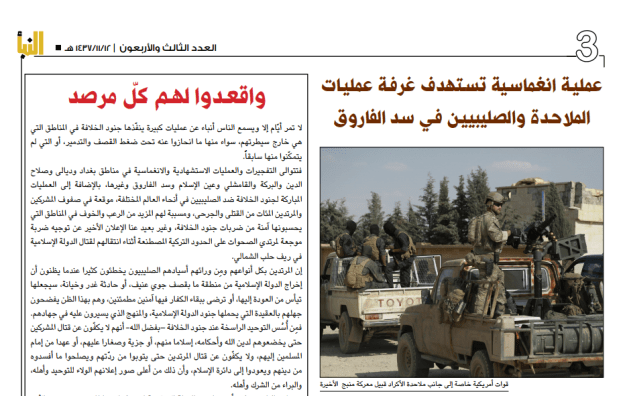
Al-Naba 43, page 3

The Islamic State (IS) brought out the forty-third edition of Al-Naba, its newsletter, on 16 August 2016. On page 3 was an article that made reference to IS’s insurgent activities, which had already begun in areas it had lost. A rough copy is reproduced below.

At that time this article was published, IS was on the verge of losing Minbij, and had issued statements in May 2016 and June saying that the loss of the caliphate would not be the end of the group. By early 2017, IS’s insurgent operations were visibly mature, long before the formal declaration in October 2017 that IS was giving up its statelet and recommencing all-out insurgency. Continue reading

Russia’s Plans in Syria Falter, Opening Chance for the West

By Kyle Orton (@KyleWOrton) on 29 December 2017

The Astana track of Syrian “peace” negotiations began on 23 January 2017, under Russian guidance in the Kazakh capital, with Iran and Turkey also invited as “guarantor countries” of the various sides in Syria. The process, initiated in the shadow of the savage conquest of Aleppo city in December 2016 that signalled the total strategic defeat of the insurrection against the Bashar al-Asad regime, was an attempt by Moscow to convert the military gains it had enabled by Asad and Iran on the ground into political facts that could then be imported into the internationally-recognized Geneva process. This “Astana-isation of Geneva” was Russia’s bid to take control of the political process and redefine it: rather than having Asad’s removal as its end-goal, it would set the terms of reintegration into the Asad state. Abetted by a purblind Western campaign against the Islamic State (IS) and a strategic reorientation in Turkey, the pro-Asad coalition has more or less had its way for the last year. But there are now signs that this approach is beginning to unravel. Continue reading

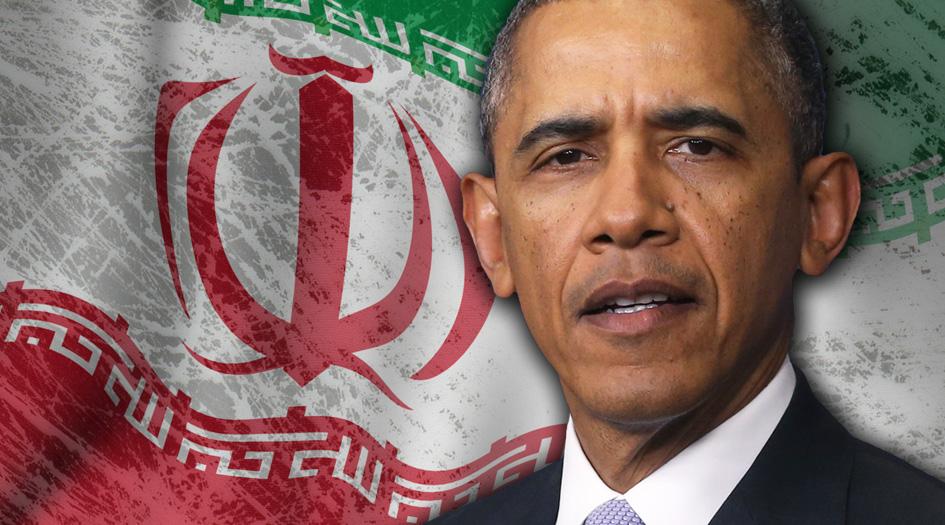
Further Details Emerge of Obama’s Failed Iran Policy

Published at The New Arab.

By Kyle Orton (@KyleWOrton) on 21 December 2017

A widely reported, 15,000-word article by Josh Meyer in Politico on Sunday moves us another step closer to finding out the actual terms of President Barack Obama’s nuclear deal with the Islamic Republic of Iran.

Though the Obama administration sold the Iran deal on the narrowest possible terms as an arms control agreement, the reality was that this agreement was intended to facilitate a strategic tilt in Iran’s favour—against traditional allies—that left a regional balance requiring less American commitment.

Because the administration wanted the paper agreement, Iran had the leverage to threaten to walk away, and was therefore appeased on multiple fronts ostensibly unrelated to the nuclear issue.

Continue reading

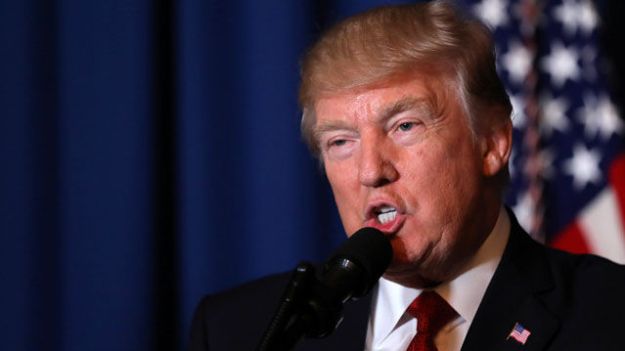
A Year In, Trump’s Syria Policy Looks A Lot Like Obama’s

Originally published at Ahval

By Kyle Orton (@KyleWOrton) on 18 December 2017

Nearly a year into Donald Trump’s administration, the president has followed the track laid down by his predecessors in Syria, accelerating it in some cases, and reinforcing the negative trends of Barack Obama’s defective policy that will undo even apparent successes, like the destruction of the Islamic State’s (ISIS) “caliphate”. Continue reading

Is Britain Cracking Down on PKK Terrorist Activity?

Originally published at The Henry Jackson Society

By Kyle Orton (@KyleWOrton) on 16 December 2017

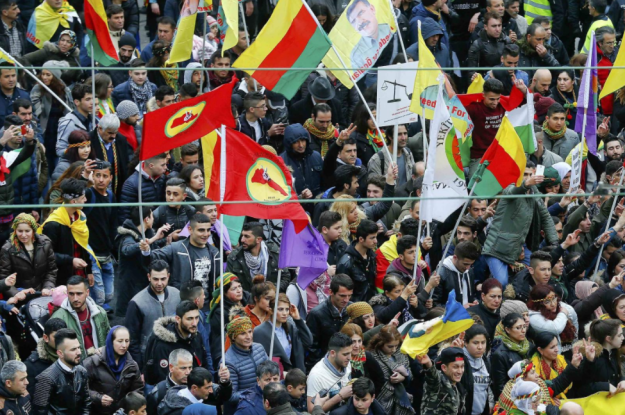
Pro-PKK demonstrators in Frankfurt, Germany, 18 March 2017, REUTERS / Ralph Orlowski

The BBC reported yesterday that on 7 December the Metropolitan Police Service arrested four people—two 17-year-old boys, a 38-year-old woman, and a 50-year-old woman—were arrested in the Haringey area of north London as part of a probe into terrorist fundraising, through money laundering and fraud. The terrorist group at issue is the Kurdistan Workers’ Party (PKK), and those arrested are believed to have contributed to the PKK’s finances through sale and distribution of one of the PKK’s most important propaganda instruments, the Yeni Ozgur Politika (New Free Politics) newspaper. Time will tell if this is a one-off or the beginning of a serious and long-overdue attempt to curtail the PKK’s propaganda-recruitment activity and fundraising in the West. Continue reading

America’s Kurdish Allies in Syria Drift Toward the Regime, Russia, and Iran

By Kyle Orton (@KyleWOrton) on 10 December 2017

Russian soldiers in Efrin, Syria, 1 May 2017 (source)

The American-led Coalition against the Islamic State (IS) partnered with the “Syrian Democratic Forces” (SDF), a political façade for the proscribed Kurdistan Workers’ Party (PKK), as the ground force in Syria. The most ventilated problems with this partnership so far have been the strain it has put on relations with NATO ally Turkey, against which the PKK has run a terrorist-insurgency for more than thirty years, and the deep local suspicion of the PKK’s governing program that might yet reverse the gains against IS and open political space for other jihadists like al-Qaeda. Another of the problems is now gaining salience: the PKK’s long-term alliance with Bashar al-Asad’s regime and the states—Russia and Iran—that keep it alive. Continue reading