Tag Archives: Qatar

What Is Trump Thinking About Syria?

By Kyle Orton (@KyleWOrton) on 18 April 2018
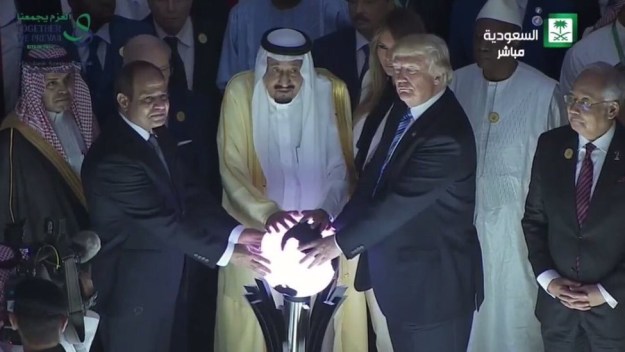
Egyptian ruler Abdelfattah al-Sisi, Saudi King Salman, and President Donald Trump in Riyadh on 22 May 2017 (image source)

Two days ago, The Wall Street Journal reported that President Donald Trump has been exploring plans to replace American troops in the areas of Syria held by the Coalition partner force, the “Syrian Democratic Forces” (SDF), with troops from the Arab states. The problems with this proposal, even in the rudimentary form it is presented, are manifold. It also feeds into the broader problem of Trump’s inconsistent messaging about Syria—or, more precisely, his failed efforts to balance domestic messaging, which calls for what was once referred to as “nation building … at home”, and his foreign messaging that needs to emphasise U.S. constancy to see through the mission to defeat the Islamic State (IS) by, among other things, stabilising and reconstructing Syria. Continue reading
Syria’s Revolution Has Been Overtaken By Outside Powers

By Kyle Orton (@KyleWOrton) on 16 March 2018

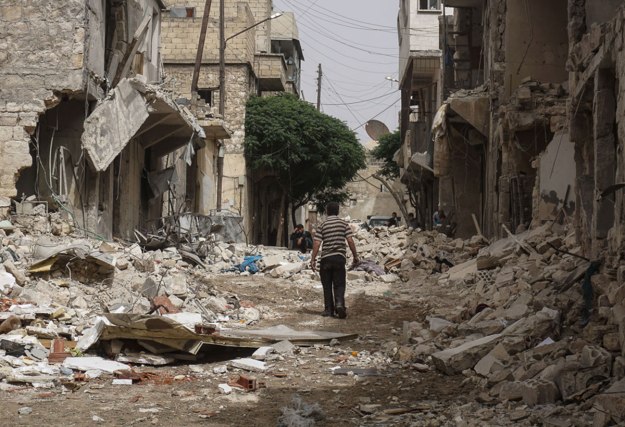
Devastation in Aleppo (image source)

This week marks the seventh anniversary of the Syrian revolution. A movement that began with peaceful street protests calling for reform and—after the government responded with lethal violence—the downfall of the dictator, descended into war that has to this point cost the lives of at least 500,000 people and displaced nearly twelve million others—more than half of Syria’s pre-war population.

In any strategic sense the rebellion has been defeated—it is not able to overthrow Bashar al-Assad by force on its own—and its political cause is increasingly strained as the remnants of the armed opposition are increasingly co-opted by external actors, state and non-state. Continue reading

Al-Qaeda Letter on Relations with the Islamic State and Iran

By Kyle Orton (@KyleWOrton) on 5 February 2018

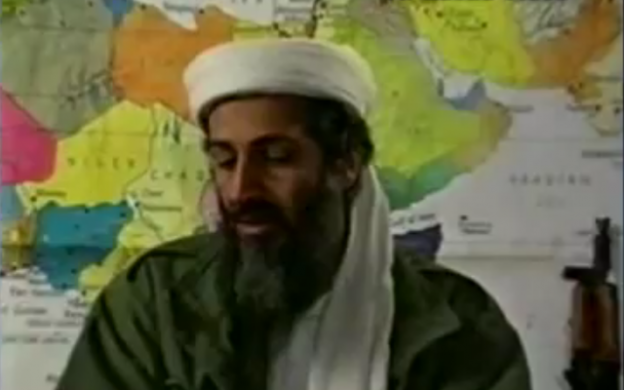
Usama bin Ladin in an al-Qaeda video (image source: CNN)

A letter released by the Office of the Director of National Intelligence (ODNI) on 20 May 2015, the “Letter to Abu Abdallah al-Hajj”, was written by an al-Qaeda leader on 17 December 2007. The letter, reproduced below with some editions in transliteration and some important sections highlighted bold, is interesting for several reasons. Continue reading

The Gulf Crisis and British Interests

By Kyle Orton (@KyleWOrton) on 4 December 2017

The decision by Saudi Arabia, the United Arab Emirates, Bahrain, and Egypt to impose a boycott on Qatar this summer was an out-of-character development for the Gulf, where all too much politics is conducted behind closed doors between the ruling families and elites. To go public, the schism between Qatar and the so-called Quartet must have been very serious.

It was the end-point of a dispute that began in the 1990s about Qatar’s foreign policy, which at that point became independent of the Saudi-led Gulf Cooperation Council (GCC), and indeed actively competitive with Saudi interests. Doha wanted to alter the Saudi-oriented status quo and did so by empowering groups—almost invariably Islamists—in its cause. Those Islamists not only had agendas running counter to the other Gulf states’ conception of regional order, but which the Quartet regarded as threatening to their internal security. Continue reading

Qatar and the Gulf Crisis

By Kyle Orton (@KyleWOrton) on 30 November 2017

I released a report today, published by the Henry Jackson Society, Qatar and the Gulf Crisis. The intent was to examine the charges made against the Qatari government by its Gulf neighbours with regard to the funding of terrorism, the hosting of extremists, the dissemination of hate speech and incitement, among other things. Having separated fact from fiction with regards to he accusations against Qatar, the report proposes how Britain might proceed in such a way as to press Doha on issues of concern, while avoiding being drawn into the middle of the Gulf dispute, and trying to foster reconciliation between allies, especially at a time when a united front is necessary to oppose the far larger challenge of the Iranian theocracy.  Continue reading

Iran Escalates its Subversive Activities in Bahrain

Post originally appeared at The Henry Jackson Society

By Kyle Orton (@KyleWOrton) on 19 November 2017

Fire at the oil pipeline in Buri village, south of Manama, Bahrain, 10 Nov. 2017. REUTERS/Hamad I Mohammed

Just over a week ago, the major oil pipeline in Bahrain was bombed by operatives the government says were working for the Islamic Republic of Iran. This is the latest in an escalating series of terrorist attacks inside Bahrain. Throughout the year, Manama has also been rolling up terrorist cells that have links to Iran’s intelligence services and Bahraini citizens now in Iran that form part of Tehran’s regional terrorist network. The breakdown in Gulf unity is especially worrying in the face of this intensified Iranian aggression and subversion in Bahrain. Continue reading

Taliban Blames the Afghan Government and America for the Lack of Peace in Afghanistan

By Kyle Orton (@KyleWOrton) on 29 September 2017

The Taliban’s Political Office put out a statement today “concerning opposition to peace process and activities”, which placed blame for the ongoing war in Afghanistan on the Afghan government and the U.S.-led coalition. The statement is reproduced below. Continue reading

Iraqi Kurdistan’s Independence Referendum and the West’s Middle East Strategy

By Kyle Orton (@KyleWOrton) on 27 September 2017

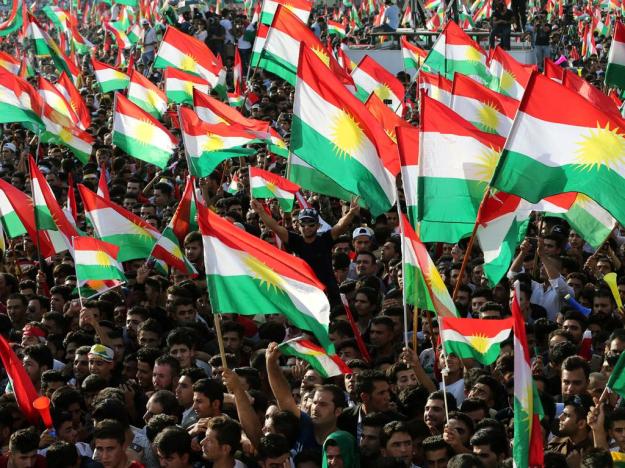
The Kurdistan Regional Government (KRG) held a referendum on 25 September, and voted overwhelmingly—with nearly 93% in favour—for independence. The comparison with Brexit might have been overworked by all sides, but there was a familiarity: while the result itself was not a shock, the fact of the referendum itself came as a surprise to many in what one might call the global elite, which lectured in that endearing way that had such success in deterring Brits a year ago. Then as now, the effect was, if anything, to stoke the bloody-mindedness of a population that had considerable qualms but had enough pride to repudiate being harangued in those accents. Still, as with Brexit, it wasn’t as if the naysayers didn’t have a case, and now comes the really difficult work. Continue reading

The Role of Turkey in Syria

By Kyle Orton (@KyleWOrton) on 16 August 2017

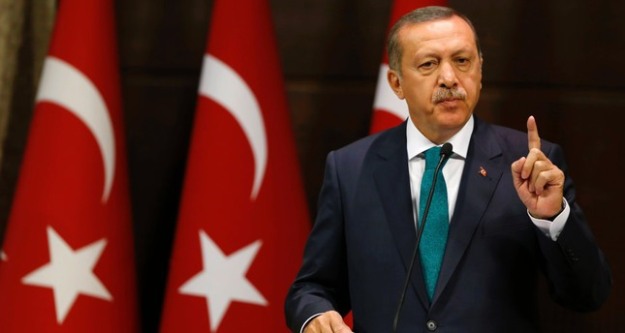
Recep Tayyip Erdogan (image source)

The Turkish government has gotten more and more deeply involved in Syria since the uprising began in 2011. But Turkey now finds its original aim, namely the overthrow of Bashar al-Assad’s regime, unattainable, creating tensions with the Syrian armed opposition, its primary lever inside Syria, and there are considerable problems stabilizing the zone of Syria that came under Turkish occupation after Ankara’s direct intervention in 2016. The defeat of Turkey’s primary objective has been accompanied by the rise of further problems, notably the exacerbation of its longest-standing internal security threat, that posed by the Kurdistan Workers’ Party (Partiya Karkerên Kurdistan – PKK), and the generation of new internal threats, from the Islamic State (IS) and potentially from al-Qaeda-linked groups. The options for solving these problems are constrained and unpalatable. Continue reading

Whither Al-Qaeda in Syria?

By Kyle Orton (@KyleWOrton) on 15 August 2017

A statement from Issam al-Barqawi, far better known as Abu Muhammad al-Maqdisi, the Jordan-based Palestinian jihadi-salafist cleric, was released in English on Telegram on 15 August 2017. The statement dealt with his view of Hay’at Tahrir al-Sham (HTS), highlighting again the questions around this Syrian-based jihadi group and its relations with al-Qaeda. Continue reading