Tag Archives: Quds Force

The Nuclear Negotiations Are Only Part Of Iran’s Regional Ambitions—And Obama’s

By Kyle Orton (@KyleWOrton) on October 27, 2014
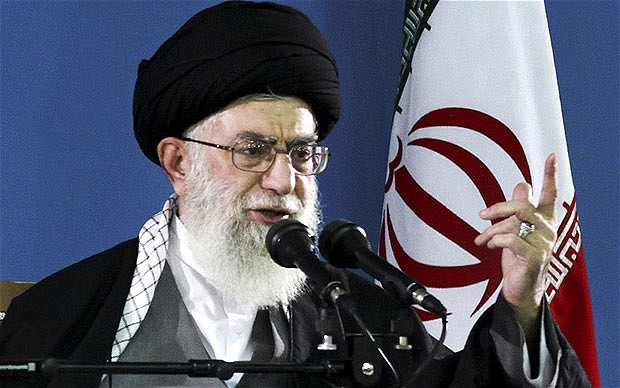
Ali Khamenei

Ali Khamenei

When the next—and supposedly final—round of negotiations over Iran’s nuclear program end next month, there are three possible outcomes:

  1. The “interim” deal, the Joint Plan of Action (JPA), will be rolled over for another six months after it was rolled over in July, and will, like so much else in the Middle East billed as temporary, begin to look permanent.
  2. A final deal is signed that is an Iranian victory in all-but name, putting them on the threshold of a nuclear weapon with only the regime’s goodwill stopping them crossing the finishing line to a bomb.
  3. Iran’s dictator, Ali Khamenei, refuses President Obama both of the above fig leaves and breaks off negotiations.

How did we get here? Continue reading
Obama’s Abandonment of Kobani Isn’t Just A Disaster For The Kurds

By Kyle Orton (@KyleWOrton) on October 9, 2014

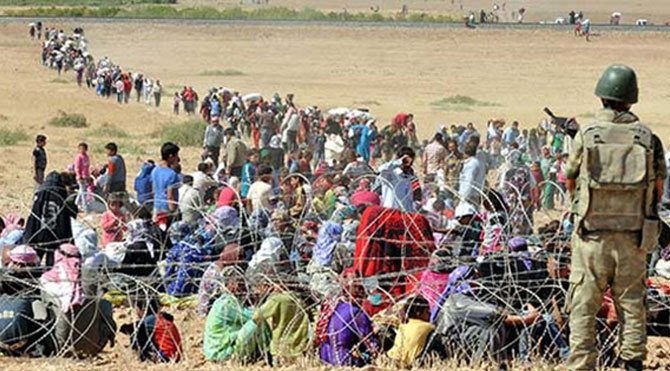
Syrian Kurdish refugees at the Turkish frontier

Syrian Kurdish refugees at the Turkish frontier

After three-and-a-half years of resistance, the United States finally intervened in Syria on September 23 with airstrikes against the Islamic State (I.S.). The I.S. had begun an attack on the Kurdish-controlled enclave in northern Aleppo along the Turkish border on September 15/16. By October 5, the Kurdish forces had been driven back into the Kurdish-majority town of Kobani (a.k.a. Ayn al-Arab), and I.S. had them surrounded. The desperate scenes of Syrian Kurds fleeing over the Turkish border in the face of the takfiris’ recalls the Iraqi Kurds making a run for the hills after the March 1991 uprising against Saddam Hussein was crushed. Then as now the Kurds believed they had stronger American backing than turned out to be the case. Continue reading

A Syrian Rebel Commander Accuses Iran of Helping The Islamic State

By Kyle Orton (@KyleWOrton) on September 25, 2014

Is there anything Hajj Qassem can't do?

Is there anything Hajji Qassem can’t do?

Middle East Monitor Online (MEMO) has published an article by Yvonne Ridley that consists of an interview with Hassan Abboud just a few hours before he and most of the Ahrar a-Sham leadership were killed on September 9. The accusations Ridley records Abboud levelling against the Islamic State (I.S.) are deeply upsetting to the conventional view of the Syrian conflict. Continue reading

Syria’s Rebellion on the Ropes

By Kyle Orton (@KyleWOrton) on July 9, 2014

3

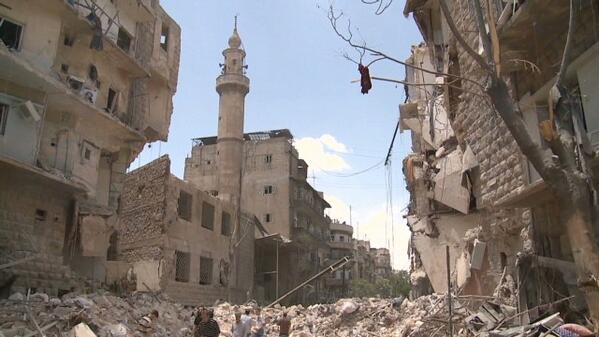
The devastated city of Aleppo

As we approach the forty month mark for the Syrian uprising the situation is grimmer than it has ever been. Not just the casualties: more than 200,000 people dead. Not just the physical devastation and mass-displacement of more than a third of the country. But now in military terms the rebellion is on the defensive in a way it has not been since it erupted at the end of 2011, after more than six months of peaceful protests.

Continue reading

To Save Iraq from ISIS: Get Rid Of Maliki, Support The Kurds And Syrian Rebels

By Kyle Orton (@KyleWOrton) on June 20, 2014

The Peshmerga (those who face death): the people's army of Iraqi Kurdistan

The Peshmerga (those who face death): the people’s army of Iraqi Kurdistan

President Obama met with Congressional leaders on Wednesday to brief them on a “comprehensive approach” to Iraq, which for now will not include airstrikes against the Islamic State of Iraq and Syria (ISIS) inside Iraq, “in part because”—as previously reported—”U.S. military officials lack sufficient information to hit targets that would shift momentum on the battlefield.” Obama has let this drag out so long that the Sahwa (Awakening), the Sunni Arabs who rose up against ISIS’s previous incarnations, al-Qaeda in Iraq (AQI) and the Islamic State of Iraq (ISI), are now either eliminated or mixed back in with ISIS and—crucially—other locally-focussed Sunni Islamist insurgent groups, notably the Sufi-Ba’athist Jaysh an-Naqshbandi. Defensible as this is, there are stronger reasons why the decision not to strike is correct.

Continue reading