Tag Archives: Raqqa

The West’s Plan for Defeating the Islamic State in Syria is Fatally Flawed

By Kyle Orton (@KyleWOrton) on 6 June 2017

A member of the YPG/PKK militia, Delil Souleiman/Agence France-Presse — Getty Images

The United States recently committed itself to arming the Kurdish People’s Protection Units, known as the Y.P.G., to help evict the Islamic State from its Syrian stronghold, Raqqa. This decision is likely to prove deeply troublesome, risking the regional stability necessary for the lasting defeat of the Islamic State.

The Y.P.G. denies that it is, in effect, a wing of the Kurdistan Workers’ Party, or P.K.K., but the evidence is clear. The P.K.K., a Marxist-leaning Kurdish nationalist organization, was founded in Turkey in 1978, and took up arms against the Turkish state in 1984. The group’s leader, Abdullah Ocalan, was expelled from Syria in 1998, when his old patron, the regime of Hafez al-Assad (Bashar’s father), came under military threat from Turkey. Mr. Ocalan was soon arrested by the Turks, and the tide of war turned against the P.K.K. Continue reading
Raqqa Doesn’t Want to Be Liberated By the West’s Partners

By Kyle Orton (@KyleWOrton) on 30 May 2017

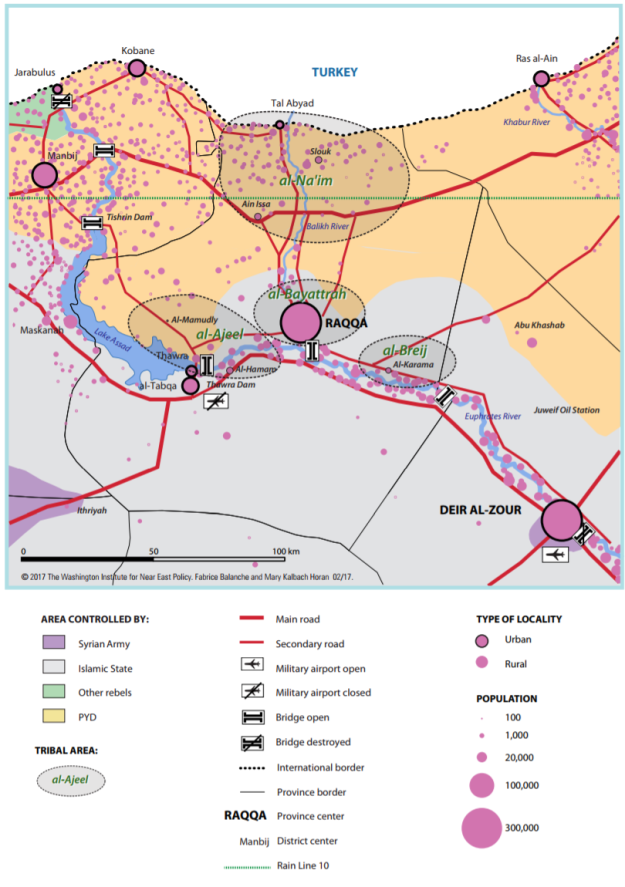
Map of the tribes around Raqqa city (source: WINEP report)

We are now on the eve of the operation to evict the Islamic State (IS) from its Syrian capital, Raqqa, and, as expected, the United States will partner with the Syrian Democratic Forces (SDF), the front-group for the Democratic Union Party (PYD) and its armed wing, the People’s Protection Units (YPG), which President Donald Trump’s administration has committed to directly arming.

Many of the doubts voiced about this course relate to Turkey, since the PYD/YPG is—despite continued efforts to obfuscate the fact—the Syrian department of the Kurdistan Workers’ Party (PKK), the premier internal security threat to Turkey for many decades. The discussion then tends to fall into one of two grooves. Continue reading

Coalition on the Verge of Repeating the Mistakes of the Past Against the Islamic State

This article was published at BICOM

By Kyle Orton (@KyleWOrton) on 16 May 2017

Within the next month, the Islamic State (IS) will likely lose its grip on its Iraqi capital, Mosul, and the operation to drive it from its Syrian capital, Raqqa, will begin. The destruction of IS’s caliphate, however, is not even close to the end of the road for the movement, not least because of the manner in which it is being accomplished.

At its core the IS movement is waging a revolutionary war, and as Craig Whiteside, a fellow with The International Centre for Counter-Terrorism has explained, this means that the focus is on legitimacy. Military victories come and go but if IS is, over the long-term, gaining acceptance—whether from support, resignation, or fear—among the population it hopes to govern (the Sunni Arabs), then it is winning. It is for this reason that IS tries to embed political victories within its military defeats. Continue reading

Crackdown Continues in Syrian Kurdish Areas

By Kyle Orton (@KyleWOrton) on 12 May 2017

Fasla Yusef, Syrian Kurdish opposition leader

The Kurdistan Workers’ Party (PKK) controls areas of northern Syria, operating under the name of the Democratic Union Party or PYD (its political wing) and the People’s Protection Units or YPG (its military wing). On Tuesday, President Donald Trump approved plans to arm the YPG directly, abandoning a fiction that the U.S. was only arming the Arab parts of an ostensible coalition, the Syrian Democratic Forces (SDF), which is in fact controlled by the YPG/PKK. This is in preparation for the U.S. backing the “SDF” to liberate Raqqa City, the Syrian capital of the Islamic State’s (IS) caliphate. Leaving aside the geopolitical implications of the U.S. decision for NATO and regional order, and putting aside, too, the likelihood that this decision will defeat its own purposes and give IS a new lease on life, there is a purely humanitarian dimension that deserves more attention. In March the PYD effectively legalized its one-party state in northern Syria and escalated its already-severe persecution of the Kurdish opposition. That crackdown has continued. Continue reading

The Problems With the West’s Partners Against the Islamic State

By Kyle Orton (@KyleWOrton) on 10 May 2017

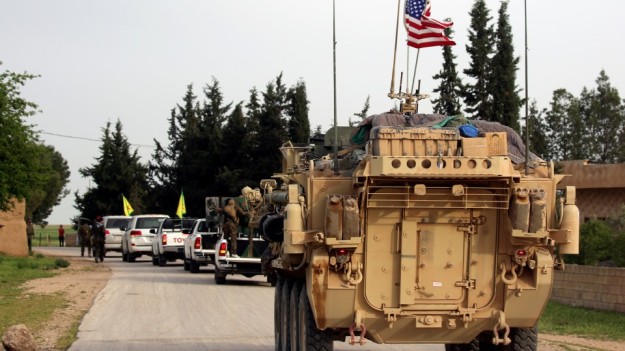
U.S. troops patrolling with the YPG/PKK in the village of Darbasiyah, northern Syria, on the border with Turkey, 28 April 2017

The United States has tried to engage in Syria almost solely in a counter-terrorism capacity, against Daesh (IS) and—in a recently-escalating campaign—against al Qaeda. The narrowness of the focus on jihadist terrorists led to the US disregarding wider political dynamics in the war in Syria—and to a degree in Iraq, too—and partnering with forces that over the long term will undo even this narrow mission.

The announcement yesterday that President Donald Trump will now arm the Kurdish People’s Protection Units (YPG) to expel Daesh from its Syrian capital, Raqqa, is the end-point of this policy, setting up a very dangerous medium- and long-term situation that will redound to the benefit of terrorists. Continue reading

PKK and Propaganda

By Kyle Orton (@KyleWOrton) on 29 April 2017

Ilham Ahmed

The West’s Syria policy is beginning to unravel of its own contradictions.

The Turkish government launched airstrikes against the positions of the Kurdistan Workers’ Party (PKK) in north-eastern Syria and the Sinjar area of north-western Iraq in the early hours of 25 April. There were international ramifications to this because the PKK in Syria, which operates politically under the name of the Democratic Union Party (PYD) and militarily as the People’s Defence Units (YPG), is the main partner of the U.S.-led Coalition against the Islamic State (IS). Turkey has protested the U.S. engaging the YPG/PKK so deeply and exclusively as its anti-IS partner, being displeased at the U.S.’s uncritical (public) stance toward the YPG, even after the YPG violated U.S.-brokered agreements on its operational theatres and used Russian airstrikes to attack Turkey- and CIA-backed rebels.

In response to Turkey’s anti-PKK operations this week, The Washington Post has hosted an op-ed by Ilham Ahmed, identified as “a co-president of the Democratic Council of Syria”. Continue reading

Repression Increases in the Syrian Kurdish Areas

By Kyle Orton (@KyleWOrton) on March 16, 2017

Kurds protesting against the PYD in Hasaka, 16 August 2016

The Democratic Union Party (PYD), the Syrian front of the Turkey-based Kurdistan Workers’ Party (PKK), is the leading group in the administration of the Kurdish areas in north-eastern Syria. The PYD and its armed wing, the People’s Protection Units (YPG), have become the preferred instrument of the U.S.-led Coalition against the Islamic State (IS) and as a by-product have been assisted in conquering some Arab-majority zones of northern Syria—and perhaps soon of eastern Syria. The PYD/PKK has always treated all dissent harshly and the Kurdish opposition in recent days has reported an escalation in repression by the PYD, which the West—as has become a habit in cases of PYD misbehaviour—has made no public protest about. Continue reading

Outcome Uncertain as American Involvement in Syria Deepens

By Kyle Orton (@KyleWOrton) on March 10, 2017

American ground forces are getting more deeply entangled in Syria as the offensive to push the Islamic State (IS) out of its de facto capital city, Raqqa, approaches. It remains unclear exactly which actors in Syria these troops will be assisting, though there are more and more indications that their mission will redound to the benefit of the regime of Bashar al-Assad and his allies, Iran and Russia. Continue reading

Islamic State Has Been Defeated in Al-Bab, But America Needs a New Direction in Syria

Published at The International Business Times and subsequently discussed on the IBTimes podcast

By Kyle Orton (@KyleWOrton) on February 27, 2017

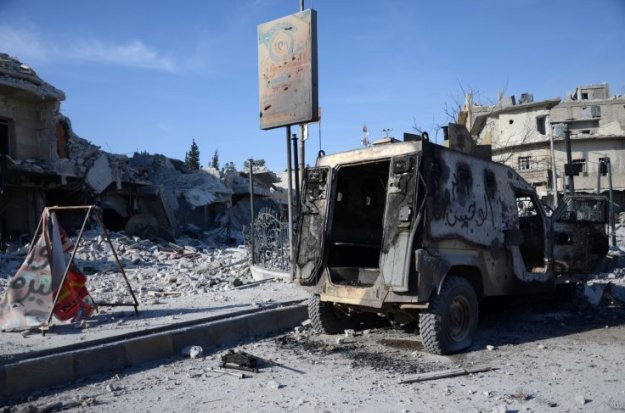
A burnt-out vehicle on a destroyed street in al-Bab on 23 February 2017 (Nazeer al-Khatib/AFP/Getty Images)

Turkey intervened in Syria in August 2016 with Operation Euphrates Shield (OES), which involved special forces, some regular troops, and the mobilisation of Syrian rebels to clear its border of terrorist threats by pushing ISIS (the Islamic State) away from the frontier and preventing the Syrian branch of the Kurdistan Workers’ Party (PKK) creating a state-let on its border that could be used as a harbour and launch-pad for attacks inside Turkey.

To secure this mission, on 13 November 2016 OES began an assault on al-Bab in the eastern countryside of Aleppo Province, just 15 miles from Turkey’s border and ISIS’ last major urban centre in Syria outside its capital, Raqqa. Some 102 days of combat later, on 23 February, al-Bab fell. What happens next could determine the course of the war as Turkey competes with the PKK to be the U.S.-led Coalition’s partner in clearing ISIS from Raqqa. Continue reading

The Need for Caution in Releasing Guantanamo Inmates

Originally published at The Henry Jackson Society.

By Kyle Orton (@KyleWOrton) on February 21, 2017

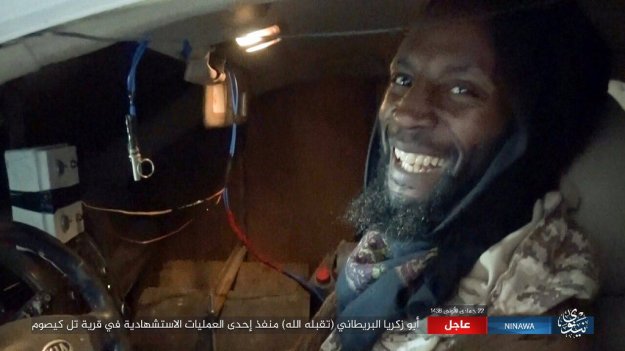
Ronald Fiddler (Abu Zakariya al-Britani)

Ronald Fiddler (Abu Zakariya al-Britani)

Since the offensive against Mosul, the Iraqi capital of the Islamic State (IS), began five months ago, IS has expended a high number of lives quite deliberately in suicide attacks. One of the suicide-attacks conducted on 20 February 2017, a car bombing against an Iraqi base, was by Abu Zakariya al-Britani, a British citizen now identified as Ronald Fiddler from Manchester. In 2002, Fiddler, then calling himself Jamal Udeen al-Harith, was sent to Guantanamo Bay, before being released in 2004 while still protesting his innocence. After suing the British government over his imprisonment, Fiddler received a substantial cash settlement in order to avoid compromising state secrets. Fiddler’s demise invites some revisiting of widely-held assumptions surrounding Guantanamo. Continue reading