By Kyle Orton (@KyleWOrton) on 25 March 2026
By Kyle Orton (@KyleWOrton) on June 5, 2015 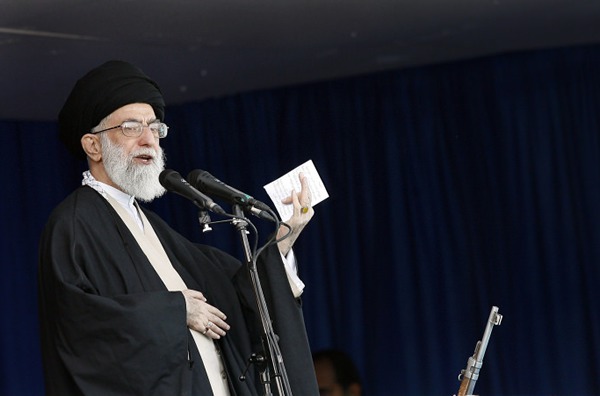 In the Guardian this morning, Jonathan Steele has written an article defending President Barack Obama’s Iran policy. Steele allows others to make his points for him, but he contributes to a narrative in which rapprochement with Iran is a worthy policy—even as the President formally denies that the Iran negotiations are about anything other than the nuclear-weapons program. Steele writes:
In Iraq, [Iranian officials] insist, Iran is a force for stability, helping [Iraqi prime minister] Haider al-Abadi’s government militarily while urging it to be more attentive to Sunni concerns—just as Washington is.
This is nonsense. In 2008, after the US ‘surge’, violence in Iraq was down 90 per cent, and the political process had begun to work. This was achieved by separating the Sunni Arab tribes of western Iraq from al-Qaeda in Mesopotamia (AQM), the forerunner to the Islamic State (ISIS).
By Kyle Orton (@KyleWOrton) on February 22, 2015
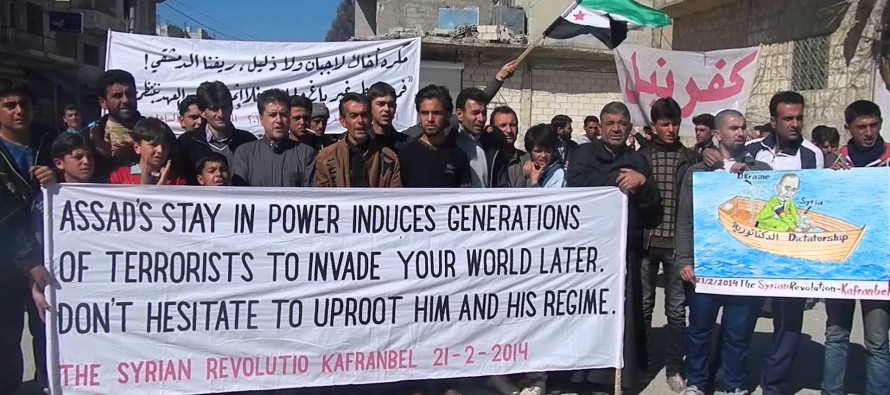
Kafranbel gets it
The United States is about to begin training some Syrian rebels, and giving them the ability to call in U.S. airstrikes, the Wall Street Journal reports. Continue reading
By Kyle Orton (@KyleWOrton) on February 10, 2015

This is the fourth of a four-part series looking at the United States’ increasingly-evident de facto alliance with Iran in the region. The first part looked at the way this policy has developed since President Obama took office and how it has been applied in Iraq; the second part looked at the policy’s application in Syria; the third part looked at its application in Lebanon, Afghanistan, and Yemen; and this part is a conclusion. Continue reading
By Kyle Orton (@KyleWOrton) on February 3, 2015
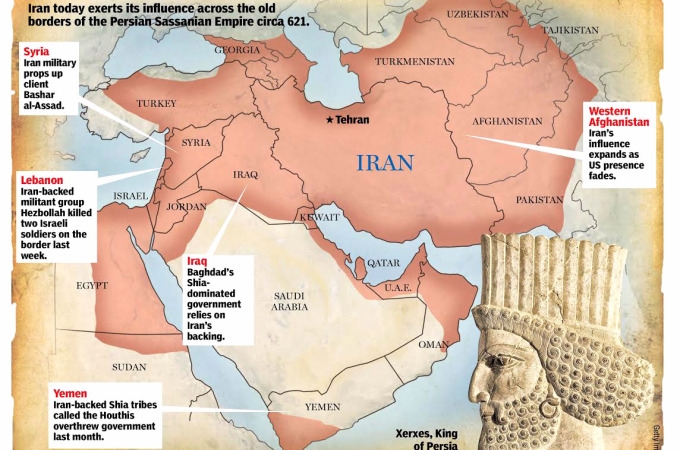
This is the third of a four-part series looking at the United States’ increasingly-evident de facto alliance with Iran in the region. This first part looked at the way this policy has developed since President Obama took office and how it has been applied in Iraq. The second part looked at the policy’s application in Syria; this part will look at its application in Lebanon, Afghanistan, and Yemen; and part four will be a conclusion. Continue reading


 Kyle Orton's Blog