Tag Archives: Russia

Defeating the Islamic State for Good

Originally published at The Henry Jackson Society

By Kyle Orton (@KyleWOrton) on December 2, 2016

Islamic State fortifications in Deir Ezzor (from an IS video, 11 July 2016)

The Islamic State (IS) is nominally under attack now in its twin capitals, Mosul in Iraq and Raqqa in Syria. This is necessary task, of course, but, as I’ve written repeatedly over the last few months, clearing IS from its urban centres is not sufficient. IS lost its overt urban holdings once before and nonetheless rebuilt in the deserts between 2008 and 2013, rising again to seize increasingly-large tracts of territory that were eventually declared a caliphate. IS was able to do this because of the success of its long-term method of war-making, and political changes in Baghdad—toward greater sectarianism and authoritarianism—that gave it more space to manoeuvre. The flaws in the strategy and partners the U.S.-led international Coalition have chosen to eliminate IS are creating a situation in which what will be called “victory” is really the resetting of the cycle. More evidence of this has recently come to the fore. Continue reading

The “Syrian Kurds” Helped Assad Take Aleppo City

By Kyle Orton (@KyleWOrton) on November 30, 2016

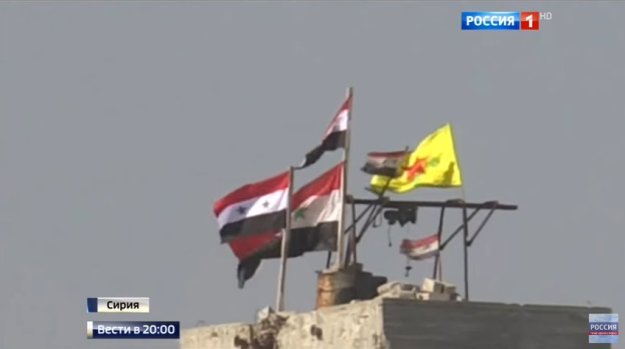
YPG flags flying with the Assad regime’s over Bustan al-Basha, Aleppo city, 28 November 2016

The Syrian Observatory for Human Rights (SOHR) reported on 28 November 2016 about the assistance provided by the Kurdistan Workers’ Party (PKK)—which operates in Syria under the banners of the People’s Protection Units (YPG) and Syrian Democratic Forces (SDF)—to the forces fighting in the name of Bashar al-Assad’s regime, led by Iran on the ground and supported by Russian airstrikes, to crush the Syrian rebellion in Aleppo city: Continue reading

Film Review: Snowden (2016)

By Kyle Orton (@KyleWOrton) on November 29, 2016

1

Snowden never, ever recovers from its premise: that Edward Snowden, a super-capable, pure-hearted all-American, found terrible government crimes against the American population while working at the National Security Agency, and was moved to disclose them to the world after being stymied in official channels.

Literally none of that is true. The Snowden revelations found mistakes that were generally cleared up by an efficient and functional bureaucratic oversight mechanism. Snowden did not try to go official channels in the way he described, and the bulk of what Snowden revealed was nothing to do with the privacy of Americans but was related to foreign intelligence, where the legal and practical situation is that everyone hoovers up as much data as they can. The capabilities of the Snowden presented here, personal and professional—to say nothing of Joseph Gordon-Levitt’s Snowden’s motives—would not withstand scrutiny for a single second against the actual historical record. This could be said fairly generally of the whole film. Continue reading

What To Expect After the Fall of Aleppo

Published at TRT World

By Kyle Orton (@KyleWOrton) on November 29, 2016

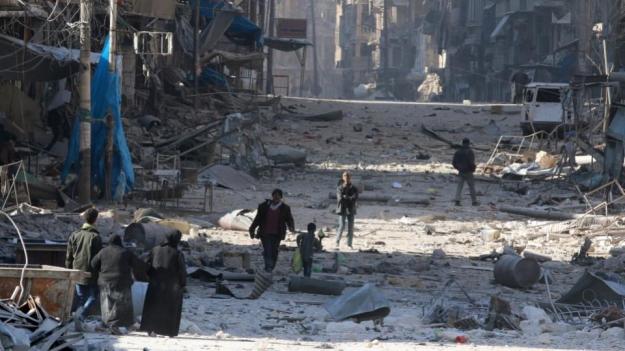
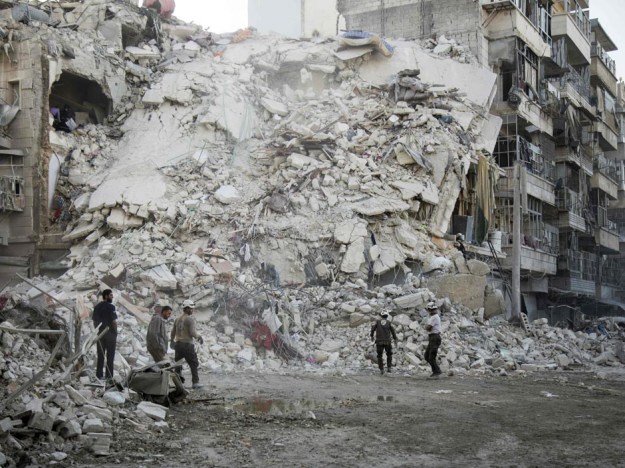
The pro-Assad coalition in Syria has conquered more than a third of the rebel-held enclave in eastern Aleppo City, the last urban stronghold of the mainstream armed opposition. Without significant external assistance, it is difficult to imagine the rebels can hold off, and in the coming days or weeks will likely be forced out entirely. This will not end the war, nor will it suppress the opposition, but it will end the rebellion as a strategic threat to the regime of Bashar al-Assad and push the insurgency into a greater reliance on extremists, creating more space for international terrorists and protracting the war. Continue reading

Trump Might Continue Obama’s Dangerous Syria Policy

Originally published at The Henry Jackson Society

By Kyle Orton (@KyleWOrton) on November 24, 2016

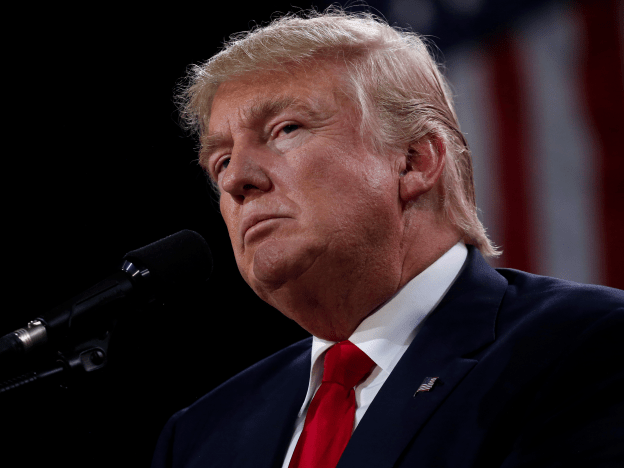
There is not yet any clarity with regard what Donald Trump would do about Syria once he becomes President. Virtually everything about the incoming administration is in the “wait and see” phase. Still, on the current evidence, Trump’s Syria policy would appear to be a continuation of President Barack Obama’s policy of prioritizing the threat of the Islamic State (IS) and other non-state Sunni jihadist groups, while effectively aligning with the pro-regime coalition, made up of Russian air power and a ground force led by the Islamic Republic of Iran, stitched together out of the battered remnants of Bashar al-Assad’s army and his sectarian militias, Iranian paramilitary and regular forces, and foreign Shi’a jihadist groups under Iran’s control. The only potential difference is that Trump may formally repudiate the anti-Assad forces. The effect of this would be to destroy the mainstream Syrian opposition and empower al-Qaeda, but it would not bring stability to Syria. There are hints, however, that Trump is recruiting senior officials who will alter this policy. Continue reading

Turkey Continues to Protest the Coalition’s Syrian Kurdish Allies

By Kyle Orton (@KyleWOrton) on November 22, 2016

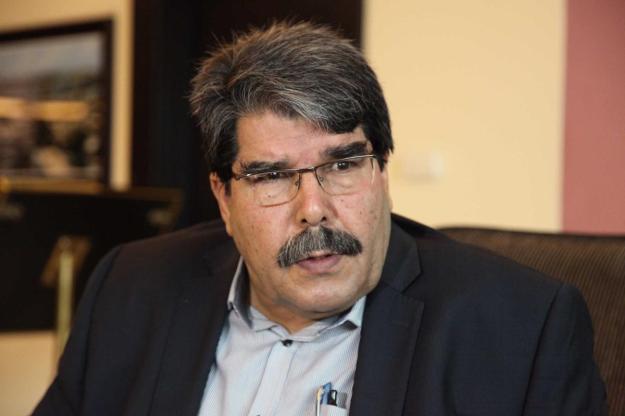
Saleh Muslim Muhammad

This morning, Turkey issued arrest warrants for forty-eight members of the Kurdistan Workers’ Party (PKK), which has fought a forty-year war against the Turkish state. The PKK is listed as terrorist by Ankara, Britain, the European Union, NATO, and the United States. Among those being sought is Saleh Muslim Muhammad, the leader of the Syrian branch of the PKK, known as the Democratic Union Party (PYD), whose armed wing—the People’s Protection Units (YPG)—happens to be the favoured Western instrument in combatting the Islamic State (IS) in Syria. The West has long denied or obfuscated the fact it is working with an organization that a NATO partner considers its nemesis and a long-standing threat to its national security. The Turks, it seems, are not content to let this ambiguity stand, and there are good reasons of Western self-interest why the alliance with the PKK deserves another look. Continue reading

Film Review: Bethlehem (2013)

By Kyle Orton (@KyleWOrton) on November 20, 2016

1

Bethlehem is one of the most compelling films I’ve seen in a long time. There are so few good spy films available that this is a welcome surprise. Unlike Burn After Reading, a genius film, the intention here is not to show things from the agency side, to demonstrate how wildly out of control things can get when you only have half-or-less of the facts. It is also not Charlie Wilson’s War, which shows the feats that intelligence agencies can accomplish when well-directed. Bethlehem is most like Breach, which showed the immense damage an individual spy can do. But instead of showing the effects the act of spying had, with the human characters secondary, Bethlehem tracks specifically the complex relationship that develops between handler and asset. Continue reading

America Escalates the War Against Al-Qaeda in Syria

By Kyle Orton (@KyleWOrton) on November 11, 2016

On the right: Abdullah al-Muhaysini (source)

The United States and therefore the international Coalition is about to step up its operations against Jabhat Fatah al-Sham (JFS), al-Qaeda’s recently rebranded Syrian branch. This is a necessary policy, but pursued in isolation—without replacing the capacities that JFS provides to the insurgency—this action will strengthen the coalition supporting the regime of Bashar al-Assad, the actors chiefly responsible for the humanitarian abomination in Syria that has deliberately given rise to the security menace of the Islamic State (IS) and the flow of refugees into Europe that has destabilized Western security. Assad’s coalition also includes the Islamic Republic of Iran, a more significant global terrorism threat than IS which has repeatedly attacked the West. Continue reading

The Coalition’s Flawed Endgame Strategy for the Islamic State

By Kyle Orton (@KyleWOrton) on November 6, 2016

After some (perhaps wilful) confusion over the timing, the operation to expel the Islamic State (IS) from Raqqa City, its Syrian capital, got underway this morning, running concurrent with the effort to evict IS from its Iraqi capital, Mosul. There are deep concerns about the methods adopted in both cases. The ground forces the U.S.-led Coalition has chosen to support in Raqqa cannot lead to sustainable stability in Syria, something that is essential to defeat IS. While the Mosul operation has proceeded generally to plan, there are increasing signs of trouble within the operation itself and the most troubling aspect—the aftermath—still appears to be unplanned. Beyond this is the continued assault on Aleppo City by Bashar al-Assad’s regime and its Russian and Iranian patrons that is systematically destroying the forces needed if there is to be any settlement to Syria’s war that ends the space given to international terrorists. Continue reading

Russia Moves in For the Kill in Syria

Originally published at The Henry Jackson Society

By Kyle Orton (@KyleWOrton) on October 21, 2016

Vladimir Putin’s Russia is “deploying all of the Northern fleet and much of the Baltic fleet in the largest surface deployment since the end of the Cold War,” a NATO diplomat told Reuters on Wednesday night. These Naval assets are designed to buttress a final offensive by the remnants of Bashar al-Assad’s regime in Syria, which is effectively controlled on the ground by the Islamic Republic of Iran and an assortment of foreign Shi’a jihadists, against the insurgent-held east of Aleppo city, crushing once and for all the strategic threat posed by the rebellion to the regime, a threat that had already been all-but ended in the first months of Russia’s intervention. Nearly a year ago the U.S. began a political process with the Russians intended to end the war and begin a political transition. Moscow has subverted this process, using force to buttress its political efforts to secure Assad in power. The timing of this attack is seemingly intended as one final humiliation for President Barack Obama. Continue reading