By Kyle Orton (@KyleWOrton) on 28 February 2018
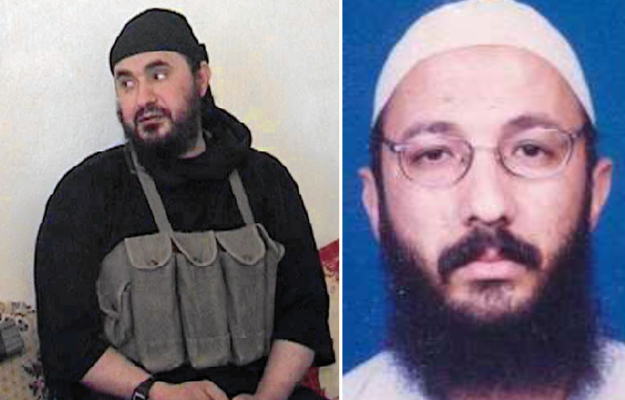
Ahmad al-Khalayleh (Abu Musab al-Zarqawi) [picture via Getty], Muhammad Zaydan (Sayf al-Adel) [picture via Kronos Advisory LLC]
By Kyle Orton (@KyleWOrton) on 28 February 2018
Ahmad al-Khalayleh (Abu Musab al-Zarqawi) [picture via Getty], Muhammad Zaydan (Sayf al-Adel) [picture via Kronos Advisory LLC]
By Kyle Orton (@KyleWOrton) on 9 February 2018
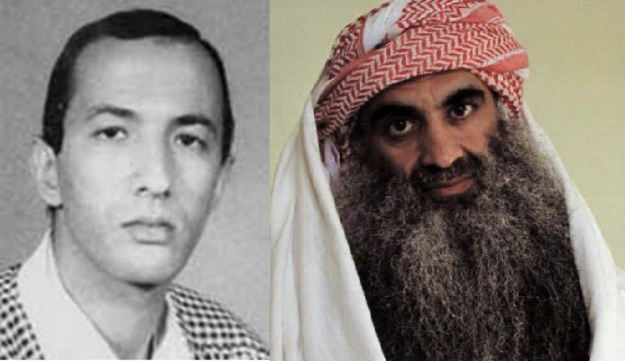
Sayf al-Adel (image source), Khalid Shaykh Muhammad (image source)
Muhammad Saladin Abd al-Halim Zaydan (Sayf al-Adel) wrote a letter on 13 June 2002 to Khalid Shaykh Muhammad (KSM or Mukhtar), the operational planner of the 9/11 massacre. Zaydan criticises KSM’s handling of al-Qaeda in the aftermath of 9/11 and the fall of the Taliban, and calls on him to surrender control to others. At that time the latter was written, Zaydan had been the head of al-Qaeda’s military committee for about seven months, replacing Muhammad Atef (Abu Hafs al-Masri), who was killed by an American airstrike in Afghanistan in November 2001. Zaydan was based then—as he is now—in Iran, with much of al-Qaeda’s senior leadership, at the invitation of Qassem Sulaymani, the head of the Quds Force, the component of the Islamic Revolutionary Guard Corps (IRGC) tasked with exporting the Iran’s Islamist revolution. The letter is reproduced below with the key sections highlighted in bold.
Phrased with much surrounding politeness, Zaydan gets to the point: KSM has been on a spree of external operations—notably with “shoe bomber” Richard Reid and José Padilla (Abdullah al-Muhajir)—that have failed spectacularly and exposed al-Qaeda to ridicule. Instead of learning from his mistakes, KSM has heedlessly rushed to the next plot, says Zaydan. Usama bin Ladin might have signed off on these plots, Zaydan writes, but Bin Ladin is also reckless and refuses to heed advice—instead changing the advisor to get the answer he wants. (Bin Ladin had done this—or tried to—for the 9/11 attack itself, stacking the executive committee with loyalists before the key vote, which he ended up not bothering to hold anyway.) KSM should halt all plots currently underway and resign his duties to others so that stock can be taken of how these disasters have befallen the organisation, Zaydan concludes. Zaydan adds a final note demanding the removal of a post on an al-Qaeda forum that identifies his children by their real names. Continue reading
By Kyle Orton (@KyleWOrton) on 24 January 2018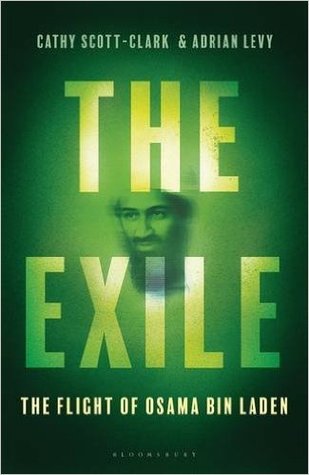
The new book by the investigative journalists Adrian Levy and Catherine Scott-Clark, The Exile: The Flight of Osama bin Laden, charts the career of al-Qaeda’s founder, Osama bin Laden, up to the day he became a household name—11 September 2001—through his downfall in 2011, to the end of 2016, when al-Qaeda was more powerful than ever. It is a thoroughly absorbing account, bringing to light vast tranches of new facts, including many intricate details of how al-Qaeda operated on a human, day-to-day level, and of those states and para-states that shielded the terror network, collaborated with it, and enabled it—and still do.
The gathering of the Bin Laden network in Sudan and then in the Taliban-held areas of Afghanistan in the 1990s is a familiar story, but the splits and debates among the Arab jihadists around Bin Laden, including the opposition of significant numbers of them to the 9/11 massacre, is perhaps less well known. The authors trace out how Bin Laden manipulated his own quasi-institutions to get his way. First, Bin Laden took on the plan of a man, Khalid Shaykh Muhammad (KSM), who was not even a member of al-Qaeda, and then, ahead of the crucial vote, packed the shura (consultation) council with ultra-zealous Egyptians by engineering a merger between al-Qaeda and Islamic Jihad, led by Ayman al-Zawahiri. Continue reading
By Kyle Orton (@KyleWOrton) on 30 December 2017
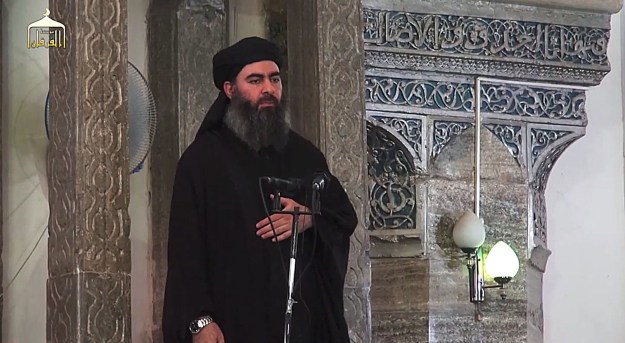
The leader of the Islamic State, Ibrahim al-Badri (Abu Bakr al-Baghdadi), speaking at the Zengi Mosque in Mosul, 4 July 2014 // AP Images
The current leader of the Islamic State (IS), Ibrahim al-Badri (Abu Bakr al-Baghdadi), was appointed as al-amir al-mu’mineen (the commander of the faithful or prince of the believers) on 16 May 2010, after his predecessor, Hamid al-Zawi (Abu Umar al-Baghdadi), was killed on 18 April 2010 in the company of his deputy and “war minister”, Abdul Munim al-Badawi (Abu Hamza al-Muhajir). The official statement appointing al-Badri is reproduced below. Continue reading
By Kyle Orton (@KyleWOrton) on 10 December 2017

Russian soldiers in Efrin, Syria, 1 May 2017 (source)
The American-led Coalition against the Islamic State (IS) partnered with the “Syrian Democratic Forces” (SDF), a political façade for the proscribed Kurdistan Workers’ Party (PKK), as the ground force in Syria. The most ventilated problems with this partnership so far have been the strain it has put on relations with NATO ally Turkey, against which the PKK has run a terrorist-insurgency for more than thirty years, and the deep local suspicion of the PKK’s governing program that might yet reverse the gains against IS and open political space for other jihadists like al-Qaeda. Another of the problems is now gaining salience: the PKK’s long-term alliance with Bashar al-Asad’s regime and the states—Russia and Iran—that keep it alive. Continue reading
By Kyle Orton (@KyleWOrton) on 8 December 2017

Abdullah al-Faisal
The U.S. Treasury Department sanctioned Abdullah Ibrahim al-Faisal (born: Trevor William Forrest), a Jamaican cleric who supports the Islamic State (IS) on 5 December. This was long overdue. Al-Faisal’s record of disseminating jihadist ideology, and influencing and/or interacting with terrorists, goes back several decades. And since 2014, al-Faisal has been one of IS’s influential English-language propagandist-recruiters. Continue reading
By Kyle Orton (@KyleWOrton) on 30 November 2017

I released a report today, published by the Henry Jackson Society, Qatar and the Gulf Crisis. The intent was to examine the charges made against the Qatari government by its Gulf neighbours with regard to the funding of terrorism, the hosting of extremists, the dissemination of hate speech and incitement, among other things. Having separated fact from fiction with regards to he accusations against Qatar, the report proposes how Britain might proceed in such a way as to press Doha on issues of concern, while avoiding being drawn into the middle of the Gulf dispute, and trying to foster reconciliation between allies, especially at a time when a united front is necessary to oppose the far larger challenge of the Iranian theocracy. Continue reading
By Kyle Orton (@KyleWOrton) on 12 November 2017
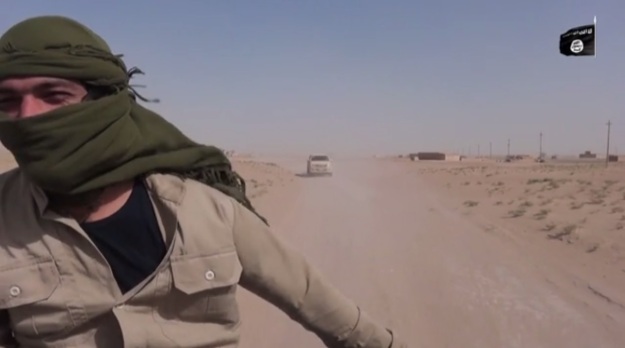
Muhammad Shakar had, according to his martyr biography, “become influenced by Salafism in 1997-98 while serving as a part of [Saddam] Hussein’s Special Republican Guard”.[1] Quitting the military and returning to his home in Mosul, Shakar was harassed by the regime until he went to join Ansar al-Islam in the mountains of Kurdistan.[2]
Shakar, known as Abu Talha al-Ansari or Abu Talha al-Mawsuli, joined the predecessor to Islamic State either just before or just after Saddam fell, and he was arrested in Mosul on 14 June 2005. Continue reading
By Kyle Orton (@KyleWOrton) on 24 October 2017

Raqqa city has been destroyed (image source)
The Islamic State (IS) captured Raqqa city, its first provincial capital, in January 2014. Six months later, IS declared its caliphate and Raqqa became its de facto capital. Last Tuesday, the partner force of the US-led anti-IS Coalition, the “Syrian Democratic Forces” (SDF), entered the city centre in Raqqa. A deal had evacuated most of the remaining jihadists over the prior weekend, though a determined core remained and still held about 10 per cent of the city. The caliphate is crumbling and the Coalition says IS has 6,500 fighters left. According to the Coalition, this puts IS “on the verge of a devastating defeat”. Unfortunately, there is no reason to believe this is true. To the contrary, IS is more powerful at this point, in theatre, even after the military reverses inflicted on it by the Coalition, than in the period after the “defeat” of 2008, and the outlook is more favourable now to IS. Moreover, IS now has an international reach, physically and ideologically, it did not previously possess. Continue reading
By Kyle Orton (@KyleWOrton) on 5 October 2017
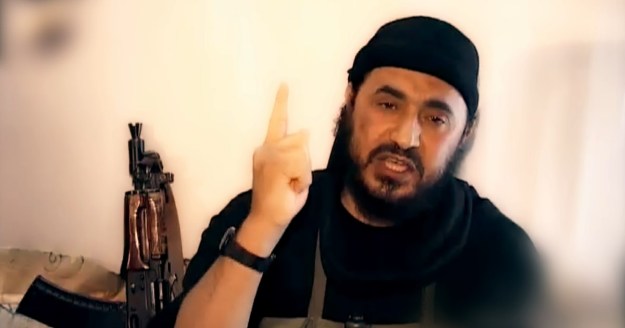
Ahmad al-Khalayleh (Abu Musab al-Zarqawi)
The Islamic State’s founder, Ahmad al-Khalayleh (Abu Musab al-Zarqawi), took the anti-Shi’ism within jihadi-salafism, and moved it to ideological centre-stage in his campaign to implement a shari’a regime in Iraq. In a speech on 18 May 2005, “The Return of Ibn al-Alqami’s Grandchildren”, al-Khalayleh cast the Shi’a as the internal enemies of Islam. Al-Alqami, a Shi’a, was the vast vizier of the Abbasid caliphate and allegedly opened the gates to allow the Mongols to sack Baghdad in 1258. In al-Khalayleh’s telling, the Iraqi Shi’a repeated this in 2003 by welcoming the Americans—a piece of sectarian incitement first used by Saddam Husayn. Al-Khalayleh makes reference to Shi’a figures conspiring in the American project for a New Iraq, something unalterably opposed not only by al-Khalayleh but most Iraqi Sunnis and their “resistance” groups, who objected to their loss of primacy in the aftermath of Saddam, flatly rejecting the demographic facts of Iraq that grant them a smaller share of power than they feel is their due. This political grievance is secondary to al-Khalayleh, however. Al-Khalayleh advances a cosmic, theological argument. To al-Khalayleh, the existence of the Shi’a is a standing affront to the “true” faith and a temptation for Sunnis to fall into apostasy, and since the need to defend the faith itself is above the protection of human life, the shedding of the blood of Shi’a civilians licit. This is the intellectual universe in which al-Khalayleh and his successors dwell. Excerpts from the speech are republished below. Continue reading
 Kyle Orton's Blog