Tag Archives: Saddam Hussein

Raqqa Doesn’t Want to Be Liberated By the West’s Partners

By Kyle Orton (@KyleWOrton) on 30 May 2017

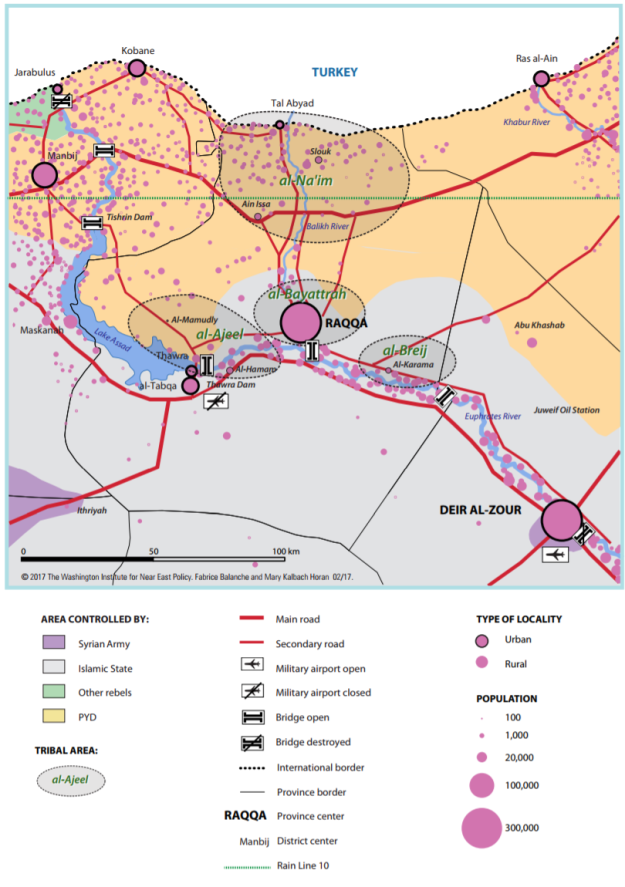
Map of the tribes around Raqqa city (source: WINEP report)

We are now on the eve of the operation to evict the Islamic State (IS) from its Syrian capital, Raqqa, and, as expected, the United States will partner with the Syrian Democratic Forces (SDF), the front-group for the Democratic Union Party (PYD) and its armed wing, the People’s Protection Units (YPG), which President Donald Trump’s administration has committed to directly arming.

Many of the doubts voiced about this course relate to Turkey, since the PYD/YPG is—despite continued efforts to obfuscate the fact—the Syrian department of the Kurdistan Workers’ Party (PKK), the premier internal security threat to Turkey for many decades. The discussion then tends to fall into one of two grooves. Continue reading

The Problems With the West’s Partners Against the Islamic State

By Kyle Orton (@KyleWOrton) on 10 May 2017

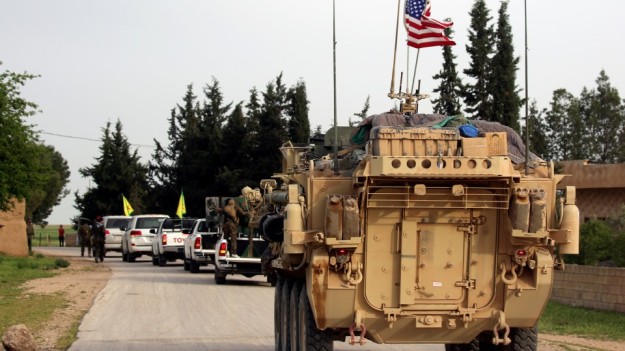
U.S. troops patrolling with the YPG/PKK in the village of Darbasiyah, northern Syria, on the border with Turkey, 28 April 2017

The United States has tried to engage in Syria almost solely in a counter-terrorism capacity, against Daesh (IS) and—in a recently-escalating campaign—against al Qaeda. The narrowness of the focus on jihadist terrorists led to the US disregarding wider political dynamics in the war in Syria—and to a degree in Iraq, too—and partnering with forces that over the long term will undo even this narrow mission.

The announcement yesterday that President Donald Trump will now arm the Kurdish People’s Protection Units (YPG) to expel Daesh from its Syrian capital, Raqqa, is the end-point of this policy, setting up a very dangerous medium- and long-term situation that will redound to the benefit of terrorists. Continue reading

How Powerful is the Islamic State in Saudi Arabia?

Originally posted at The Henry Jackson Society

By Kyle Orton (@KyleWOrton) on 27 April 2017

The U.S. Department of State designated Mubarak Mohammed Alotaibi, also transliterated as Mubarak Muhammad al-Utaybi, as a Specially Designated Global Terrorist (SDGT), because he has “committed, or pose[s] a significant risk of committing, acts of terrorism that threaten the security of U.S. nationals or the national security, foreign policy, or economy of the United States.” Al-Utaybi is a citizen of Saudi Arabia and is the “Syria-based deputy leader” of the Islamic State’s (IS) branch in the Saudi Kingdom. Continue reading

Russia and Iran Use Terrorism Against Western Interests

By Kyle Orton (@KyleWOrton) on 25 April 2017

The evidence is mounting that Vladimir Putin’s government supports the Taliban as a means of thwarting NATO interests in Afghanistan. Russia has long manipulated terrorists, internally and abroad, to suit its policy aims, but as Moscow solidifies its relationship with the Iranian revolution the Russian policy, particularly in Syria, has become something more like a conventional alliance—not least because those who run Tehran’s foreign policy and the clerical regime’s most powerful assets are themselves terrorists. Continue reading

Why The Islamic State Endures

By Kyle Orton (@KyleWOrton) on March 15, 2017

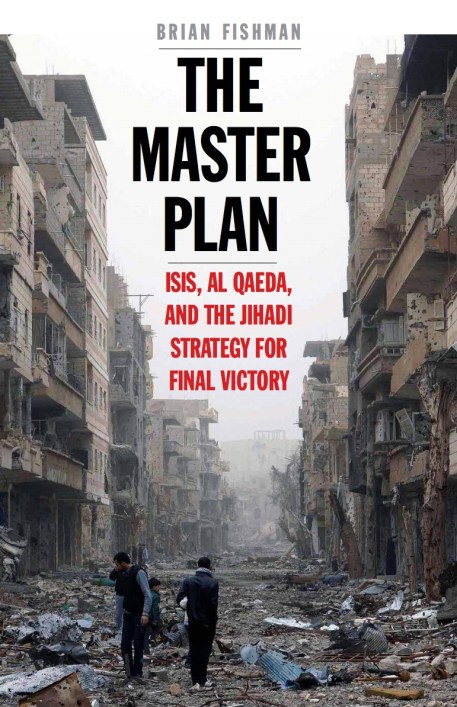
Brian Fishman’s The Master Plan provides a comprehensive history of the Islamic State’s (IS) strategic evolution, covering the personalities and events that shaped one of the most feared terrorist-insurgent groups that has ever existed. Eminently readable, in places even amusing—no small feat in a book about IS—Fishman flips with ease between the overview and the granular to demonstrate his points, using new sources that will allow as much supplementary research as a reader could wish for, and ties it together in a narrative that will be of use to both specialists and generalists. Continue reading

The Leader of the Islamic State in the 2004 Fallujah Battles: Umar Hadid

By Kyle Orton (@KyleWOrton) on January 30, 2017

Umar Hadid [right] (source)

Umar Hadid [right] (source)

Umar Hadid was a native of Fallujah, hence his kunya, Abu Khattab al-Falluji,[1] and a part of the extremist thread of the Salafist underground in Saddam Husayn’s Iraq. Working as an electrician for a time, Hadid had gone into internal exile years before the invasion after attacking Saddam’s security forces. In the aftermath of Saddam’s toppling, Hadid quickly joined with Ahmad al-Khalayleh (Abu Musab al-Zarqawi), the Jordanian founder of the Islamic State (IS) who had been in Baghdad from May 2002. Hadid rose swiftly in the ranks of the IS movement, and led the insurgency during the two battles with American forces in Fallujah in 2004, being killed during the second of them. Continue reading

Profile of Hudayfa al-Batawi, Former Islamic State Emir of Baghdad

By Kyle Orton (@KyleWOrton) on January 29, 2017

hudayfa-al-batawi-1

Hudayfa al-Batawi was among the Iraqis who joined the Islamic State (IS) movement early after the fall of Saddam Husayn, having been a long-time Salafist extremist. Al-Batawi rose through the ranks and became the emir of Baghdad, involved in some of the worst attacks in that city in 2009 and 2010. Arrested in late 2010, al-Batawi was killed in a prison riot in 2011. Continue reading

Abdallah Najem al-Jawari: A Key Early Leader of the Islamic State

By Kyle Orton (@KyleWOrton) on January 28, 2017

1

Abdallah Najem al-Jawari (Abu Azzam al-Iraqi) was something like the Islamic State (IS) movement’s first Finance Minister and a senior regional official, first in his native Anbar—he was from Fallujah—and later in Baghdad. Joining the group quickly after the collapse of the Saddam Husayn regime, al-Jawari was killed in 2005. Al-Jawari remains among those commemorated by IS as founders who set the stage for the current rise of “the State”.
Continue reading

Profile of Abu Raghd: On the Origins of the Iraqi Jihad

By Kyle Orton (@KyleWOrton) on January 28, 2017

2016-11-10-is-closing-in-on-palmyra-p13

In his first speech as the then-Islamic State of Iraq’s (ISI’s) official spokesman in August 2011, Taha Falaha (Abu Muhammad al-Adnani) referred to several of the group’s “leaders” who had been killed. Among them was Abu Raghd, whose biography provides a glimpse of the role regional states—specifically Saddam Husayn’s Iraq and Bashar al-Assad’s Syria—played in facilitating the birth of the Islamic State (IS). Continue reading

The Islamic State’s First War Minister

By Kyle Orton (@KyleWOrton) on January 25, 2017

One of the few existing pictures of Abu Hamza al-Muhajir (Abdul Munim al-Badawi)

One of the few existing pictures of Abu Hamza al-Muhajir (Abdul Munim al-Badawi)

Below is reproduced a very short biography for Abu Hamza al-Muhajir, sometimes called Abu Ayyub al-Masri, whose real name is Abdul Munim al-Badawi,[1] that circulated on pro-Islamic State forums. Al-Badawi took over leadership of al-Qaeda in Iraq (AQI) when its founder, Ahmad al-Khalayleh (Abu Musab al-Zarqawi), was killed on 7 June 2006. Al-Badawi then declared his allegiance to Hamid al-Zawi (Abu Umar al-Baghdadi) and the Islamic State of Iraq (ISI) on 10 November 2006, formally dissolving al-Qaeda on Iraqi territory, and becoming al-Zawi’s deputy. Abu Hamza had been in Iraq, including Baghdad, a year before Saddam Husayn was overthrown, and he and al-Zawi were killed together on 18 April 2010. Continue reading