By Kyle Orton (@KyleWOrton) on 19 October 2018
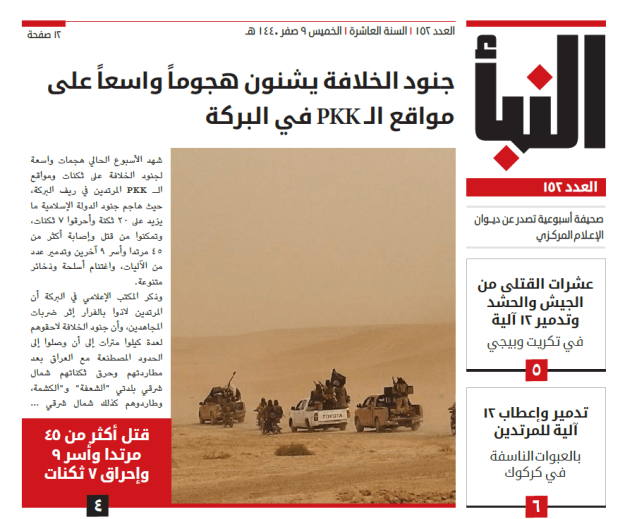
The Islamic State (IS) released the 152nd edition of Al-Naba, its weekly newsletter, on 18 October. Continue reading
By Kyle Orton (@KyleWOrton) on 19 October 2018
The Islamic State (IS) released the 152nd edition of Al-Naba, its weekly newsletter, on 18 October. Continue reading
By Kyle Orton (@KyleWOrton) on 7 September 2018
The U.S. Treasury Department sanctioned four individuals and five entities connected to the Syrian regime of Bashar al-Asad on 6 September 2018. The most interesting was Muhammad al-Katerji, who has been involved in trade with the Islamic State (IS). A relative of his, Hussam al-Katerji, has previously been revealed as funding the jihadists on behalf of the regime, and the U.S. has previously sanctioned another Kremlin-linked Asad regime oligarch, George Haswani, for financing IS. “The United States will continue to target those who facilitate transactions with the murderous Asad regime and support ISIS”, said U.S. Treasury Secretary Steven Mnuchin. Continue reading
By Kyle Orton (@KyleWOrton) on 21 August 2018
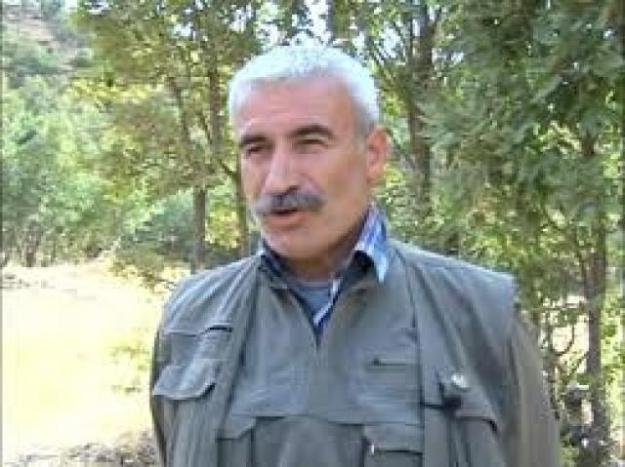
Ismail Özden (image source)
Turkey killed a senior operative of the Kurdistan Workers’ Party (PKK), the internationally-recognised terrorist organisation and narcotics trafficking entity that has been at war with the Turkish state since 1984, in Iraq last week. Turkey launched a wave of airstrikes against PKK targets in Syria and Iraq in April 2017 and for the last several months Ankara has been widening its campaign against the PKK outside Turkey’s borders, particularly in Iraq, where the PKK is not protected by the United States, as it is in eastern Syria. Having feinted in June toward an attack on the historic PKK headquarters in the Qandil Mountains—a somewhat symbolic target at this stage, with the bulk of the PKK’s leadership and resources in Syria—it appears the Turks have opted for a more targeted approach.
This operation underscores the continuance of U.S.-Turkey relations, and the mutual benefits of the relationship, even in its current damaged state, where both sides have a laundry list of legitimate grievances with the other. If a formula for normalisation can be found, the potential to contain and weaken some of the worst, most destabilising elements in the region, saliently the PKK and the Iranian regime, is within reach. Continue reading
By Kyle Orton (@KyleWOrton) on 15 August 2018

America’s imposition of sanctions on Turkey brings the relationship to its lowest ebb in more than forty years. Almost as soon as the Justice and Development Party (AKP) and its leader, Recep Tayyip Erdoğan, came into office in 2002 there have been tensions in the relationship. These manageable differences escalated considerably during the time of President Barack Obama, primarily because of his Syria policy, and now threaten to boil over. The chances to soothe a vital strategic partnership appear to be slipping. Continue reading
By Kyle Orton (@KyleWOrton) on 12 July 2018

American troops look out toward the border with Turkey from a small outpost near the town of Minbij, 7 Feb. 2018 (AP Photo/Susannah George)
As Turkey moves past last month’s election, the foreign policy challenges remain acute, particularly in Syria, and there is a looming confrontation with the United States over sanctions on Iran that might undo the recent progress toward the normalisation of U.S.-Turkish relations. Continue reading
By Kyle Orton (@KyleWOrton) on 7 June 2018
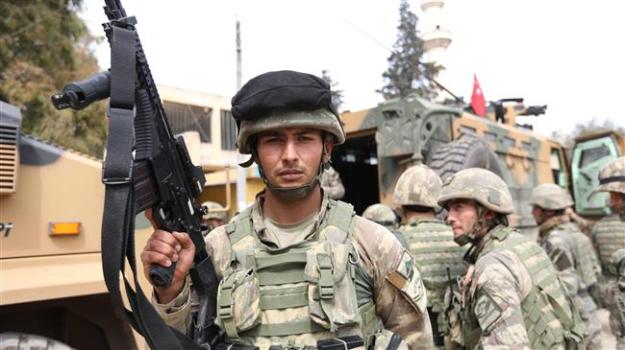
Turkish soldiers and their rebel dependencies in Efrin, 18 March 2018 // AFP
On June 24, for the first time in 15 years, there seems a possibility, however faint, that elections in Turkey will end in defeat for President Recep Tayyip Erdoğan.
It is an uphill battle, not least because of the ongoing state of emergency after the 2016 attempted coup, which has exacerbated the systemic biases against Erdoğan’s political opponents. But the Turkish opposition has managed to overcome its own fractiousness and has a strategic game-plan that makes sense. One card Erdoğan still has to play is foreign policy, and there are signs in Syria and Iraq of advantageous news to come. Continue reading
Published at The New Arab.
By Kyle Orton (@KyleWOrton) on 21 December 2017
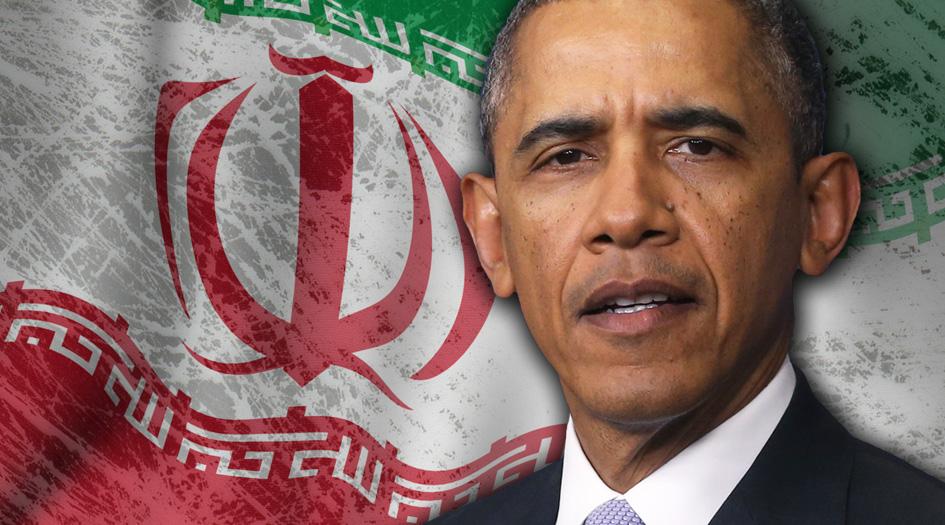
A widely reported, 15,000-word article by Josh Meyer in Politico on Sunday moves us another step closer to finding out the actual terms of President Barack Obama’s nuclear deal with the Islamic Republic of Iran.
Though the Obama administration sold the Iran deal on the narrowest possible terms as an arms control agreement, the reality was that this agreement was intended to facilitate a strategic tilt in Iran’s favour—against traditional allies—that left a regional balance requiring less American commitment.
Because the administration wanted the paper agreement, Iran had the leverage to threaten to walk away, and was therefore appeased on multiple fronts ostensibly unrelated to the nuclear issue.
By Kyle Orton (@KyleWOrton) on 8 December 2017
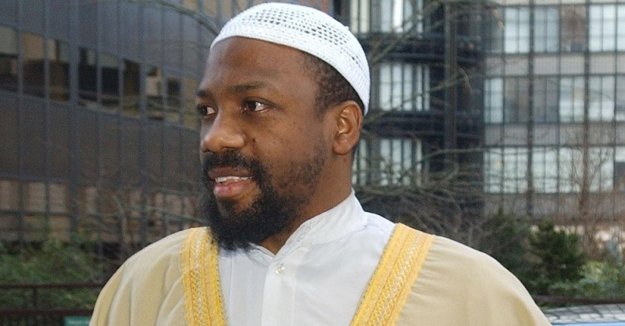
Abdullah al-Faisal
The U.S. Treasury Department sanctioned Abdullah Ibrahim al-Faisal (born: Trevor William Forrest), a Jamaican cleric who supports the Islamic State (IS) on 5 December. This was long overdue. Al-Faisal’s record of disseminating jihadist ideology, and influencing and/or interacting with terrorists, goes back several decades. And since 2014, al-Faisal has been one of IS’s influential English-language propagandist-recruiters. Continue reading
By Kyle Orton (@KyleWOrton) on 23 November 2017

The Office of Foreign Assets Control (OFAC) in the U.S. Department of Treasury, on 20 November, sanctioned “a network of individuals and entities involved in a large-scale scheme to help Iran’s Islamic Revolutionary Guard Corps-Quds Force (IRGC-QF) counterfeit currency to support its destabilizing activities” in Yemen. Continue reading
By Kyle Orton (@KyleWOrton) on 28 October 2017
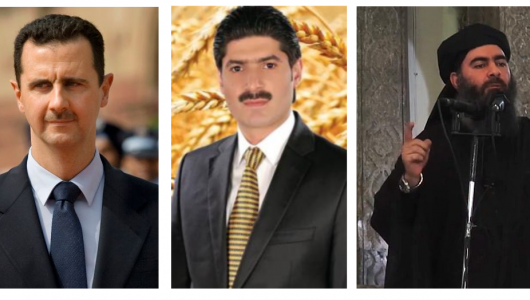
Bashar al-Assad, Hussam al-Katerji, Ibrahim al-Badri (Abu Bakr al-Baghdadi)
Reuters reported on 11 October that Hussam al-Katerji, a member of Bashar al-Asad’s Syrian regime, has been engaged in trading wheat with the Islamic State (IS), helping supply the terrorists with resources to run their statelet and threaten the security of Syria’s neighbours and the wider world. This pattern of behaviour from the Asad regime—holding itself out as a counterterrorism partner, while it bolsters terrorist organizations—is well-established, and has its origins in the regime’s survival strategy: to destroy all acceptable opposition forces and make the Syrian war a binary contest between the dictatorship and terrorists. Continue reading
 Kyle Orton's Blog