Tag Archives: sectarianism

By Strengthening Iran, the Coalition Has Ensured the Islamic State’s Survival

Published at The Telegraph

By Kyle Orton (@KyleWOrton) on 6 October 2017

The “defeat” of the Islamic State (ISIL), signified by its eviction from Mosul in July, its impending loss of Raqqa, and an apparent resurgence of Bashar al-Assad’s regime in Syria, seemed to augur a new era of stability for the Middle East. The jihadists would be gone and Iranian-backed governments in Syria and Iraq consolidated.

True, Assad murdering those who resisted him with poison gas and concentration camps, and hiding the evidence by installing crematoria, would nag at our conscience. But foreign policy is a cold-blooded business and it has been decreed that ISIL is the greatest—really the only—threat emanating from the region.

It would not be justice, but it would be peace. Or something like that. Continue reading

How the Islamic State’s Founder Justified Murdering Shi’a Civilians

By Kyle Orton (@KyleWOrton) on 5 October 2017

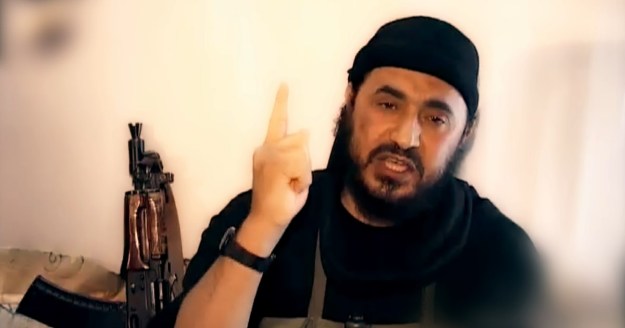
Ahmad al-Khalayleh (Abu Musab al-Zarqawi)

The Islamic State’s founder, Ahmad al-Khalayleh (Abu Musab al-Zarqawi), took the anti-Shi’ism within jihadi-salafism, and moved it to ideological centre-stage in his campaign to implement a shari’a regime in Iraq. In a speech on 18 May 2005, “The Return of Ibn al-Alqami’s Grandchildren”, al-Khalayleh cast the Shi’a as the internal enemies of Islam. Al-Alqami, a Shi’a, was the vast vizier of the Abbasid caliphate and allegedly opened the gates to allow the Mongols to sack Baghdad in 1258. In al-Khalayleh’s telling, the Iraqi Shi’a repeated this in 2003 by welcoming the Americans—a piece of sectarian incitement first used by Saddam Husayn. Al-Khalayleh makes reference to Shi’a figures conspiring in the American project for a New Iraq, something unalterably opposed not only by al-Khalayleh but most Iraqi Sunnis and their “resistance” groups, who objected to their loss of primacy in the aftermath of Saddam, flatly rejecting the demographic facts of Iraq that grant them a smaller share of power than they feel is their due. This political grievance is secondary to al-Khalayleh, however. Al-Khalayleh advances a cosmic, theological argument. To al-Khalayleh, the existence of the Shi’a is a standing affront to the “true” faith and a temptation for Sunnis to fall into apostasy, and since the need to defend the faith itself is above the protection of human life, the shedding of the blood of Shi’a civilians licit. This is the intellectual universe in which al-Khalayleh and his successors dwell. Excerpts from the speech are republished below. Continue reading

Islamic State Leader Says the Show Goes On

By Kyle Orton (@KyleWOrton) on 28 September 2017

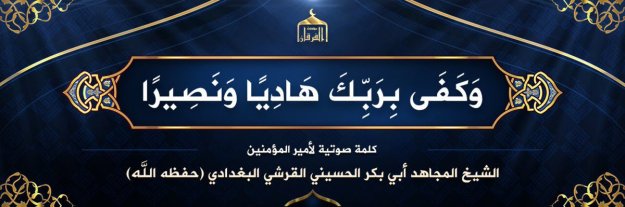
The leader of the Islamic State (IS), Ibrahim al-Badri (Abu Bakr al-Baghdadi), released a 46-minute audio statement today, his first statement for about eleven months. Entitled, “Sufficient Is Your Lord As A Guide And A Helper” or “Your Lord Suffices as Guide and Helper”, it is al-Badri’s twelfth speech since he became leader of the IS movement in 2010 and the seventh since IS declared the restoration of the caliphate. Continue reading

Coalition Risks Replacing the Islamic State With the Islamic Republic

By Kyle Orton (@KyleWOrton) on 14 September 2017

By recent reports, one could easily come away with the impression that war and instability across the Fertile Crescent are winding down. Predictions about what comes next, always a risky enterprise in the Middle East, are at a point of unique vulnerability. Chaos and violence for some considerable time to come look like a safe bet, though the timing and scale look more uncertain. Nonetheless, certain trendlines are visible, most clearly the emergence of a regional order, abetted by the international coalition’s campaign against the self-proclaimed Islamic State (ISIS), dominated by the Islamic Republic of Iran. Continue reading

The Syrian Regime Helped the Islamic State Murder Americans

By Kyle Orton (@KyleWOrton) on 26 August 2017

The Asad family regime in Syria has long been known to have had a key role in the formation and sustenance of the Islamic State (IS) and its predecessors. Without the Asad regime’s assistance, the IS movement could not have hoped to pose such a challenge to the Iraqi government, regional states, and Western interests and citizens. This has been underlined in a series of Federal Court rulings in the United States that have brought together evidence on this matter. In April, another such ruling found the Asad regime liable in the murder of three more Americans. Continue reading

Iran and Russia Are Using the Taliban Against the West

By Kyle Orton (@KyleWOrton) on 5 August 2017

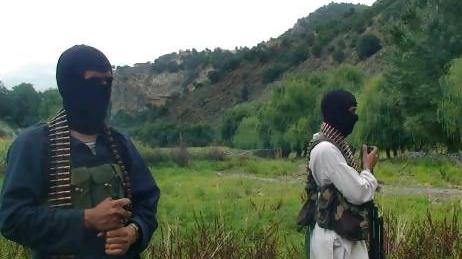
Taliban jihadists (image source)

The New York Times reported on the growing closeness of relations between the governments in Iran and Russia, and the Taliban movement in Afghanistan, something that became especially salient earlier this year and which has been visible for at least two years. Continue reading

Islamic State’s Attack in Iran Was a Bid For the Mantle of ‘Protector of the Sunnis’

Published at The Telegraph

By Kyle Orton (@KyleWOrton) on 7 June 2017

Armed terrorists stormed the Iranian parliament complex in Tehran (CREDIT: OMID VAHABZADEH/AFP/GETTY IMAGES)

In its choice of target and timing, ISIL has shown, once again, its skill in exploiting the rivalries of its enemies—setting them against one another to buy itself greater room for manoeuvre. Continue reading

Raqqa Doesn’t Want to Be Liberated By the West’s Partners

By Kyle Orton (@KyleWOrton) on 30 May 2017

Map of the tribes around Raqqa city (source: WINEP report)

We are now on the eve of the operation to evict the Islamic State (IS) from its Syrian capital, Raqqa, and, as expected, the United States will partner with the Syrian Democratic Forces (SDF), the front-group for the Democratic Union Party (PYD) and its armed wing, the People’s Protection Units (YPG), which President Donald Trump’s administration has committed to directly arming.

Many of the doubts voiced about this course relate to Turkey, since the PYD/YPG is—despite continued efforts to obfuscate the fact—the Syrian department of the Kurdistan Workers’ Party (PKK), the premier internal security threat to Turkey for many decades. The discussion then tends to fall into one of two grooves. Continue reading

Coalition on the Verge of Repeating the Mistakes of the Past Against the Islamic State

This article was published at BICOM

By Kyle Orton (@KyleWOrton) on 16 May 2017

Within the next month, the Islamic State (IS) will likely lose its grip on its Iraqi capital, Mosul, and the operation to drive it from its Syrian capital, Raqqa, will begin. The destruction of IS’s caliphate, however, is not even close to the end of the road for the movement, not least because of the manner in which it is being accomplished.

At its core the IS movement is waging a revolutionary war, and as Craig Whiteside, a fellow with The International Centre for Counter-Terrorism has explained, this means that the focus is on legitimacy. Military victories come and go but if IS is, over the long-term, gaining acceptance—whether from support, resignation, or fear—among the population it hopes to govern (the Sunni Arabs), then it is winning. It is for this reason that IS tries to embed political victories within its military defeats. Continue reading

Signs of Recovery for the Islamic State

By Kyle Orton (@KyleWOrton) on April 22, 2017

The operation to clear the Islamic State (IS) from its Iraqi capital, Mosul, began on 17 October and is now 188 days old. IS was announced cleared from east Mosul on 25 January, and the offensive that began on 19 February to clear the more densely-populated and difficult west Mosul has ostensibly swept IS from sixty percent of that area. Official sources claim IS now controls less than seven percent of Iraqi territory, down from forty percent in 2014. But yesterday, a car bomb struck Zuhur, the first attack of this kind in east Mosul since February, murdering at least four people. This is part of a pattern of attacks that suggests the Mosul operation itself was rushed and more importantly that IS is already recovering in liberated areas. Continue reading