Tag Archives: Soviet Union

The Fall of the Shah and the Rise of Islamism

By Kyle Orton (@KyleWOrton) on 17 January 2019

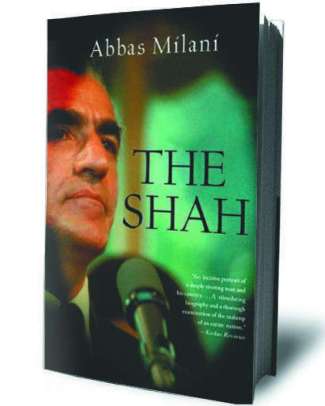
Forty years ago yesterday, Muhammad Reza Pahlavi, the Shah (King) of Iran, left his country for the last time as a year-long revolution crested. A month later, the remnants of the Imperial Government collapsed and Grand Ayatollah Ruhollah Khomeini was swept to power after his long exile, establishing the first Islamist regime. Andrew Scott Cooper’s 2016 book, The Fall of Heaven: The Pahlavis and the Final Days of Imperial Iran, charts how this happened. Continue reading

The Russian Relationship with Israel: A History

By Kyle Orton (@KyleWOrton) on 12 December 2018

© AP Photo / Jim Hollander, Pool

Essay: “Zionism is Making Us Stupid”: The Russian Relationship with Israel from the Soviets to Putin Continue reading

Who Killed Kennedy?

By Kyle Orton (@KyleWOrton) on 18 September 2018

To even pose the question is, for most of us, to be already well-advanced down the road of madness that leads to saying the U.S. federal government murdered President John F. Kennedy. Dr. David Kaiser’s The Road to Dallas (2008) rejects such vast conspiracy theories, as it does the notion of Lee Harvey Oswald as the lone killer. Kaiser instead argues for a more limited conspiracy, led by the mob bosses of mid-20th century America, and originating in the grey-zone where that world met the Cuban exile community and the Central Intelligence Agency’s efforts to bring down Fidel Castro. Continue reading

What Questions Remain About 9/11?

By Kyle Orton (@KyleWOrton) on 5 September 2018

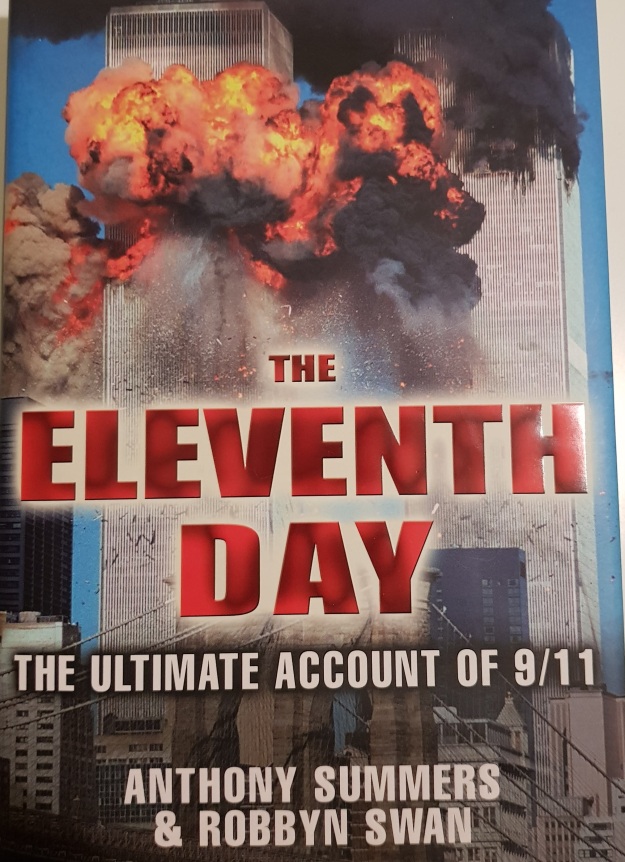
In less than a week, it will be the seventeenth anniversary of al-Qaeda’s “Plane’s Operation”, the assault on the United States. It is a vertiginous enough reflection that many of us have been alive more years since 11 September 2001 than before it, and positively alarming that many of those who will soon move into the government, media, and other leading societal institutions will have been born after an event that still shapes so much of the international scene. As Anthony Summers and Robbyn Swan put it in The Eleventh Day: The Ultimate Account of 9/11 (2011), we are left with “the brief name ‘9/11’,” the context and meaning stripped away all this time later. The book is a useful overview of an event that should always be to some degree fresh in mind, though it is not without its problems in its analytical sections. Continue reading

The Secular Foreign Fighters of the West in Syria

By Kyle Orton (@KyleWOrton) on 24 July 2018

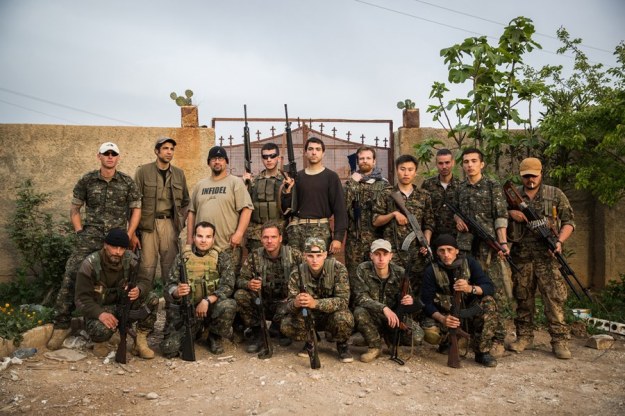
Foreign fighters with the YPG/PKK on the outskirts of Tal Tamr in northwestern Syria, 16 April 2015. UYGAR ÖNDER ŞİMŞEK / AFP / Getty Images

ABSTRACT: The Kurdistan Workers Party (PKK) operates under the names of the Democratic Union Party and the People’s Protection Units in Syria. The PKK is registered as a terrorist group by most Western governments, the European Union and Turkey, where it originated as a separatist organization. Nonetheless, the YPG has been the partner of the United States-led coalition in Syria against the ISIS. The strengthening of the YPG/PKK and its political messaging has brought in a flow of western foreign fighters. Some of these fighters are now returning to their homelands with indications that they are bringing security problems with them.

Article published in Insight Turkey.

The PKK and Terrorism in Europe

By Kyle Orton (@KyleWOrton) on 16 March 2018

Screenshot from video of a PKK attack on Turkish diplomats in Paris, France (13 March 2018)

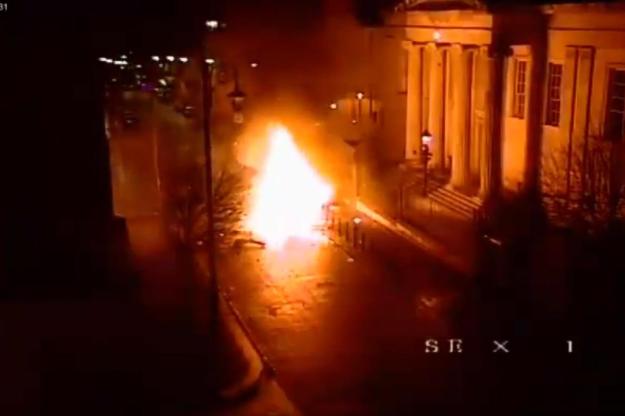
A wave of politically motivated violence has swept over Europe in the last few days, carried out by an extremist group and its sympathisers, accompanied by public statements threatening further attacks.

These attacks are intended to change western policy to one more suitable to the attackers.

The conventional term for this is “terrorism”.

These assailants are not Islamist, however; they are from the Kurdish PKK, and this seems to have both reduced the amount of attention this campaign has received, and to have dulled the reaction from some who suggest that perhaps the attackers have a point. Continue reading

Human Rights Abuses in Rojava and the Anti-ISIS War

By Kyle Orton (@KyleWOrton) on 3 March 2018

Guerrillas from the Sinjar Resistance Units (YBS), the name the Kurdistan Workers’ Party (PKK) uses in Sinjar, Iraq, together with operatives from the People’s Defence Forces (HPG), the armed units of the PKK inside Turkey, holding a picture of PKK leader Abdullah Ocalan. (image source)

The American-led Coalition’s partner against the Islamic State (IS) in Syria, the so-called Syrian Democratic Forces (SDF), presents itself, ideologically and in terms of the governance structure it controls, in universalistic liberal and democratic terms, emphasizing ecological and feminist themes. The reality is that the SDF is under the politico-military control of the Kurdistan Workers’ Party (PKK), a designated terrorist organization that has run a four-decade-long insurgency against Turkey. The PKK has brought some measure of stability to the areas it controls, but it continues to struggle for legitimacy and without locally-legitimate government IS and other jihadi-Salafists will find political room to operate. The PKK’s continued monopolization of power and abusive governance practices undermine the chances for the “Rojava” system to evolve into a long-term solution to the jihadist terrorists that have used Syrian territory to threaten the region and the wider world. Continue reading

Coping With America’s Syria Policy, Israel Tries To Draw its Own Red Line

Published at TRT World

By Kyle Orton (@KyleWOrton) on 13 February 2018

There was a serious escalation between Israel and Iran in Syria last week. This has been a long-time coming, an inevitable part of the contest for regional order that was obscured, and fuelled, by the narrow focus on the Islamic State (Daesh) and the war against its “caliphate”, particularly over the last year. Continue reading

Profile of a 9/11 Planner: Muhammad Atef

By Kyle Orton (@KyleWOrton) on 5 February 2018

Al-Qaeda’s military leader Muhammad Atef at a press conference in Afghanistan, 26 May 1998 (image source: CNN)

Muhammad Atef, best-known as Abu Hafs al-Masri, but who also went by the names Taseer Abdullah or Taysir Abdullah and Subhi Abu Sitta, was al-Qaeda’s military leader between 1996 and 2001, and one of the three people most responsible for the terrorist attack in the United States on 11 September 2001. Continue reading

Al-Qaeda’s First Military Emir

By Kyle Orton (@KyleWOrton) on 5 February 2018

Moments after the bombing of the U.S. Embassy in Kenya on 7 August 1998 (picture source: UPI)

Ali Amin al-Rashidi (Abu Ubayda al-Banshiri or Abu Ubayda al-Panjshiri) was the first head of al-Qaeda’s military committee until his death in an accident in 1996. Continue reading