Tag Archives: Soviet Union

Russia’s Unreliable Claims About the Islamic State

By Kyle Orton (@KyleWOrton) on 1 October 2017
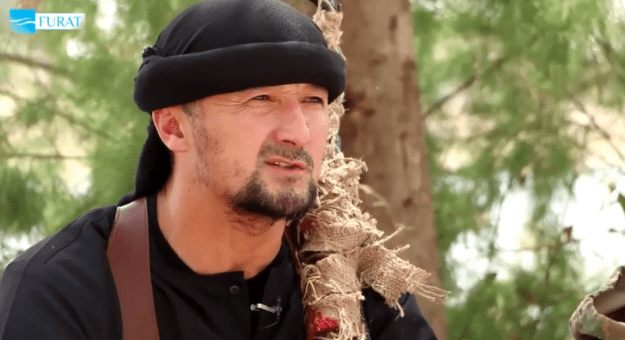
Gulmurod Khalimov

The Islamic State’s (IS) caliph, Ibrahim al-Badri (Abu Bakr al-Baghdadi), appeared on Thursday to deliver his first speech in nearly a year. Other than the contents of the speech, al-Badri’s re-appearance was confirmation that the claim by the Russian government, on 16 June, to have killed al-Badri and 330 other IS jihadists in a 28 May airstrike in Syria, was false.[1] This is far from the first mendacious claim Moscow has made on this topic.

On 8 September, the Russian Ministry of Defence claimed it had killed “four influential field commanders”, one of whom was Tarad al-Jarba (Abu Muhammad al-Shimali), and forty other IS jihadists, in an airstrike near Deir Ezzor city. Later in the day, the Russians claimed day that another of the four commanders was Gulmurod Khalimov (Abu Umar al-Tajiki), named by the U.S.-led coalition as IS’s War Minister. In fact, it is likely that Khalimov was already dead and that al-Jarba is still alive. Continue reading
The Role of Turkey in Syria

By Kyle Orton (@KyleWOrton) on 16 August 2017

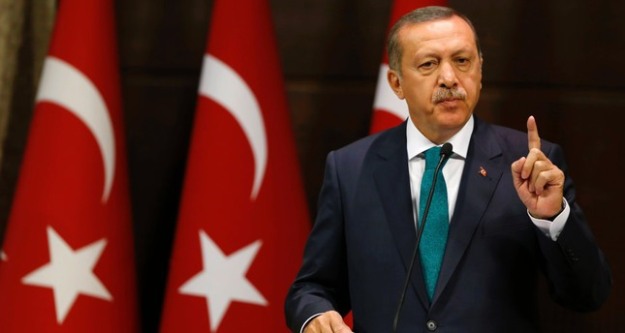
Recep Tayyip Erdogan (image source)

The Turkish government has gotten more and more deeply involved in Syria since the uprising began in 2011. But Turkey now finds its original aim, namely the overthrow of Bashar al-Assad’s regime, unattainable, creating tensions with the Syrian armed opposition, its primary lever inside Syria, and there are considerable problems stabilizing the zone of Syria that came under Turkish occupation after Ankara’s direct intervention in 2016. The defeat of Turkey’s primary objective has been accompanied by the rise of further problems, notably the exacerbation of its longest-standing internal security threat, that posed by the Kurdistan Workers’ Party (Partiya Karkerên Kurdistan – PKK), and the generation of new internal threats, from the Islamic State (IS) and potentially from al-Qaeda-linked groups. The options for solving these problems are constrained and unpalatable. Continue reading

PKK and Propaganda

By Kyle Orton (@KyleWOrton) on 29 April 2017

Ilham Ahmed

The West’s Syria policy is beginning to unravel of its own contradictions.

The Turkish government launched airstrikes against the positions of the Kurdistan Workers’ Party (PKK) in north-eastern Syria and the Sinjar area of north-western Iraq in the early hours of 25 April. There were international ramifications to this because the PKK in Syria, which operates politically under the name of the Democratic Union Party (PYD) and militarily as the People’s Defence Units (YPG), is the main partner of the U.S.-led Coalition against the Islamic State (IS). Turkey has protested the U.S. engaging the YPG/PKK so deeply and exclusively as its anti-IS partner, being displeased at the U.S.’s uncritical (public) stance toward the YPG, even after the YPG violated U.S.-brokered agreements on its operational theatres and used Russian airstrikes to attack Turkey- and CIA-backed rebels.

In response to Turkey’s anti-PKK operations this week, The Washington Post has hosted an op-ed by Ilham Ahmed, identified as “a co-president of the Democratic Council of Syria”. Continue reading

Russia and Iran Use Terrorism Against Western Interests

By Kyle Orton (@KyleWOrton) on 25 April 2017

The evidence is mounting that Vladimir Putin’s government supports the Taliban as a means of thwarting NATO interests in Afghanistan. Russia has long manipulated terrorists, internally and abroad, to suit its policy aims, but as Moscow solidifies its relationship with the Iranian revolution the Russian policy, particularly in Syria, has become something more like a conventional alliance—not least because those who run Tehran’s foreign policy and the clerical regime’s most powerful assets are themselves terrorists. Continue reading

The Assad Regime Admits to Manipulating the Islamic State

By Kyle Orton (@KyleWOrton) on January 6, 2017

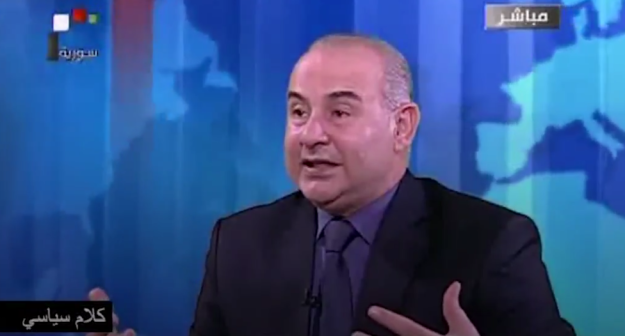
Khaled Abboud

From the beginning of the uprising in Syria in 2011, there have been accusations that Bashar al-Assad’s regime was in a de facto partnership with the Islamic State (IS) against the mainstream opposition. These accusations have a considerable basis in fact: during the entirety of the Anglo-American occupation of Iraq, Assad collaborated with IS jihadists in the destabilization of Iraq, killing thousands of Iraqi civilians and hundreds of American and British troops. Once the Syrian uprising was underway, the regime undertook various measures to bolster extremists in the insurgency. Assad and IS worked in tandem to leave Syria as a binary choice between themselves: Assad was sure this would rehabilitate him in the eyes of the world and transform his criminal regime into a partner of the international community in suppressing a terrorist insurgency, and IS wanted to rally Sunnis to its banner. The Secretary of the Syrian Parliament has now come forward to underline this. Continue reading

A Counterterrorism Policy in Syria That Helps Terrorists

Originally published at The Henry Jackson Society

By Kyle Orton (@KyleWOrton) on January 5, 2017

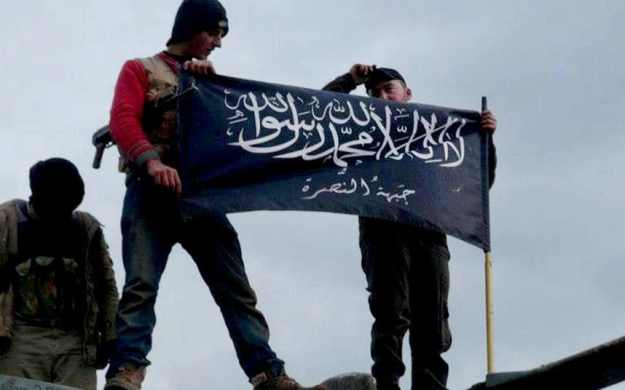
Jabhat al-Nusra jihadists wave their flag in Syria (Associated Press picture, source)

In the last week, the American-led Operation INHERENT RESOLVE, whose primary mission is to “degrade and ultimately destroy” the Islamic State (IS), has apparently conducted two airstrikes against senior members of Jabhat Fatah al-Sham (JFS), once known as Jabhat al-Nusra, al-Qaeda’s rebranded presence in Syria. In late 2016, the U.S. began an intensified targeting campaign against al-Qaeda and associated individuals; this appears to be a continuation of that policy, which provides some guidance about Western policy on Syria more broadly. Continue reading

Film Review: Snowden (2016)

By Kyle Orton (@KyleWOrton) on November 29, 2016

1

Snowden never, ever recovers from its premise: that Edward Snowden, a super-capable, pure-hearted all-American, found terrible government crimes against the American population while working at the National Security Agency, and was moved to disclose them to the world after being stymied in official channels.

Literally none of that is true. The Snowden revelations found mistakes that were generally cleared up by an efficient and functional bureaucratic oversight mechanism. Snowden did not try to go official channels in the way he described, and the bulk of what Snowden revealed was nothing to do with the privacy of Americans but was related to foreign intelligence, where the legal and practical situation is that everyone hoovers up as much data as they can. The capabilities of the Snowden presented here, personal and professional—to say nothing of Joseph Gordon-Levitt’s Snowden’s motives—would not withstand scrutiny for a single second against the actual historical record. This could be said fairly generally of the whole film. Continue reading

Fidel Castro: A Life Spent in the Service of Tyranny

By Kyle Orton (@KyleWOrton) on November 26, 2016

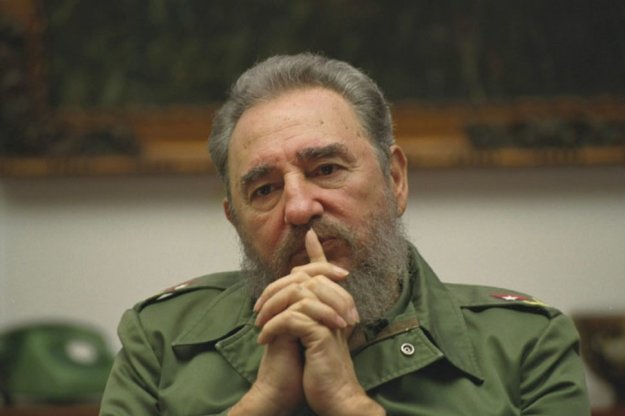
It is difficult to think of a dictator that has had more popular support in the West than Fidel Castro. The president of the European Commission Jean-Claude Juncker, Canadian Prime Minister Justin Trudeau, former U.S. President Jimmy Carter, and the Leader of the Labour Party Jeremy Corbyn have all today expressed their admiration in one way or another for Castro. This support was never just personal: any number of “revolutionary” governments could vicariously earn themselves similar leniency for their practices via some kind of identification with Castro. This was especially useful for the Soviet Union and its clients during the Cold War, but continued long after. That all of these “experiments” ended in bloodshed and disaster never seemed to matter, so long as the flame of anti-Americanism remained lit. Now, finally, Castro is at an end, even if his ruinous legacy is not. Continue reading

Turkey Continues to Protest the Coalition’s Syrian Kurdish Allies

By Kyle Orton (@KyleWOrton) on November 22, 2016

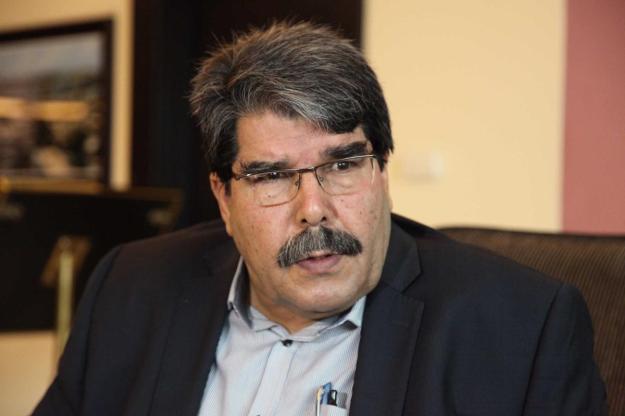
Saleh Muslim Muhammad

This morning, Turkey issued arrest warrants for forty-eight members of the Kurdistan Workers’ Party (PKK), which has fought a forty-year war against the Turkish state. The PKK is listed as terrorist by Ankara, Britain, the European Union, NATO, and the United States. Among those being sought is Saleh Muslim Muhammad, the leader of the Syrian branch of the PKK, known as the Democratic Union Party (PYD), whose armed wing—the People’s Protection Units (YPG)—happens to be the favoured Western instrument in combatting the Islamic State (IS) in Syria. The West has long denied or obfuscated the fact it is working with an organization that a NATO partner considers its nemesis and a long-standing threat to its national security. The Turks, it seems, are not content to let this ambiguity stand, and there are good reasons of Western self-interest why the alliance with the PKK deserves another look. Continue reading

An Ideological Founder of Islamic State is Killed in Syria

UPDATE: It has subsequently become clear that the “Abu Abdullah al-Muhajir” who was killed in Syria on 18 November 2016 was not Muhammad al-Saghir, who is profiled below. The slain man, like al-Saghir a veteran of the war get the Soviets out of Afghanistan and an Egyptian jihadist with close links to al-Qaeda, also used the kunya “Abu Afghan al-Muhajir”.

By Kyle Orton (@KyleWOrton) on November 20, 2016

Abu Abdallah al-Muhajir (source)

A week ago, it became clear that the air war being waged by the U.S.-led Coalition, which primarily targets the Islamic State (IS), was going to expand its campaign against the leadership of Jabhat Fatah al-Sham (JFS), al-Qaeda’s rebranded branch in Syria. In the evening of 18 November 2016, the Coalition killed Abu Abdullah al-Muhajir, whose real name is Muhammad Ibrahim al-Saghir. Al-Saghir also uses the name Abd al-Rahman al-Ali. This killing would appear to be part of the Coalition’s new effort.

Al-Saghir has a long record as an important jihadi religious ideologue, though his exact relationship with al-Qaeda’s network remains unclear. Al-Saghir’s most lasting contribution to jihadi-salafism is as a key guide to the founder of IS, Ahmad al-Khalayleh. Continue reading