Tag Archives: Soviet Union

Fidel Castro: A Life Spent in the Service of Tyranny

By Kyle Orton (@KyleWOrton) on November 26, 2016

It is difficult to think of a dictator that has had more popular support in the West than Fidel Castro. The president of the European Commission Jean-Claude Juncker, Canadian Prime Minister Justin Trudeau, former U.S. President Jimmy Carter, and the Leader of the Labour Party Jeremy Corbyn have all today expressed their admiration in one way or another for Castro. This support was never just personal: any number of “revolutionary” governments could vicariously earn themselves similar leniency for their practices via some kind of identification with Castro. This was especially useful for the Soviet Union and its clients during the Cold War, but continued long after. That all of these “experiments” ended in bloodshed and disaster never seemed to matter, so long as the flame of anti-Americanism remained lit. Now, finally, Castro is at an end, even if his ruinous legacy is not. Continue reading

Turkey Continues to Protest the Coalition’s Syrian Kurdish Allies

By Kyle Orton (@KyleWOrton) on November 22, 2016

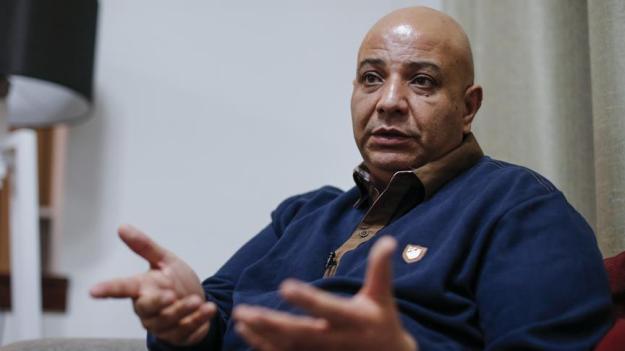
Saleh Muslim Muhammad

This morning, Turkey issued arrest warrants for forty-eight members of the Kurdistan Workers’ Party (PKK), which has fought a forty-year war against the Turkish state. The PKK is listed as terrorist by Ankara, Britain, the European Union, NATO, and the United States. Among those being sought is Saleh Muslim Muhammad, the leader of the Syrian branch of the PKK, known as the Democratic Union Party (PYD), whose armed wing—the People’s Protection Units (YPG)—happens to be the favoured Western instrument in combatting the Islamic State (IS) in Syria. The West has long denied or obfuscated the fact it is working with an organization that a NATO partner considers its nemesis and a long-standing threat to its national security. The Turks, it seems, are not content to let this ambiguity stand, and there are good reasons of Western self-interest why the alliance with the PKK deserves another look. Continue reading

An Ideological Founder of Islamic State is Killed in Syria

UPDATE: It has subsequently become clear that the “Abu Abdullah al-Muhajir” who was killed in Syria on 18 November 2016 was not Muhammad al-Saghir, who is profiled below. The slain man, like al-Saghir a veteran of the war get the Soviets out of Afghanistan and an Egyptian jihadist with close links to al-Qaeda, also used the kunya “Abu Afghan al-Muhajir”.

By Kyle Orton (@KyleWOrton) on November 20, 2016

Abu Abdallah al-Muhajir (source)

A week ago, it became clear that the air war being waged by the U.S.-led Coalition, which primarily targets the Islamic State (IS), was going to expand its campaign against the leadership of Jabhat Fatah al-Sham (JFS), al-Qaeda’s rebranded branch in Syria. In the evening of 18 November 2016, the Coalition killed Abu Abdullah al-Muhajir, whose real name is Muhammad Ibrahim al-Saghir. Al-Saghir also uses the name Abd al-Rahman al-Ali. This killing would appear to be part of the Coalition’s new effort.

Al-Saghir has a long record as an important jihadi religious ideologue, though his exact relationship with al-Qaeda’s network remains unclear. Al-Saghir’s most lasting contribution to jihadi-salafism is as a key guide to the founder of IS, Ahmad al-Khalayleh. Continue reading

Coalition Allies Play Into Islamic State’s Hands

By Kyle Orton (@KyleWOrton) on November 14, 2016

Kurdistan Workers’ Party (PKK) fighters in Dohuk in northern Iraq, 14 May 2013, Azad Lashkari/Reuters

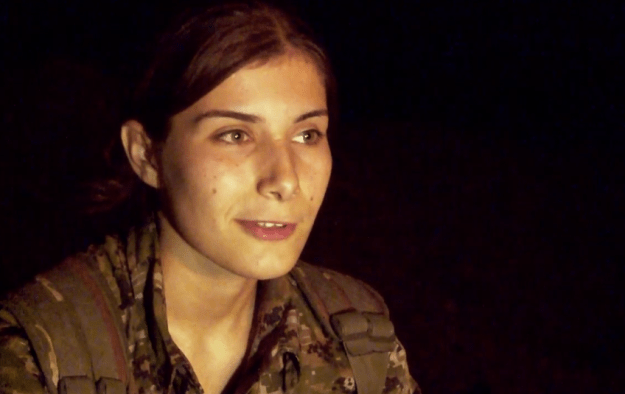
Last week, a member of the Kurdish militia that is the primary instrument the U.S.-led Coalition is using in Syria to defeat the Islamic State (IS) was killed. Examining his biography underlined that this militia is the Syrian wing of the Kurdistan Workers’ Party (PKK), a Marxist-separatist group that is registered as a terrorist organization by the United States, the European Union, and Turkey. The Western powers continue to obfuscate, if not outright deny, this fact, but Coalition support for the PKK—questionable morally and legally in and of itself—is producing negative results on the ground that help IS over the long-term. Continue reading

The Demise of Ahmad Mabruk: Al-Qaeda in Syria and American Policy

By Kyle Orton (@KyleWOrton) on October 4, 2016

Ahmad Mabruk in Jabhat al-Nusra's "Heirs of Glory" video, March 2016. (Source: The Long War Journal)

Ahmad Mabruk in Jabhat al-Nusra’s “Heirs of Glory” video, March 2016. (Source: The Long War Journal)

Ahmad Salama Mabruk (Abu Faraj al-Masri) was an al-Qaeda veteran, close to the organization’s leadership. The United States killed Mabruk in Syria on 3 October 2016 in a drone strike near Jisr al-Shughour in northern Syria. This is the second time in a month the U.S. has killed off a senior al-Qaeda jihadist, and sheds some light on the strength of the U.S. policy in Syria. Continue reading

Propaganda and the War Against Independent Media in Syria

By Kyle Orton (@KyleWOrton) on December 29, 2015

In the last month, the Islamic State (IS) has been waging a concerted campaign to shut down all independent sources of information emanating from its statelet. IS’s focus has been on Raqqa is Being Slaughtered Silently (RBSS), an activist group that began in April 2014 in IS’s de facto capital in northern Syria. RBSS has published information—including pictures and videos, much of it via Twitter—on the crimes of the “caliphate”. IS has now murdered at least five RBSS journalists and activists, two of them on foreign soil in Turkey, plus the father of one of RBSS’s founders. (The sixth case, also in Turkey, is more murky.) The suppression of independent media by IS is necessary to allow the group to maintain social control of the areas it rules and to sustain the narrative that it is building utopia on earth, which attracts in the foreign fighters that help IS maintain and expand its territory.
Continue reading

How Russia Manipulates Islamic Terrorism

By Kyle Orton (@KyleWOrton) on September 8, 2015

Shamil Basayev and Murad Margoshvili (a.k.a. Muslem al-Shishani)

Shamil Basayev and Murad Margoshvili (a.k.a. Muslem a-Shishani)

Last year I wrote about the murky role Russia was playing in the Syrian war, bolstering the Bashar al-Assad tyranny while facilitating the rise of the Islamic State (ISIS) and other Salafi-jihadists as a means of dividing and discrediting the Syrian opposition. This strategy and the associated tactics—infiltrating the insurgency, facilitating the arrival of al-Qaeda and other global jihadists to displace the nationalists, and in general driving the rebellion into the political dead-end of extremism and barbaric atrocities—has worked in other States where the intelligence services were trained by Moscow, and it worked internally to defeat the separatist movement in Chechnya. In Syria, Russia is reinforcing an old client regime, which has staked its life on the proposition that it is the last line of defence against a terrorist takeover and a genocide against the minorities, a policy now largely directed on-the-ground by Iran, to whom Assad surrendered sovereignty some time ago. New evidence has emerged to underline these points. Continue reading

Film Review: The Falcon and the Snowman (1985)

By Kyle Orton (@KyleWOrton) on August 25, 2015

1

In 1974, former Catholic seminary student Christopher Boyce (played by Timothy Hutton) takes a job at TRW, a Southern California aerospace firm, where he is read on to highly classified programs related to the then-new technology of satellites. Through a childhood friend, drug dealer, and minor smuggler, Andrew Daulton Lee (played by Sean Penn), Boyce begins selling secrets to Soviet intelligence based in the Embassy in Mexico.

Credit should be given for the graphics. While released in the mid-1980s, the clothing (and hair) is clearly of 1970s vintage. But the film’s narrative is direly flawed—both in what it does say and what it doesn’t.
Continue reading

Obituary: Robert Conquest

By Kyle Orton (@KyleWOrton) on August 5, 2015

1

Few men did more than the historian Robert Conquest to refute the lies of the Soviet Union, undermining its ideology and propaganda, therefore its appeal, and ultimately its regime. Indeed, at the final meeting of the Soviet Central Committee a Stalinist hack described Conquest as “anti-Sovietchik No. 1“; a compliment if ever there was one. Continue reading

Bernard Lewis and the Armenian Genocide Question

By Kyle Orton (@KyleWOrton) on June 7, 2015

In 2012, Bernard Lewis published his memoirs, Notes on a Century: Reflections of a Middle East Historian, which included a chapter on the court case brought against him in France in the 1990s for refusing to agree that the massacres of Armenians in the Ottoman Empire in 1915-16 constitute genocide in the original sense of the term, as applied to the Nazi Holocaust of European Jewry. The chapter is reproduced below.

Continue reading