By Kyle Orton (@KyleWOrton) on 17 August 2017
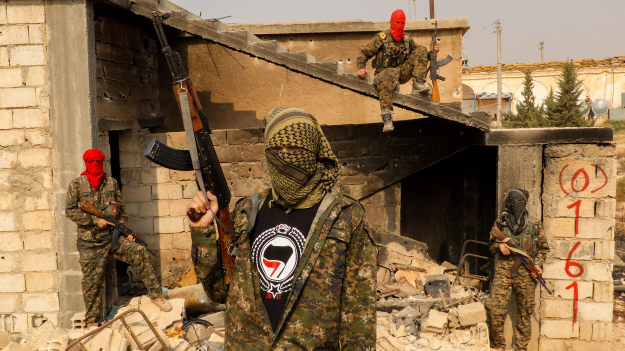
I released a report today, published by the Henry Jackson Society, The Forgotten Foreign Fighters: The PKK in Syria. Continue reading
By Kyle Orton (@KyleWOrton) on 17 August 2017
I released a report today, published by the Henry Jackson Society, The Forgotten Foreign Fighters: The PKK in Syria. Continue reading
By Kyle Orton (@KyleWOrton) on 16 August 2017
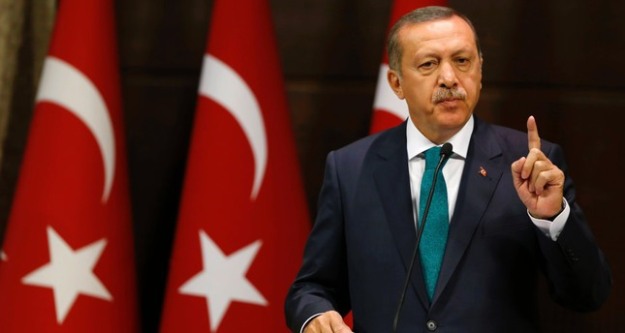
Recep Tayyip Erdogan (image source)
The Turkish government has gotten more and more deeply involved in Syria since the uprising began in 2011. But Turkey now finds its original aim, namely the overthrow of Bashar al-Assad’s regime, unattainable, creating tensions with the Syrian armed opposition, its primary lever inside Syria, and there are considerable problems stabilizing the zone of Syria that came under Turkish occupation after Ankara’s direct intervention in 2016. The defeat of Turkey’s primary objective has been accompanied by the rise of further problems, notably the exacerbation of its longest-standing internal security threat, that posed by the Kurdistan Workers’ Party (Partiya Karkerên Kurdistan – PKK), and the generation of new internal threats, from the Islamic State (IS) and potentially from al-Qaeda-linked groups. The options for solving these problems are constrained and unpalatable. Continue reading
By Kyle Orton (@KyleWOrton) on 15 August 2017
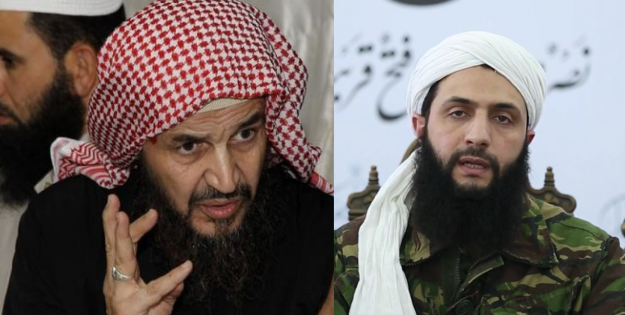
A statement from Issam al-Barqawi, far better known as Abu Muhammad al-Maqdisi, the Jordan-based Palestinian jihadi-salafist cleric, was released in English on Telegram on 15 August 2017. The statement dealt with his view of Hay’at Tahrir al-Sham (HTS), highlighting again the questions around this Syrian-based jihadi group and its relations with al-Qaeda. Continue reading
By Kyle Orton (@KyleWOrton) on 5 August 2017
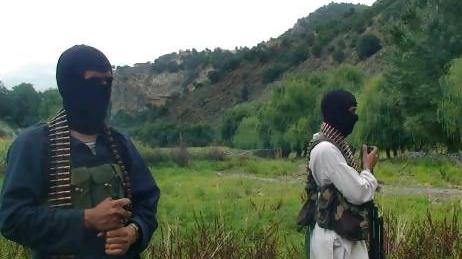
Taliban jihadists (image source)
The New York Times reported on the growing closeness of relations between the governments in Iran and Russia, and the Taliban movement in Afghanistan, something that became especially salient earlier this year and which has been visible for at least two years. Continue reading
By Kyle Orton (@KyleWOrton) on 4 August 2017
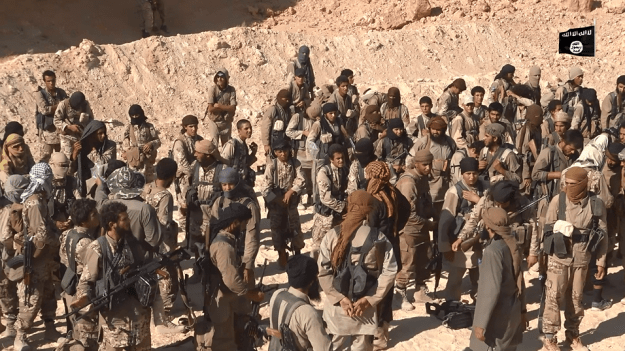
The Coalition announced yesterday that it had killed eight Islamic State (IS) “leaders involved in directing external operations, as well as bomb-making, directed at regional and Western targets”. Continue reading
By Kyle Orton (@KyleWOrton) on 31 July 2017

Earlier this month, it was announced that an LGBT military unit had been formed to fight the Islamic State (IS) in its Syrian “capital”, Raqqa city. There does appear to be such a unit in existence, though it is militarily inconsequential and likely has fewer than a dozen members, all of them foreign. The unit’s primary intention was to bolster the ongoing media-political campaign of the Kurdistan Workers’ Party (PKK), which is selling itself to Western audiences as a “progressive” ideological ally in the Middle East. This is the latest chapter in a conflict where the significance of the media war has few precedents. Continue reading
By Kyle Orton (@KyleWOrton) on 29 July 2017
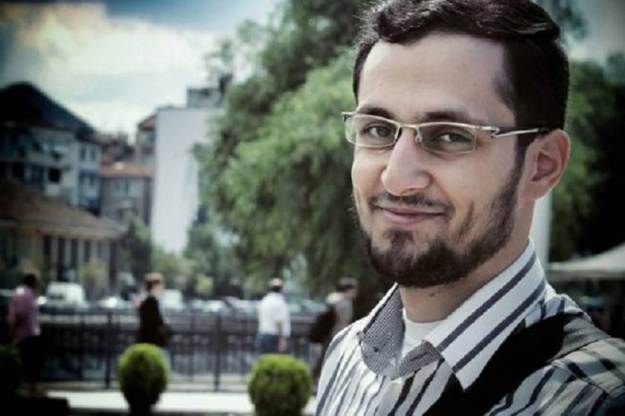
Baraa Kadek (Riyan Meshal) [image source]
By Kyle Orton (@KyleWOrton) on 28 July 2017
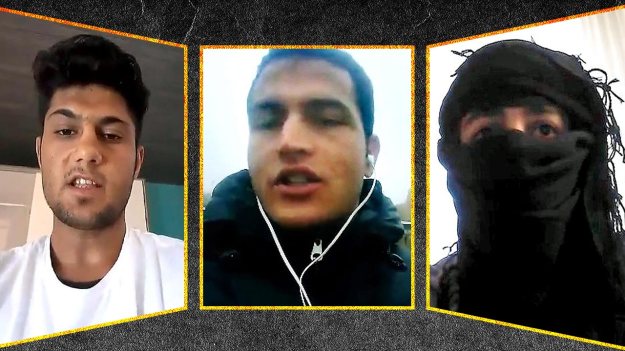
Screenshots from the bay’a-martyrdom videos of: Riaz Khan Ahmadzai (Muhammad Riyad), Anis Amri, Mohammad Daleel (source)
The Islamic State (IS) has escalated a campaign of global terrorism over the past few years, exactly as it was losing overt control of territory. In 2016, IS consolidated a model of guiding and claiming attacks in the West and elsewhere via is media channel, Amaq. The outlines of this have long been known. Now there is significant new detail thanks to a four part reporting series in the German newspaper BILD by Björn Stritzel, who contacted Amaq and posed over many months—in consultation with Germany security agencies—as a potential terrorist. Continue reading
By Kyle Orton (@KyleWOrton) on 12 July 2017
In Syria, the West has been keen not to repeat the mistakes of Iraq—defined as being drawn into an open-ended ‘war of choice’ in the Middle East. This insight led to watching with folded arms as the regime of Bashar al-Assad massacred peaceful protesters and depopulated ancient cities with fighter jets and poison gas, an exodus that spread instability into Europe and allowed menacing strategic adversaries like Iran and Russia to gain footholds that Western policy had heretofore denied them. Continue reading
Originally published at The Henry Jackson Society
By Kyle Orton (@KyleWOrton) on 9 July 2017
Syrian Democratic Forces (SDF) logo
The offensive to expel the Islamic State (IS) from its primary urban stronghold in Syria, Raqqa city, began on 6 November 2016 with shaping operations and commenced in earnest on 6 June 2017. Backed by the U.S.-led Coalition, the operation, known as EUPHRATES WRATH, is being carried out on the ground by the Syrian Democratic Forces (SDF) or Quwwat Suriya al-Dimoqratiyya (QSD). The SDF is formally a coalition of Kurds and Arabs—its announcement of the Raqqa operation named eighteen distinct sub-units. But the predominant force within the SDF is the Kurdistan Workers Party (PKK), and the Arab SDF play a “secondary role of maintaining local security,” which is to say providing an acceptable face for the PKK’s administration in the Arab-majority areas it has captured. Examining the SDF’s composition, and the recent marginalization of Arab SDF groups, underscores the point. Continue reading

