Tag Archives: terrorism

Defining Freedom Fighters and Terrorists in Syria (and Beyond)

By Kyle Orton (@KyleWOrton) on 21 November 2017

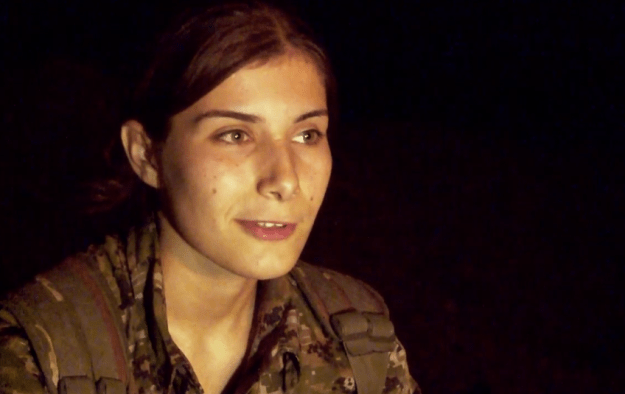
Zozan Temir (Zozan Cudi) in ‘No Free Steps to Heaven’

Yesterday, it was announced that a 15 November Turkish government airstrike in the mountains of the Sirnak area in southeastern Turkey, near the zone where the borders of Turkey, Syria, and Iraq meet, had killed twelve guerrillas from the Kurdistan Workers’ Party (PKK). Given that the PKK has waged war against Turkey since 1984, and the state has obviously fought back, such events are distressingly mundane. But this event was exceptional because among the slain was a female foreign fighter, Zozan Temir. Continue reading

Iran Escalates its Subversive Activities in Bahrain

Post originally appeared at The Henry Jackson Society

By Kyle Orton (@KyleWOrton) on 19 November 2017

Fire at the oil pipeline in Buri village, south of Manama, Bahrain, 10 Nov. 2017. REUTERS/Hamad I Mohammed

Just over a week ago, the major oil pipeline in Bahrain was bombed by operatives the government says were working for the Islamic Republic of Iran. This is the latest in an escalating series of terrorist attacks inside Bahrain. Throughout the year, Manama has also been rolling up terrorist cells that have links to Iran’s intelligence services and Bahraini citizens now in Iran that form part of Tehran’s regional terrorist network. The breakdown in Gulf unity is especially worrying in the face of this intensified Iranian aggression and subversion in Bahrain. Continue reading

A Defection and the Dictatorship in Syrian Kurdistan

By Kyle Orton (@KyleWOrton) on 17 November 2017

Talal Silo

It was announced on 15 November that Talal Ali Silo, the official spokesman of the Syrian Democratic Forces (SDF), had fled to the EUPHRATES SHIELD zone in northern Aleppo, run by rebels operating under the Free Syrian Army (FSA) brand that are dependent on Turkey. The SDF is the partner force in Syria for the U.S.-led Coalition against the Islamic State (IS). Though the SDF presents itself as a multi-ethnic coalition of Kurds and Arabs, it was initiated as a front for the Kurdistan Workers’ Party (PKK). By attaching non-Kurdish units to a PKK core and using the SDF banner, it circumvented various legal and political obstacles for Coalition states. But all real power has remained in the hands of the PKK, which has systematically purged all genuinely independent power centres within the SDF. Silo, a Turkoman, helped further the narrative of the SDF’s ethnic inclusivity, and his defection underlines the reality of the organization’s political exclusivity. Continue reading

Islamic State Officially Gives Up the Caliphate, Returns to Insurgency

By Kyle Orton (@KyleWOrton) on 15 November 2017

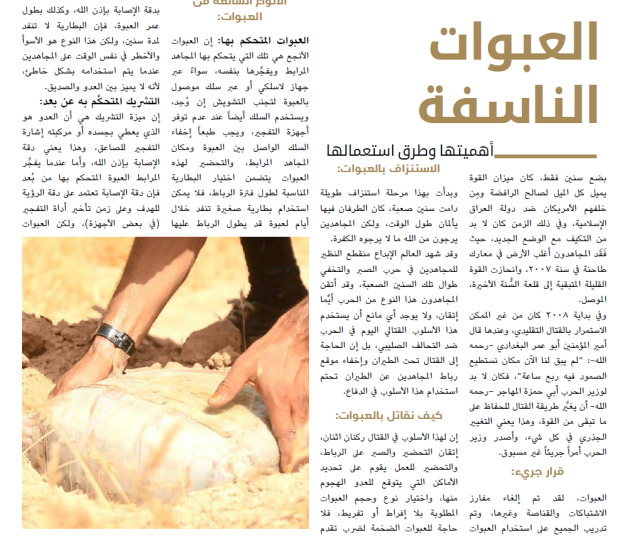
Al-Naba 101, page 8

In the 101st edition of the Islamic State’s weekly newsletter al-Naba (page 8-9), released on 12 October 2017, the organisation gave some fascinating details about how they responded to the “defeat” inflicted on them in 2007-08 by the American surge and the tribal Sahwa (Awakening) forces. The article describes how IS switched wholly to insurgent-terrorist tactics, dismantling its conventional fighting units and even its sniper teams in March 2008, and training in hit-and-run bombings. The leadership at that time, the emir Hamid al-Zawi (Abu Umar al-Baghdadi) and his deputy, the “first minister” and the “war minister” Abdul Munim al-Badawi (Abu Hamza al-Muhajir), encountered some initial scepticism, but the rank-and-file soon came on board when they saw its effectiveness. IS says that it is time to return to this form of warfare. In short, IS marked a switch in al-Naba 101 entirely from the statehood and governance phase of its revolutionary warfare, back into insurgency mode. The article is reproduced below. Continue reading

The Coalition Removes Senior Islamic State Leaders, Military Officials, and External Terror Operatives

By Kyle Orton (@KyleWOrton) on 15 November 2017

The United States Department of Defence announced on 14 November that four more important operatives of the Islamic State (IS) had been killed in targeted airstrikes by the U.S.-led anti-IS Coalition. “The removal of these key terrorists disrupts ISIS’ weapons engineering activities and their ability to recruit and train terrorists,” the Pentagon said in a statement. “It also reduces their ability to plan and conduct terrorist attacks, both within Syria and Iraq and abroad.” Continue reading

Hamza bin Ladin Presents Al-Qaeda As the Guardian of Revolution

By Kyle Orton (@KyleWOrton) on 9 November 2017

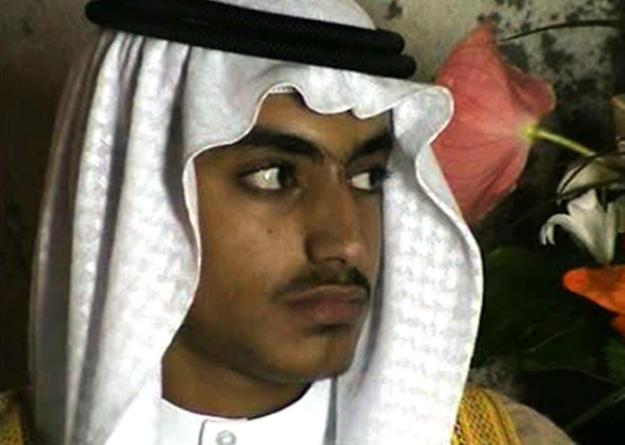
Hamza bin Ladin on his wedding day in Tehran, under the protection of the Quds Force, the expeditionary unit of the Islamic Revolutionary Guard Corps that attempts to spread the Iranian revolution through subversion and terrorism

Hamza bin Ladin, whose profile is being deliberately raised within al-Qaeda, released a speech on 7 November 2017, “The Fighter Against Invaders And The Inciter of Rebellion Against Tyrants”, an English transcript of which was produced by As-Sahab Media, and is reproduced below. Continue reading

Islamic State and Female Fighters

By Kyle Orton (@KyleWOrton) on 8 November 2017

The Khansaa Brigade, the all-female Islamic State espionage network and morality enforcement police, based in Raqqa city (image source)

A debate has been ongoing among analysts since the summer about the view the Islamic State (IS) has of mujahidat (female fighters). IS now seems to have settled the matter in its newsletter, Al-Naba. Continue reading

The Islamic State Claims the Manhattan Terror Attack

By Kyle Orton (@KyleWOrton) on 3 November 2017

The Islamic State’s claim for the 31 Oct. 2017 Manhattan terror attack is on the right. (Al-Naba 140, 2 Nov. 2017, page 3.)

The Islamic State released the 140th edition of its newsletter, Al-Naba, on 2 November 2017, which contained an article claiming that the perpetrator of the vehicular ramming terrorist attack in New York city on Halloween night, Sayfullo Saipov, an Uzbek immigrant to the United States, was one of the caliphate’s “soldiers”. The Islamic State also repeated its much-contested claim that Stephen Paddock, whom it refers to as “Abu Abd al-Bir al-Amriki”, was motivated by its call when carrying out the massacre at the concert in Las Vegas on 1 October. The article is reproduced below.
Continue reading

The Syrian Regime’s Funding of the Islamic State

By Kyle Orton (@KyleWOrton) on 28 October 2017

Bashar al-Assad, Hussam al-Katerji, Ibrahim al-Badri (Abu Bakr al-Baghdadi)

Reuters reported on 11 October that Hussam al-Katerji, a member of Bashar al-Asad’s Syrian regime, has been engaged in trading wheat with the Islamic State (IS), helping supply the terrorists with resources to run their statelet and threaten the security of Syria’s neighbours and the wider world. This pattern of behaviour from the Asad regime—holding itself out as a counterterrorism partner, while it bolsters terrorist organizations—is well-established, and has its origins in the regime’s survival strategy: to destroy all acceptable opposition forces and make the Syrian war a binary contest between the dictatorship and terrorists. Continue reading

The Islamic State Planned For Sectarian War in Iraq From the Beginning

By Kyle Orton (@KyleWOrton) on 13 October 2017

The Iraqi Kurdish authorities arrested Mustafa Haji Muhammad Khan (Hassan Ghul) on 23 January 2004. Khan had been dispatched to Iraq by Nashwan Abd al-Baqi (Abd al-Hadi al-Iraqi), one of the key military officials of al-Qaeda “central” (AQC), to function as AQC’s intermediary with Ahmad al-Khalayleh (Abu Musab al-Zarqawi), the founder of the Islamic State movement. Khan replaced Abdallah al-Kurdi, the first envoy sent by Abd al-Baqi. Al-Kurdi had failed to establish any footing to do his job effectively, but Khan, a battle-hardened jihadist from Baluchistan, earned a measure of respect from al-Khalayleh and facilitated a productive conversation between AQC and al-Khalayleh. Al-Khalayleh, possessed of a pathological anti-Shi’ism, wrote a seventeen-page memo to Usama bin Laden explaining his strategy to defeat the Americans by starting a total war between the sects in Iraq. That memo, in digital form, was given to Khan, and Khan had it in his possession when he was captured. A translation of the letter is given below with some interesting sections highlighted in bold.[1] Continue reading