By Kyle Orton (@KyleWOrton) on 17 August 2017

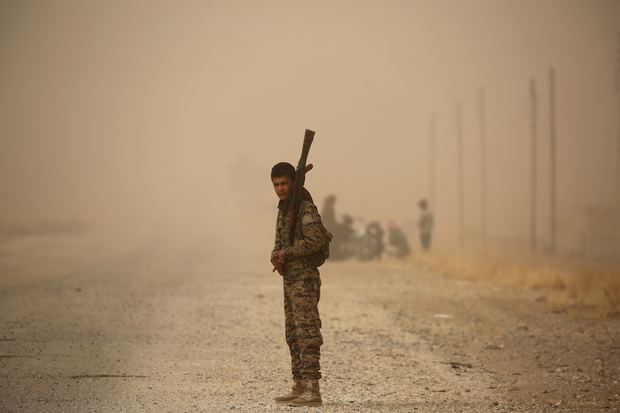
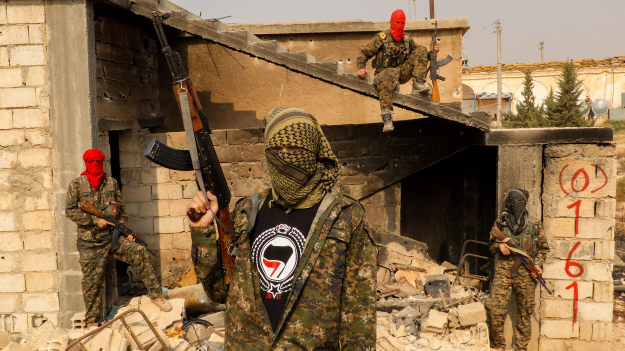
I released a report today, published by the Henry Jackson Society, The Forgotten Foreign Fighters: The PKK in Syria. Continue reading
By Kyle Orton (@KyleWOrton) on 17 August 2017

I released a report today, published by the Henry Jackson Society, The Forgotten Foreign Fighters: The PKK in Syria. Continue reading
By Kyle Orton (@KyleWOrton) on 16 August 2017

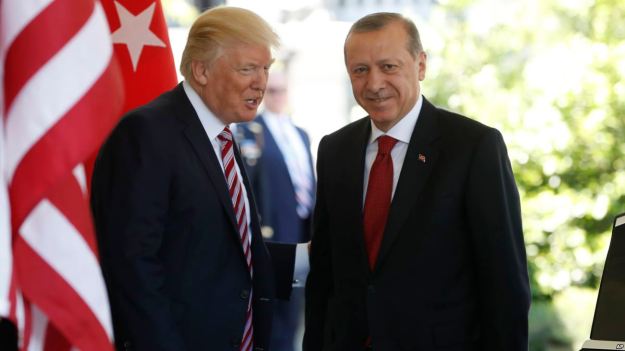
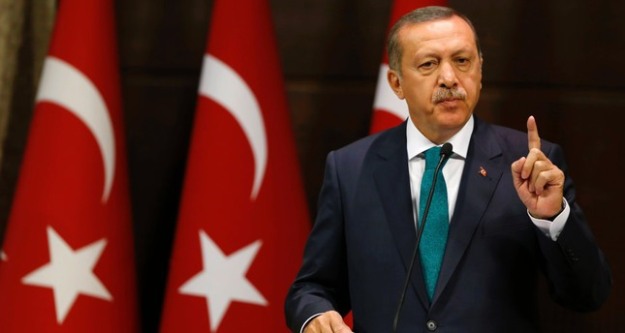
Recep Tayyip Erdogan (image source)
The Turkish government has gotten more and more deeply involved in Syria since the uprising began in 2011. But Turkey now finds its original aim, namely the overthrow of Bashar al-Assad’s regime, unattainable, creating tensions with the Syrian armed opposition, its primary lever inside Syria, and there are considerable problems stabilizing the zone of Syria that came under Turkish occupation after Ankara’s direct intervention in 2016. The defeat of Turkey’s primary objective has been accompanied by the rise of further problems, notably the exacerbation of its longest-standing internal security threat, that posed by the Kurdistan Workers’ Party (Partiya Karkerên Kurdistan – PKK), and the generation of new internal threats, from the Islamic State (IS) and potentially from al-Qaeda-linked groups. The options for solving these problems are constrained and unpalatable. Continue reading
By Kyle Orton (@KyleWOrton) on 15 August 2017

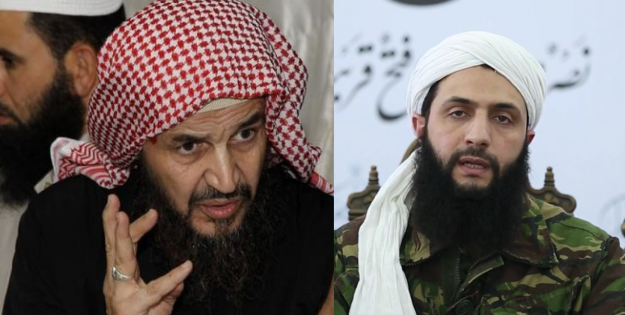
A statement from Issam al-Barqawi, far better known as Abu Muhammad al-Maqdisi, the Jordan-based Palestinian jihadi-salafist cleric, was released in English on Telegram on 15 August 2017. The statement dealt with his view of Hay’at Tahrir al-Sham (HTS), highlighting again the questions around this Syrian-based jihadi group and its relations with al-Qaeda. Continue reading
By Kyle Orton (@KyleWOrton) on 31 July 2017

Earlier this month, it was announced that an LGBT military unit had been formed to fight the Islamic State (IS) in its Syrian “capital”, Raqqa city. There does appear to be such a unit in existence, though it is militarily inconsequential and likely has fewer than a dozen members, all of them foreign. The unit’s primary intention was to bolster the ongoing media-political campaign of the Kurdistan Workers’ Party (PKK), which is selling itself to Western audiences as a “progressive” ideological ally in the Middle East. This is the latest chapter in a conflict where the significance of the media war has few precedents. Continue reading
By Kyle Orton (@KyleWOrton) on 7 July 2017

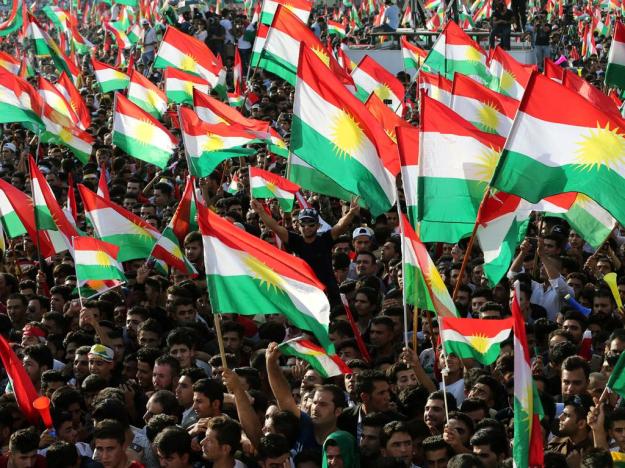
Announcement of the Kurdish Salvation Movement, 12 March 2017
As the operation proceeds to expel the Islamic State (IS) from its last major Syrian urban stronghold, Raqqa city, a statement was published on 5 July by a number of clerics, which points to the danger that the Coalition campaign, by partnering exclusively with Kurdish forces, is preparing conditions that will allow other Islamists to fill the vacuum after IS loses overt control of eastern Syria.
Continue reading
By Kyle Orton (@KyleWOrton) on 30 June 2017

Abdirahman Sheik Mohamud (source)
In April 2015, a United State Federal Grand jury in Ohio charged Abdirahman Sheik Mohamud, also known as “Ayanle”, with three terrorism-related offences. Yesterday, court records were unsealed that revealed that Mohamud pleaded guilty to all charges, admitting to having fought with a terrorist organization in Syria and returned to the United States with the intention of carrying out an act of domestic terrorism. Mohamud was in contact with foreign terrorist operatives throughout the period he was plotting an attack within the United States. But—and this is the most significant aspect of the case—Mohamud was not in contact with one of the Islamic State’s intelligence operatives, who guide attacks in a manner now relatively well-understood. Instead, Mohamud was in contact with Jabhat al-Nusra, at that time al-Qaeda’s declared branch in Syria. Al-Nusra is now known as Hay’at Tahrir al-Sham (HTS) and claimed in July 2016 to have disaffiliated from al-Qaeda’s “central”, not that this has (nor will nor should) remove HTS from the terrorism list. Regardless of its formal status within al-Qaeda’s command structure, HTS retains significant links with al-Qaeda’s global networks, and a breakaway group from HTS in Syria has reaffirmed its loyalty to al-Qaeda. Mohamud’s case is an extremely important data point in assessing the risk these overlapping and mutually reinforcing entities pose to the West and the wider world. Continue reading
Originally published at The Henry Jackson Society
By Kyle Orton (@KyleWOrton) on 8 June 2017

Aftermath of a TAK bombing in central Istanbul, Turkey, 7 June 2016
The Kurdistan Freedom Falcons (TAK) issued a threat against Turkey on Tuesday, at the very moment the U.S.-led Coalition was announcing the commencement of the operation to evict the Islamic State (IS) from its Syrian capital, Raqqa, in alliance with the TAK’s mother organization, the Kurdistan Workers’ Party (PKK). This underlines some of the challenges confronting the Coalition as a result of a half-decade of short-sighted counter-terrorism policy in Syria and a regional posture that tilted away from traditional allies. Continue reading
By Kyle Orton (@KyleWOrton) on 30 May 2017

Map of the tribes around Raqqa city (source: WINEP report)
We are now on the eve of the operation to evict the Islamic State (IS) from its Syrian capital, Raqqa, and, as expected, the United States will partner with the Syrian Democratic Forces (SDF), the front-group for the Democratic Union Party (PYD) and its armed wing, the People’s Protection Units (YPG), which President Donald Trump’s administration has committed to directly arming.
Many of the doubts voiced about this course relate to Turkey, since the PYD/YPG is—despite continued efforts to obfuscate the fact—the Syrian department of the Kurdistan Workers’ Party (PKK), the premier internal security threat to Turkey for many decades. The discussion then tends to fall into one of two grooves. Continue reading
This article was published at BICOM
By Kyle Orton (@KyleWOrton) on 16 May 2017

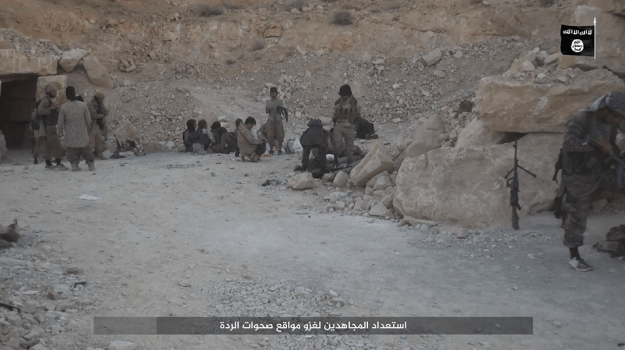
Within the next month, the Islamic State (IS) will likely lose its grip on its Iraqi capital, Mosul, and the operation to drive it from its Syrian capital, Raqqa, will begin. The destruction of IS’s caliphate, however, is not even close to the end of the road for the movement, not least because of the manner in which it is being accomplished.
At its core the IS movement is waging a revolutionary war, and as Craig Whiteside, a fellow with The International Centre for Counter-Terrorism has explained, this means that the focus is on legitimacy. Military victories come and go but if IS is, over the long-term, gaining acceptance—whether from support, resignation, or fear—among the population it hopes to govern (the Sunni Arabs), then it is winning. It is for this reason that IS tries to embed political victories within its military defeats. Continue reading
By Kyle Orton (@KyleWOrton) on 12 May 2017

Fasla Yusef, Syrian Kurdish opposition leader
The Kurdistan Workers’ Party (PKK) controls areas of northern Syria, operating under the name of the Democratic Union Party or PYD (its political wing) and the People’s Protection Units or YPG (its military wing). On Tuesday, President Donald Trump approved plans to arm the YPG directly, abandoning a fiction that the U.S. was only arming the Arab parts of an ostensible coalition, the Syrian Democratic Forces (SDF), which is in fact controlled by the YPG/PKK. This is in preparation for the U.S. backing the “SDF” to liberate Raqqa City, the Syrian capital of the Islamic State’s (IS) caliphate. Leaving aside the geopolitical implications of the U.S. decision for NATO and regional order, and putting aside, too, the likelihood that this decision will defeat its own purposes and give IS a new lease on life, there is a purely humanitarian dimension that deserves more attention. In March the PYD effectively legalized its one-party state in northern Syria and escalated its already-severe persecution of the Kurdish opposition. That crackdown has continued. Continue reading