By Kyle Orton (@KyleWOrton) on 22 July 2019

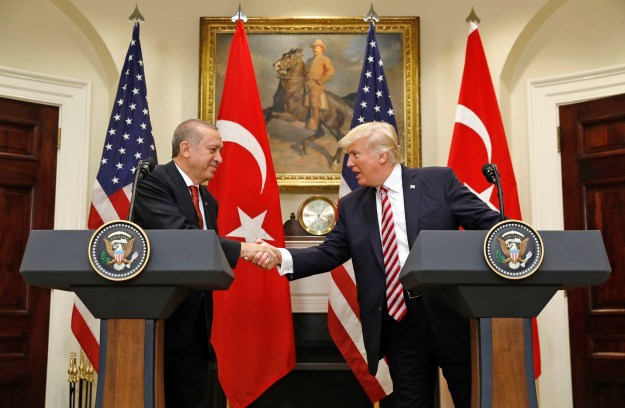
U.S. President Donald Trump and Turkey’s President Recep Tayyip Erdogan meeting during the G20 leaders summit in Osaka, Japan, 29 June 2019 [image source]
By Kyle Orton (@KyleWOrton) on 22 July 2019
U.S. President Donald Trump and Turkey’s President Recep Tayyip Erdogan meeting during the G20 leaders summit in Osaka, Japan, 29 June 2019 [image source]
By Kyle Orton (@KyleWOrton) on 20 July 2019
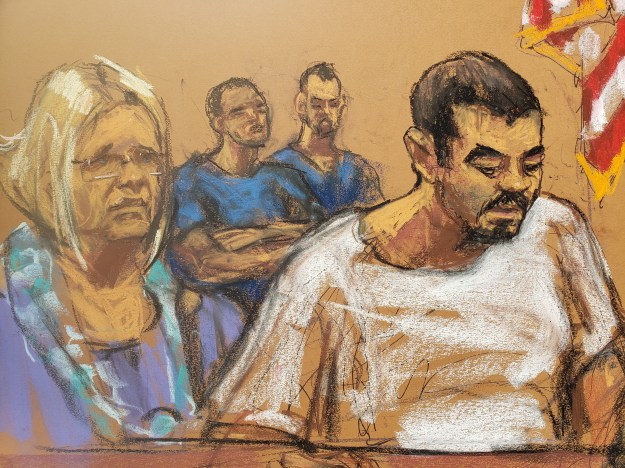
Sketch of Ruslan Asainov // Image credit: Jane Rosenberg/Reuters
In the Eastern District of New York, on 19 July, a criminal complaint was unsealed against Ruslan Maratovich Asainov, described in the press release as a “naturalized U.S. citizen born in Kazakhstan”. According to the release, Asainov is to be charged with providing and attempting to provide “material support, including training, services, and personnel” to a terrorist group, namely the Islamic State (IS), which he joined in 2013 and rose through the ranks to become an emir. Asainov was captured by the “Syrian Democratic Forces” (SDF), the Coalition’s anti-IS Kurdish partner force, and handed over to the FBI, before being returned to America this month. The maximum penalty for these charges is twenty years imprisonment, and it is likely the U.S. government will be seeking additional charges in the indictment. The case raises an interesting question over the gaps in knowledge about IS. Continue reading
By Kyle Orton (@KyleWOrton) on 15 June 2019
The Arab inhabitants of eastern Syria have once again turned out in protest against the Syrian Democratic Forces (SDF), the Western partner force in the campaign against the Islamic State (IS). The rejection of the SDF’s rule in the area has its roots in political dynamics that were entirely foreseeable. Continue readingBy Kyle Orton (@KyleWOrton) on 10 May 2019
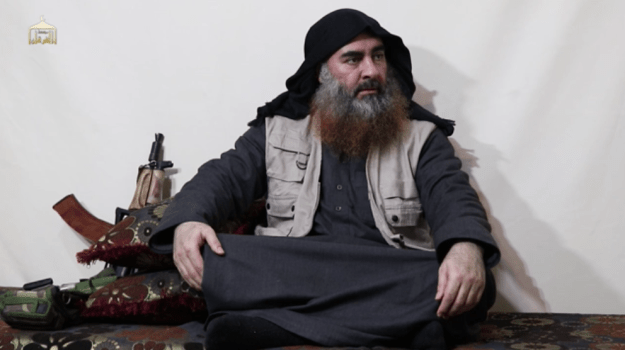
The leader of the Islamic State, Ibrahim al-Badri (Abu Bakr al-Baghdadi) appearing in an Islamic State propaganda video, “In the Hospitality of Amir al-Mu’mineen, 29 April 2019
The leader of the Islamic State (IS), Ibrahim al-Badri (Abu Bakr al-Baghdadi), appeared in an eighteen-minute video on 29 April, the first time Al-Ibrahim has appeared since 4 July 2014 when he gave the Friday prayer at the Nuri Mosque in Mosul, days after IS had announced the restoration of the caliphate. Al-Ibrahim has given semi-regular speeches over the years, but with these two exceptions they have been audio addresses. The video was released by IS’s premier media outlet, Al-Furqan Media Foundation, which is also the group’s oldest media platform. An English translation was released by IS’s Halummu outlet and is republished below with some interesting and/or important sections, plus names of IS operatives, highlighted in bold. Continue reading
By Kyle Orton (@KyleWOrton) on 29 April 2019
This article was originally published at European Eye on Radicalization
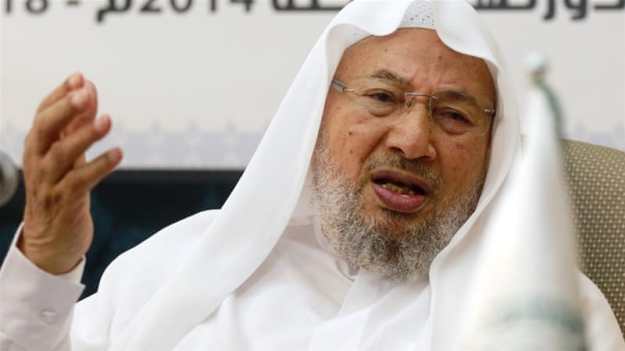
In the wake of the horrific bombings by the Islamic State (ISIS) in Sri Lanka on Eastern Sunday, which killed 250 people, an image has circulated purporting to show a terrorist connected to the attack in the company of the Qatar-based cleric of the Muslim Brotherhood, Yusuf al-Qaradawi. In fact, the image shows no such thing. But Al-Qaradawi’s influence in creating the ideology that motivates Islamist terrorists cannot be doubted. Continue reading
This article was originally published at European Eye on Radicalisation
By Kyle Orton (@KyleWOrton) on 16 April 2019

Ahmad al-Shara (Abu Muhammad al-Jolani) [image source]
Several years ago, Al-Qaeda made a strategic decision to refrain from foreign terrorist operations, refocusing away from these global spectaculars towards integrating more closely into local conflicts. The 2014 rampage across Iraq and Syria by Al-Qaeda’s rebellious former Iraqi branch, the Islamic State (ISIS), provided both the opportunity and additional incentive for a long-mediated rebranding effort. However, there have recently been signs of a shift back towards external terror operations, just as ISIS undergoes a setback and Al-Qaeda has a chance to reassert its dominance over the jihadi scene. Continue reading
By Kyle Orton (@KyleWOrton) on 9 April 2019

As the regime of Bashar Assad appears to be consolidating in Syria, many Israelis have concluded that their government’s handling of the crisis was generally laudable.
The most comprehensive statement of this view was given recently in Haaretz by Anshel Pfeffer (Netanyahu Outfoxed Russia, Iran and ISIS With His Cynical, Ruthless Syria Policy.) Every aspect of this is open to question. Continue reading
By Kyle Orton (@KyleWOrton) on 20 March 2019
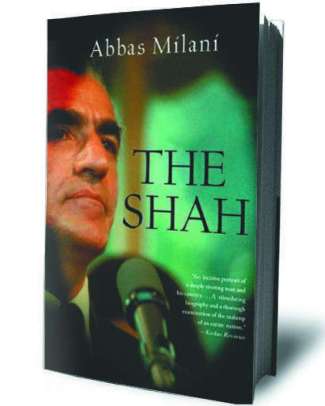
Abbas Milani’s The Shah gives a portrait of Iran’s last monarch, Muhammad Reza Pahlavi, and the impact that his downfall forty years ago continues to have in the Middle East, notably the emboldening of the Islamist movement. Continue reading
This article was published at Ahval
By Kyle Orton (@KyleWOrton) on 12 March 2019
The wheel turns again. After U.S. President Donald Trump announced the withdrawal of U.S. forces from Syria in December, it seemed rapprochement with Turkey was on the cards. Now that looks less likely. Continue readingBy Kyle Orton (@KyleWOrton) on 10 March 2019
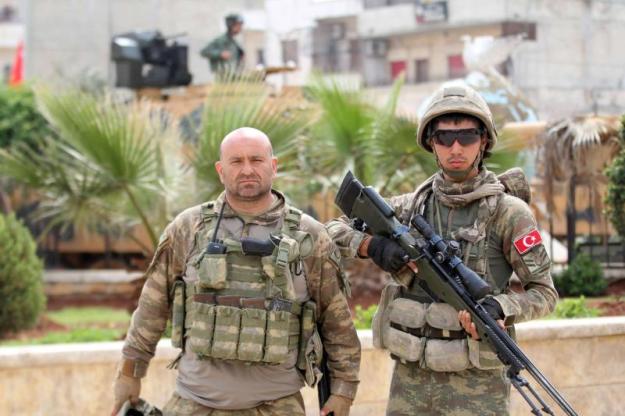
Turkish soldiers in Efrin, Syria, March 2018. (AFP)
Eight years ago, peaceful protests began against Syrian President Bashar Assad. Since then, outside powers — the Iran-Russia axis, the United States and Turkey — have become dominant in Syria.
The Iranians and Russians keeping Assad’s regime alive are clearly going nowhere. The Americans’ indecision on the point is apparently final. So, what of Turkey, which is the custodian of the remnants of the armed opposition? Continue reading
 Kyle Orton's Blog