By Kyle Orton (@KyleWOrton) on 29 July 2017
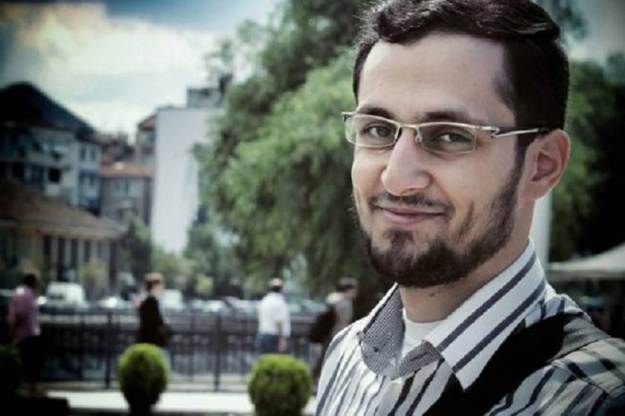
Baraa Kadek (Riyan Meshal) [image source]
By Kyle Orton (@KyleWOrton) on 29 July 2017
Baraa Kadek (Riyan Meshal) [image source]
By Kyle Orton (@KyleWOrton) on 28 July 2017
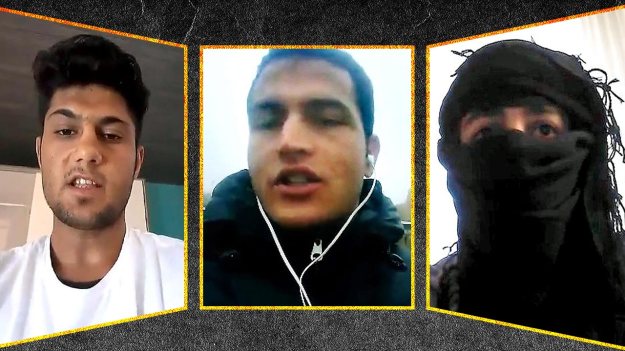
Screenshots from the bay’a-martyrdom videos of: Riaz Khan Ahmadzai (Muhammad Riyad), Anis Amri, Mohammad Daleel (source)
The Islamic State (IS) has escalated a campaign of global terrorism over the past few years, exactly as it was losing overt control of territory. In 2016, IS consolidated a model of guiding and claiming attacks in the West and elsewhere via is media channel, Amaq. The outlines of this have long been known. Now there is significant new detail thanks to a four part reporting series in the German newspaper BILD by Björn Stritzel, who contacted Amaq and posed over many months—in consultation with Germany security agencies—as a potential terrorist. Continue reading
By Kyle Orton (@KyleWOrton) on 16 June 2017

Usama Atar, older picture and most recent (picture via CNN)
Just three days after the U.S. government sanctioned two Islamic State (IS or ISIS) operatives for their role in helping the jihadists develop chemical weapons of mass destruction, another raft of sanctions were issued on 15 June against four IS members occupying varying positions within the organization from finance to propaganda to orchestrating the foreign attacks. Continue reading
By Kyle Orton (@KyleWOrton) on 11 June 2017
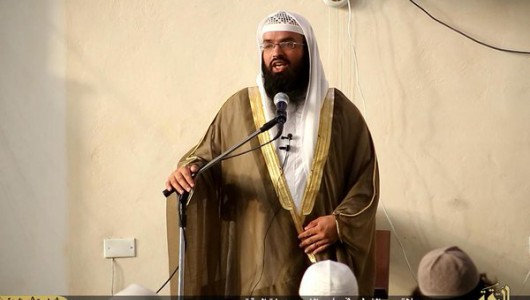
Turki al-Binali at prayers in Raqqa, July 2015
It was reported on jihadist websites and by local activists that Turki al-Binali (Abu Hammam al-Athari), a senior cleric of the Islamic State (IS) and perhaps the most important public proponent of the caliphate’s formation, had been killed in Syria by an airstrike from the U.S.-led Coalition on 29 May. IS has been silent on this despite releasing their newsletter al-Naba and the tenth edition of their English-language propaganda magazine Rumiyah since then. On Tuesday, the intelligence services of the Kurdistan Regional Government (KRG) in northern Iraq confirmed that al-Binali had been killed. Continue reading
By Kyle Orton (@KyleWOrton) on December 7, 2016
(source)
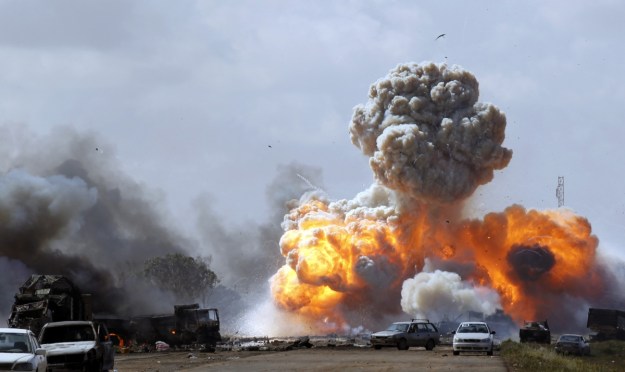
The “capital” of the Islamic State (IS) in Libya, Sirte, has fallen to pro-government militias. “Our forces have total control of Sirte,” claimed one spokesman on Monday. “Islamic State’s rule over Sirte is now over,” said another. That was slightly premature, though it does appear that the city fell entirely around mid-afternoon yesterday. Regardless, it is clear that IS’s hold on Sirte is soon to be at an end. Positive as this development is, it is what happens after IS’s grip on urban areas is broken that will determine the durability of this victory. IS will remain a disruptive force for some time no matter what happens next, and for that reason it is important to continue military operations in pursuit of IS in its rural sanctuaries. But IS is a symptom of Libya’s political problems, not their cause. Without a government that solves some of those original problems, and has the legitimacy and capacity to keep IS out, the group will rise again. Continue reading
By Kyle Orton (@KyleWOrton) on August 15, 2016
Published at The Wall Street Journal
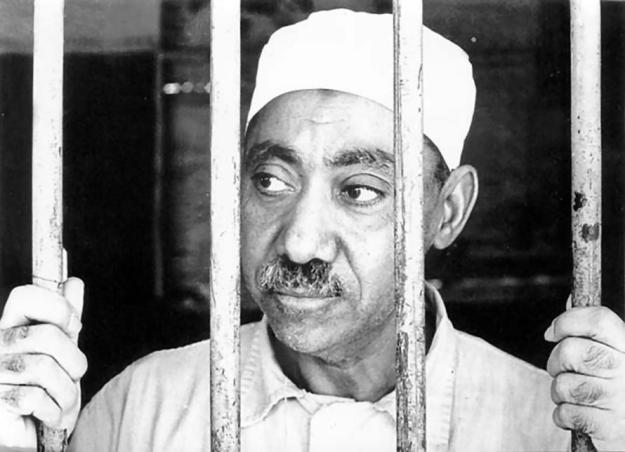
Sayyid Qutb
Why did Prohibition in America fail? The Pakistani Islamic scholar Abul Ala Mawdudi argued that it was because the law “required people to accept human rather divine reasoning.” What was needed was a harsh and absolute divine mandate to root out evils like alcohol. As the Ottoman empire was being swept away and national-independence movements were about to overrun the Muslim world, men like Mawdudi began articulating a new ideology that would meld medieval and modern concepts. That ideology, Salafi-jihadism, now represents one of the West’s greatest security challenges. Continue reading
By Kyle Orton (@KyleWOrton) on July 29, 2016

A new report by me for the Henry Jackson Society (accessible here) is out today. It looks at those governing the statelet held by the Islamic State in parts of Syria and Iraq, and those who are orchestrating IS’s foreign terrorist attacks, including in Europe. The wave of attacks over Ramadan has been described as a “lone wolf” epidemic by many, but IS is coordinating this mayhem through its Amn al-Kharji, foreign intelligence service, and the report looks at who staffs this institution and the dangers of writing-off these attacks as the work of lone radicals with no connection to each other or IS. Continue reading
By Kyle Orton (@KyleWOrton) on September 22, 2015

Abu Musab al-Zarqawi
In August 2015’s Perspectives on Terrorism, Truls Tønnessen writes about the evolution of the leadership of what is now the Islamic State (I.S.) from its origins in al-Qaeda in Iraq (AQI) under the heading, “Heirs of Zarqawi or Saddam?” Tonnessen makes the obvious point that AQI’s leadership was largely comprised of foreign Salafi-jihadists with al-Qaeda histories, while I.S. is led by Iraqis, most of them former (Saddam) regime elements (FREs). But Tonnessen’s argument that I.S.’s leaders had not been AQI members is mistaken (they had), which erodes his arguments that AQI’s influence diminished over time as I.S. formed from various mergers, and that this diminution of influence came about because I.S.’s post-2010 leadership purged the veteran AQI elements within I.S. (I.S.’s leaders are veteran AQI elements.) The main difference between AQI’s leaders and I.S.’s is that AQI’s leaders had background connections to al-Qaeda Central (AQC) networks, and I.S.’s largely do not. While Tonnessen sees Jabhat al-Nusra as linked to these shifting dynamics, this argument does not stack up. Ultimately, Tonnessen’s contention that I.S.’s leaders are more heirs of Saddam than Zarqawi fails in the terms Tonnessen presents it. Continue reading
By Kyle Orton (@KyleWOrton) on January 8, 2015
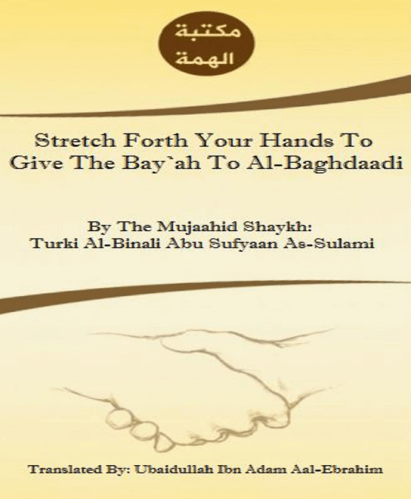
Soon after the public emergence inside Syria of the then-Islamic State of Iraq and Syria (ISIS) in the spring of 2013, a treatise was published by the Bahraini jihadi scholar, Turki al-Binali, which is to date the only official biography of the group’s leader, Abu Bakr al-Baghdadi, and piloted the idea that he was the caliph, i.e. the leader of Muslims worldwide. Al-Binali’s document, “Stretch [Out] the Hands to Give Allegiance to Al-Baghdadi”,[1] first published on August 5, 2013, would be amplified throughout late 2014 after ISIS declared that it had restored the caliphate last June and Abu Bakr took the mantle of caliph. An English translation of the document was produced on December 21, 2014, by someone using the name Ubaidullah ibn Adam al-Ibrahim on the pro-Islamic State Ansar al-Khilafa blog. It is reproduced below, with some editions for syntax and transliteration, to preserve it for study. Continue reading
By Kyle Orton (@KyleWOrton) on November 8, 2014
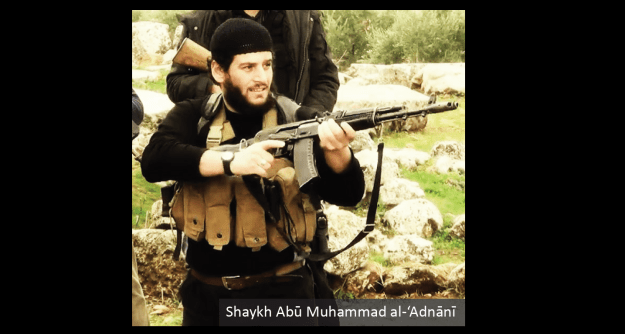
Picture of Abu Muhammad al-Adnani from the second edition of Dabiq magazine (July 27, 2014)
A Bahraini jihadist ideologue, Turki al-Binali, who has become a cleric in the Islamic State, put out a profile of the Islamic State’s official spokesman, Abu Muhammad al-Adnani, on November 1. By this account, al-Adnani took up jihadism in 2000 and was among a small cadre of people who joined the Islamic State’s founder, Ahmad al-Khalayleh, the infamous Abu Musab al-Zarqawi, when he journeyed through Syria on a recruitment-drive in 2002. Learned in Islamic jurisprudence and rigid in doctrinal literalness, al-Adnani was associated with some of the titans of the Islamic State’s legend like Abu Muhammad al-Lubnani and Abu Anas al-Shami. Appointed as emir of a small town in Anbar, Haditha, the first leader after the declaration of “the State” in 2006, Hamid al-Zawi (Abu Umar al-Baghdadi), worked under al-Adnani’s command. Al-Adnani then moved on to be an ideological instructor. Such was al-Adnani’s status, he did not have to consult al-Zarqawi before ordering operations; he only had to brief al-Zarqawi afterwards. Al-Adnani was arrested by the Americans in Iraq in May 2005, thereafter spending six years behind the wire, though never giving up his missionary activity. Indeed, the profile says al-Adnani developed the first full training program, academic and physical, for jihadi inmates. Upon release, al-Adnani took the post of official spokesman and has maintained it ever since. This profile is reproduced below with some minor editions for transliteration, syntax, and spelling. Continue reading
 Kyle Orton's Blog