By Kyle Orton (@KyleWOrton) on January 30, 2017
![Umar Hadid [right] (source)](https://kyleorton.co.uk/wp-content/uploads/2017/01/umar-hadid-1-right.jpg?w=286&h=194)
Umar Hadid [right] (source)
By Kyle Orton (@KyleWOrton) on January 30, 2017
Umar Hadid [right] (source)
By Kyle Orton (@KyleWOrton) on January 30, 2017
A profile of Umar Hadid, taken from the Islamic State’s “Distinguished Martyrs” series posted to a jihadist forum, is reproduced below with some interesting and important sections highlighted in bold. Hadid—variously known as Abu Khattab al-Falluji, Abu Khattab al-Ansari, and Abu Khattab al-Iraqi—was a native of Fallujah who took up Salafism in the late 1990s during the rule of Saddam Husayn, leading to clashes with the security forces and Hadid going into internal exile. After the fall of Saddam, Hadid quickly linked up with the elite circles of the nascent Islamic State movement, including its leader Ahmad al-Khalayleh (Abu Musab al-Zarqawi), his deputy Umar Yusef Jum’a (Abu Anas al-Shami), the military leader Mustafa Ramadan Darwish (Abu Muhammad al-Lubnani) and Abu Raghd who set up the Rawa Camp in Anbar Province, said to be the first terrorist training facility of the Iraqi jihad, and Abdallah Najem al-Jawari (Abu Azzam al-Iraqi), the chief financier and Anbar governor in 2004 before being appointed emir of Baghdad in 2005. Hadid was the leader of the insurgency in the two battles at Fallujah in 2004, being killed during the second of them. Continue reading
By Kyle Orton (@KyleWOrton) on January 29, 2017
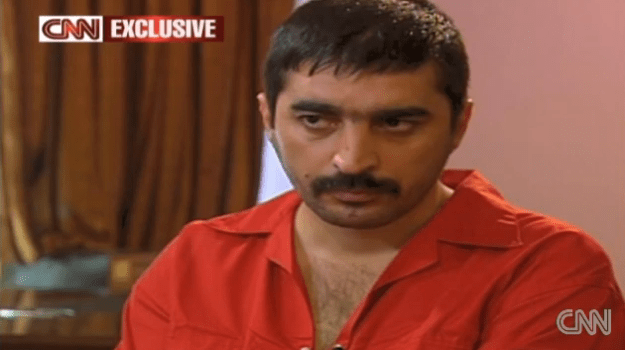
Manaf al-Rawi
Manaf Abdul Rahim al-Rawi was the leader of operations in Baghdad for the Islamic State of Iraq (ISI), the predecessor to the Islamic State (IS), between 2008 and his arrest in 2010. Al-Rawi had been with IS from its earliest days and his arrest in 2004 only advanced him through the ranks as he networked in prison. Upon release and assumption of the post of wali (governor) of Baghdad, al-Rawi was responsible for some of the worst atrocities in 2009 and 2010 in that city. Al-Rawi was executed in prison in 2013. Continue reading
By Kyle Orton (@KyleWOrton) on January 28, 2017
In his first speech as the then-Islamic State of Iraq’s (ISI’s) official spokesman in August 2011, Taha Falaha (Abu Muhammad al-Adnani) referred to several of the group’s “leaders” who had been killed. Among them was Abu Raghd, whose biography provides a glimpse of the role regional states—specifically Saddam Husayn’s Iraq and Bashar al-Assad’s Syria—played in facilitating the birth of the Islamic State (IS). Continue reading
By Kyle Orton (@KyleWOrton) on January 22, 2017
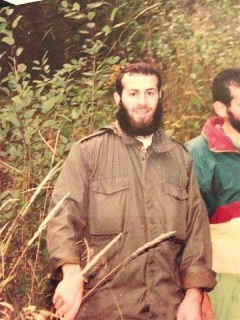
Mustafa Ramdan Darwish (Abu Muhammad al-Lubnani)
After the leaders of the Islamic State die—usually killed by their foes—short biographies tend to be circulated on internet forums that favour the group. One such obituary—with the above picture—was disseminated for Mustafa Ramadan Darwish (Abu Muhammad al-Lubnani), and is reproduced below with some editions to transliteration and some interesting sections highlighted in bold. Darwish was the first leader of the Islamic State’s military portfolio and the second overall deputy (between September 2004 and early 2005) to the movement’s founder, Ahmad al-Khalayleh (Abu Musab al-Zarqawi). One of the most interesting parts of Darwish’s profile is its addition of details on the jihadi networks linked to al-Qaeda and the first generation of the Islamic State that were operating in Iraq in the final years of Saddam Husayn’s rule, a topic touched on in other biographies of Islamic State leaders. Continue reading
Originally published at The Henry Jackson Society.
By Kyle Orton (@KyleWOrton) on December 16, 2016
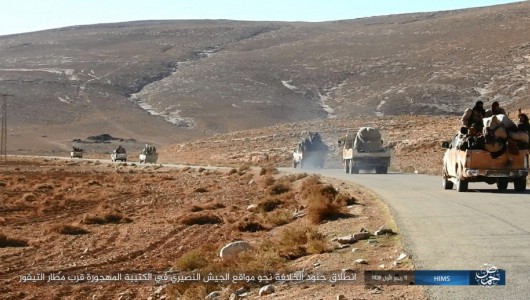
The Islamic State (IS) has named a new official spokesman, Abu Hassan al-Muhajir. Abu Hassan is the fourth man to hold the position of spokesman within the IS movement, and the third since it declared statehood in 2006. Very little is known about Abu Hassan but assessing the history of IS’s media enterprise offers some hints about his profile. In this regard, a new paper by Dr. Craig Whiteside of the International Centre for Counter Terrorism Terrorism is instructive. Looking forward, examining Abu Hassan’s inaugural speech offers some clues about the direction IS’s messaging and behaviour will take now as its statelet shrinks under pressure from the U.S.-led Coalition. Continue reading
By Kyle Orton (@KyleWOrton) on September 30, 2016
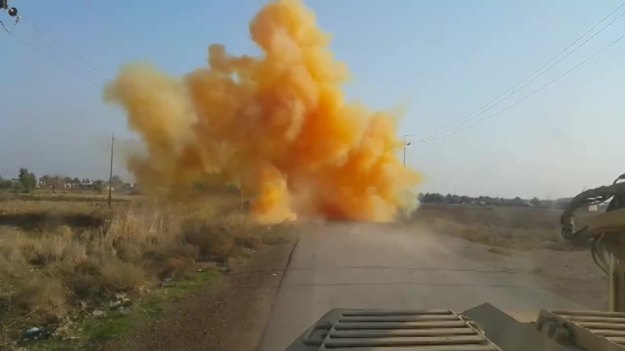
This year, the American-led anti-Islamic State (IS) Coalition has targeted members of the organization’s program to develop chemical weapons of mass destruction (CWMD). One reason for this is likely that the Coalition has been building toward—and now appears to be on the eve of—the operation to attempt to expel IS from its Iraqi capital, Mosul, and it is considered probable that IS will use CWMD on its way down. Whether that can now be prevented, and how far IS ever got with its attempt to develop CWMD, might only be known once it is too late. Continue reading
 Kyle Orton's Blog