Tag Archives: Vladimir Putin

Syria Is Only Going to Get Worse After the Fall of Aleppo

Published at The New Arab

By Kyle Orton (@KyleWOrton) on December 14, 2016

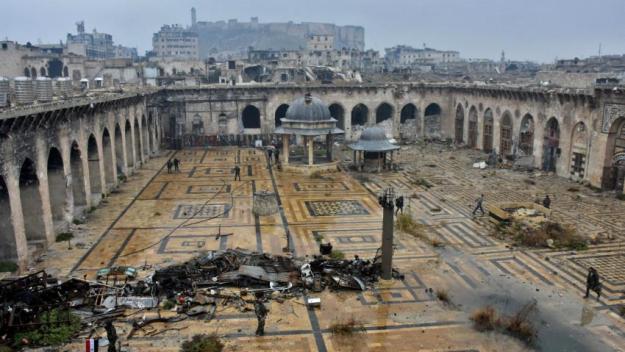
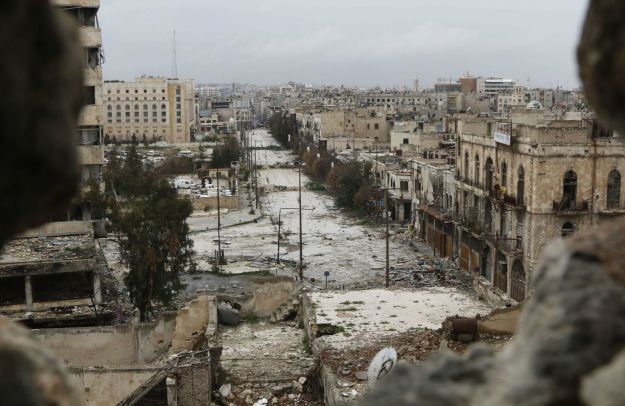
Syrian pro-government forces recapture the old city of Aleppo, December 13, 2016 [Getty]

In May 2016, the Roman Theatre in Palmyra was the site of a Russian orchestra performance, led by Valery Gergiev, a supporter of Russian ruler Vladimir Putin. The event was broadcast widely on RT (formerly Russia Today), the state-run English-language propaganda channel, and images and clips of the event were disseminated worldwide. The concert crowned Putin’s eight-month intervention in Syria, reinforcing the Kremlin’s messaging: Moscow and its blood-drenched client, Bashar al-Assad, were staffing the front line for civilisation against the barbarous hordes of the Islamic State group—and they were winning. What a difference seven months has made. Continue reading

Trump Might Continue Obama’s Dangerous Syria Policy

Originally published at The Henry Jackson Society

By Kyle Orton (@KyleWOrton) on November 24, 2016

There is not yet any clarity with regard what Donald Trump would do about Syria once he becomes President. Virtually everything about the incoming administration is in the “wait and see” phase. Still, on the current evidence, Trump’s Syria policy would appear to be a continuation of President Barack Obama’s policy of prioritizing the threat of the Islamic State (IS) and other non-state Sunni jihadist groups, while effectively aligning with the pro-regime coalition, made up of Russian air power and a ground force led by the Islamic Republic of Iran, stitched together out of the battered remnants of Bashar al-Assad’s army and his sectarian militias, Iranian paramilitary and regular forces, and foreign Shi’a jihadist groups under Iran’s control. The only potential difference is that Trump may formally repudiate the anti-Assad forces. The effect of this would be to destroy the mainstream Syrian opposition and empower al-Qaeda, but it would not bring stability to Syria. There are hints, however, that Trump is recruiting senior officials who will alter this policy. Continue reading

Russia Moves in For the Kill in Syria

Originally published at The Henry Jackson Society

By Kyle Orton (@KyleWOrton) on October 21, 2016

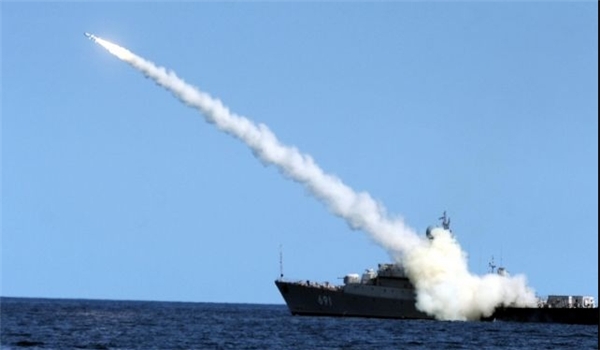
Vladimir Putin’s Russia is “deploying all of the Northern fleet and much of the Baltic fleet in the largest surface deployment since the end of the Cold War,” a NATO diplomat told Reuters on Wednesday night. These Naval assets are designed to buttress a final offensive by the remnants of Bashar al-Assad’s regime in Syria, which is effectively controlled on the ground by the Islamic Republic of Iran and an assortment of foreign Shi’a jihadists, against the insurgent-held east of Aleppo city, crushing once and for all the strategic threat posed by the rebellion to the regime, a threat that had already been all-but ended in the first months of Russia’s intervention. Nearly a year ago the U.S. began a political process with the Russians intended to end the war and begin a political transition. Moscow has subverted this process, using force to buttress its political efforts to secure Assad in power. The timing of this attack is seemingly intended as one final humiliation for President Barack Obama. Continue reading

Russia is No Partner Against the Islamic State

By Kyle Orton (@KyleWOrton) on February 12, 2016

1

This morning, Russia ostensibly agreed to help the U.S. impose a ceasefire in Syria within a week—on the way to a negotiated settlement. This could not work right now, even if Russia intended it to. But Russia does not. Russia’s role since intervening in Syria in late September 2015 has been to bolster the regime of Bashar al-Assad and a primary tactic in that overarching strategic aim has been the attempt to destroy all opposition to Assad that the international community could possibly deal with, and to create a binary situation where there is only the regime and jihadi-Salafist terrorists, primarily the Islamic State (IS), and secondarily—in areas where they do not threaten key regime interests—Jabhat an-Nusra (al-Qaeda). Moscow will eventually turn on IS, but in the short-term Russia has engaged in indirect coordination with IS to weaken the rebels and push them out of key strategic areas, notably in eastern Aleppo where Russia bombed rebels out of the way who had been holding IS out for years. On Tuesday, Foreign Policy reported on another aspect of this Russia-IS collaboration that aims to empower the takfiris in the short-term as part of the long-term plan, also supported by Iran, to secure the Assad regime in power. Continue reading

Litvinenko Verdict: What Happens Now?

By Kyle Orton (@KyleWOrton) on January 25, 2016

Published at Left Foot Forward.

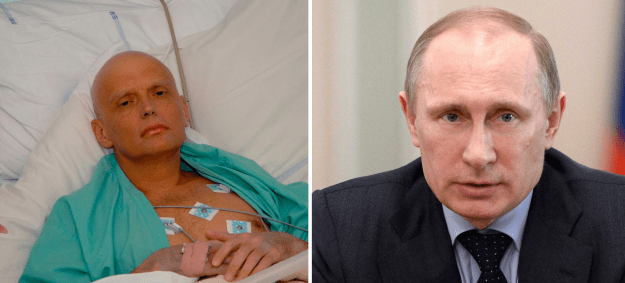
The British inquiry into the death of Alexander Litvinenko concluded on Thursday, making official what everyone already knew: the Russian intelligence services, “probably” at the direct order of Russian President Vladimir Putin, murdered Litvinenko in London in November 2006.

Welcome as it is to have this on the record and to have Litvinenko’s killers named for all the world to see, it now leaves questions, primarily:

Will similar forensic scrutiny be brought to bear on several other odd instances of political and other crime in Russia?

And what does the British government intend to do now that the Kremlin is carrying out assassinations on its territory again? Continue reading

Is Turkey Responsible for the Islamic State?

By Kyle Orton (@KyleWOrton) on December 20, 2015

1

Turkey concluded its biggest investigation to date into Islamic State (IS) operatives on its territory on Friday, and blacklisted sixty-seven people. This provides a good moment to review what Turkey’s role has been in the rise of IS, especially amid the escalating accusations from Russia that Turkey is significantly responsible for financing IS. The reality is that while Turkish policy has, by commission and omission, made IS stronger than it would otherwise have been, so has Russia’s policy—and Russia’s policy was far more cynical than Turkey’s, deliberately intended empower extremists to discredit the rebellion against Bashar al-Assad. Turkey’s focus on bringing down Assad and Ankara’s fear of Kurdish autonomy led it into these policies and now—having seemingly found the will to act to uproot IS’s infrastructure on Turkish territory—there is the problem of actually doing so, when IS can (and has) struck inside Turkey. The concerns about these external funding mechanisms for IS, while doubtless important, obscure the larger problem: IS’s revenue is overwhelmingly drawn from the areas it controls and only removing those areas of control can deny IS its funds. Continue reading

Russia Teams Up With Islamic State Against Syria’s Rebels

By Kyle Orton (@KyleWOrton) on October 11, 2015

Devastation of the Ibrahim al-Khalil mosque in Tareeq al Bab after Assad's barrel bombs, Aleppo, April 2015 (source)

Devastation of the Ibrahim al-Khalil mosque in Tareeq al Bab after Assad’s barrel bombs, Aleppo, April 2015 (source)

The main intention of Russia’s intervention in Syria is to prop up the dictatorship of Bashar al-Assad and to do that Russia is seeking to ensure that the Islamic State (I.S.) is the only alternative to Assad’s regime. If the conflict becomes binary—Assad or I.S.—nobody can support I.S., and by default it will be accepted that Assad has to stay; even if international help is not given to put down the insurgency at that point, tacit support and political legitimacy will be extended to Russia’s effort to keep its client regime alive. In service of this mission, Moscow has consistently targeted the moderate rebels and even some non-moderate rebels, while avoiding I.S., in the conscious hope that the rebel positions it destroys will be replaced by I.S. fighters. In northern Syria in the last few days, Russia got its wish in a major way. Continue reading

What Russia Wants in Syria

By Kyle Orton (@KyleWOrton) on October 4, 2015

US President Barack Obama (R) listens to Russian President Vladimir Putin after their bilateral meeting in Los Cabos, Mexico on June 18, 2012 on the sidelines of the G20 summit. Obama and President Vladimir Putin met Monday, for the first time since the Russian leader's return to the presidency, for talks overshadowed by a row over Syria. The closely watched meeting opened half-an-hour late on the sidelines of the G20 summit of developed and developing nations, as the US leader sought to preserve his

In the last few days I’ve written about Russia’s initial military action in Syria, which is intended to prop up the dictatorship of Bashar al-Assad, and explained (with my friend James Snell) how U.S. policy has enabled this, both by effectively outsourcing Middle East policy to Vladimir Putin over the chemical weapons “red line” debacle, and by the pro-Iran tilt that is implicit in President Obama’s nuclear deal-facilitated move toward détente with the Islamic Republic: Obama is effectively supporting Iran’s assets in Syria, and Putin is now using those same pieces to prosecute his own war in the Levant. With this in the background, this post will focus on what Putin wants in Syria.

Putin’s aims in Syria can be boiled down to two: (1) Ensure the Assad tyranny survives, which includes the building of a permanent military-colonial outpost on the Mediterranean coast and destroying all the moderate rebels so that Syria can be presented as a choice of Assad or the Islamic State (I.S.), legitimizing Russia’s support for Assad; and (2) humiliating the West on the way to constructing an alternate world order to American hegemony. Continue reading

In Syria, Russia and Iran Reap the Harvest of Obama’s Failed Foreign Policy

By Kyle Orton (@KyleWOrton) and James Snell on October 1, 2015

Published at National Review.

Aftermath of a Russian airstrike against U.S.-supported moderate rebels in Talbiseh, Homs (AP)

Aftermath of a Russian airstrike against U.S.-supported moderate rebels in Talbiseh, Homs (AP)

The situation in Syria could hardly get more desperate. With more than half the population displaced and 300,000 people dead, the civil war in Syria is the greatest humanitarian disaster of our time. But Syria is also a profound challenge to the American-underwritten geopolitical order that aspires toward free institutions and representative rule. As a direct consequence of policies pursued by the Obama administration, Iran and Russia, two enemies of this order, have taken their chance to assert their dominance. Continue reading

Russia’s War For Assad

By Kyle Orton (@KyleWOrton) on September 30, 2015

1

Russia began airstrikes in Syria today, ostensibly to combat the Islamic State (I.S.). In reality the strikes first hit U.S.-supported moderate rebels and the campaign is intended to buttress the dictatorship of Bashar al-Assad. Continue reading