Tag Archives: Yemen

The Turkey-Saudi Rivalry for America’s Attention

This article was published at Ahval

By Kyle Orton (@KyleWOrton) on 26 October 2018

The Turkish government’s recent record in foreign policy is hardly a success story. It is therefore noteworthy that, so far, Ankara has handled the murder of Saudi journalist Jamal Khashoggi with a singular deftness. Whether Turkish President Recep Tayyip Erdoğan can see this through is now the key question. Continue reading

Islamic State Spokesman Claims the Attack in the Arab Area of Iran

By Kyle Orton (@KyleWOrton) on 26 September 2018

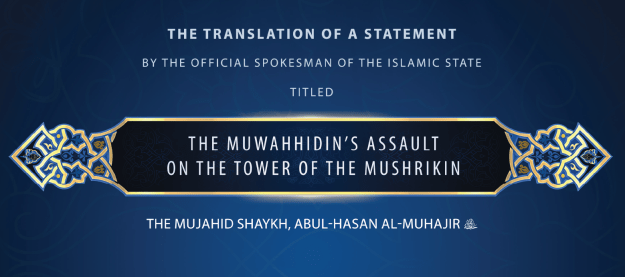
The spokesman for the Islamic State (IS), Abu Hassan al-Muhajir, gave a short speech today, “The Muwahhidin’s Assault on the Tower of the Mushrikin” (The Monotheists’ Assault on the Tower of the Polytheists). Abu Hassan’s speech was further confirmation of IS’s responsibility for the terrorist attack in Iran on 22 September. IS has published an English-language transcript of this speech, which is reproduced below with some editions for transliteration. Continue reading

Islamic State Mourns a Saudi Jihadist in Yemen

By Kyle Orton (@KyleWOrton) on 26 May 2018

Ahmad bin Sa’id al-Amudi (Abu Karam al-Hadrami) // Picture from page 9 of Al-Naba 133 (25 May 2018)

The 133rd edition of the Islamic State’s (IS) weekly newsletter, Al-Naba, was released on 25 May 2018. In Al-Naba, on page nine, there was a profile of Ahmad bin Sa’id al-Amudi (Abu Karam al-Hadrami), a Saudi jihadist who fought for IS and was killed in Yemen. Al-Naba has run obituaries for prominent IS operatives like Mohammed Emwazi (Abu Muharib al-Muhajir), often known as “Jihadi John”, very senior IS officials whose biographies were shrouded in mystery like Abd al-Rahman al-Qaduli (Abu Ali al-Anbari) and Ali Aswad al-Jiburi (Abu Ayman al-Iraqi), as well as completely unknown figures like Abu Sulayman al-Libi. Al-Amudi is in this final category. Continue reading

Saudi Newspaper: Make Peace with Israel, Confront Iran

By Kyle Orton (@KyleWOrton) on 14 April 2018

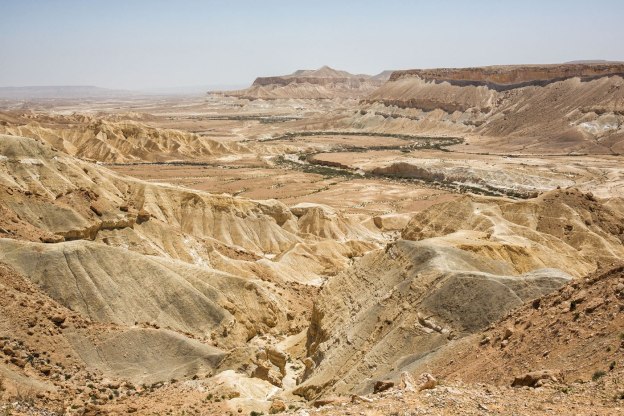
Negev Desert, Israel (image source)

Al-Riyadh is the leading daily newspaper in Saudi Arabia. While Al-Riyadh’s exact status is contested, there is little doubt it is close to the Saudi government and some identify it as a “semi-official” in the Kingdom. It was therefore very interesting that the paper hosted an opinion editorial by Dr. Ahmad al-Jamiya on 14 April, republished below, which made the case for the House of Saud to make peace with the State of Israel as part of a policy to halt and reverse the Iranian revolution in the Middle East. Continue reading

Al-Qaeda Gives its Verdict on the “Arab Spring” Seven Years On

By Kyle Orton (@KyleWOrton) on 28 January 2018

Al-Qaeda’s leader, Ayman al-Zawahiri, made a speech on 26 January 2018, entitled, “After Seven Years Where Is the Deliverance?” The speech built the case that the “Arab spring” uprisings failed because they tried to make changes within the framework of the nation-state, to be incremental, and to make accommodations with the fallen regimes, rather than radical “purification” by launching coordinated jihadist revolutions that respected no frontier, violently uprooted the old order, and implemented the shari’a. An English transcript of the speech was released by al-Qaeda’s As-Sahab Media station and is reproduced below. Continue reading

When Iran Saved Al-Qaeda

By Kyle Orton (@KyleWOrton) on 24 January 2018

The new book by the investigative journalists Adrian Levy and Catherine Scott-Clark, The Exile: The Flight of Osama bin Laden, charts the career of al-Qaeda’s founder, Osama bin Laden, up to the day he became a household name—11 September 2001—through his downfall in 2011, to the end of 2016, when al-Qaeda was more powerful than ever. It is a thoroughly absorbing account, bringing to light vast tranches of new facts, including many intricate details of how al-Qaeda operated on a human, day-to-day level, and of those states and para-states that shielded the terror network, collaborated with it, and enabled it—and still do.

The gathering of the Bin Laden network in Sudan and then in the Taliban-held areas of Afghanistan in the 1990s is a familiar story, but the splits and debates among the Arab jihadists around Bin Laden, including the opposition of significant numbers of them to the 9/11 massacre, is perhaps less well known. The authors trace out how Bin Laden manipulated his own quasi-institutions to get his way. First, Bin Laden took on the plan of a man, Khalid Shaykh Muhammad (KSM), who was not even a member of al-Qaeda, and then, ahead of the crucial vote, packed the shura (consultation) council with ultra-zealous Egyptians by engineering a merger between al-Qaeda and Islamic Jihad, led by Ayman al-Zawahiri. Continue reading

Further Details Emerge of Obama’s Failed Iran Policy

Published at The New Arab.

By Kyle Orton (@KyleWOrton) on 21 December 2017

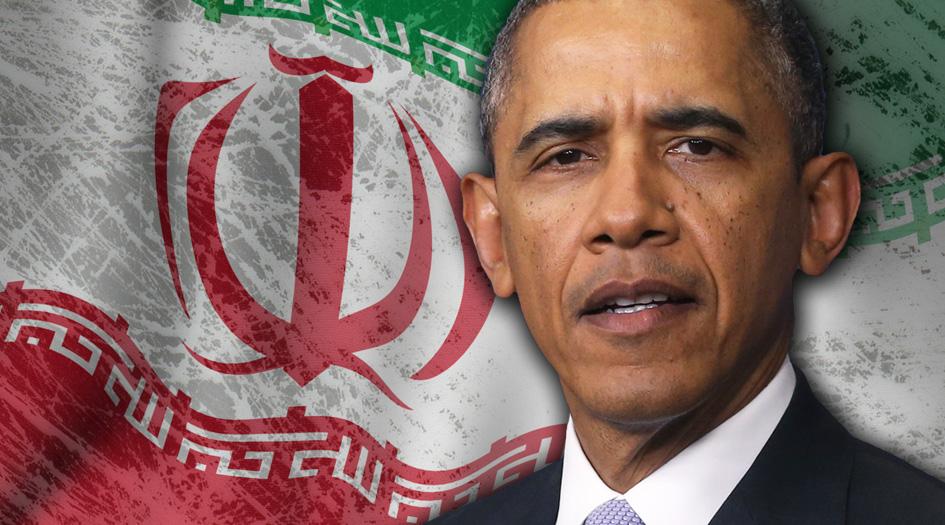
A widely reported, 15,000-word article by Josh Meyer in Politico on Sunday moves us another step closer to finding out the actual terms of President Barack Obama’s nuclear deal with the Islamic Republic of Iran.

Though the Obama administration sold the Iran deal on the narrowest possible terms as an arms control agreement, the reality was that this agreement was intended to facilitate a strategic tilt in Iran’s favour—against traditional allies—that left a regional balance requiring less American commitment.

Because the administration wanted the paper agreement, Iran had the leverage to threaten to walk away, and was therefore appeased on multiple fronts ostensibly unrelated to the nuclear issue.

Continue reading

The Gulf Crisis and British Interests

By Kyle Orton (@KyleWOrton) on 4 December 2017

The decision by Saudi Arabia, the United Arab Emirates, Bahrain, and Egypt to impose a boycott on Qatar this summer was an out-of-character development for the Gulf, where all too much politics is conducted behind closed doors between the ruling families and elites. To go public, the schism between Qatar and the so-called Quartet must have been very serious.

It was the end-point of a dispute that began in the 1990s about Qatar’s foreign policy, which at that point became independent of the Saudi-led Gulf Cooperation Council (GCC), and indeed actively competitive with Saudi interests. Doha wanted to alter the Saudi-oriented status quo and did so by empowering groups—almost invariably Islamists—in its cause. Those Islamists not only had agendas running counter to the other Gulf states’ conception of regional order, but which the Quartet regarded as threatening to their internal security. Continue reading

Qatar and the Gulf Crisis

By Kyle Orton (@KyleWOrton) on 30 November 2017

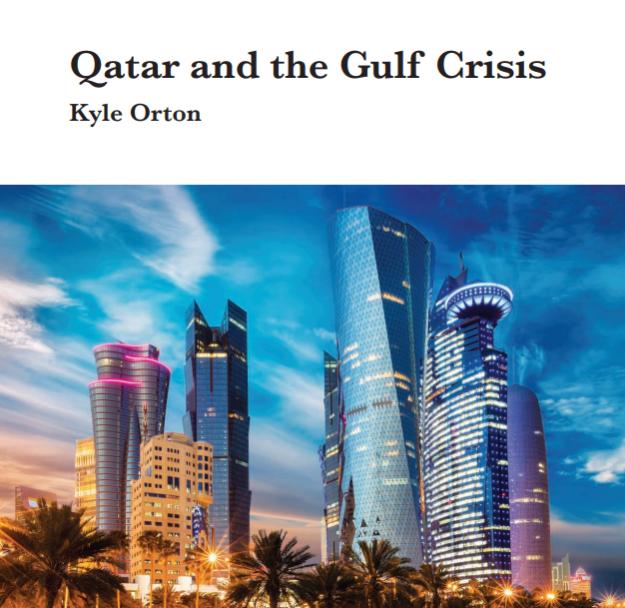
I released a report today, published by the Henry Jackson Society, Qatar and the Gulf Crisis. The intent was to examine the charges made against the Qatari government by its Gulf neighbours with regard to the funding of terrorism, the hosting of extremists, the dissemination of hate speech and incitement, among other things. Having separated fact from fiction with regards to he accusations against Qatar, the report proposes how Britain might proceed in such a way as to press Doha on issues of concern, while avoiding being drawn into the middle of the Gulf dispute, and trying to foster reconciliation between allies, especially at a time when a united front is necessary to oppose the far larger challenge of the Iranian theocracy.  Continue reading

America Reveals How Iran Funds Instability in Yemen

By Kyle Orton (@KyleWOrton) on 23 November 2017

The Office of Foreign Assets Control (OFAC) in the U.S. Department of Treasury, on 20 November, sanctioned “a network of individuals and entities involved in a large-scale scheme to help Iran’s Islamic Revolutionary Guard Corps-Quds Force (IRGC-QF) counterfeit currency to support its destabilizing activities” in Yemen. Continue reading