Tag Archives: YPG

The Islamic State Was Engaged in Insurgency Long Before the Caliphate Collapsed

By Kyle Orton (@KyleWOrton) on 11 January 2018
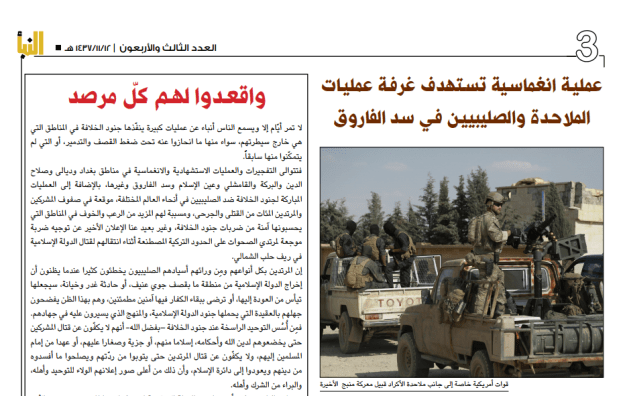
Al-Naba 43, page 3

The Islamic State (IS) brought out the forty-third edition of Al-Naba, its newsletter, on 16 August 2016. On page 3 was an article that made reference to IS’s insurgent activities, which had already begun in areas it had lost. A rough copy is reproduced below.

At that time this article was published, IS was on the verge of losing Minbij, and had issued statements in May 2016 and June saying that the loss of the caliphate would not be the end of the group. By early 2017, IS’s insurgent operations were visibly mature, long before the formal declaration in October 2017 that IS was giving up its statelet and recommencing all-out insurgency. Continue reading

Russia’s Plans in Syria Falter, Opening Chance for the West

By Kyle Orton (@KyleWOrton) on 29 December 2017

The Astana track of Syrian “peace” negotiations began on 23 January 2017, under Russian guidance in the Kazakh capital, with Iran and Turkey also invited as “guarantor countries” of the various sides in Syria. The process, initiated in the shadow of the savage conquest of Aleppo city in December 2016 that signalled the total strategic defeat of the insurrection against the Bashar al-Asad regime, was an attempt by Moscow to convert the military gains it had enabled by Asad and Iran on the ground into political facts that could then be imported into the internationally-recognized Geneva process. This “Astana-isation of Geneva” was Russia’s bid to take control of the political process and redefine it: rather than having Asad’s removal as its end-goal, it would set the terms of reintegration into the Asad state. Abetted by a purblind Western campaign against the Islamic State (IS) and a strategic reorientation in Turkey, the pro-Asad coalition has more or less had its way for the last year. But there are now signs that this approach is beginning to unravel. Continue reading

A Year In, Trump’s Syria Policy Looks A Lot Like Obama’s

Originally published at Ahval

By Kyle Orton (@KyleWOrton) on 18 December 2017

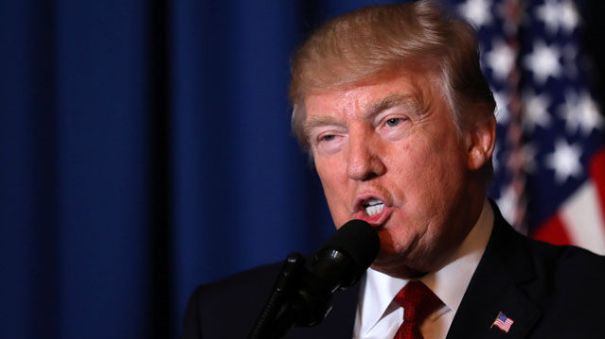
Nearly a year into Donald Trump’s administration, the president has followed the track laid down by his predecessors in Syria, accelerating it in some cases, and reinforcing the negative trends of Barack Obama’s defective policy that will undo even apparent successes, like the destruction of the Islamic State’s (ISIS) “caliphate”. Continue reading

Is Britain Cracking Down on PKK Terrorist Activity?

Originally published at The Henry Jackson Society

By Kyle Orton (@KyleWOrton) on 16 December 2017

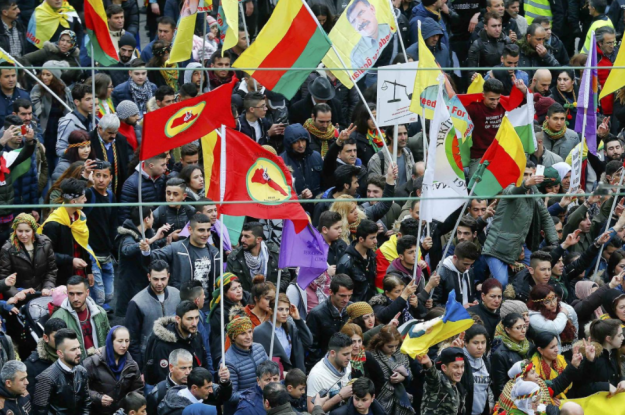
Pro-PKK demonstrators in Frankfurt, Germany, 18 March 2017, REUTERS / Ralph Orlowski

The BBC reported yesterday that on 7 December the Metropolitan Police Service arrested four people—two 17-year-old boys, a 38-year-old woman, and a 50-year-old woman—were arrested in the Haringey area of north London as part of a probe into terrorist fundraising, through money laundering and fraud. The terrorist group at issue is the Kurdistan Workers’ Party (PKK), and those arrested are believed to have contributed to the PKK’s finances through sale and distribution of one of the PKK’s most important propaganda instruments, the Yeni Ozgur Politika (New Free Politics) newspaper. Time will tell if this is a one-off or the beginning of a serious and long-overdue attempt to curtail the PKK’s propaganda-recruitment activity and fundraising in the West. Continue reading

America’s Kurdish Allies in Syria Drift Toward the Regime, Russia, and Iran

By Kyle Orton (@KyleWOrton) on 10 December 2017

Russian soldiers in Efrin, Syria, 1 May 2017 (source)

The American-led Coalition against the Islamic State (IS) partnered with the “Syrian Democratic Forces” (SDF), a political façade for the proscribed Kurdistan Workers’ Party (PKK), as the ground force in Syria. The most ventilated problems with this partnership so far have been the strain it has put on relations with NATO ally Turkey, against which the PKK has run a terrorist-insurgency for more than thirty years, and the deep local suspicion of the PKK’s governing program that might yet reverse the gains against IS and open political space for other jihadists like al-Qaeda. Another of the problems is now gaining salience: the PKK’s long-term alliance with Bashar al-Asad’s regime and the states—Russia and Iran—that keep it alive. Continue reading

A “Syrian Democratic Forces” Defector Speaks About the Role of the PKK and America in Syria

By Kyle Orton (@KyleWOrton) on 3 December 2017

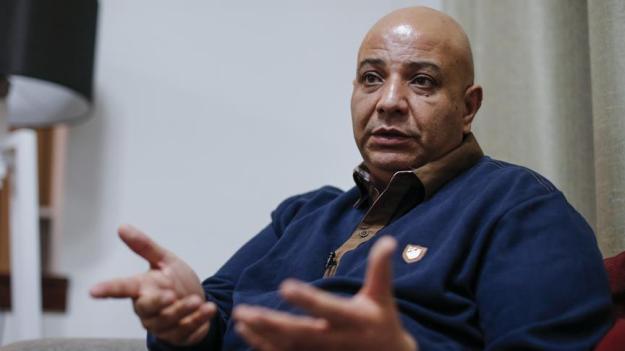
Talal Silo

Talal Silo was the leader of an ethnic Turkoman unit within the Syrian Democratic Forces (SDF), the ground partner in Syria of the American-led international coalition against the Islamic State (IS). Having defected recently, Tilo has now given an interview about his experiences, the nature of the SDF, and the SDF’s links to the Bashar al-Asad regime and its supporters, Russia and Iran. Continue reading

Former Al-Qaeda in Syria Branch Arrests Members of Al-Qaeda in Syria

By Kyle Orton (@KyleWOrton) on 28 November 2017

Iyad al-Tubaysi (Abu Julaybib), Sami al-Uraydi (Abu Mahmud al-Shami)

Hay’at Tahrir al-Sham (HTS), a powerful jihadi group in northern Syria, formally broke from al-Qaeda’s command over the last year. In the morning of 27 November, HTS arrested the leaders of a splinter group from HTS that remained loyal to al-Qaeda. The arrests were first reported by pro-al-Qaeda media, and HTS has since released a statement explaining that, having found this al-Qaeda group unwilling to even engage in reconciliation talks, it placed “the heads of turmoil” before a “just shari’a court” to answer for spreading demoralizing lies about HTS. Continue reading

Defining Freedom Fighters and Terrorists in Syria (and Beyond)

By Kyle Orton (@KyleWOrton) on 21 November 2017

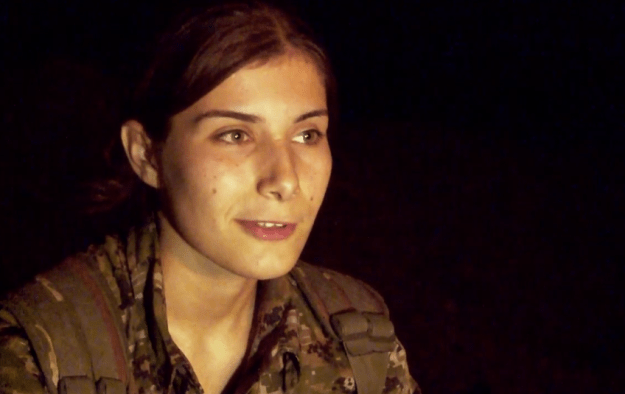
Zozan Temir (Zozan Cudi) in ‘No Free Steps to Heaven’

Yesterday, it was announced that a 15 November Turkish government airstrike in the mountains of the Sirnak area in southeastern Turkey, near the zone where the borders of Turkey, Syria, and Iraq meet, had killed twelve guerrillas from the Kurdistan Workers’ Party (PKK). Given that the PKK has waged war against Turkey since 1984, and the state has obviously fought back, such events are distressingly mundane. But this event was exceptional because among the slain was a female foreign fighter, Zozan Temir. Continue reading

A Defection and the Dictatorship in Syrian Kurdistan

By Kyle Orton (@KyleWOrton) on 17 November 2017

Talal Silo

It was announced on 15 November that Talal Ali Silo, the official spokesman of the Syrian Democratic Forces (SDF), had fled to the EUPHRATES SHIELD zone in northern Aleppo, run by rebels operating under the Free Syrian Army (FSA) brand that are dependent on Turkey. The SDF is the partner force in Syria for the U.S.-led Coalition against the Islamic State (IS). Though the SDF presents itself as a multi-ethnic coalition of Kurds and Arabs, it was initiated as a front for the Kurdistan Workers’ Party (PKK). By attaching non-Kurdish units to a PKK core and using the SDF banner, it circumvented various legal and political obstacles for Coalition states. But all real power has remained in the hands of the PKK, which has systematically purged all genuinely independent power centres within the SDF. Silo, a Turkoman, helped further the narrative of the SDF’s ethnic inclusivity, and his defection underlines the reality of the organization’s political exclusivity. Continue reading

Iraqi Kurdistan’s Independence Referendum and the West’s Middle East Strategy

By Kyle Orton (@KyleWOrton) on 27 September 2017

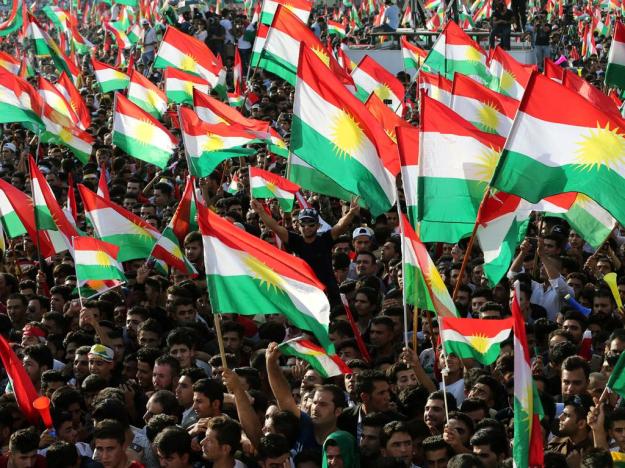
The Kurdistan Regional Government (KRG) held a referendum on 25 September, and voted overwhelmingly—with nearly 93% in favour—for independence. The comparison with Brexit might have been overworked by all sides, but there was a familiarity: while the result itself was not a shock, the fact of the referendum itself came as a surprise to many in what one might call the global elite, which lectured in that endearing way that had such success in deterring Brits a year ago. Then as now, the effect was, if anything, to stoke the bloody-mindedness of a population that had considerable qualms but had enough pride to repudiate being harangued in those accents. Still, as with Brexit, it wasn’t as if the naysayers didn’t have a case, and now comes the really difficult work. Continue reading