By Kyle Orton (@KyleWOrton) on October 4, 2020
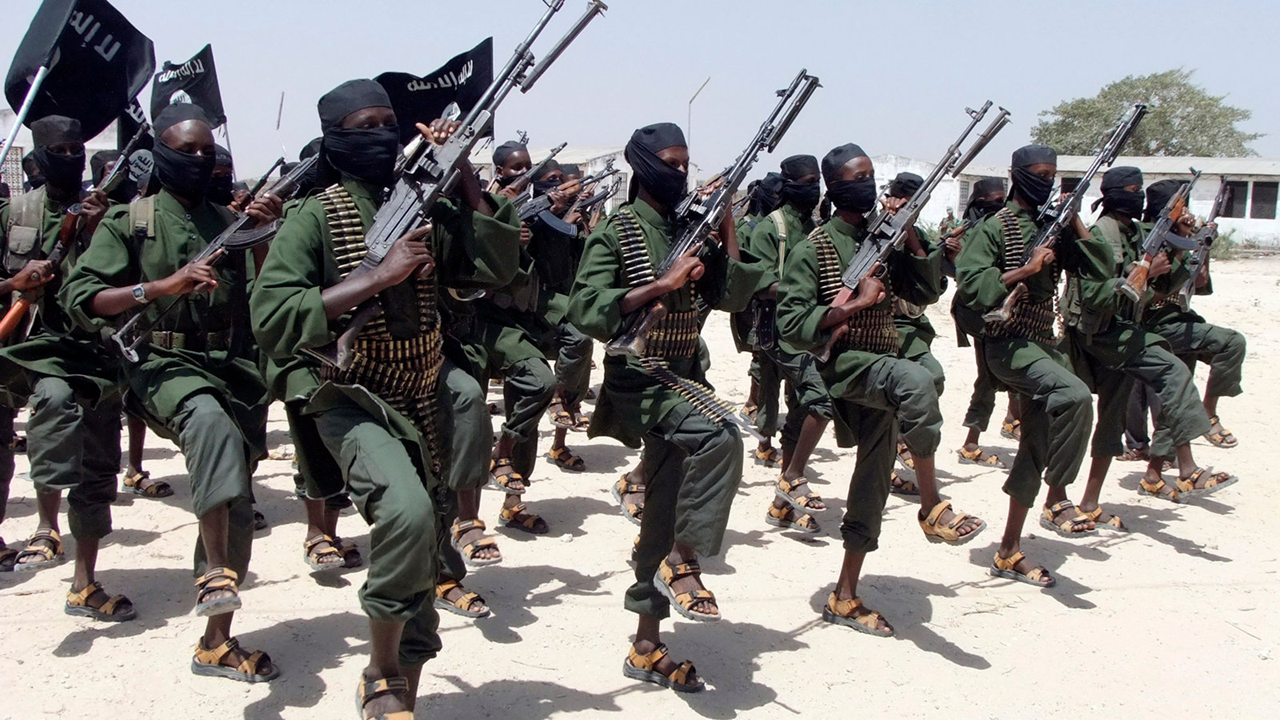
A chapter about Al-Qaeda I wrote for the American Foreign Policy Council’s (AFPC) ‘World Almanac of Islamism’ was published today. Do check it out, and the broader site, which is a great, accessible resource. The format of the website necessitated that the chapter as I submitted it was edited, condensed, and split up to fill out the various categories. In case it is of any interest, the original version of the chapter is reproduced below.
HISTORY AND IDEOLOGY
The Rise of Political Islam
Secular pan-Arab nationalism led by Jamal Abd al-Nasr in Egypt had seemed to be the wave of the future after the Second World War, so much so the U.S. misguidedly courted Al-Nasr even as he solidified an alliance with the Soviet Union.[1] Al-Nasr exploited this to sweep away much of the Western-aligned order by the mid-1960s. The Soviets and their militant republican allies seemed to have events going their way.[2]
From at least the seventeenth century, the peoples of the Middle East have been aware that things have gone wrong and the contest over how to put it right broadly split into two trends: modernists, who argued that the problem was insufficient changes to catch up with the West, and those who blamed the changes for the problem, arguing that what was needed was to get back to authentic Islam.[3] The humiliation of Al-Nasr and his allies in the Six-Day War against Israel in June 1967 was a mortal blow to pan-Arabism and with it the modernist argument. People fell back on what they knew best—their religion.[4]
In January 1979, after a year-long Islamist revolution,[5] the Shah of Iran, unwilling to keep himself in power with lethal force, departed his country.[6] The orchestrator of the revolution, Ayatollah Ruhollah Khomeini, returned and crushed all the factions who had mistakenly believed they were partners of the Imam.[7]
The Iranian revolution serves as the epicentre of the modern jihadi-Salafist movement. The roots go back to 1924, the abolition of the Ottoman caliphate and the search for legitimacy afterwards. Figures like Jamal al-Deen Afghani and the other Islamic modernists provided building blocks for the Islamist movement, which in a formalistic sense can be said to have begun with the Muslim Brotherhood (al-Ikhwan al-Muslimeen) in Egypt in 1928. Ikhwan founder Hassan al-Banna and contemporaries like Muhammad Rashid Rida[8] and Abu al-Ala al-Mawdudi, and successors like Sayyid Qutb, all provide pieces of the story. In the 1960s and 1970s, the Egyptian and Syrian Ikhwan congregated in Saudi Arabia encounter Wahhabism, the state Salafi doctrine that emphasises stripping Islam of accumulated cultural practices, creating the mix of puritanical religious doctrine and revolutionary political methods that characterise jihadism.[9] But the Iranian revolution did three things that brought these fragments together in a way that created the menace that confronts us in the twenty-first century.
First, the birth of a theocratic state in Iran showed that it was possible, and inspired Sunni Arab Islamists like the current leader of Al-Qaeda, Ayman al-Zawahiri, who were facing regimes far less powerful.[10] Second, the attempt by Khomeini to export his revolution led the Saudis to stabilise their rule by rolling back domestic reforms and vastly expanding their Wahhabi missionary activity, both of which helped the jihadists. The Saudis also became willing to throw cash at Islamist groups that were involved in popular causes as a way of bolstering their domestic legitimacy,[11] notably Bosnia in the 1990s,[12] and Afghanistan in the 1980s. Which is the third point. The Iranian revolution set in train the events that led to the Soviet conquest of Afghanistan by alarming Moscow about the possibility of Islamist revolutionary contagion spilling into domestic affairs in Soviet Central Asia.[13]
This brazen attack energised Muslims all across Islamdom—and the West—and brought them together in one place, creating networks and relationships that shape history down to the present. This was the context in which the Arabs who later created Al-Qaeda found one-another.
The Anti-Soviet Jihad
The Afghan Resistance: the Mujahideen
By late 1983, the Soviets were aware they had misjudged Afghanistan and from 1984 the Central Intelligence Agency (CIA) and Pakistani Inter-Services Intelligence (ISI) believed the Soviets could be defeated. After the Mujahideen, the Afghan insurgents under the effective control of the ISI who received funding from the CIA and the Saudis, were supplied with Stinger surface-to-air missiles from 1986, neutralising the Soviets’ primary advantage (air power), this belief was reinforced.[14] The last Soviet combat troops departed Afghanistan in February 1989.
There were around 170 (mostly Sunni) armed resistance groups in Afghanistan during the Soviet occupation.[15] The ISI dealt primarily with the so-called Peshawar Seven, who were the major political-military Mujahideen actors left on the field as the Soviet occupation phase of Afghanistan’s torment gave way to indigenous factional strife, a cusp upon which Al-Qaeda was born.[16]
The Peshawar Seven were:[17]
- Jamiat-i-Islami (Islamic Society), led politically by Burhanuddin Rabbani and militarily by Ahmad Shah Masud;
- Hizb-i-Islami (Party of Islam), led by Gulbuddin Hekmatyar;
- Ittehad-i-Islami (Islamic Union), led by Abdul Rasul Sayyaf;
- Hizb-i-Islami Khalis (HIK), led by Mawlani Muhammad Yunis Khalis, with Jalaluddin Haqqani as an important field commander;
- Mahaz-i-Milli Islami (Islamic National Front), led by Pir Ahmad Gaylani;
- Jabha-i Nejat-i-Milli (National Liberation Front), led by Sibghatullah Mojadedi; and
- Harakat-i-Inqilab-i-Islami (HII, Revolutionary Islamic Movement), led by Muhammad Nabi Muhammadi
Gaylani and Mojadedi were monarchists and nationalists. Muhammadi was more Islamist but of a different sort to the Jamiat, Hizb, Ittehad, and HIK, and he worked reasonably closely with the monarchists.[18]
The four more hardline Islamist factions—Jamiat, Hizb, Ittehad, and HIK—descend from a common Ikhwani root traceable to Gholam Niazi, the godfather of Afghan Islamism,[19] and all were intimately tied to Pakistan, though Sayyaf had important ties to the Saudi regime.[20] Jamiat, from which the others originate, decamped to Pakistan in 1973 after the coup against the monarchy and by the next year had been instrumentalised by ISI to weaken a Kabul regime making revisionist claims along the border.[21] Jamiat and Hizb received the most Pakistani resources during the Soviet occupation period, making them the most powerful Mujahideen elements.[22]
A point to be underlined here: as this timeline shows, the popular belief that the U.S. enlisted Pakistan in its jihad against the Soviets in Afghanistan is exactly wrong. As a further demonstration that the initiative did not come from the American side: the U.S. had imposed sanctions on Pakistan in April 1979 over the nuclear-weapons program, meaning official U.S. aid to the Mujahideen was delayed until 1982.[23] The truth is that ISI had been running an Islamist insurgency through Afghan proxies against an increasingly-Soviet-dominated Kabul for many years by the time the Red Army crossed the Amu Darya in December 1979, and the Pakistanis drew the U.S. into sponsoring their jihad program.[24]
It was in this ISI-dominated milieu of Ikhwani-derived Mujahideen forces that the Arab volunteers from outside came together to form Al-Qaeda.
The Arab-Afghans
Attesting to the role of pure chance in history, the organised mobilisation of Arabs to Afghanistan is the work of one man, Abdullah Azzam, and his decision was triggered after a series of events outside his control led him to Pakistan in the autumn of 1981.[25]
In terms of the structural factors that formed the background to Azzam’s entrepreneurial effort, the primary one was the creation in the mid-1970s of a transnational Islamist population, largely based in the Hijaz, in western Saudi Arabia, comprised of Arabs—predominantly Egyptian and Syrian Muslim Brothers—who had fled their homelands, and were permitted by the Kingdom to work on Muslim global causes, but not get involved in local politics.[26] This pan-Islamist community, bringing together Ikhwani methods and the Wahhabi creed,[27] might well have led a foreign fighter mobilisation; it needed Azzam to occur when and where it did in Afghanistan.
The at-that-time small Arab-Afghan contingent in Afghanistan had realised after the late-1983 debacle at Urgun, in the Paktika province, that a body was needed to tackle the disorganisation of the Arabs. This idea was brought to Azzam and Bin Laden by Sayyaf and Haqqani on the haj in Saudi Arabia in mid-1984.[28] The Services Bureau (Maktab al-Khadamat), born in October 1984 with Azzam as its leader and the newly-arrived Bin Laden as its main financier, was the manifestation of this idea, coming a month after Azzam issued his fatwa saying jihad—at least by money—was “now an individual obligation on every Muslim everywhere on Earth”.[29]
What Azzam had done, as his biographer Thomas Hegghammer explains, was “not a radical innovation—only an incremental one—[which] is why many were swayed by it. Put very simply, Azzam combined two existing but previously unconnected ideas.” The “uncontested Islamic legal principle that occupation of Muslim land triggers a duty to repel the invaders through jihad” was fused with “the argument developed by militant Islamists in the 1970s that the duty of jihad is universal”. Azzam had taken the duty for jihad away from established authorities, especially states, an innovation that would haunt the movement.[30]
It might be said that while Azzam’s life had laid the foundations for the jihadi movement, his death provided the spark that launched it. Azzam was killed in deliberately spectacular fashion in Peshawar on 24 November 1989, blown up in his car just after midday as he arrived at Sab al-Layl mosque to give the Friday sermon.[31] The list of suspects is long—Mujahideen commanders like Hekmatyar, Arab rivals like Al-Zawahiri, foreign states (the Soviets, Pakistan, America, Israel)—and thirty years later there is little clarity.
The Arab-Afghan community, already fractured, ruptured with Azzam’s death. For this, Azzam is mostly to blame. Having preached against authority when deciding on jihad—governments, clerical institutions, even parents—Azzam had become a source of authority with no way to pass on the role. In death, Azzam’s argument became a general license for extremist disobedience; this exact issue broke Islamic State (IS) away from Al-Qaeda in 2013-14 and led to the problems within IS.[32] Azzam’s aversion to intra-Muslim fighting was overcome by takfir (excommunication), by saying opponents were not Muslims at all. In this vacuum of authority, Al-Qaeda grew.[33]
Al-Qaeda’s Founding
CIA support to Bin Laden during the anti-Soviet war is a myth.[34] The Arab-Afghan contingent was small and militarily negligible: 2,000 Arabs in an insurgency of maybe 200,000 fighters.[35] The CIA had no reason to support the Arab-Afghans, and the Arab jihadists were bitterly anti-American so had no incentive to take the Agency’s help. The creation of Al-Qaeda, indeed, came about as Bin Laden separated himself more firmly from the mainstream insurgency and thus even the indirect benefits of the CIA’s support, channelled through the ISI.
The institutional origins of Al-Qaeda trace to October 1986, when Bin Laden began constructing the Lion’s Den of Supporters (al-masada al-ansar) camp near Jaji, what some would call more simply “the military base” (al-Qaeda al-Askariyya).[36] Al-Qaeda emerges, physically, out of the bureaucracy necessary to make the Masada camp function.[37] The camp was created after the Zhawar battle in April 1986 had exposed the Arab-Afghans’ indiscipline,[38] convincing Bin Laden to move full-time to Afghanistan and train-up the Arabs—and, incidentally, convincing the ISI and the Americans of the need for the Stinger missiles.[39]
The Jaji battle of 17 April 1987, little more than a skirmish with the Arabs, including Bin Laden, supported by artillery from Hekmatyar’s forces, clashing with the Red Army, would become legendary. The week-long Soviet retaliation caused a temporary abandonment of Al-Masada, but the Soviets were held back and Bin Laden was wounded but alive; “experience” was now claimed by the Arab-Afghans and a story was told attributing the difference in outcomes between Zhawar and Jaji to the work at Al-Masada. It captured imaginations and brought in recruits.[40] It was in the months after Jaji, spurred on by that legend and Bin Laden’s wealth at a time when everybody else was struggling, that Al-Qaeda was created.[41]
At this early stage Al-Qaeda was almost exclusively focused on military-tactical improvement, though to the extent it is developing an orientation it is more global, convinced that Afghanistan is too corrupt to become an Islamic state. Ironically, this is happening just as Al-Qaeda is receiving thousands of volunteers, inspired by events at Jaji to get involved in the Afghan jihad.[42]
The final of the three important battles in Arab-Afghan historiography began in March 1989 at Jalalabad, which, unlike the scuffles at Zhawar and Jaji that later became politically significant, was planned as a political turning point by ISI and the CIA, to use about 10,000 Mujahideen, mostly Hekmatyar’s and Sayyaf’s, to deal a decisive blow to the Communist regime in Kabul, a month after the Soviet withdrawal.[43] It was an epic catastrophe, with maybe half the Mujahideen killed over two months and eighty Arabs, a staggering proportion.[44]
Jalalabad damaged Bin Laden’s authority and hastened the religio-political fragmentation of the Arab-Afghan population. It also left Bin Laden with the sense that the more isolated he was in an opinion the more likely he was to be correct. He came to Afghanistan in 1984, set up Al-Masada in 1986, and fought at Jaji in 1987 against the consensus and succeeded. It was only when he went along with the majority in 1989 it ended in calamity. This helped frame Bin Laden’s approach to 9/11.[45]
GLOBAL REACH
Branching Out
A rapid-fire series of events from 1989 to 1995 made Al-Qaeda into a truly global organisation, three of which stand out.
First, there was the implosion of the Soviet Empire. Bin Laden ignored the military irrelevance of the Arab-Afghans—and the external support to the Afghan Mujahideen, which was merely one component of the pressure imposed on the Soviets by the U.S. actually waging the Cold War in the 1980s, after the disaster of détente in the 1970s. Bin Laden’s narrative did not have space for Mikhail Gorbachev either, and his “New Thinking”, which grievously miscalculated that Communism was possible without the Cheka secret police to safeguard the Revolution. So far as Bin Laden was concerned, the destruction of the Soviet Union was his victory, and he believed that the more dangerous of the infidel superpowers had been defeated. Bin Laden thought dealing with the pampered Americans would be easy. “Hit them and they will run”, Bin Laden intoned to his followers.[46]
Second, Saddam’s annexation of Kuwait in August 1990 created a total breach between Bin Laden and the Saudi government. Turki bin Faysal, the head of Saudi intelligence, contemptuously rejected Bin Laden’s quixotic proposal for a rag-tag battalion of Arab-Afghans to defend the Kingdom from Saddam. The Americans were called in to defend the House of Saud, and allowed to use Saudi territory to evict Saddam from Kuwait, then stay to monitor the ceasefire and deter Saddam.[47] Non-Muslims on the Peninsula was an issue Bin Laden could easily exploit, and significant parts of the Saudi ulema were with him; this clerical dissent later erupted as the Sahwa (Awakening) movement against the Saudi regime and fed the jihadist movement beyond that.[48] Bin Laden was expelled, and his citizenship revoked in 1994.[49] Bin Laden was now on the road permanently, physically and spiritually removing any restraints his association with the Saudi regime imposed on him.
Third, Bosnia. During the war there in the early 1990s, Al-Qaeda had intruded with its “train the trainers” model,[50] and been transformed—with assistance from the Iranian regime—into a truly global movement with a foothold in Europe, and easy access to America.[51] Umar Abdurrahman, “The Blind Shaykh”, had arrived in America in July 1990 via Sudan,[52] where Bin Laden was based after his expulsion from Saudi Arabia. In receipt of regular payments from Bin Laden, Abdurrahman built a network, some of whose recruits were trained and dispatched to Bosnia, which was the premier focus. Al-Qaeda was closely aligned with the Bosnian government of president Alija Izetbegovic, a determined Islamist since at least the 1940s, who had waited with extraordinary patience for the demise of Communism in Jugoslavija. Bin Laden himself journeyed to Bosnia to meet with Izetbegovic and the footage of the pair meeting was used as recruitment material to bring in more jihadists.[53]
In Bosnia, a large number of foreign jihadists were brought together, creating the kind of personal networks on which a transnational terrorist organisation relies. In Al-Qaeda’s case, it permitted a rebuilding after the organisation had virtually fizzled out in 1993.[54] These zealots were able to draw on the training of Iran’s Islamic Revolutionary Guards Corps (IRGC) and the Iranian intelligence ministry (VEVAK) that had virtually taken control of the Bosnian security sector, particularly those aspects dealing with the ideological military units and the dirty work of the secret police in eliminating the (mostly Muslim) domestic opponents of Izetbegovic. Al-Zawahiri, at that time nominally still leading Egyptian Islamic Jihad (EIJ) but functioning as something like Bin Laden’s ambassador, and the cohort of countrymen with him who had been driven out after their failed Islamist revolt, were especially close to Iran in Bosnia.[55] Al-Qaeda had a pre-existing relationship with Clerical Iran that included Tehran providing training through IRGC’s Lebanese division, Hizballah, in the Bekaa Valley; the geographic transfer of this deal to the Balkans was easy.[56] At the end of the war, Izetbegovic naturalised the jihadist foreigners, providing them a base and European passports that made travel much easier.[57]
Global Terrorism: The Early Phase
The Bosnian cause was used to recruit people to the jihad, making the dual argument that suffering Muslims must be helped and inculcating anti-Westernism by portraying Western inaction as complicity in the atrocities. The rage stoked by that recruitment pitch was very easy to redirect from Bosnia to the U.S. and in February 1993 the World Trade Centre was attacked for the first time: operatives of Shaykh Abdurrahman’s network detonated a bomb underneath the North Tower, intending to knock it over into the South Tower. They failed, but six people were murdered and over 1,000 were injured.
The man who mixed the chemicals for the explosives, Abdul Rahman Yasin, fled to Saddam’s Iraq, from where he later said he had been directed by Ramzi Yusuf, the nephew of Khaled Shaykh Muhammad (KSM), the architect of 9/11.[58] A planned follow-on attack that would have hit half-a-dozen landmarks in New York was thwarted and Abdurrahman and his lead associates arrested. This was the end of the United States as perhaps the most permissive environment for jihad on the planet.[59]
Yusuf was rounded up in Pakistan in February 1995 as he and KSM plotted, using Bin Laden’s money, Operation BOJINKA, intending to bring down eleven planes over the Pacific Ocean, massacring up to 4,000 civilians,[60] foreshadowing 9/11. In November 1995, four Americans training the Saudi National Guard were killed,[61] and three-dozen wounded in a twin car bombing in Riyadh by Arab-Afghans inspired by Bin Laden.[62]
Under intense U.S. pressure, the Sudanese regime expelled Bin Laden in May 1996 and he moved, reluctantly, back to Afghanistan—an error, in retrospect, but it had seemed he was less danger in remote Afghanistan than in the heart of Africa, so close to the sea-lanes of the Arabian Peninsula.
The second major attack in Saudi Arabia, in June 1996, the bombing of the housing complex in Khobar that murdered nineteen Americans and wounded 500 people, was for a long time assumed to be an Iranian-led operation that involved Al-Qaeda.[63] It was not. Bin Laden endorsed the attack when asked about it, and issued his “Declaration of War against the Americans Occupying the Land of the Two Holy Place” in August 1996—letting stand the suspicion he had a hand in the Khobar Towers atrocity—but he had never actually claimed it. After the November 1995 attack in Riyadh, much of Al-Qaeda’s (rather minimal) infrastructure in the Kingdom was rolled up.[64] It was another decade before Al-Qaeda posed a serious challenge to the House of Saud domestically.
The Road to 9/11
With Bin Laden’s declaration in February 1998 that it was “individual duty” for Muslims to “kill the Americans and their allies … in any country” and the bombing of the American Embassies in Kenya and Tanzania that August, which killed hundreds and provoked a minor missile retaliation in Afghanistan and Sudan, Al-Qaeda in the form that most people would come to know it after 9/11 was born. Bin Laden had directly planned and ordered these attacks in line with a defined, announced religio-political program.[65]
The idea for the East Africa Embassy bombings had been around with Al-Qaeda since early 1994, yet had not been possible, even when based much more closely, in Sudan, and having joint control of the state. From faraway Afghanistan, however, this had become possible—because of a more intimate cooperation with Iran.[66] Perhaps even more significantly, the Embassy atrocities convinced KSM that Bin Laden was serious about warring with the Americans and a few months later KSM presented Bin Laden and his military chief, Muhammad Atef (Abu Hafs al-Masri), with the plan for 9/11.[67]
Al-Qaeda tried to blow up the U.S.S. Sullivans with an explosives-laden skiff when it was in the port of Aden on 3 January 2000; it failed, but the explosives were salvaged and Al-Qaeda succeeded at the second attempt, against the U.S.S. Cole on 12 October 2000, which killed seventeen American sailors and wounded nearly forty.[68]
The 9/11 conspiracy was well-advanced by the summer of 2001 when Bin Laden tried to get what had to that point been an off-the-books enterprise between Bin Laden, Atef, and KSM, who was not even formally a member of Al-Qaeda, endorsed by Al-Qaeda’s leadership. Even stacking Al-Qaeda’s executive Shura (Consultation) Council did not win the debate for Bin Laden at the 27 June 2001 meeting, so he simply ended the meeting and informed those present that a decision had been made.[69]
The High-Water Mark: 11 September 2001 to 2006
In about two hours, beginning just after 08:45 on Tuesday, 11 September 2001, Al-Qaeda murdered nearly 3,000 people from ninety countries and wounded more than 6,000 in the United States.[70]
Al-Qaeda lost its Taliban safe haven, as the internal critics of 9/11 had warned. Had it not been for the sanctuary provided by Pakistan and Iran, personally approved by Qassem Sulaymani, the leader of the IRGC’s Quds Force, Bin Laden and the leadership might have been destroyed.[71] And soon Saddam, who had offered Bin Laden refuge as recently as 1999 when he fell out with the Taliban,[72] was gone. Not even Bin Laden’s public fatwa calling on Muslims to defend Saddam,[73] which thousands of Arab jihadists did,[74] could save Saddam.
The first few post-9/11 follow-on plots—the British “shoe bomber” Richard Reid,[75] and the Brooklyn-born would be “dirty bomber” José Padilla (Abdullah al-Muhajir)[76]—were amateurish failures that led the head of Al-Qaeda’s military committee, Muhammad Zaydan (Sayf al-Adel), safely ensconced in Iran, to write to KSM in June 2002 and ask that he cease all plots he had in the works and resign his ad hoc role as chief of external operations to spare the organisation further embarrassment.[77]
Still, in many ways the next half-decade was Al-Qaeda’s high-water mark. In 2002 and 2003, Al-Qaeda blew up synagogues in Tunisia and Turkey, killed American Marines on Faylaka Island in Kuwait, massacred holidaymakers in Bali, attacked hotels from Mombasa to Jakarta, and struck at other areas frequented by Westerners in Casablanca and Riyadh. Around 400 people were killed and 1,500 wounded.[78] And this was just the start.
In Iraq, the Islamic State movement, which had taken root in Iraq under Saddam’s regime,[79] initiated its terror-insurgency in August 2003 with three “spectacular” attacks.[80] IS would only formally join Al-Qaeda in late 2004,[81] but it had visible connections even at this time.
In March 2004, ten bombs were detonated on four trains in Madrid, slaughtering 191 people, wounding 1,800, and removing a government committed to the War on Terror.[82] In July 2005, three trains and a bus were blown up in London, murdering fifty-two people and wounding 800. In October 2005, twenty-five tourists in Bali were murdered in a series of bombings attributed to Al-Qaeda’s local manifestation.[83]
In a direct echo of BOJINKA, Britain unravelled a plot on 9 August 2006, two weeks before it was set to be executed, that was intended to bring down transatlantic planes leaving from Heathrow and cause “mass murder on an unimaginable scale”.[84] The subsequent trials, and captured documents, made clear that Al-Qaeda “proper” was in total control of this operation, with a British Al-Qaeda official, Rashid Rauf, [85] in overall command of at least two-dozen men.[86]
The facts about Rauf and his co-conspirators cut against the grain of analysis at the time. With Bin Laden having gone quiet until his audio message in late October 2004, right before the U.S. Election,[87] and the release of Setmariam’s The Global Islamic Resistance Call earlier that year, an idea had begun to take hold that, beyond spiritual guidance, Al-Qaeda Centre (AQC) was not much involved in this wave of attacks.[88] This narrative was very far advanced by the time of the 7/7 attacks in London and heavily influenced the official findings that said the suicide-killers had no direct links to Al-Qaeda,[89] findings which were obliterated a year later when Al-Qaeda released incontrovertible proof that the men who had carried out the attack were their agents, trained and ordered from the Centre in Pakistan.[90]
RECENT ACTIVITY
Surviving the Islamic State and the “Arab Spring”: Affiliates and Glocalism
The Wahhabi movement that emerged in the eighteenth century, which provides part of the root of modern jihadism, was focused primarily on combat, ideological and otherwise, with other Muslims.[91] The same is true of Al-Qaeda. The purpose of 9/11 and the other attacks was to drive American influence out of the region. Only the U.S., Al-Qaeda believed, kept the non-jihadist rulers the group wanted to depose in power. It was, therefore, natural that Al-Qaeda should construct institutions to oversee these various fronts, while maintaining its ultimate, utopian ambition to bring the whole world under Islamic rule. This jihadi version of the maxim to act locally and think globally has been called “glocalism” by some.[92]
What is now the Islamic State, then-known as Al-Qaeda in Mesopotamia (AQM), was the first affiliate adopted by AQC at the end of 2004, and IS’s founder, Ahmad al-Khalayleh (Abu Musab al-Zarqawi), was instrumental in creating the second, Al-Qaeda in the Islamic Maghreb (AQIM), in North and West Africa in January 2007.[93] In January 2009, Al-Qaeda in the Arabian Peninsula (AQAP) was announced, based in Yemen and composed of the remnants of the jihadi insurgency against the Saudi monarchy (2003-05), as well as local extremists, key members of whom—including the founding leader, Nasr al-Wuhayshi, and his successor, Qassem al-Raymi—were freed in a 2006 “jailbreak”.[94] In 2012, Harakat al-Shabab al-Mujahideen (HSM) in Somalia finally admitted that it was an Al-Qaeda group, as had long been suspected.[95] This strategy of secretly gaining the loyalty of groups, particularly in Africa, was something Bin Laden had mused on before his death, and it would soon become important as AQIM extended into Tunisia and Libya, among other places, as the “Arab Spring” unfolded.[96] In 2013, in Syria, there was the predictable revelation in a wholly unpredictable set of circumstances that Al-Qaeda had the loyalty of Jabhat al-Nusra,[97] now known as Hay’at Tahrir al-Sham (HTS) and ostensibly no longer under AQC’s command structure. More on this below.
IS was a problem child from the get-go for AQC. The central issue was theological: what to do with the vast majority of Muslims who are not jihadists. Al-Qaeda’s formal answer is patience and proselytism, with violence used only against the persistently intransigent. As the jihadi scholar Brian Fishman has explained, “Zarqawiism inverts that assumption, effectively presuming that violence and killing are generally justified”.[98] Even more so with the Shi’a, a pressing issue since Iraq is a Shi’a-majority country. Both Al-Qaeda and IS regard Shi’is as deviant, but Al-Qaeda regards lay Shi’is as “correctable” and “only” its leaders as marked for death. IS, by contrast, views all Shi’a everywhere as fit for slaughter and has acted in accordance with this stated view.[99]
Al-Qaeda deplored that Zarqawi launched mass-attacks on Shi’a civilians and was especially appalled that Zarqawi advertised these atrocities as part of a deliberate strategy to foster a sectarian war that would, in Zarqawi’s view, force Sunnis to fall in behind IS by making them fear annihilation from a provoked Shi’a community.[100] AQC wrote letters to Zarqawi demanding he desist,[101] but internal documents show AQC never had effective control over IS.[102] Indeed, while Zarqawi had finally given bay’a to Bin Laden in late 2004 to gain access to Al-Qaeda revenue streams, within a year or so, the situation of dependence had reversed. The very letters where AQC remonstrated with Zarqawi contained requests for money.[103]
Four months after Zarqawi was killed in June 2006, AQM formally dissolved itself into a proclaimed Islamic State of Iraq.[104] There were statements at the time, from Al-Zawahiri, among others, that “there is nothing in Iraq by the name of Al-Qaeda”,[105] but there is every indication that this was part of a deception operation intended to allow the IS movement political room to move within the Iraqi insurgency, and that in private both sides understood IS to be subordinate to AQC. A strong indicator is that—despite AQC’s lack of practical power over IS—it does appear that after Bin Laden was killed in May 2011, IS wrote to his successor, Dr. Al-Zawahiri, to ask if they should reissue their bay’a to him in public or in private.[106]
In February 2014, all guesswork was dispensed with: AQC expelled IS from the ranks of Al-Qaeda. [107] The dispute began in Syria over Al-Nusra: created as a front for IS in 2011, IS decided it wanted to cash in its chips in early 2013 by publicly subsuming Al-Nusra.[108] The plan with Al-Nusra had been to ingratiate with the population and then reveal the nature of the group, thereby restoring IS’s, and by extension Al-Qaeda’s, reputation.[109] The problem was that the man IS had deputised to lead Al-Nusra, Ahmad al-Shara (Abu Muhammad al-Jolani), had no intention of surrendering his autonomy. Al-Shara cleverly gave a public bay’a to Al-Zawahiri and called on him to adjudicate, i.e. to send the IS leader, Ibrahim al-Badri (Abu Bakr al-Baghdadi), back to Iraq and leave Al-Shara to run affairs in Syria.[110] Again indicating that IS understood itself to be an Al-Qaeda branch at this time, Al-Badri accepted that this was a matter on which Al-Zawahiri had the authority to rule—until Al-Zawahiri ruled against him.[111] At that point IS went to war with Al-Qaeda, and not only in Syria.
Shortly thereafter, IS overran Mosul, putting itself on the global map, and using the resources to grab huge chunks of the territory in eastern and northern Syria that the rebellion had taken from the regime of Bashar al-Asad. Proclaiming the areas it held across the demolished Iraq-Syria border to be a caliphate in June 2014,[112] for a time it seemed IS would eclipse Al-Qaeda. This was the second time in three years Al-Qaeda’s end was widely predicted. In 2011, there had been a cast-iron consensus that the “Arab Spring” would do the job.[113]
The Arab uprisings began in an atmosphere where President Barack Obama had already set a narrative of decline for Al-Qaeda. This narrative was pushed harder after Bin Laden’s demise, with claims to be “within reach of strategically defeating Al-Qaeda”.[114] The then-deputy at the CIA, Michael Morell, spoke for the prevailing wisdom when he said Al-Qaeda’s defeat was assumed to be a matter of time, and “told policy-makers that this outburst of popular revolt would damage Al-Qaeda by undermining the group’s narrative”.[115] This was not what happened. Rather, the security gaps that opened up—and Western disengagement—put the initiative back with the jihadists, as Bin Laden had predicted.[116]
Al-Qaeda had not always been so opposed to the rapid establishment of a caliphate, even by IS,[117] but by the time it arrived in 2014 there had been a shift in Al-Qaeda’s strategic thinking and in any case IS’s caliphate was being presented directly as an existential challenge to Al-Qaeda. The response of Al-Qaeda was a kind of jujitsu: it leaned even further into its strategic and theological differences with IS. Al-Qaeda’s affiliates, when faced with the choice of purity or tacking closer to local sentiments, chose localism every time, and the foreign attacks campaign, long dormant, was ostentatiously called off as IS sowed mayhem around the world.
The Affiliates: Governance and Choosing Sides
The “Arab Spring” transpired to be a great testing ground for Al-Qaeda to experiment with various forms of insurgent governance—in Somalia, Yemen, West Africa, and the more complicated case of Syria. The failure of all of these emirates reinforced the position Al-Qaeda had already been moving towards, namely opposing the near-term declaration of a caliphate.
Somalia
At the time of the Arab uprisings, there had already been one experiment in Islamist governance in Somalia—with the Islamic Courts Union (ICU) in 2006,[118] ended by an Ethiopian intervention that December—and another was underway. Al-Shabab had quickly started regaining ground in early 2007, re-infiltrating Mogadishu and seizing neighbourhoods of the capital by 2008,[119] then consolidating into control over larger tracts of territory in 2009.[120]
Funded by “taxes” extracted from the population and revenue from captured resources, notably charcoal exported through the United Arab Emirates and Saudi Arabia, Al-Shabab created a repressive Islamist polity.[121] Al-Shabab took the decision to withdraw from Mogadishu entirely in August 2011,[122] and lost Baraawe, its final urban stronghold and the access point to the Indian Ocean, in October 2014.[123] Still, Al-Shabab de facto held areas in the south and transitioned seamlessly to guerrilla activity and terrorism in the areas it lost, which was then expanded to terrorism in the East Africa region—in Ethiopia, Tanzania, and Kenya.[124]
When the Islamic State challenge arrived in Somalia in 2015, Al-Shabab’s intelligence and counter-intelligence service, the Amniyat, the backbone of the apparatus of surveillance and spies that controls populations under Al-Shabab’s rule,[125] was mobilised and ruthlessly and effectively suppressed IS. The Amniyat arrested IS sympathisers and agents through 2016 and 2017, demonstrating Al-Shabab’s control of the situation. But IS, while down, was not out.
IS anointed a wilaya (province)—its version of the affiliates, though much more centrally-controlled than Al-Qaeda’s—in December 2017 and by December 2018 all-out war had been declared by Al-Shabab.[126] Wilayat al-Somal or the Islamic State in Somalia (ISS) gathered perhaps 300 people to its banner and threw a challenge to Al-Shabab. While the ISS problem has generally been thought of as relatively contained,[127] the U.S. saw the problem as serious enough to conduct its first anti-IS airstrike in Somalia on 21 July 2020 to protect partner forces.[128]
Somalia has not had political order since the collapse of the Communist government in 1991 and there is little chance that the recognised government will assert its writ across the whole country anytime soon. Somaliland has virtually seceded in the north and Al-Shabab continues to effectively govern parts of southern and central Somalia.[129] As well as its domestic revolutionary goals, Al-Shabab will continue to go after foreign targets inside Somalia and to pose a threat to the region around Somalia. The most interesting aspect with Al-Shabab going forward, however, is the way the region will impact it.
In July 2019, Qatar was exposed as having sponsored an Al-Shabab attack against its Gulf rival, the UAE, in the port city of Bosaso three months earlier.[130] The former head of Somalia’s main intelligence body, the National Intelligence and Security Agency (NISA), has said Qatar is the “main sponsor [of Al-Shabab] and uses tricks such as … random deals” to channel money to them.[131] NISA itself stands accused of being entangled with elements of Al-Shabab and being behind some of the jihadist group’s attacks in Kenya.[132] This kind of hazy distinction between state and terrorists has been seen elsewhere, notably in Algeria in the 1990s,[133] and more recently in Yemen.[134] The Horn of Africa will continue to be a theatre of competition as the Gulf dispute that began in 2017 with the Saudi-Emirati blockade of Qatar drags on; none of these parties are above manipulating Al-Shabab or other militants for their own ends.[135] Added to that is Iran.
On the day Esmail Qaani replaced the slain Sulaymani as head of the Quds Force in January 2020, Al-Shabab claimed its first ever attack on a U.S. base in Somalia,[136] and in Kenya a British base was attacked.[137] Iran’s long relationship with Al-Qaeda generally is not contested, and it soon became clear that Iran was supplying weapons and money direct to Al-Shabab for the specific purpose of attacks on American forces and that this had been going on for some time. The Russians have extended their strategic partnership with Iran to Somalia, too: the Wagner “mercenaries”—an extension of Russian military intelligence (GRU)—have established relations with Al-Shabab and also encouraged the jihadists in attacks to try to drive out Western forces, the better to open up the ports to Russian influence, amongst other things.[138]
Yemen
AQAP was Al-Qaeda’s most active division of the organisation in terms of foreign terrorist attacks in 2009 and 2010 (see below), but soon after it shifted to a domestic focus. Within Yemen, the group seemed relatively weak, estimated at between 200 and 300 members, albeit with unofficial estimates approximately double that.[139] It was, therefore, somewhat surprising when AQAP conquered Ja’ar and Zinjibar in the Abyan governorate in the spring of 2011, as the wave of rebellion reached Yemen, and then moved on to capture Shaqwa in the Shabwa governorate in the late summer, declaring the areas it held to be an emirate.[140] What is known for sure is that the security forces offered no resistance as AQAP advanced; many Yemenis believe the country’s ruler, Ali Abdullah Saleh, allowed AQAP to run riot in order to try to rally support, domestic and foreign, for his regime as it faced down a popular uprising.[141] Little clarity was ever gained about the murky distinction between AQAP and the Saleh state, except in so far as it was clear the latter manipulated the former to line the pockets of its officials with international funds provided to assist with counterterrorism.[142]
Saleh was finally pushed out in February 2012 and within a few months AQAP was forced into a “strategic retreat” from Abyan province.[143] This defeat would prove short-lived as conditions developed favourably for AQAP. Under interim president Abd Rabbuh Mansur Hadi, a Saudi-facilitated national dialogue was initiated to bring the various sectors of Yemen together around a decentralised governing structure, leading to national elections. That process was interrupted in September 2014 by a coup from Ansarallah, better known as the Huthis, supported by Iran. The Iranians were so closely involved in the Huthis’ overrunning of the capital, Sanaa, that when the Huthis sacked the state intelligence buildings they handed the files showing co-operation with the Americans on counter-terrorism directly to IRGC officers.[144]
President Hadi fled to Saudi Arabia and Riyadh tried to negotiate with the Huthis for his return and the resumption of the reform process. Instead, the Huthis—in alliance with forces loyal to Saleh, who bet (lethally as it turned out) on the Huthis as his way back to power—swept east and south from Sanaa, capturing Hudayda, Marib, and Aden, then as far west as Bayda. With no other option, in March 2015 a Saudi-led coalition intervened with force to try to restore Saleh and the political transition. Coming at the height of IS’s advances in Iraq and Syria, this out-of-character boldness from the Saudi government was seemingly the only direct challenge to Iranian expansionism at that time, and had considerable political potential to draw Sunni opinion away from the jihadists.[145] This potential would be whittled down and the opportunity lost.
The immediate-run effect of the Huthi aggression was to polarise the sectarian situation enough to let AQAP present itself as a bulwark and carve out another mini-emirate, grabbing the city of Al-Mukalla in April 2015. At best, the Saudi-led Coalition was indifferent to AQAP’s advances, with its focus drawn to the Huthis, but AQAP was consciously trying to market itself as an instrument for the Arab Coalition against Iran. There are local reports that the Coalition prevented tribal fighters who wanted to resist the AQAP takeover of their city,[146] and the U.A.E. has publicly admitted that AQAP operatives have been brought within the forces it supports.[147] AQAP “further softened its approach by socialising with residents and refraining from draconian rules”, as The International Crisis Group notes, ruling through a local council and police drawn from city residents, not displaying its black banner, and launching infrastructure projects alongside its provision of food and medical care. This governance method—with the emphasis on “Sunni” security against the “Shi’a” Huthi threat, stability against the Hadian chaos, and economic activity—was reasonably popular.[148] AQAP has continued “moderating” on issues like the popular drug qat.[149]
The Coalition, nettled by the accusations it was aligning with terrorists to conduct its mission, began to go after Sunni jihadists in Yemen. In April 2016, the Coalition ostensibly pushed AQAP out of Al-Mukalla.[150] The fact that AQAP avoided fighting for the city meant it retained much of the popularity it had built up,[151] and there are accusations that end of AQAP’s overt control in Al-Mukalla was more like a (paid) negotiated settlement than a battle.[152] Whatever the truth of that, the anti-jihadi campaign, to the extent it meant anything, ended up meaning mostly fighting IS.[153]
IS’s branch in Yemen, officially recognised in November 2014, seemed to have favourable circumstances. The primary advantage was the Huthis’ coup and expansion, which inflamed the sectarian passions IS feeds on. On the other side, there were visible pro-IS sections of AQAP that had made the fake August 2014 statement saying AQAP had switched its allegiance to IS somewhat plausible.[154] Added to this, there was no effective state, the country was awash in weapons, and fertile ground was provided by powerful Islamist and Salafi currents.[155] So, why didn’t IS take off in Yemen?
IS was limited from without by AQAP’s adaptive capacity and deep roots among tribes, and limited from within by its ideology and behaviour. IS’s doctrine was alarming even to most jihadists in Yemen, and its tactics, both the brutality and its high-handed authoritarianism in a country that values consultation, alienated too many Yemenis for IS to get very far.[156] IS was beaten down and quarantined to Bayda province by late 2016, and its nascent attempt to rebuild was aborted by U.S. airstrikes on its two main camps in October 2017.[157]
Any momentum for anti-AQAP operations was sapped entirely by the U.A.E.’s announced withdrawal from Yemen in July 2019, a decision driven by public-relations concerns as political opinion in the West soured on Saudi Arabia after the October 2018 murder of Jamal Khashoggi and the Yemen war became a target. The U.A.E. hardly gave up everything: its proxy, the separatist Southern Transition Council (STC), retained firm control in the southeast.[158] But the situation quickly unravelled: the STC essentially went to war with the Saudi-backed Hadi forces, starting in Aden in May 2020.[159]
The onset of all-out war between AQAP and IS in Yemen in July 2018 has gravely weakened both, however, so it is unclear how much advantage they can take of the political and security vacuums opened by this turmoil.[160] The end of the external attacks—and the political changes in the U.S. since 2016—have meant that the West is simply uninterested to a large extent in AQAP, and IS uses this fact to spin a narrative in which AQAP prioritises war with IS because it is riddled with agents doing the West’s bidding in order to avoid being droned.[161] This likely is not true, but it likely is true that AQAP—and IS—have been, in their weakened condition, infiltrated and elements of them co-opted, even fabricated, by the various regional powers. IS in particular since its ostensible re-emergence in 2018 shows every sign of having been instrumentalised by Iran in Yemen.[162]
In this predicament, dominated by the geopolitical competition, and with both groups at their lowest ebb in terms of activity, the future of jihadism in Yemen is distinctly murky.
Maghreb and Sahel
AQIM emerges from the remnants of the jihadists who waged war with the military despotism in Algeria in the 1990s. Alongside the regime’s open, indiscriminate brutality, the dirty tricks of its secret police, the Department of Intelligence and Security (DRS), in infiltrating and inventing Islamist groups that visited escalating extremism on the population, make it impossible, even all this time later, to say exactly who did what and why. All that can be said for sure is that by the end of the 1990s, the Islamist revolt had been broken, politically discredited and militarily shattered, and 200,000 people were dead, most of them civilians.[163]
AQIM, announced in 2007 under Abd al-Malek Drukdel (Abu Musab Abd al-Wadud), has been somewhat hindered by its Algerian roots, making it difficult to spread beyond the Arab areas of north-west Africa. The creation of Jamaat Nasr al-Islam wal-Muslimeen (JNIM) in 2017 is partly an attempt to overcome this problem.
Amid the domestic instability in Mali in 2012, AQIM—having gained a foothold in nearby Libya and operating inside Mali through front-groups—took the chance to occupy an area about the size of Texas in the north of the country and administer it for a number of months.[164] By the time France intervened in January 2013, AQIM’s territorial grip had been weakened, as Drukdel well knew, because the jihadists had tried to implement their program too quickly.[165] The main rival Drukdel had to deal with was the infamous one-eyed jihadist, Mokhtar Belmokhtar, whose wayward schemes often led to disaster—like the siege of the gas plant near In Amenas in south-east Algeria, which between Belmokhtar and DRS killed nearly 100 people in the days after the French intervention in Mali—but ultimately Belmokhtar remained within the Qaeda fold.
The outbreak of protests in Algeria continued even after the ousting of the president, Abdelaziz Bouteflika, in April 2019. Partially interrupted by the coronavirus pandemic, the protests have begun to return over the summer of 2020 as economic conditions in Algeria continue to deteriorate with low oil prices.[166] The jihadists will try to take advantage of any instability.
AQIM was the first Al-Qaeda affiliate to reject IS and its caliphate in 2014,[167] but the problem in maintaining unity is structural: a vast geography that makes communication difficult, porous borders, revenue streams from drugs and other contraband that incentivise internal competition, and all in the shadow of DRS. AQIM, while holding to Al-Qaeda organisationally, lost important splinters to IS and also lost groups it had nurtured, like Boko Haram in Nigeria.[168] Since the beginning of 2020, the intra-jihadi competition in West Africa and the Sahel has intensified,[169] and with the loss of Drukdel in early June, the trendline has turned in IS’s favour.[170]
Syria
Immediately after the separation from IS, Jabhat al-Nusra found itself fighting for its life as IS had already pre-arranged the defection of vast portions of its leadership and foreign fighter contingent.[171] Al-Nusra was, it might be said, vindicated in the approach it had taken of infiltrating the rebellion—rather than, like IS, trying to brutalise it into submission. By building local support and forging local relationships, Al-Nusra had a safety net when IS tore away more than half its organisation. One relationship was of particular importance: with Ahrar al-Sham, a Syrian insurgent force derived from the jihadi-Salafist world,[172] which had been “the greatest enabler of Jabhat al-Nusra’s sustained rise in influence in northern Syria”,[173] and at this moment the provider of quite possibly existential assistance.[174]
Within a year, in March 2015, Al-Nusra had recovered and it spearheaded, along with Ahrar, an insurgent offensive that captured Idlib city, only the second provincial capital to fall in Syria—the first, Raqqa, had been captured by rebels in early 2013 and then taken over by IS later in the year, to become the Syrian “capital” of its caliphate. Clearly intending to draw a contrast with IS, Al-Shara said that Al-Nusra did not “strive to rule the city or to monopolize it without others”.[175] This attempt to make Al-Nusra seem more local and accepted than was really the case continued through two rounds of rebranding—to Jabhat Fatah al-Sham (JFS) in August 2016, accompanied by claims that it no longer had an “affiliation to any external entity” (i.e. Al-Qaeda),[176] and then, in January 2017, JFS supposedly dissolved itself into a coalition of other Islamist groups and became Hay’at Tahrir al-Sham (HTS).[177]
Al-Nusra’s project to foster co-dependency with the rebellion and ultimately to co-opt it meant building up local acceptance by making itself indispensable to the revolutionary cause, providing opportunities to disseminate its ideology among the population, and minimising popular discontent when it acted to eliminate any rebel force that could not be annexed.[178] Al-Nusra took apart what had seemed to be its final rivals just before the creation of HTS—but there was one left. At the end of July 2017, HTS/Al-Nusra defeated Ahrar al-Sham, an organisation whose size and strength had long been inflated by a propaganda campaign,[179] and which was too ideologically confused to put up much resistance.[180] Soon afterwards, much of the window dressing for HTS would fall away and it would be left essentially with the Nusra core, but by then it was too late to make any difference: HTS dominated Idlib.[181]
Though the pro-regime coalition has conquered parts of Idlib, what remains has become HTS/Al-Nusra’s fiefdom. While there have been signs of external operations from HTS,[182] provoking U.S. targeted strikes on their leadership up to 2017,[183] the period of HTS’ dabbling in foreign terrorism seems to have passed. Assuming that is so, HTS’ statelet will not be destroyed by the Americans, and assuming the regime coalition’s devastating loss to Turkey in the brief February-March 2020 drone war means that the province is safe from that direction,[184] then the challenges to HTS come from two trends about which clarity is distinctly difficult to obtain.
After some public, if contained, public disputes between HTS and open Al-Qaeda loyalists in Idlib at the end of 2017 and a speech from Al-Zawahiri directly critical of Al-Shara, in February 2018 a new jihadi group declaredly loyal to Al-Qaeda announced itself in Idlib, Tanzim Hurras al-Deen. The public fighting stopped after that.[185] An analytical consensus has emerged that HTS truly has severed itself from Al-Qaeda’s command structure and Hurras al-Deen is a competitor organisation. Putting aside the questions about where Hurras al-Deen comes from,[186] there is another possibility, which is that Hurras is a safety valve for HTS.[187] That HTS has not eliminated Hurras, as it has done with groups that actually threaten it, is suggestive. The apparent June 2020 crackdown by HTS on Hurras can be read as yet more evidence the groups are competitors and enemies,[188] or it can be read in the context of the second challenge to HTS: Turkey.
Ever since Turkey’s first incursion into Syria in 2016, it has created serious ideological trouble for the more jihadi-inclined insurgents, intensified after the late 2017 entry of Turkish troops directly into Idlib.[189] Doctrinally, the jihadists see the Turkish state as an infidel system that has to be destroyed, yet their tactical interests—notably protection from the Asad regime—often mean alignment with Turkey. There are clearly contacts between Turkey and HTS; this has caused divisions, and the Turks have expanded these divisions with a campaign of assassinations against the most intransigent jihadists. Which is where HTS sees an opportunity by acting against Hurras.
HTS’ long-term goal—similar to AQAP—is to make itself tolerable to local governments, and by extension to the international community, so it can keep its Islamist statelet and reshape the local Muslim population. HTS would become to Idlib what HAMAS is to Gaza.[190] In pursuit of this, HTS is pitching itself Turkey as a useful partner in Ankara’s counter-terrorism mission in Syria against IS (whose cells HTS has been very effective in eliminating in Idlib) and the globally-focused jihadists within Hurras. At the present time, as Turkey is building up its presence in Idlib, HTS is being seriously weakened.[191] This is not necessarily negative for Al-Shara and HTS: the Turks might get HTS to a point where it is seen as neutralised, a suitable local administrator—in effect the Gaza scenario. But the Turks might also see advantages in finishing the job.
Foreign Terrorism
Brief Revival
IS’s foreign attacks campaign—begun in Europe in 2002, before the invasion of Iraq—was side-lined once Western soldiers were on the ground in front of them in Iraq.[192] It was revived most publicly in September 2014.[193] Playing off a model Al-Qaeda created years earlier,[194] IS now had a caliphate available to provide reasonably unimpeded training and new technologies like encrypted online communications that enabled IS’s foreign intelligence service, Amn al-Kharji,[195] to more effectively remote-control its agents.[196] By the time of this surge in IS’s attacks, Al-Qaeda’s foreign attacks campaign had been dormant for nearly a decade.
After the thwarting of Al-Qaeda’s transatlantic airlines plot in the summer of 2006, there would be no further attacks until 2019, with the brief exception of three AQAP plots over fourteen months from August 2009 to October 2010, none of them very sophisticated and all of them failures.
First, on 27 August 2009 an AQAP operative tried to assassinate the Saudi Interior Minister, Prince Muhammad bin Nayef, in Jeddah, by blowing himself up with a bomb supplied by AQAP’s notorious explosives expert, Ibrahim al-Asiri, and hidden in his rectum. The suicide bomber succeeded only in killing himself.[197]
Next, on Christmas Day 2009, a 23-year-old Nigerian, Umar Farouk Abdulmutallab, became the fourth president of an Islamic society of a London university indicted for terrorism when he tried to detonate a bomb hidden in his underwear while in a plane over Detroit.[198] Abdulmutallab, who had also received the device from Al-Asiri and been coached through the attack by AQAP propagandist-recruiter Anwar al-Awlaki,[199] succeeded only in igniting a small though undoubtedly distressing fire. (Al-Awlaki was wrongly believed to have played the role of guide a month earlier to Nidal Hasan at Fort Hood.[200])
In October 2010, three months after the first edition of AQAP’s Inspire Magazine, a project driven by Al-Awlaki that incited “lone wolf” attacks in the West, AQAP sent printer cartridges packed with explosives to Chicago, seemingly intent on detonating the packages on board cargo planes, rather than passenger planes, causing death and destruction by what the planes crashed into on the ground. With an initial tip from the Saudis, British intelligence was able to foil the plot.[201]
It is notable that during this time, in May 2010, Bin Laden had appointed Abdurrahman Salim (Yunis al-Mauritani) to coordinate between AQIM and AQAP, and as the head of “external work in Africa and west Asia”. One of the few people to know of this decision was Drukdel, who was ordered to provide Salim with training facilities and money.[202] Salim was arrested in Pakistan in September 2011.[203] There is no record of Salim having achieved anything significant, and, with his removal, external plots, let alone attacks, paused.
Dormancy and False Alarms
From 2010 to 2019, Al-Qaeda was purportedly tied to two plots against the West.
First, there is the alleged 2012 effort of AQAP to get a suicide bomber on board a plane to the United States, possibly for an attack to coincide with the one-year anniversary of Bin Laden’s killing. Ostensibly directed by Fahd al-Quso, an Al-Qaeda veteran involved in the Cole attack and the AQAP external operations chief after Al-Awlaki was killed in September 2011, some U.S. officials were reportedly worried about the sophistication of the bomb created for the operation by Al-Asiri. But another official noted that there had been little danger since the U.S. and an allied intelligence service had been “carefully monitoring this from early on”.[204]
The allied service was Saudi Arabia, and this was rather more complicated than simply having good intelligence. An agent of the Saudi intelligence services had joined AQAP, professed himself “willing to die in a suicide operation”, had “travel papers that would allow him to board a U.S.-bound flight”, and was then “fitted … with a new version of a nonmetallic ‘underwear bomb’” by Al-Asiri.[205] In other words, the initiative did not come from AQAP. Once fitted with the bomb, the Saudi agent simply crossed back into the Kingdom and handed the device to the Saudi government on or about 20 April 2012. It was then passed on to the U.S. for forensic examination.[206]
Second is the massacre of the staff at Charlie Hebdo, the French satirical magazine that had mocked Islam, in Paris on 7 January 2015. Unlike the 2012 incident, there are grave doubts that AQAP was involved at all.[207]
The standard narrative of these events is that Chérif and Saïd Kouachi, brothers of Algerian descent, carried out the attack on Charlie Hebdo, slaughtering twelve of the staff, on behalf of AQAP, and on the day they were killed, 9 January, another attack took place, carried out by an IS operative of Malian background, Amedy Coulibaly, at a Jewish supermarket, Hypercacher, which murdered four people. Coulibaly was killed by police at roughly the same time as the Kouachi brothers.
The overlap of these attacks was a coincidence, said a statement attributed to AQAP.[208] It would seem unlikely that near-simultaneous attacks were unrelated, and the close relations between the Kouachis and Coulibaly make the coincidence theory flatly unbelievable.[209]
The evidence that AQAP was behind the Kouachis’ rampage comes down to two points: (1) a claim from Chérif, the younger brother, in a television interview with BFMTV while he was on the run after the attack, that they were acting under AQAP’s orders and had been trained and financed by Al-Awlaki, whose death they were avenging, and (2) a statement days after the attack from AQAP.[210]
Saïd had studied in Yemen from 2009-10 and was acquainted with Abdulmutallab,[211] and Chérif had gone to Yemen in 2011, using his brother’s passport. Whatever contact they had with AQAP—and even if Chérif was given $20,000 and if that exact money was used in the attack all those years later—there is no evidence AQAP guided the attack. The Kouachis’ worked from a publicly-available AQAP target list.[212]
These links are tenuous at most, and there are serious doubts over the initial claims that came out under AQAP’s name. AQAP had established mechanisms for claiming attacks, through media operations like Al-Fajr Media and Al-Malahim, and the claim for the Charlie Hebdo attack was not released on any of these channels. Instead, a source within AQAP claimed it was their attack to The Intercept; an AQAP official, Bakhsaruf al-Danqaluh, then tweeted an Arabic translation of parts of that article; and an audio statement from AQAP cleric, Shaykh Harith bin Ghazi al-Nadhari, was released, which celebrated the attacks but made no actual claim of responsibility.[213]
AQAP did directly claim responsibility on 14 January 2015, in a video released by one of AQAP’s founders, Nasr al-Ansi, saying the “leadership” had “chose[n] the target, laid the plan, and financed the operation”, under the “order of our general emir”, Al-Zawahiri.[214] It is not clear Al-Ansi is saying Al-Zawahiri was operationally involved, so much as AQAP was acting under the general guidance of AQC.
The evidence pointing to AQAP as the perpetrator of the Charlie Hebdo atrocity, then, is very weak, and in context it would be extremely strange. To reiterate: an attack by Al-Qaeda in a Western city in January 2015 would be diametrically at odds with AQC’s strategy, and an attack in collaboration with IS is unthinkable. If the Charlie Hebdo attack makes little sense as either an Al-Qaeda or joint AQAP-IS operation, the possibility that IS was behind it could make sense of the available evidence.
A video of Coulibaly was released on 11 January in which he gave his bay’a to IS’s caliph. In the video, Coulibaly says he “coordinated” with the brothers for the 8 January murder of policewoman Clarissa Jean-Philippe.[215] Coulibaly said he supplied the money to the Kouachis for their weapons (“a few thousand euros”) and coordinated his attack with their attack on the offices of Charlie Hebdo, staging them consecutively rather than simultaneously, protracted over three days rather than just a few hours on one day, “so that it’d have more impact”. The Kouachis were, said Coulibaly, “brothers from our team”, i.e. IS.[216] An IS cleric in Mosul, Abu Saad al-Ansari, claimed the Charlie Hebdo attack.[217] IS has a well-established process for claiming attacks,[218] which was generally reliable,[219] and Coulibaly’s video was perfectly in-keeping with this process. The video being released by IS after Coulibaly’s death is itself a demonstration he had pre-attack contact with IS and subsequent evidence demonstrated the close direction of Coulibaly by IS.[220] The lack of such an official claim for the Charlie Hebdo attack is suggestive but not definitive, as is the claim from Abu Saad.
How then to explain that Chérif and perhaps Saïd seem to have been loyal to AQAP? The answer that would explain this, and fit with all the other available evidence, is that the Kouachis were manipulated by Coulibaly, who controlled the resources for the terror cell and was, without question, an IS operative: he received online instructions from IS Centre and appears to have had an on-the-ground handler, too.[221] If Chérif and his brother mistook whose agenda they were forwarding, they would hardly be the first. As one academic has put it, “people pulling the triggers do not necessarily know much about the wider causes for which they are fighting. And what they do know might be totally wrong”.[222]
Dormant No More?
A 21-year-old Saudi Air Force officer, Second Lieutenant Mohammed Saeed al-Shamrani, was killed during a shooting rampage at a training program in Florida, at the Naval Air Station Pensacola, on 6 December 2019. Al-Shamrani murdered three people and wounded eight. In an audio statement released on 2 February 2020, AQAP’s leader Qassem al-Raymi—who had been killed three days earlier in an American drone strike—claimed responsibility. Simultaneously, AQAP released Al-Shamrani’s last will, written in September 2019, and copies of the correspondence Al-Shamrani had with AQAP over an encrypted app.[223] The FBI later accessed Al-Shamrani’s mobile telephones, confirmed that these messages were real, that Al-Shamrani had been in contact with Al-Qaeda for years, and that he had long-planned this attack, joining the Saudi Air Force in order to conduct a “special operation” and getting ever-more specific in discussions about tactics in the month before the murders.[224]
CONCLUSION
Whether induced by capacity or strategy during the 2006-08 and 2010-13 dormant periods, after 2014 it became an advertised policy of Al-Qaeda’s to avoid foreign attacks. Rather than trying to compete with IS in terms of the caliphate and global terrorism, Al-Qaeda very deliberately went the other way—rebranding itself as a reasonable actor opposed to gratuitous atrocities like beheadings and random bombings against civilians, concerned instead with protecting threatened Sunni populations and countering Iranian influence, intended to build up local and regional acceptance as inter alia a bulwark against Iranian expansionism.[225] Does Pensacola mean this policy has been reversed—is Al-Qaeda back in the global terrorism business?
The timing would make some sense. With the final destruction of IS’s caliphate in Baghuz in March 2019, Al-Qaeda can claim vindication, and try to wrestle back its jihadist leadership position. Al-Qaeda has always addressed IS in the tone of an adult lecturing a wayward child engaged in self-destructive behaviour. In specifics, Al-Qaeda said that to rush the creation of an Islamic state, imposing it by force without gaining local support and using it as a base for attacks on the West immediately, would be unsustainable, provoking an international reaction that destroyed such a state. Which is what happened. It is possible this image of grown-up jihadism will allow Al-Qaeda to attract some of the disillusioned. And while the world was distracted with IS, Al-Qaeda was quietly engaged in the groundwork to draw local Muslim communities closer to its worldview.[226]
Until quite recently, the glocalist strategy looked to have worked: Al-Qaeda had acquired, or was on its way to building, numerous secure bases, deep-rooted and woven into civilian populations that could be used effectively as human shields if or when an act of terrorism triggered retaliation. As outlined above, the outlook has darkened considerably of late: Al-Shabab in Somalia has influence in some areas but is weakened and shows signs of being manipulated by state powers; with AQAP in Yemen these dynamics are even more extreme; and AQIM/JNIM in West Africa represents an intermediary case, with the localised trendline running against AQIM in the competition with an increasingly powerful IS. In Syria, whatever the reality is with HTS’ loyalty, it is crammed into Idlib and besieged. The best outcome there for the Syrian jihadi project is simple survival. After all of this effort around the world, which has undoubtedly made Al-Qaeda stronger than it was in 2001, the most promising area for Al-Qaeda at present is where it all started, in Afghanistan.
Still, in the aftermath of the caliphate, Al-Qaeda does have a chance to use this “we told you so” narrative to try to reassert itself as the leader of the jihadist movement, and re-engaging in global terrorist attacks could well be part of that. The question then becomes whether Al-Qaeda will look to recreate sophisticated attacks like 9/11, or will look to the low-tech but frequent attacks IS has been using.
Christopher Wray, the director of the FBI, offered this read on where Al-Qaeda is two months before Pensacola. Whatever “desire” Al-Qaeda “maintains … for large-scale, spectacular attacks”, said Wray, “the near term” is “more likely to [see Al-Qaeda] focus on building its international affiliates and supporting small-scale, readily achievable attacks in key regions such as east and west Africa”. Regional prioritisation makes sense—the point of the foreign attacks was driving the West out of the region so the non-jihadist governments could be toppled, after all. If possible, Al-Qaeda “seeks to inspire individuals to conduct their own attacks in the U.S. and the West”, said Wray, placing them nearer to the low-tech end of the spectrum, quite possibly because the “degraded” state of its leadership, decimated and hemmed in by the drones, cannot do much more than that.[227]
What might change this picture and let Al-Qaeda back into the major attacks game is the imminent Western withdrawal from Afghanistan. Al-Qaeda will claim it has defeated the second infidel superpower, a political victory that will certainly bring more recruits, while physically restoring the safe havens for training. Remote warfare through drones is difficult when the intelligence streams from the ground dry up.
_____________________________________
REFERENCES
[1] For a full discussion of the U.S.’s mishandling of Al-Nasr, see: Michael Doran, Ike’s Gamble: America’s Rise to Dominance in the Middle East (2016).
[2] Mitrokhin and Andrew, The World Was Going Our Way, p. 24.
[3] Bernard Lewis, What Went Wrong? The Clash Between Islam and Modernity in the Middle East (2001), pp. 151-160.
[4] Bernard Lewis, ‘The Return of Islam’, Commentary, January 1976, https://www.commentarymagazine.com/articles/bernard-lewis/the-return-of-islam/
[5] For a full account of the Iranian Revolution, see: Andrew Scott Cooper, The Fall of Heaven: The Pahlavis and the Final Days of Imperial Iran (2016).
[6] Gary Sick, All Fall Down: America’s Fateful Encounter with Iran (1985), p. 153.
[7] Afshon Ostovar, Vanguard of the Imam: Religion, Politics, and Iran’s Revolutionary Guards (2016), pp. 41-44.
[8] Elizabeth F. Thompson, ‘The Arab World’s Liberal–Islamist Schism Turns 100’, The Century Foundation, 23 April 2019, https://tcf.org/content/report/arab-worlds-liberal-islamist-schism-turns-100/
[9] For the way Wahhabism/Salafism and political Islam interacted to create the jihadi trend, see: Stéphane Lacroix, Awakening Islam: The Politics of Religious Dissent in Contemporary Saudi Arabia (2011), and, Hassan Hassan, ‘The Sectarianism of the Islamic State: Ideological Roots and Political Context’, Carnegie, 13 June 2016, https://carnegieendowment.org/2016/06/13/sectarianism-of-islamic-state-ideological-roots-and-political-context/j1iy
[10] Kyle Orton, ‘Examining Iran’s Long Relationship with Al-Qaeda’, The Brief [defunct], 26 October 2018, text available at: https://kyleorton1991.wordpress.com/2018/10/26/examining-irans-long-relationship-with-al-qaeda/
[11] Kim Ghattas, Black Wave: Saudi Arabia, Iran, and the Forty-Year Rivalry That Unraveled Culture, Religion, and Collective Memory in the Middle East (2020).
[12] John Schindler, Unholy Terror: Bosnia, Al-Qa’ida, and the Rise of Global Jihad: Bosnia, Al-Qaida, and the Rise of Global Jihad (2007), pp. 125-31
[13] Mitrokhin and Andrew, The World Was Going Our Way, pp. 396-7.
[14] Mitrokhin and Andrew, The World Was Going Our Way, pp. 404-14.
[15] Lawrence Wright, The Looming Tower: Al Qaeda’s Road to 9/11 (2006), p. 100.
[16] Jonathan Steele, Ghosts of Afghanistan: The Haunted Battleground (2011), chapter three.
[17] Aisha Ahmad, Jihad & Co: Black Markets and Islamist Power (2017), p. 35.
[18] Arif Jamal, ‘The Growth of the Deobandi Jihad in Afghanistan’, Jamestown, 14 January 2010, https://jamestown.org/program/the-growth-of-the-deobandi-jihad-in-afghanistan/
[19] Chris Sands and Fazelminallah Qazizai, Night Letters: Gulbuddin Hekmatyar and the Afghan Islamists Who Changed the World (2019), pp. 73-6.
[20] Lawrence Wright, The Looming Tower: Al Qaeda’s Road to 9/11 (2006), p. 100.
[21] Christine Fair, ‘Pakistan: Did The Right Enemy Know Where Bin Laden Was?’, War on the Rocks, 22 July 2014, https://warontherocks.com/2014/07/pakistan-did-the-right-enemy-know-where-bin-laden-was/
[22] Aisha Ahmad, Jihad & Co: Black Markets and Islamist Power (2017), p. 35.
[23] Christine Fair, Fighting to the End: The Pakistan Army’s Way of War (2014), pp. 206-7.
[24] Husain Haqqani, Pakistan: Between Mosque and Military (2005), p. 152.
[25] Thomas Hegghammer, ‘The Origins of Global Jihad: Explaining the Arab Mobilization to 1980s Afghanistan’, Policy Brief for the Belfer Center at the Harvard Kennedy School, 22 January 2009, https://www.belfercenter.org/publication/origins-global-jihad-explaining-arab-mobilization-1980s-afghanistan. For more details on the events that led up to Azzam’s trip to Pakistan—and details about how the trip itself came about, which it very easily might not have—see: Thomas Hegghammer, The Caravan: Abdallah Azzam and the Rise of Global Jihad (2020), pp. 120-25.
[26] Thomas Hegghammer, The Caravan: Abdallah Azzam and the Rise of Global Jihad (2020), pp. 107-10.
[27] Hassan, ‘The Sectarianism of the Islamic State: Ideological Roots and Political Context’.
[28] Farall and Hamid, The Arabs at War in Afghanistan, pp. 65-70.
[29] Hegghammer, The Caravan, p. 302.
[30] Hegghammer, The Caravan, pp. 302-3.
[31] Thomas Hegghammer, ‘The Mysterious Assassination That Unleashed Jihadism’, History News Network, 24 November 2019, https://historynewsnetwork.org/article/173697
[32] The “dissident” or “ultra-extremist” trend within the Islamic State, known as Al-Hazimiyya or the Hazimis was contained reasonably easily by the group’s leadership, but it was nonetheless the most serious internal challenge in an otherwise notably cohesive organisation. For a more in-depth look at the Hazimis’ history and ideology, see: Tore Hamming, ‘The Extremist Wing of the Islamic State’, Jihadica, 9 June 2016, http://www.jihadica.com/the-extremist-wing-of-the-islamic-state/ and, Cole Bunzel, ‘The Islamic State’s Mufti on Trial: The Saga of the “Silsila ‘Ilmiyya”,’ CTC Sentinel, October 2018, https://ctc.usma.edu/islamic-states-mufti-trial-saga-silsila-ilmiyya/
[33] Thomas Hegghammer, ‘The Mysterious Assassination That Unleashed Jihadism’, History News Network, 24 November 2019, https://historynewsnetwork.org/article/173697
[34] Robert Farley, ‘Rand Paul’s Bin Laden Claim Is “Urban Myth”’, FactCheck.org, 8 February 2013, https://www.factcheck.org/2013/02/rand-pauls-bin-laden-claim-is-urban-myth/
[35] Hegghammer, The Caravan, p. 365.
[36] Assaf Moghadam, Nexus of Global Jihad: Understanding Cooperation Among Terrorist Actors (2019).
[37] Hegghammer, The Caravan, pp. 350-52.
[38] Hegghammer, The Caravan, p. 334.
[39] Hegghammer, The Caravan, p. 334.
[40] Thomas R. Mockaitis, Osama Bin Laden: A Biography (2010), pp. 42-3.
[41] Hegghammer, The Caravan, p. 358.
[42] Farall and Hamid, The Arabs at War in Afghanistan, p. 115.
[43] Brian Glyn Williams, ‘Afghanistan After the Soviets: From Jihad to Tribalism’, Small Wars and Insurgencies, 6 October 2014, https://www.tandfonline.com/doi/abs/10.1080/09592318.2014.945634
[44] Hegghammer, The Caravan, p. 393.
[45] Farall and Hamid, The Arabs at War in Afghanistan, p. 96.
[46] Lewis, From Babel to Dragomans: Interpreting the Middle East, p. 376.
[47] Wright, The Looming Tower, pp. 156-9.
[48] For the fullest explanation of Al-Sahwa al-Islamiyya, see: Lacroix’s Awakening Islam.
[49] Patrick Tyler and Philip Shenon, ‘Call by Bin Laden Before Attacks Is Reported’, The New York Times, 2 October 2001, https://www.nytimes.com/2001/10/02/us/nation-challenged-investigation-call-bin-laden-before-attacks-reported.html
[50] Hegghammer, The Caravan, pp. 356-7.
[51] For a full description of the Qaeda-Iran nexus in Bosnia, see: Schindler, Unholy Terror.
[52] J.M. Berger, Jihad Joe: Americans Who Go to War in the Name of Islam (2011), p. 40.
[53] Berger, Jihad Joe, pp. 51-77.
[54] Farall and Hamid, The Arabs at War in Afghanistan, pp. 111-12.
[55] Schindler, Unholy Terror, pp. 131-42, 238-46.
[56] ‘The 9/11 Commission Report’, pp. 240-1.
[57] Schindler, Unholy Terror, p. 282.
[58] Tina Kelley, ‘Suspect in 1993 Bombing Says Trade Center Wasn’t First Target’, The New York Times, 1 June 2002, https://www.nytimes.com/2002/06/01/us/suspect-in-1993-bombing-says-trade-center-wasn-t-first-target.html
[59] Thomas Hegghammer, ‘Why Jihadists Loved America in the 1980s’, The Atlantic, 6 March 2020, https://www.theatlantic.com/politics/archive/2020/03/jihad-abdallah-azzam-america-osama-bin-laden/607498/
[60] Matthew Brzezinski, ‘Bust and Boom’, The Washington Post, 30 December 2001, https://www.washingtonpost.com/archive/lifestyle/magazine/2001/12/30/bust-and-boom/1109903e-3762-4b78-90a6-d191efd39920/
[61] Elaine Sciolino, ‘Bomb Kills 4 Americans in Saudi Arabia’, The New York Times, 14 November 1995, https://www.nytimes.com/1995/11/14/world/bomb-kills-4-americans-in-saudi-arabia.html
[62] Thomas Hegghammer, ‘Deconstructing the Myth about al-Qa’ida and Khobar’, CTC Sentinel, February 2008, https://ctc.usma.edu/deconstructing-the-myth-about-al-qaida-and-khobar/
[63] ‘The 9/11 Commission Report’, p. 60.
[64] Hegghammer, ‘Deconstructing the Myth about al-Qa’ida and Khobar’.
[65] Bernard Lewis, ‘License to Kill: Usama bin Ladin’s Declaration of Jihad’, Foreign Affairs, November/December 1998, https://www.foreignaffairs.com/articles/saudi-arabia/1998-11-01/license-kill-usama-bin-ladins-declaration-jihad
[66] Orton, ‘Examining Iran’s Long Relationship with Al-Qaeda’.
[67] ‘The 9/11 Commission Report’, p. 149.
[68] ‘U.S. Indicts Two Yemeni Nationals, Al Qaeda Members in USS Cole Attack’, Department of Defense, 15 May 2003 https://archive.defense.gov/news/newsarticle.aspx?id=28976
[69] Adrian Levy and Catherine Scott-Clark, The Exile: The Flight of Osama bin Laden (2017), pp. 45-7.
[70] ‘September 11 Attack Timeline’, 9/11 Memorial, https://timeline.911memorial.org/#Timeline/2
[71] Levy and Scott-Clark, The Exile, pp. 75-106.
[72] ‘The 9/11 Commission Report’, p. 134.
[73] Bruce Lawrence (ed.), Messages to the World: The Statements of Osama Bin Laden (2005), p. 184.
[74] Charles Lister, The Syrian Jihad: Al-Qaeda, the Islamic State and the Evolution of an Insurgency (2016), p. 34.
[75] ‘British National Indicted for Conspiring with “Shoe Bomber” Richard Reid’, U.S. Department of Justice, 4 October 2004, https://www.justice.gov/archive/opa/pr/2004/October/04_crm_673.htm
[76] James Risen and Philip Shenon, ‘U.S. Says It Halted Qaeda Plot to Use Radioactive Bomb’, The New York Times, 10 June 2002, https://www.nytimes.com/2002/06/10/national/us-says-it-halted-qaeda-plot-to-use-radioactive-bomb.html
[77] Kyle Orton, ‘When Al-Qaeda’s Military Leader Asked The Architect of 9/11 to Resign’, Blog, 9 February 2018, https://kyleorton1991.wordpress.com/2018/02/09/sayf-al-adel-letter-calls-ksm-resign/
[78] Author calculation
[79] See: Kyle Orton, ‘The Islamic State Was Coming Without the Invasion of Iraq’, Blog, 12 December 2015, https://kyleorton1991.wordpress.com/2015/12/12/the-islamic-state-was-coming-without-the-invasion-of-iraq/, and, Hassan Hassan, ‘The True Origins of ISIS’, The Atlantic, 30 November 2018, https://www.theatlantic.com/ideas/archive/2018/11/isis-origins-anbari-zarqawi/577030/
[80] ‘Iraq holy city blast kills scores’, BBC News, 29 August 2003, news.bbc.co.uk/2/hi/middle_east/3191137.stm
[81] Jeffrey Pool, ‘Zarqawi’s Pledge of Allegiance to Al-Qaeda’, Jamestown, 16 December 2004, https://jamestown.org/program/zarqawis-pledge-of-allegiance-to-al-qaeda-from-muasker-al-battar-issue-21-2/
[82] Paul Hamilos, ‘The Worst Islamist Attack in European History’, The Guardian, 31 October 2007, https://www.theguardian.com/world/2007/oct/31/spain
[83] John Aglionby, David Smith, and Martin Bright, ‘Tourists Hit as Terror Bombs Return to Bali’, The Guardian, 2 October 2005, https://www.theguardian.com/world/2005/oct/02/indonesia.davidsmith
[84] Alan Cowell and Dexter Filkins, ‘British Authorities Say Plot to Blow Up Airliners Was Foiled’, The New York Times, 10 August 2006, https://www.nytimes.com/2006/08/10/world/europe/11terrorcnd.html
[85] Nic Robertson, Paul Cruickshank, and Tim Lister, ‘Document shows origins of 2006 plot for liquid bombs on planes’, CNN, 30 April 2012, https://www.cnn.com/2012/04/30/world/al-qaeda-documents/index.html
[86] ‘Would-be suicide bombers jailed for life’, BBC News, 12 July 2010, https://www.bbc.co.uk/news/10600084
[87] ‘Full transcript of bin Ladin’s speech’, Al-Jazeera, 1 November 2004, https://www.aljazeera.com/archive/2004/11/200849163336457223.html
[88] For the classic statement of this case, see: Marc Sageman, Leaderless Jihad: Terror Networks in the Twenty-First Century (2008).
[89] Daveed Gartenstein-Ross and Nathaniel Barr, ‘How Al-Qaeda Works: The Jihadist Group’s Evolving Organizational Design’, Hudson Institute, 1 June 2018, https://www.hudson.org/research/14365-how-al-qaeda-works-the-jihadist-group-s-evolving-organizational-design
[90] ‘Video: 2 London Bombers Were Qaeda’, CBS News, 7 July 2006, https://www.cbsnews.com/news/video-2-london-bombers-were-qaeda/
[91] David Commins, The Wahhabi Mission and Saudi Arabia (2006), pp. 19-21.
[92] Isaac Kfir, ‘Glocalism comes of age in the Indo-Pacific’, Australian Strategic Policy Institute (ASPI), 22 May 2018, https://www.aspistrategist.org.au/glocalism-comes-of-age-in-the-indo-pacific/
[93] Kyle Orton, ‘France Kills Al-Qaeda’s Man in North Africa’, Blog, 11 June 2020, https://kyleorton1991.wordpress.com/2020/06/11/france-kill-drukdel-aqim/
[94] Daniel Byman, ‘Can Al Qaeda in the Arabian Peninsula Survive the Death of Its Leader?’, Foreign Policy, 16 June 2015, https://foreignpolicy.com/2015/06/16/yemen-al-qaeda-zawahiri-wuhayshi/
[95] ‘Al-Shabaab joining al Qaeda, monitor group says’, CNN, 10 February 2012, https://www.cnn.com/2012/02/09/world/africa/somalia-shabaab-qaeda/index.html
[96] Bin Laden Letter to Shaykh Mahmud (Atiyya), 3 December 2010, available: https://www.dni.gov/files/documents/ubl2016/english/Dear%20Brother%20Shaykh%20Mahmud.pdf
[97] Kyle Orton, ‘Jabhat al-Nusra Rejects the Islamic State of Iraq’s Takeover’, Blog, 2 April 2014, https://kyleorton1991.wordpress.com/2014/04/02/jabhat-al-nusra-rejects-the-islamic-state-of-iraqs-takeover/
[98] Fishman, The Master Plan, pp. 62-3.
[99] Craig Whiteside, ‘A Case for Terrorism as Genocide in an Era of Weakened States’, Dynamics of Asymmetric Conflict, 30 November 2015, https://www.tandfonline.com/doi/abs/10.1080/17467586.2015.1104418
[100] ‘Zarqawi Letter’, U.S. Department of State, February 2004, https://2001-2009.state.gov/p/nea/rls/31694.htm
[101] ‘Atiyah’s Letter to Zarqawi’, CTC Sentinel, 12 December 2005, https://ctc.usma.edu/harmony-program/atiyahs-letter-to-zarqawi-original-language-2/
[102] ‘Letter from Adam Gadahn’, CTC Sentinel, January 2011, https://www.ctc.usma.edu/harmony-program/letter-from-adam-gadahn-original-language-2/
[103] ‘Zawahiri’s Letter to Zarqawi’, CTC Sentinel, 9 July 2005, https://ctc.usma.edu/harmony-program/zawahiris-letter-to-zarqawi-original-language-2/
[104] Kyle Orton, ‘The Announcement of the Islamic State—in 2006’, Blog, 18 March 2018, https://kyleorton1991.wordpress.com/2018/03/18/the-announcement-of-the-islamic-state-in-2006/
[105] This statement was made by Dr. Al-Zawahiri in December 2007. See: William McCants, ‘State of Confusion: ISIS’ Strategy and How to Counter It’, Brookings Institute, 11 September 2014, https://www.brookings.edu/opinions/state-of-confusion-isis-strategy-and-how-to-counter-it/. The curious thing is that Al-Zawahiri had been instructed four months earlier in a letter from Bin Laden to “remove ambiguity” about the AQC-IS relationship and give IS “support” in an “overt and obvious” way. See: ‘Letter [from Bin Laden] to Shaykh Abu Muhammad (Ayman al-Zawahiri)’, 17 August 2007, https://www.dni.gov/files/documents/ubl2016/english/Letter%20to%20Shaykh%20Abu%20Muhammad%2017%20August%202007.pdf
[106] Kyle Orton, ‘The Islamic State’s Relationship With Al-Qaeda’, Blog, 30 August 2016, https://kyleorton1991.wordpress.com/2016/08/30/the-islamic-states-relationship-with-al-qaeda/
[107] Kyle Orton, ‘Ayman al-Zawahiri Expels ISIS From Al-Qaeda’, Blog, 21 March 2014, https://kyleorton1991.wordpress.com/2014/03/21/ayman-al-zawahiri-expels-isis-from-al-qaeda/
[108] Kyle Orton, ‘The Announcement of the Islamic State of Iraq and Syria’, Blog, 2 April 2014, https://kyleorton1991.wordpress.com/2014/04/02/the-announcement-of-the-islamic-state-of-iraq-and-syria/
[109] Rania Abouzeid, ‘The Jihad Next Door’, Politico, 23 June 2014, https://www.politico.com/magazine/story/2014/06/al-qaeda-iraq-syria-108214
[110] Orton, ‘Jabhat al-Nusra Rejects the Islamic State of Iraq’s Takeover’.
[111] Kyle Orton, ‘ISIS Rejects Al-Qaeda’s Command To Return To Iraq’, Blog, 3 April 2014, https://kyleorton1991.wordpress.com/2014/04/03/isis-rejects-al-qaedas-command-to-return-to-iraq/
[112] Kyle Orton, ‘ISIS Announces the Restoration of the Caliphate’, Blog, 29 June 2014, https://kyleorton1991.wordpress.com/2014/06/29/isis-announces-the-restoration-of-the-caliphate/
[113] The view that the “Arab Spring” was fatal to Al-Qaeda stretched from the Left flank of The Guardian, all the way over to Fouad Ajami, who wrote the day after Bin Laden’s demise: “The Arab Spring has simply overwhelmed the world of the jihadists.” See: Ian Black, ‘Al-Qaida already looked irrelevant after Arab Spring’, The Guardian, 2 May 2011, https://www.theguardian.com/world/2011/may/02/al-qaida-irrelevant-arab-spring, and, Fouad Ajami, ‘Osama Bin Laden, Weak Horse’, The Wall Street Journal, 3 May 2011, https://www.wsj.com/articles/SB10001424052748704436004576299110143040714
[114] Elisabeth Bumiller, ‘Panetta Says Defeat of Al Qaeda Is “Within Reach”,’ The New York Times, 9 July 2011, http://www.nytimes.com/2011/07/10/world/asia/10military.html
[115] Michael Morell, The Great War of Our Time: The CIA’s Fight Against Terrorism from Al-Qaeda to ISIS (2015).
[116] Aya Batrawy, Maggie Michael, Malak Harb, Sinan Salaheddin, and Malaka Badr, ‘Osama Bin Laden saw “chaos” of Arab Spring as opportunity for al-Qaeda, journal released by CIA reveals’, The Independent, 3 November 2017, https://www.independent.co.uk/news/world/middle-east/osama-bin-laden-journal-arab-spring-revolutions-chaos-al-qaeda-cia-a8035301.html
[117] ‘Zawahiri’s Letter to Zarqawi’, CTC Sentinel, 9 July 2005.
[118] Cedric Barnes and Harun Hassan, ‘The Rise and Fall of Mogadishu’s Islamic Courts’, Journal of Eastern African Studies, July 2007, https://www.tandfonline.com/doi/pdf/10.1080/17531050701452382
[119] Jeffrey Gettleman and Mohamed Ibrahim, ‘Shabab Concede Control of Capital to Somalia Government’, The New York Times, 6 August 2011, https://www.nytimes.com/2011/08/07/world/africa/07somalia.html
[120] Bohumil Dobos, ‘Shapeshifter of Somalia: Evolution of the Political Territoriality of Al-Shabaab’, Small Wars and Insurgencies, 5 August 2016, https://www.tandfonline.com/doi/abs/10.1080/09592318.2016.1208282
[121] Tom Keatinge, ‘The Role of Finance in Defeating Al-Shabaab’, Royal United Services Institute (RUSI), December 2014, p. 4, https://rusi.org/sites/default/files/201412_whr_2-14_keatinge_web_0.pdf
[122] ‘Somalia’s al-Shabab rebels leave Mogadishu’, BBC News, 6 August 2011, https://www.bbc.com/news/world-africa-14430283
[123] Christopher Anzalone, ‘The Resilience of al-Shabaab’, CTC Sentinel, April 2016, https://ctc.usma.edu/the-resilience-of-al-shabaab/
[124] James Miller, ‘Al Shabaab in East Africa’, Critical Threats, 24 July 2014, https://www.criticalthreats.org/analysis/al-shabaab-in-east-africa
[125] ‘Somalia’s frightening network of Islamist spies’, BBC News, 27 May 2019, https://www.bbc.com/news/world-africa-48390166
[126] Caleb Weiss, ‘Reigniting the Rivalry: The Islamic State in Somalia vs. al-Shabaab’, CTC Sentinel, April 2019, https://ctc.usma.edu/reigniting-rivalry-islamic-state-somalia-vs-al-shabaab/
[127] Sunguta West, ‘Islamic State’s Mixed Fortunes Become Visible in Somalia’, Jamestown, 14 January 2020, https://jamestown.org/program/islamic-states-mixed-fortunes-become-visible-in-somalia/
[128] Fadumo Yasin, ‘US Airstrike Hits Pro-Islamic State Militants in Somalia’, Voice of America, 22 July 2020, https://www.voanews.com/africa/us-airstrike-hits-pro-islamic-state-militants-somalia
[129] Jordan Indermuehle, ‘Al Shabaab Areas of Operations in Somalia: October 2017’, Critical Threats, 17 October 2017, https://www.criticalthreats.org/analysis/al-shabaab-area-of-operations-october-2017; Katherine Zimmerman, Jacqulyn Meyer, Colin Lahiff, and Jordan Indermuehle, ‘US Counterterrorism Objectives in Somalia: Is Mission Failure Likely?’, Critical Threats, 1 March 2017, https://www.criticalthreats.org/analysis/us-counterterrorism-objectives-in-somalia-is-mission-failure-likely
[130] Ronen Bergman and David Kirkpatrick, ‘With Guns, Cash and Terrorism, Gulf States Vie for Power in Somalia’, The New York Times, 22 July 2019, https://www.nytimes.com/2019/07/22/world/africa/somalia-qatar-uae.html
[131] Abuga Makori, ‘Somalia: Ex-NISA Boss Links Qatar to Financing of Al-Shabaab, Accuses Fahad Yasin of Being “Middleman”,’ Garowe Online, 16 May 2020, https://www.garoweonline.com/en/news/somalia/somalia-ex-nisa-boss-links-qatar-to-financing-of-al-shabaab-accuses-fahad-yasin-of-being-middleman
[132] ‘Somali Intelligence Funding Shabaab to Attack Kenya — Report’, Star, 17 April 2020, https://www.the-star.co.ke/news/2020-04-17-somali-intelligence-funding-shabaab-to-attack-kenya–report/
[133] John Schindler, ‘The Ugly Truth about Algeria’, The National Interest, 10 July 2012, https://nationalinterest.org/commentary/the-ugly-truth-about-algeria-7146
[134] Sam Kimball, ‘Whose Side Is Yemen On?’, Foreign Policy, 29 August 2012, https://foreignpolicy.com/2012/08/29/whose-side-is-yemen-on/
[135] ‘Intra-Gulf Competition in Africa’s Horn: Lessening the Impact’, The International Crisis Group, 19 September 2019, https://www.crisisgroup.org/middle-east-north-africa/gulf-and-arabian-peninsula/206-intra-gulf-competition-africas-horn-lessening-impact
[136] ‘Al-Shabaab kills three Americans in attack on US military base in Kenya’, The Associated Press, 5 January 2020, https://www.theguardian.com/world/2020/jan/05/al-shabaab-attack-us-military-base-kenya
[137] Duncan Miriri and Katharine Houreld, ‘Kenya arrests three men for trying to breach British army camp’, Reuters, 5 January 2020, https://www.reuters.com/article/us-kenya-security/kenya-arrests-three-men-for-trying-to-breach-british-army-camp-idUSKBN1Z404G
[138] Muhammad Fraser-Rahim and Mo Fatah, ‘In Somalia, Iran Is Replicating Russia’s Afghan Strategy’, Foreign Policy, 17 July 2020, https://foreignpolicy.com/2020/07/17/iran-aiding-al-shabab-somalia-united-states/
[139] ‘Western Counter-Terrorism Help “Not Enough for Yemen”,’ BBC News, 29 December 2009, http://news.bbc.co.uk/2/hi/8433844.stm
[140] Grace Wyler, ‘Al Qaeda Declares Southern Yemeni Province An “Islamic Emirate”,’ Business Insider, 1 April 2011, https://www.businessinsider.com/al-qaeda-declares-southern-yemeni-province-an-islamic-emirate-2011-3?r=US&IR=T
[141] ‘Yemen’s al-Qaeda: Expanding the Base’, The International Crisis Group, 2 February 2017, https://www.crisisgroup.org/middle-east-north-africa/gulf-and-arabian-peninsula/yemen/174-yemen-s-al-qaeda-expanding-base
[142] Kimball, ‘Whose Side Is Yemen On?’
[143] Andrew Michaels and Sakhr Ayyash, ‘AQAP’s Resilience in Yemen,’ CTC Sentinel, September 2013, http://www.ctc.usma.edu/posts/aqaps-resilience-in-yemen
[144] Brian Bennett and Zaid al-Alayaa, ‘Iran-backed rebels in Yemen loot secret files about US spy operations’, Stars and Stripes, 25 March 2015, https://www.stripes.com/news/middle-east/iran-backed-rebels-in-yemen-loot-secret-files-about-us-spy-operations-1.336632
[145] Nibras Kazimi, ‘Saudi Arabia’s “Islamic Alliance”: Major Challenge for Al-Baghdadi’s Islamic State, or Potential Opportunity?’, Hudson Institute, 29 April 2016, https://www.hudson.org/research/12291-saudi-arabia-s-islamic-alliance-major-challenge-for-al-baghdadi-s-islamic-state-or-potential-opportunity
[146] ‘Yemen’s al-Qaeda: Expanding the Base’, The International Crisis Group.
[147] Bel Trew, ‘Former al-Qaeda footsoldiers have been allowed into Yemen forces, admits UAE military’, The Independent, 16 August 2018, https://www.independent.co.uk/news/world/middle-east/yemen-civil-war-al-qaeda-soldiers-uae-military-emirati-a8494481.html
[148] ‘Yemen’s al-Qaeda: Expanding the Base’, The International Crisis Group, 2 February 2017.
[149] Jonathan fenton-Harvey, ‘Al-Qaeda’s Future in a War-torn Yemen’, Sada, 25 September 2018, https://carnegieendowment.org/sada/77334
[150] ‘Yemen conflict: Troops retake Mukalla from al-Qaeda’, BBC News, 25 April 2016, https://www.bbc.co.uk/news/world-middle-east-36128614
[151] ‘Yemen’s al-Qaeda: Expanding the Base’, The International Crisis Group, 2 February 2017.
[152] Maggie Michael, Trish Wilson, and Lee Keath, ‘AP Investigation: US allies, al-Qaida battle rebels in Yemen’, The Associated Press, 7 August 2018, https://apnews.com/f38788a561d74ca78c77cb43612d50da/AP-investigation:-Yemen-war-binds-US,-allies,-al-Qaida
[153] Kareem Fahim and Missy Ryan, ‘Saudi Arabia announces capture of an ISIS leader in Yemen in U.S.-backed raid’, The Washington Post, 25 June 2019, https://www.washingtonpost.com/world/saudi-arabia-announces-capture-of-islamic-state-leader-in-yemen-in-us-backed-raid-backed/2019/06/25/79734ca2-976a-11e9-9a16-dc551ea5a43b_story.html
[154] Katherine Zimmerman, ‘Did AQAP declare support for the Islamic State?’, American Enterprise Institute, 20 August 2014, https://www.aei.org/foreign-and-defense-policy/middle-east/did-aqap-declare-support-for-the-islamic-state/
[155] Michael Horton, ‘Why Islamic State Has Failed to Expand in Yemen’, Jamestown, 24 March 2017, https://jamestown.org/program/islamic-state-failed-expand-yemen/
[156] Elisabeth Kendall, ‘The Failing Islamic State Within The Failed State of Yemen’, Perspectives on Terrorism, February 2019, https://www.jstor.org/stable/pdf/26590510.pdf
[157] Barbara Starr and Zachary Cohen, ‘First US airstrike targeting ISIS in Yemen kills dozens’, CNN, 16 October 2017, https://www.cnn.com/2017/10/16/politics/us-isis-training-camp-strike-yemen/index.html
[158] Michael Knights, ‘Lessons from the UAE War in Yemen’, The Washington Institute, 18 August 2019, https://www.washingtoninstitute.org/policy-analysis/view/lessons-from-the-uae-war-in-yemen
[159] Saeed al-Batati, ‘Yemen government vows to expel separatists from Aden as fighting spreads’, Arab News, 13 May 2020, https://www.arabnews.com/node/1673881/middle-east
[160] Elisabeth Kendall, ‘The Failing Islamic State Within The Failed State of Yemen’.
[161] Aaron Zelin, ‘New issue of The Islamic State’s newsletter: “al-Naba #239”’, Jihadology, 18 June 2020, https://jihadology.net/2020/06/18/new-issue-of-the-islamic-states-newsletter-al-naba-239/
[162] Elisabeth Kendall, ‘ISIS in Yemen: Caught in a Regional Power Game’, Center for Global Policy, 21 July 2020, https://cgpolicy.org/articles/isis-in-yemen-caught-in-a-regional-power-game/
[163] Orton, ‘France Kills Al-Qaeda’s Man in North Africa’.
[164] Zachary Laub and Jonathan Masters, ‘Al-Qaeda in the Islamic Maghreb’, Council on Foreign Relations, 27 March 2015, http://www.cfr.org/terrorist-organizations-and-networks/al-qaeda-islamic-maghreb-aqim/p12717
[165] Charles Lister, ‘Jihadi Rivalry: The Islamic State Challenges al-Qaida’, Brookings Institution, January 2016, p. 11, https://www.brookings.edu/wp-content/uploads/2016/07/en-jihadi-rivalry.pdf
[166] Heba Saleh, ‘Algeria’s rulers consolidate grip as economy falters’, The Financial Times, 28 June 2020, https://www.ft.com/content/c0ddd7fc-a41e-4c49-9d12-0077a88a88d6
[167] Tore Refslund Hamming, ‘ISIS’s charm offensive toward al-Qaeda in the Islamic Maghreb’, Middle East Institute, 13 December 2018, https://www.mei.edu/publications/isiss-charm-offensive-toward-al-qaeda-islamic-maghreb
[168] Jacob Zenn, ‘Demystifying al-Qaida in Nigeria: Cases from Boko Haram’s Founding, Launch of Jihad and Suicide Bombings’, Perspectives on Terrorism, 2017, www.terrorismanalysts.com/pt/index.php/pot/article/view/666/html
[169] ‘Jihadist Competition and Cooperation in West Africa’, European Eye on Radicalization, 3 April 2020, https://eeradicalization.com/jihadist-competition-and-cooperation-in-west-africa/
[170] Orton, ‘France Kills Al-Qaeda’s Man in North Africa’.
[171] Kyle Orton, ‘The Riddle of Haji Bakr’, Blog, 10 November 2015, https://kyleorton1991.wordpress.com/2015/11/10/the-riddle-of-haji-bakr/
[172] Hassan Hassan, ‘Jihadist Legacy Still Shapes Ahrar al-Sham’, The Tahrir Institute for Near East Policy, 3 June 2016, https://timep.org/commentary/analysis/jihadist-legacy-still-shapes-ahrar-al-sham/
[173] Charles Lister, ‘Profiling Jabhat al-Nusra’, Brookings Institution, July 2016, p. 26, https://www.brookings.edu/research/profiling-jabhat-al-nusra/
[174] Sam Heller, ‘Muhammad al-Amin on Ahrar al-Sham’s Evolving Relationship with Jabhat al-Nusrah and Global Jihadism’, Jihadology, 9 December 2014, https://jihadology.net/2014/12/09/guest-post-muhammad-al-amin-on-ahrar-al-shams-evolving-relationship-with-jabhat-al-nusrah-and-global-jihadism/
[175] Abu Muhammad al-Jolani, Victory from God and Conquest is Close’, Al-Manarah al-Bayda Foundation for Media Production, 1 April 2015, https://jihadology.net/2015/04/01/al-manarah-al-bay%E1%B8%8Da-foundation-for-media-production-presents-a-new-audio-message-from-jabhat-al-nu%E1%B9%A3rahs-abu-mu%E1%B8%A5ammad-al-jawlani-victory-from-god-and-conque/
[176] Kyle Orton, ‘Al-Qaeda Rebrands, Marches on in Syria’, Blog, 2 August 2016, https://kyleorton1991.wordpress.com/2016/08/02/al-qaeda-marches-on-in-syria/
[177] Kyle Orton, ‘Al-Qaeda Reshapes the Insurgency in Northern Syria’, Blog, 7 February 2017, https://kyleorton1991.wordpress.com/2017/02/07/al-qaeda-reshapes-the-insurgency-in-northern-syria/
[178] Charles Lister, ‘The Dawn of Mass Jihad: Success in Syria Fuels al-Qa’ida’s Evolution’, CTC Sentinel, September 2016, https://www.ctc.usma.edu/the-dawn-of-mass-jihad-success-in-syria-fuels-al-qaidas-evolution/
[179] Hassan Hassan, ‘Ahrar Al Sham and the Myths That Surround It’, The National, 11 December 2016, https://www.thenational.ae/opinion/ahrar-al-sham-and-the-myths-that-surround-it-1.175361
[180] Haid Haid, ‘Why Ahrar al-Sham couldn’t stand up to HTS’s attack in Idlib’, Chatham House, August 2017, https://syria.chathamhouse.org/research/why-ahrar-al-sham-couldnt-stand-up-to-htss-attack-in-idlib
[181] Aron Lund, ‘A Jihadist Breakup in Syria: Tahrir al-Sham Splits’, Foreign Affairs, 15 September 2017, https://www.foreignaffairs.com/articles/syria/2017-09-15/jihadist-breakup-syria
[182] ‘Columbus Man Sentenced for Providing Material Support to Terrorists, Making False Statements to Authorities’, U.S. Department of Justice, 22 January 2018, https://www.justice.gov/usao-sdoh/pr/columbus-man-sentenced-providing-material-support-terrorists-making-false-statements; Kyle Orton, ‘Al-Qaeda and Global Terrorism’, European Eye on Radicalization, 16 April 2019, https://eeradicalization.com/al-qaeda-and-global-terrorism/
[183] Kyle Orton, ‘The Coalition Strikes Down Al-Qaeda’s Leaders In Syria’, Blog, 20 January 2017, https://kyleorton1991.wordpress.com/2017/01/20/the-coalition-strikes-down-al-qaedas-leaders-in-syria/
[184] Can Kasapoglu, ‘Turkey’s Drone Blitz Over Idlib’, Jamestown, 17 April 2020, https://jamestown.org/program/turkeys-drone-blitz-over-idlib/
[185] Hassan Hassan, ‘Two Houses Divided: How Conflict in Syria Shaped the Future of Jihadism’, CTC Sentinel, October 2018, https://ctc.usma.edu/two-houses-divided-conflict-syria-shaped-future-jihadism/
[186] Asaad al-Mohammad, ‘The Islamic State’s Effort to Co-opt Tanzim Hurras ad-Din’, Program on Extremism at George Washington University, November 2019, https://extremism.gwu.edu/sites/g/files/zaxdzs2191/f/The%20Islamic%20State%27s%20Effort%20to%20Co-Opt%20Tanzim%20Hurras%20Ad-Din.pdf
[187] Kyle Orton, ‘The Best Bad Outcome for Idlib’, Ahval, 8 December 2018, https://ahvalnews.com/syrian-war/best-bad-outcome-idlib
[188] Simon Hooper and Harun al-Aswad, ‘British aid worker Tauqir Sharif arrested by HTS in Idlib’, Middle East Eye, 23 June 2020, https://www.middleeasteye.net/news/british-aid-worker-tauqir-sharif-syria-idlib-hts-arrest
[189] Charles Lister, ‘Turkey’s Idlib Incursion And The Hts Question: Understanding The Long Game In Syria’, War on the Rocks, 31 October 2017, https://warontherocks.com/2017/10/turkeys-idlib-incursion-and-the-hts-question-understanding-the-long-game-in-syria/
[190] Orton, ‘The Best Bad Outcome for Idlib’
[191] Sam Heller, ‘Leak Reveals Jihadists’ Weakening Grip In Syria’s Idlib’, War on the Rocks, 10 April 2020, https://warontherocks.com/2020/04/leak-reveals-jihadists-weakening-grip-in-syrias-idlib/
[192] Kyle Orton, ‘Foreign Terrorist Attacks by the Islamic State, 2002-2016’, Henry Jackson Society, 24 March 2017, https://henryjacksonsociety.org/publications/foreign-terrorist-attacks-by-the-islamic-state-2002-2016/
[193] Kyle Orton, ‘Islamic State Spokesman Calls For Attacks Against the West’, Blog, 22 September 2014, https://kyleorton1991.wordpress.com/2014/09/22/islamic-state-spokesman-calls-for-attacks-against-the-west/
[194] Mitchell Silber, The Al Qaeda Factor: Plots Against the West (2011), pp. 3-5.
[195] Bridget Moreng, ‘ISIS’ Virtual Puppeteers’, Foreign Affairs, 21 September 2016, https://www.foreignaffairs.com/articles/2016-09-21/isis-virtual-puppeteers
[196] Rukmini Callimachi, ‘Not “Lone Wolves” After All: How ISIS Guides World’s Terror Plots From Afar’, The New York Times, 4 February 2017, https://www.nytimes.com/2017/02/04/world/asia/isis-messaging-app-terror-plot.html
[197] Michael Slackman, ‘Would-Be Killer Linked to Al Qaeda, Saudis Say’, The New York Times, 28 August 2009, https://www.nytimes.com/2009/08/29/world/middleeast/29saudi.html; Rym Momtaz, ‘Al Qaeda Foe Who Survived Suicide Attack Named Top Security Official in Saudi Arabia’, ABC News, 5 November 2012, https://abcnews.go.com/Blotter/al-qaeda-foe-survived-suicide-attack-named-top/story?id=17644565
[198] Dina Temple-Raston, ‘Bomb Plot Suspect Tied To Alleged U.K. Terrorists’, National Public Radio, 25 January 2010, https://www.npr.org/templates/story/story.php?storyId=122868637
[199] Jeremy Pelofsky, ‘Prosecutors say al Qaeda leader Awlaki directed underwear bomber’, Reuters, 10 February 2012, https://www.reuters.com/article/us-usa-security-abdulmutallab/prosecutors-say-al-qaeda-leader-awlaki-directed-underwear-bomber-idUSTRE8191VL20120210
[200] Lee Ferran and James Gordon Meek, ‘US Army Officer-Turned-Terrorist Thought Fort Hood Attack Would Save Mother’s Soul, Letters Show’, ABC News, 18 October 2018, https://abcnews.go.com/US/us-army-officer-turned-terrorist-thought-attack-save/story?id=58585738
[201] Mark Mazzetti, Robert F. Worth, and Eric Lipton, ‘Bomb Plot Shows Key Role Played by Intelligence’, The New York Times, 31 October 2010, https://www.nytimes.com/2010/11/01/world/01terror.html
[202] Abbottabad document SOCOM-2012-0000019, available at: https://ctc.usma.edu/socom-2012-0000019/
[203] ‘Al-Qaeda chief Younis al-Mauritani held, says Pakistan’, BBC News, 5 September 2011, https://www.bbc.co.uk/news/world-south-asia-14787900
[204] Scott Shane and Eric Schmitt, ‘Qaeda Plot to Attack Plane Foiled, U.S. Officials Say’, The New York Times, 7 May 2012, https://www.nytimes.com/2012/05/08/world/middleeast/us-says-terrorist-plot-to-attack-plane-foiled.html
[205] Sudarsan Raghavan, Peter Finn, and Greg Miller, ‘In foiled bomb plot, AQAP took bait dangled by Saudi informant’, The Washington Post, 9 May 2012, https://www.washingtonpost.com/world/in-foiled-bomb-plot-aqap-took-bait-dangled-by-saudi-informant/2012/05/09/gIQA9oXIEU_story.html
[206] Nic Robertson and Paul Cruickshank, ‘Sources: Saudi counterterrorism work broke up new AQAP plane plot’, CNN, 9 May 2012, https://edition.cnn.com/2012/05/09/world/meast/al-qaeda-plot/index.html
[207] I would like to thank Oved Lobel of the Australia/Israel and Jewish Affairs Council (AIJAC) for directing me to this line of evidence.
[208] Rukmini Callimachi and Jim Yardley, ‘From Amateur to Ruthless Jihadist in France’, The New York Times, 17 January 2015, https://www.nytimes.com/2015/01/18/world/europe/paris-terrorism-brothers-said-cherif-kouachi-charlie-hebdo.html
[209] ‘French kosher shop burns down on attack anniversary’, AFP, 9 January 2018, https://www.france24.com/en/20180109-french-kosher-shop-burns-down-attack-anniversary-shooting-anti-semitism
[210] Callimachi and Yardley, ‘From Amateur to Ruthless Jihadist in France’, The New York Times, 17 January 2015.
[211] Margaret Coker and Hakim Almasmari, ‘Paris Attacker Said Kouachi Knew Convicted Nigerian Airline Bomber’, The Wall Street Journal, 11 January 2015, https://www.wsj.com/articles/paris-attacker-said-kouachi-knew-convicted-nigerian-airline-bomber-1421005446
[212] Eric Schmitt, Mark Mazzetti and Rukmini Callimachi, ‘Disputed Claims Over Qaeda Role in Paris Attacks’, The New York Times, 14 January 2015 https://www.nytimes.com/2015/01/15/world/europe/al-qaeda-in-the-arabian-peninsula-charlie-hebdo.html
[213] Jeremy Scahill, ‘The Paris Mystery: Were The Shooters Part Of A Global Terrorist Conspiracy?’, The Intercept, 12 January 2015, https://theintercept.com/2015/01/12/the-paris-mystery/
[214] ‘Document: “Message regarding the blessed battle of Paris”, Terrorism.Net, 14 January 2015, https://www.terrorisme.net/2015/01/14/document-message-regarding-the-blessed-battle-of-paris/
[215] Jane Onyanga-Omara, ‘Video shows Paris gunman pledging allegiance to Islamic State’, USA Today, 11 January 2015, https://eu.usatoday.com/story/news/world/2015/01/11/video-gunman-islamic-state/21589723/
[216] Brian Rohan, Lori Hinnant, and Diaa Hadid, ‘Video of Paris gunman raises questions of affiliations’, The Associated Press, 12 January 2015, https://apnews.com/f953ca926b9f4fee86d241816668bd32
[217] ‘Paris Shooting Updates / French PM Acknowledges “Failings” in Preventing Attack’, Haaretz, 10 January 2015, https://www.haaretz.com/paris-shooting-updates-1.5358286
[218] Kyle Orton, ‘How the Islamic State Claims Terrorist Attacks’, Blog, 4 February 2017, https://kyleorton1991.wordpress.com/2017/02/04/how-the-islamic-state-claims-terrorist-attacks/
[219] Samuel Osborne, ‘Does Isis really “claim every terror attack”? How do we know if a claim is true?’, The Independent, 23 March 2018, https://www.independent.co.uk/news/world/middle-east/isis-terror-attack-claim-real-true-legitimate-fake-false-how-to-know-a8270116.html
[220] ‘Paris attacks: Coulibaly “given orders by email”’, BBC News, 13 October 2015, https://www.bbc.co.uk/news/world-europe-34514244
[221] ‘Paris attacks: Investigators turn up new leads’, BBC News, 19 January 2015, https://www.bbc.co.uk/news/world-europe-30832444
[222] Philip Jenkins, ‘“False Flags,” Charlie Hebdo, And Martin Luther King’, The American Conservative, 16 January 2015, https://www.theamericanconservative.com/articles/false-flags-charlie-hebdo-and-martin-luther-king/
[223] Declan Walsh, ‘Al Qaeda Claims It Directed Florida Naval Base Shooting’, The New York Times, 2 February 2020, https://www.nytimes.com/2020/02/02/world/middleeast/al-qaeda-claims-it-directed-florida-naval-base-shooting.html
[224] ‘Attorney General William P. Barr and FBI Director Christopher Wray Announce Significant Developments in the Investigation of the Naval Air Station Pensacola Shooting’, U.S. Department of Justice, 18 May 2020, https://www.justice.gov/opa/pr/attorney-general-william-p-barr-and-fbi-director-christopher-wray-announce-significant
[225] Daveed Gartenstein-Ross And Nathaniel Barr, ‘Extreme Makeover, Jihadist Edition: Al-Qaeda’s Rebranding Campaign’, War on the Rocks, 3 September 2015, https://warontherocks.com/2015/09/extreme-makeover-jihadist-edition-al-qaedas-rebranding-campaign/
[226] Katherine Zimmerman, ‘Testimony: Al Qaeda’s Strengthening in the Shadows’, Critical Threats, 13 July 2017, https://www.criticalthreats.org/analysis/testimony-al-qaedas-strengthening-in-the-shadows
[227] Christopher Wray, ‘Global Terrorism: Threats to the Homeland’, Federal Bureau of Investigation, 30 October 2019, https://www.fbi.gov/news/testimony/global-terrorism-threats-to-the-homeland-103019
 Kyle Orton's Blog