By Kyle Orton (@KyleWOrton) on 26 January 2025
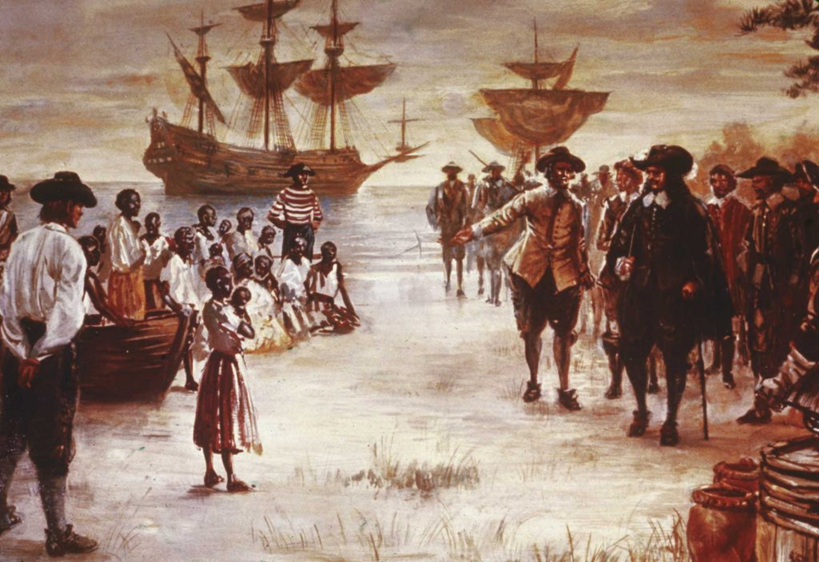
There had been indentured servants in the Massachusetts Bay Colony since its foundation and the 1641 Massachusetts Body of Liberties, the first de facto constitution of the Colony, legalised slavery—specifically “lawful captives taken in just wars, and such strangers as willingly sell themselves or are sold to us”.
The Body of Liberties was passed in the wake of the first major war Massachusetts fought with the Native Americans, the Pequot War (1636-38), where the colonists took hundreds of slaves, many of them sold to the sugar colonies in the Caribbean and others sold to the anti-Pequot Natives who had fought alongside them, but some remained in the Colony. (Massachusetts was led in this war by Sir Henry Vane, shortly before he returned to England to take up a seat in Parliament and play such a pivotal role in pushing the country into the Civil Wars.) In the colossal Metacom War or King Philip’s War (1675-76) that followed, and the Nine Years’ War (1688-97) that overlapped with the Salem witch panic, the same pattern of enslaving defeated Natives repeated.
However, the majority of slaves in Massachusetts were always African, and that majority got larger through the eighteenth century as the slave trade became racialised with the massive expansion of the Triangular Trade. Massachusetts acquired African slaves from the West Indies sugar islands, but it also traded directly—often in goods like rum—with the African Empires that did the slave-hunting for the Europeans.
That said, the number of slaves in Massachusetts was never very large, even relatively, because the economy was based on small farms, fishing, and urban artisanry. In format, slavery in Massachusetts was domestic and sparse (rarely more than two slaves to a household), categorically different in scale and type to the massive slave plantations in the southern colonies, especially Virginia, the Carolinas, and Maryland, and to a lesser extent Georgia.
Massachusetts finally abolished slavery in 1783, at the end of the rebellion that gained America independence. As Puritanism infused into society, becoming more a category than a particularist identity, it differentiated into several elements, some of which—like Congregationalists—moved towards abolitionism, and the elimination of official Puritanism in Massachusetts in the 1690s allowed an influx of Quakers, who had always been abolitionists. There was, therefore, a grassroots movement already when Massachusetts ignited the 1775 insurrection, but it was that war that tipped the balance.
“All men are created equal”, the rebels had said in explaining their actions, and this kind of rhetoric—drawing as it did on Christian precepts—threw into sharp relief the question of slavery for some colonists. And even those colonists who did not struggle internally with the hypocrisy were forced to reckon with the embarrassment of it because the British kept bringing it up. Dr. Samuel Johnson famously sneered, “How is it that we hear the loudest yelps for liberty among the drivers of negroes?”
Massachusetts had an easier time than most in settling its conscience without sacrificing much materially or in terms of societal structure because by 1775-76 there were “only” 3,500 slaves (1.3%) in a Colony of 268,500 people. The Massachusetts Constitution of 1780—drafted by John Adams—said, “all men are born free and equal”, and legal challenges based on this wording were to be the mechanism for bringing an end to slavery in Massachusetts.
______________________________________
SOURCES:
William O. Blake (1857), The History of Slavery and the Slave Trade: Ancient and Modern; the Forms of Slavery that Prevailed in Ancient Nations, Particularly in Greece and Rome, the African Slave Trade and the Political History of Slavery in the United States. Compiled from Authentic Materials, p. 388.
James A. Rawley and Stephen D. Behrendt (2005), The Transatlantic Slave Trade: A History, pp. 294-98.
Wendy Warren (2016), New England Bound: Slavery and Colonization in Early America, p. 106.
Alin Fumurescu (2019), Compromise and the American Founding, pp. 129-30.
 Kyle Orton's Blog
Very interesting. we Americans typically do not associate the New England states with slaveholding — just as the destination in the song “Follow the Drinkin’ Gourd“
My father’s ancestors were indentured ‘slaves’, scummed out of a Scottish debtors’ prison in the mid-1700s and brought to Oglethorpe’s colony in what’s now the state of Georgia. Since they didn’t arrive as citizens, does that mean my citizenship is “birthright”?
LikeLike
Potentially an open question at this stage!
LikeLike
You (and everyone) will kindly notice that I myself (chuckle) didn’t say that (muffled horselaugh) in my comment.
There are valid arguments to be made on both sides, but the present issue is rabidly emotional, childishly driven by celebrity worship.
LikeLike
The only way to handle anything at the present time is to laugh.
LikeLike
In the US, the covert “giving” of near-citizenship to illegal-entry “migrants” goes back a ways. Research what we called the Motor-Voter Act of 1993, and before that, the Cloward-Piven Strategy of 1966. Cloward & Piven watched Clinton sign the Congress-passed bill in ’93, standing behind him under the tent in the WH Rose Garden. (Do not trust today’s Wikipedia or Google Search. The topic’s too ideological. You have my email addy.)
The problem isn’t exactly “birthright citizenship”. Look at how the late Sara Sharif’s father got to stay in the UK (I think I’m correct) by way of marriage to her mother. It’s the using of using a legalism to do something which isn’t, or the deliberate setting up of a legalism which will facilitate. The Donald’s problem is that he’s not educated well enough to understand the difference.
LikeLiked by 1 person
Just another thought regarding Cloward-Piven. (Without any sort of proof) what if the “concept” behind the linked news article is along the same track?
https://www.reuters.com/sustainability/sustainable-finance-reporting/record-debt-costs-mean-climate-spending-could-push-nations-brink-insolvency-2024-04-15/
In the article is a call for “an overhaul of the global financial architecture”, apparently meaning redistribution of wealth, which itself wouldn’t have anything to do with (cough) solving the climate crisis.
Hmmmm.
(New York City’s 1975 financial crisis can be linked to a deliberate application of C-P upon the City’s financial/political/union labor “environment”.)
LikeLike