By Kyle Orton (@KyleWOrton) on 27 August 2026
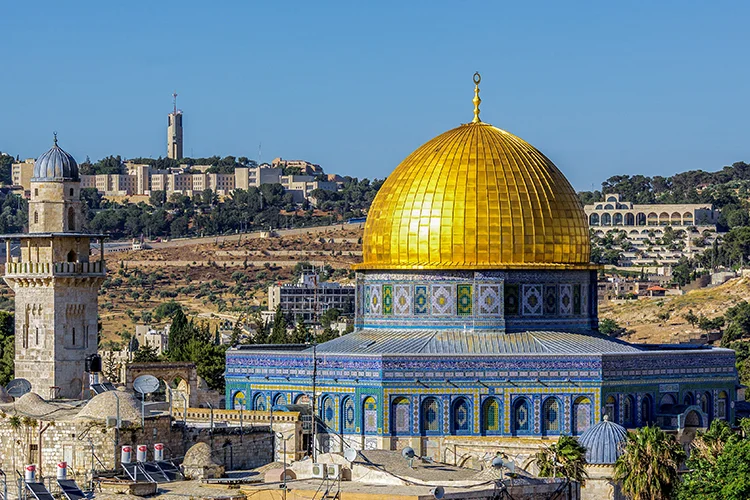
I recently went on Razib Khan’s podcast to discuss the various historical questions that surround the origins of Islam. The podcast can be found here.
The trigger for the discussion was a recent article I wrote about the journey of a Frankish bishop, Arculf, to Jerusalem c. 680 AD, nearly half-a-century after the Arab conquests, and how his observations fit with the broader evidence that Islam as we know it comes into being as a result of a process of evolution after the creation of the Arab Empire. Among other things, we also touch on the argument of “revisionist” Islamic Studies scholars since the 1970s that Muhammad and his original community of believers did not emerge in a pagan Mecca, deep in the Hijaz, but in the sectarian circles of Biblical monotheists in the Levant.
I find this subject endlessly fascinating and for those interested I have written a few other articles on aspects of this: the Jewish dimension to the early creed of the Arab conquerors; the historical difficulties with the Tradition story of the first Caliph; and what it looks like when “revisionist” interpretations go wildly wrong.
 Kyle Orton's Blog
What do we know about the “origins” of the “officially-written” Quran (when, by who, for what purpose, and what was excluded from it)? What do we care about a Sudanese fellow named Taha? What do we know about Ash’arism versus Mu’tazilism (when, from what and why, and what resulted from the ending of the “discourse”)? Does anyone today give a damn?
When religion is forced into politics, which is the first to be damaged?
What is the difference between cap-R “Religion” and spiritual faith?
In the social media age, how many people know how to spell the word “history” (not to mention, what it means)?
LikeLike