Category Archives: Foreign Policy

Liberating Raqqa from the Islamic State

By Kyle Orton (@KyleWOrton) on February 17, 2017

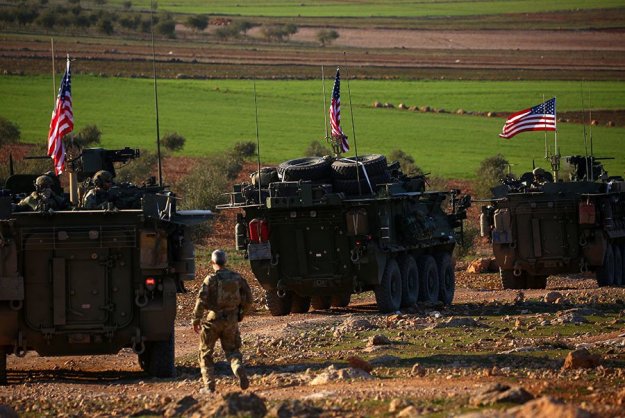
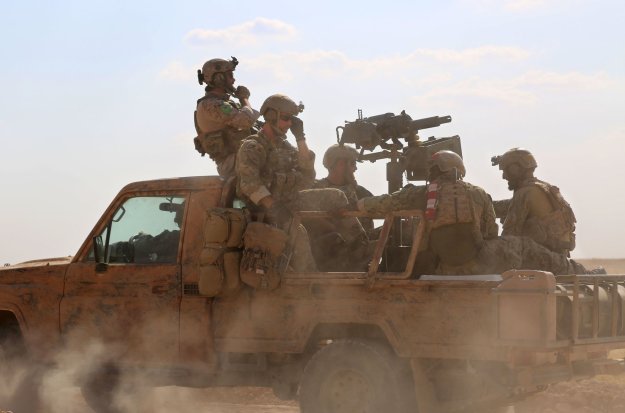
As the new administration of Donald Trump works through the United States’ options in dealing with Syria, and the Islamic State (IS) specifically, one option apparently under consideration is the use of greater numbers of combat troops to accelerate the expulsion of IS from its Syrian capital, Raqqa. While more U.S. troops would undoubtedly hasten the collapse of IS’s grip on its urban strongholds in Syria, such a policy risks continuing the failed U.S. policies of the past six years in Syria that have tackled symptoms of the conflict, rather than its causes, have tried to tackle elements in isolation from the wider conflict, and have placed too great an emphasis on military progress over politics. Continue reading

Assad’s Crimes Against Humanity and Trump’s Options in Syria

By Kyle Orton (@KyleWOrton) on February 7, 2017

Satellite picture of Sednaya prison, Syria (source)

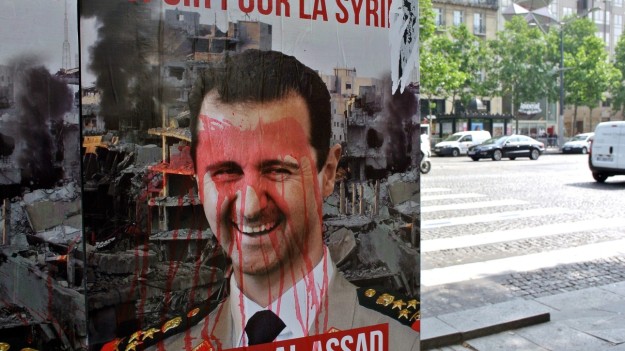
Amnesty International released a report today, “Human Slaughterhouse,” documenting the conditions in Sednaya prison, run by the regime of Bashar al-Assad in Syria, which amount to extermination as a crime against humanity. In addition to the deliberately insanitary conditions, routinized torture and maltreatment, there has been—and continues to be—a systematic campaign of extra-judicial massacre in which perhaps 13,000 people have perished. These findings buttress previous findings, and come with some political implications as the new American administration seeks to chart its way forward in Syria. Continue reading

What to Expect in Syria in 2017

By Kyle Orton (@KyleWOrton) on January 25, 2017

Syria has broken down as a functioning entity. There were some who saw in the takeover of Aleppo City last month by the coalition of states and militias that supports Bashar al-Assad’s regime the beginning of the end of the war. The pro-Assad coalition will make further territorial gains in 2017, but peace—even the peace of the graveyard—is still a long way off, and unlikely to ever arrive while Assad remains in power. The West, unwilling and apparently unable to remove him, nonetheless has vital interests in Syria that cannot be outsourced and must be secured by navigating a fragmented state. Continue reading

Chelsea Manning is a Traitor, Not a Hero

Published at The International Business Times

By Kyle Orton (@KyleWOrton) on January 18, 2017

Chelsea Manning (REUTERS/U.S. Army)

It might have been thought that a consistent opposition to treason was not all that difficult. But President Barack Obama’s surprise decision last night to commute the sentence of Bradley, now Chelsea, Manning, showed how deeply political partisanship has penetrated into areas like national security, where ideally country would be put before party or ideology. Continue reading

A Counterterrorism Policy in Syria That Helps Terrorists

Originally published at The Henry Jackson Society

By Kyle Orton (@KyleWOrton) on January 5, 2017

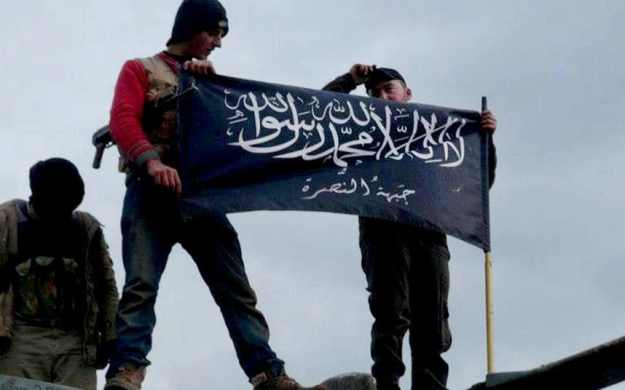
Jabhat al-Nusra jihadists wave their flag in Syria (Associated Press picture, source)

In the last week, the American-led Operation INHERENT RESOLVE, whose primary mission is to “degrade and ultimately destroy” the Islamic State (IS), has apparently conducted two airstrikes against senior members of Jabhat Fatah al-Sham (JFS), once known as Jabhat al-Nusra, al-Qaeda’s rebranded presence in Syria. In late 2016, the U.S. began an intensified targeting campaign against al-Qaeda and associated individuals; this appears to be a continuation of that policy, which provides some guidance about Western policy on Syria more broadly. Continue reading

President Obama Defends His Syria Policy to the Last

Originally published at The Henry Jackson Society

By Kyle Orton (@KyleWOrton) on December 17, 2016

At a rally in Pennsylvania as part of his “Thank You Tour” on Thursday, President-elect Donald Trump said:

We’ll build safe zones in Syria. When I look at what’s going on in Syria it’s so sad. It’s so sad, and we’ve got to help people. And we have the Gulf states; they have nothing but money. We don’t have money. We owe twenty trillion dollars. I will get the Gulf states to give us lots of money, and we’ll build and help build safe zones in Syria so people can have a chance.

Trump’s previous statements on Syria have actually demonstrated some consistency, and Trump has expressed support for safe zones before.

Taking Trump’s statement as a jumping-off point, the next day, at this final press conference of 2016, President Barack Obama was asked about the idea of safe zones in Syria and if he felt responsible for the horrors now unfolding in Aleppo. Obama responded: Continue reading

Defeating the Islamic State for Good

Originally published at The Henry Jackson Society

By Kyle Orton (@KyleWOrton) on December 2, 2016

Islamic State fortifications in Deir Ezzor (from an IS video, 11 July 2016)

The Islamic State (IS) is nominally under attack now in its twin capitals, Mosul in Iraq and Raqqa in Syria. This is necessary task, of course, but, as I’ve written repeatedly over the last few months, clearing IS from its urban centres is not sufficient. IS lost its overt urban holdings once before and nonetheless rebuilt in the deserts between 2008 and 2013, rising again to seize increasingly-large tracts of territory that were eventually declared a caliphate. IS was able to do this because of the success of its long-term method of war-making, and political changes in Baghdad—toward greater sectarianism and authoritarianism—that gave it more space to manoeuvre. The flaws in the strategy and partners the U.S.-led international Coalition have chosen to eliminate IS are creating a situation in which what will be called “victory” is really the resetting of the cycle. More evidence of this has recently come to the fore. Continue reading

Trump Might Continue Obama’s Dangerous Syria Policy

Originally published at The Henry Jackson Society

By Kyle Orton (@KyleWOrton) on November 24, 2016

There is not yet any clarity with regard what Donald Trump would do about Syria once he becomes President. Virtually everything about the incoming administration is in the “wait and see” phase. Still, on the current evidence, Trump’s Syria policy would appear to be a continuation of President Barack Obama’s policy of prioritizing the threat of the Islamic State (IS) and other non-state Sunni jihadist groups, while effectively aligning with the pro-regime coalition, made up of Russian air power and a ground force led by the Islamic Republic of Iran, stitched together out of the battered remnants of Bashar al-Assad’s army and his sectarian militias, Iranian paramilitary and regular forces, and foreign Shi’a jihadist groups under Iran’s control. The only potential difference is that Trump may formally repudiate the anti-Assad forces. The effect of this would be to destroy the mainstream Syrian opposition and empower al-Qaeda, but it would not bring stability to Syria. There are hints, however, that Trump is recruiting senior officials who will alter this policy. Continue reading

America Escalates the War Against Al-Qaeda in Syria

By Kyle Orton (@KyleWOrton) on November 11, 2016

On the right: Abdullah al-Muhaysini (source)

The United States and therefore the international Coalition is about to step up its operations against Jabhat Fatah al-Sham (JFS), al-Qaeda’s recently rebranded Syrian branch. This is a necessary policy, but pursued in isolation—without replacing the capacities that JFS provides to the insurgency—this action will strengthen the coalition supporting the regime of Bashar al-Assad, the actors chiefly responsible for the humanitarian abomination in Syria that has deliberately given rise to the security menace of the Islamic State (IS) and the flow of refugees into Europe that has destabilized Western security. Assad’s coalition also includes the Islamic Republic of Iran, a more significant global terrorism threat than IS which has repeatedly attacked the West. Continue reading

The Coalition’s Flawed Endgame Strategy for the Islamic State

By Kyle Orton (@KyleWOrton) on November 6, 2016

After some (perhaps wilful) confusion over the timing, the operation to expel the Islamic State (IS) from Raqqa City, its Syrian capital, got underway this morning, running concurrent with the effort to evict IS from its Iraqi capital, Mosul. There are deep concerns about the methods adopted in both cases. The ground forces the U.S.-led Coalition has chosen to support in Raqqa cannot lead to sustainable stability in Syria, something that is essential to defeat IS. While the Mosul operation has proceeded generally to plan, there are increasing signs of trouble within the operation itself and the most troubling aspect—the aftermath—still appears to be unplanned. Beyond this is the continued assault on Aleppo City by Bashar al-Assad’s regime and its Russian and Iranian patrons that is systematically destroying the forces needed if there is to be any settlement to Syria’s war that ends the space given to international terrorists. Continue reading