Category Archives: Foreign Policy

The Mosul Operation and Saddam’s Long Shadow

Originally published at The Henry Jackson Society

By Kyle Orton (@KyleWOrton) on October 28, 2016

Islamic State parade with captured equipment in Mosul, 23 June 2014 . (AP Photo, File)

The offensive to wrest the Iraqi capital of the Islamic State’s (IS) caliphate, Mosul, from the terror organization began on 17 October, led on the ground by Iraqi and Kurdish forces and supported from the air by the U.S.-led Coalition. While progress has been generally steady, IS has been able to mount a series of diversionary attacks, the most significant in Kirkuk City. Among those subsequently arrested for a role in planning the terrorism in Kirkuk is a cousin of Saddam Husayn, a micro-example of the influence of the fallen regime on the current situation in Iraq. Continue reading

Russia Moves in For the Kill in Syria

Originally published at The Henry Jackson Society

By Kyle Orton (@KyleWOrton) on October 21, 2016

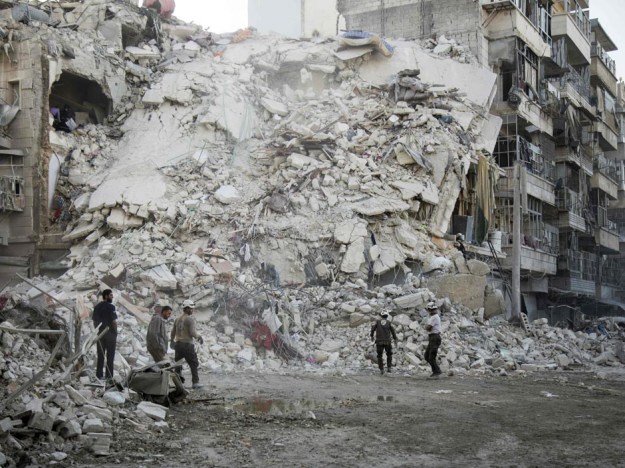
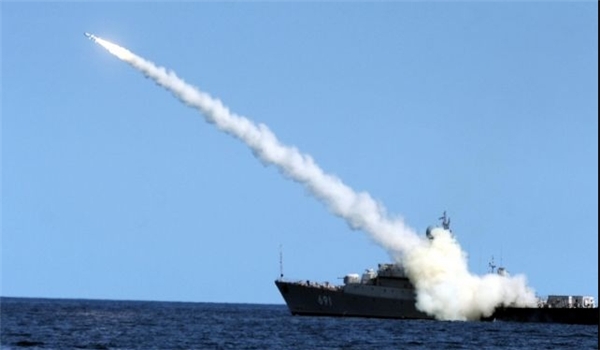
Vladimir Putin’s Russia is “deploying all of the Northern fleet and much of the Baltic fleet in the largest surface deployment since the end of the Cold War,” a NATO diplomat told Reuters on Wednesday night. These Naval assets are designed to buttress a final offensive by the remnants of Bashar al-Assad’s regime in Syria, which is effectively controlled on the ground by the Islamic Republic of Iran and an assortment of foreign Shi’a jihadists, against the insurgent-held east of Aleppo city, crushing once and for all the strategic threat posed by the rebellion to the regime, a threat that had already been all-but ended in the first months of Russia’s intervention. Nearly a year ago the U.S. began a political process with the Russians intended to end the war and begin a political transition. Moscow has subverted this process, using force to buttress its political efforts to secure Assad in power. The timing of this attack is seemingly intended as one final humiliation for President Barack Obama. Continue reading

‘Lone Wolf’ Attacks in Europe Are Nothing of the Sort

By Kyle Orton (@KyleWOrton) on July 29, 2016

Published in The Telegraph

Muhammad Riyad (Wurzburg) [top left], Mohammed Daleel (Ansbach) [top right], Adel Kermiche (Normandy) [bottom left], Abdelmalik Petitjean (Normandy) [bottom right]

Since early 2014, at the latest, the Islamic State (IS) has been plotting terrorist attacks in Europe. There has been a tendency, including during the wave of attacks in the last month in Europe, to favour the “lone wolf” explanation for IS-claimed terrorist attacks, where the killer’s only connection to IS is to be “inspired” by their online propaganda, but in reality the institutions of the caliphate stand behind this campaign.

The infiltration of IS’s enemies for the purposes of espionage and terrorism, whether this is government-held areas of Iraq and Syria or Western Europe, is led by Amn al-Kharji, the foreign service within IS’s sophisticated intelligence apparatus, as explained in a new report by The Henry Jackson Society. Continue reading

Donald Trump is Wrong (Again): Saddam Hussein Supported Terrorism

By Kyle Orton (@KyleWOrton) on July 6, 2016

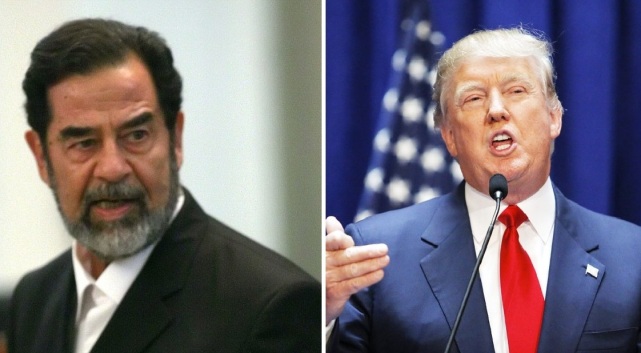
Last night Donald Trump unburdened himself of the view that Saddam Hussein was an efficient anti-terrorist operator. It is a statement Trump has made before, and it is one of such staggering ignorance—yet one which has such wide sympathy—that it seemed worth examining the multiple ways in which it was wrong. Continue reading

Don’t Count the Islamic State in Libya Down Yet

By Kyle Orton (@KyleWOrton) on June 13, 2016
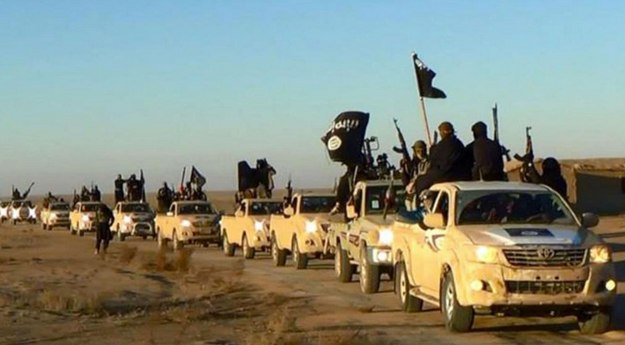
Islamic State convoy, Anbar Province, January 2014

Islamic State convoy, Anbar Province, January 2014

In Libya, the government of national accord (GNA)—in this case militias largely from western Libya, specifically Misrata, and the guards from the oil installations—claimed to have driven the Islamic State (IS) from Sirte on 11 June. Backed by artillery and airstrikes, with tanks moving in on the ground and some street clashes, the GNA-flagged troops had reached the city centre on 9 June. Expelled from Derna in the east in June 2015 and cleared from Sabratha in western Libya after a brief occupation earlier this year, this left Sirte as IS’s only major urban stronghold.

At the end of 2015, IS had controlled about 200 miles of coastline, from Abuqrayn (100 miles west of Sirte) to Nawafaliya (80 miles east of Sirte). On 12 May, an offensive began to take Sirte, coordinated through al-Bunyan al-Marsoos (The Solid Structure) Operations Room. The attack began from the Misratan militias in the west and by late May the eastern front had been opened up. At the end of May, IS lost Nawafaliya, and the collapse of territorial control has been steady since then, with IS now controlling about forty miles of coastline. A Libyan government official was quoted saying, “The battle wasn’t as difficult as we thought it would be.” While this is true—100 pro-GNA troops were killed and 500 wounded—there are reasons to be sceptical of the idea that this is the end for IS in Libya, and not just because IS still holds even areas of the Sirte.

IS had been in occupation of Sirte for almost exactly a year, meaning it has been able to accrue considerable resources, and had between 4,000 and 6,000 fighters in the city—composed of defectors from Ansar al-Shari’a (al-Qaeda), local tribes, elements of the fallen regime of Muammar al-Qaddafi, and operatives from IS core. IS has made a show of resistance, but the number of reported IS casualties is low, and the speed with which IS has fallen back makes such early reports plausible. In combination with the continued politico-military dysfunction of the ostensible governing authorities, this is very worrying.

Continue reading

Barack Obama Comes Clean

By Kyle Orton (@KyleWOrton) on March 11, 2016
1

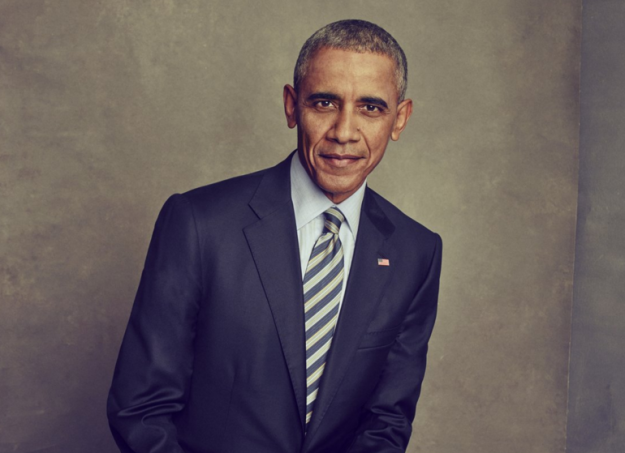
Yesterday, Jeffrey Goldberg’s latest interview with President Obama was published. There have been numerous worthwhile takes on what is a very revealing conversation, such as Max Boot and Nibras Kazimi, and it is very difficult to quarrel with the conclusion of David Frum that “the dominant theme of these interviews is that we, all of us, have grievously let down the president,” who has exactly one self-criticism: “Obama admits he does not make sufficient allowances for how unreasonable other people are.” What I think deserves most attention is that the President has finally aligned his rhetoric, especially on Iran, with his actual foreign policy. Continue reading

Russia is No Partner Against the Islamic State

By Kyle Orton (@KyleWOrton) on February 12, 2016

1

This morning, Russia ostensibly agreed to help the U.S. impose a ceasefire in Syria within a week—on the way to a negotiated settlement. This could not work right now, even if Russia intended it to. But Russia does not. Russia’s role since intervening in Syria in late September 2015 has been to bolster the regime of Bashar al-Assad and a primary tactic in that overarching strategic aim has been the attempt to destroy all opposition to Assad that the international community could possibly deal with, and to create a binary situation where there is only the regime and jihadi-Salafist terrorists, primarily the Islamic State (IS), and secondarily—in areas where they do not threaten key regime interests—Jabhat an-Nusra (al-Qaeda). Moscow will eventually turn on IS, but in the short-term Russia has engaged in indirect coordination with IS to weaken the rebels and push them out of key strategic areas, notably in eastern Aleppo where Russia bombed rebels out of the way who had been holding IS out for years. On Tuesday, Foreign Policy reported on another aspect of this Russia-IS collaboration that aims to empower the takfiris in the short-term as part of the long-term plan, also supported by Iran, to secure the Assad regime in power. Continue reading

From Bosnia to Guantanamo

By Kyle Orton (@KyleWOrton) on January 23, 2016

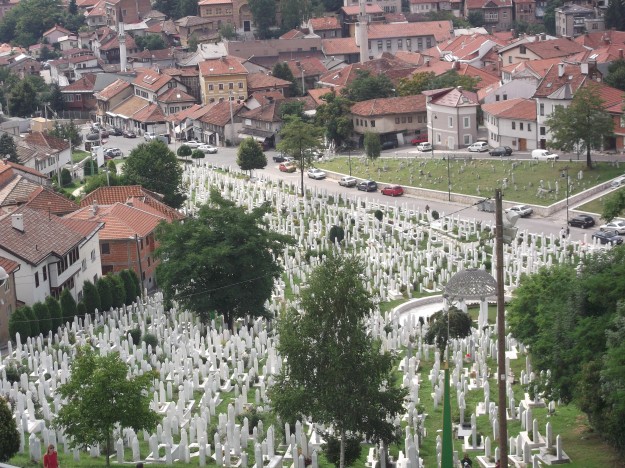
War cemetery in Sarajevo (personal picture, July 2011)

War cemetery in Sarajevo (personal photograph, July 2011)

It was announced on Thursday that Guantanamo inmates Tariq Mahmoud Ahmed as-Sawah and Abd al-Aziz Abduh Abdallah Ali as-Suwaydi had been transferred to Bosnia and Montenegro respectively. Sawah’s path to jihadi-Salafism allows a window into the Bosnian jihad, a much-underestimated factor in shaping al-Qaeda, its offshoots, and the wider jihadist movement. In that story is an examination of the role certain States have played in funding and otherwise helping the jihadists. It also leaves some questions about whether emptying Guantanamo of its dangerous inhabitants is the correct policy.
Continue reading

The Iranian Nuclear Deal and North Korea

By Kyle Orton (@KyleWOrton) on January 18, 2016

1

In the last few days, the international sanctions against the Islamic Republic of Iran’s nuclear program were lifted, which will allow Tehran access to $30 billion immediately and more than $100 billion will become available in short order. There are many fears about the uses Iran will put this money to, whether on the nuclear program itself, in aiding Iran’s imperial policy in the region, now proceeding with assistance from Russia, or perhaps exporting terrorism further abroad. An under-examined potential use of this money, highlighted by new sanctions the United States applied to Iran over its ballistic missile program, is to purchase weapons from North Korea. Pyongyang has already conducted what it claims is a hydrogen bomb test this year; fuelled by Iranian money the Hermit Kingdom might yet make more trouble for its neighbours and beyond. Continue reading

Defeating the Islamic State Requires Sunni Allies

By Kyle Orton (@KyleWOrton) on November 20, 2015

Published at Left Foot Forward.

1

In the wake of the atrocity in Paris David Cameron has accelerated the push to extend British airstrikes against the Islamic State (ISIS) beyond Iraq into Syria. As Cameron put it:

It is in Syria, in Raqqa, that [ISIS] has its headquarters and it is from Raqqa that some of the main threats against this country are planned and orchestrated. Raqqa, if you like, is the head of the snake.

There is no doubt that this is so. The British government’s decision to war against ISIS—but only on the Iraqi side of an Iraq-Syria border that ISIS has abolished—makes no sense. This one-handed clapping is especially puzzling because ISIS’s most valued holdings are in Syria. From revenue streams—namely oil fields and populations that can be taxed/extorted—to ideological legitimacy and recruitment tools, such as holding the town of Dabiq where ISIS prophesises End Times will take place, drawing in a large stream of foreign fighters, ISIS’s centre of gravity is in Syria. Continue reading