By Kyle Orton (@KyleWOrton) on 4 October 2023

By Kyle Orton (@KyleWOrton) on 20 June 2023
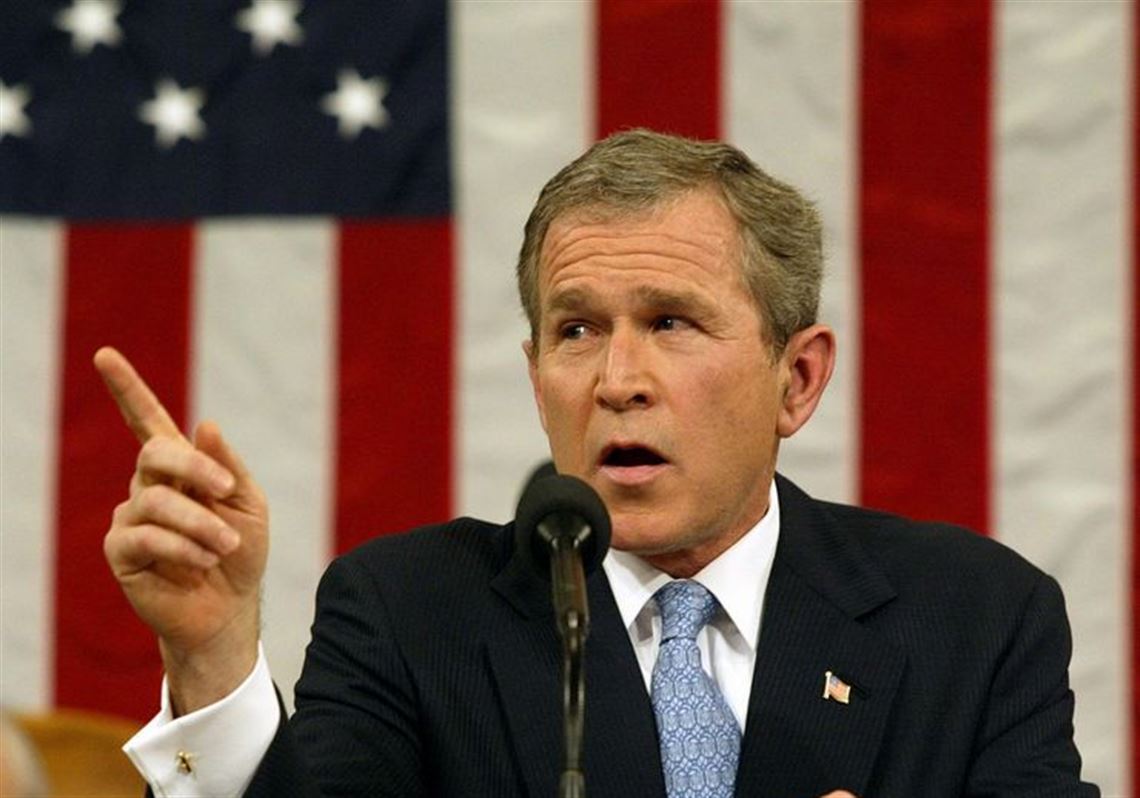
President George W. Bush said in his first State of the Union speech after 9/11, on 29 January 2002:
Our nation will continue to be steadfast, and patient and persistent in the pursuit of two great objectives. First, we will shut down terrorist camps, disrupt terrorist plans and bring terrorists to justice. … Our second goal is to prevent regimes that sponsor terror from threatening America or our friends and allies with weapons of mass destruction. …
North Korea is a regime arming with missiles and weapons of mass destruction, while starving its citizens. Iran aggressively pursues these weapons and exports terror, while an unelected few repress the Iranian people’s hope for freedom. Iraq continues to flaunt its hostility toward America and to support terror. … This is a regime that has already used poison gas to murder thousands of its own citizens …
States like these, and their terrorist allies, constitute an axis of evil, arming to threaten the peace of the world.
By Kyle Orton (@KyleWOrton) on 27 May 2021
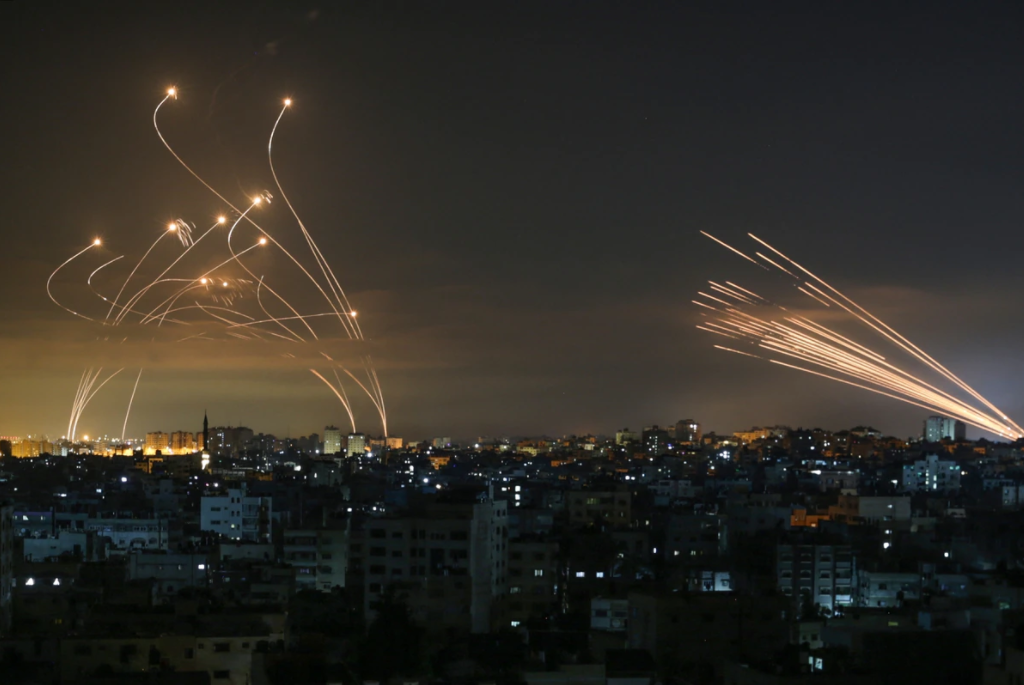
Israel’s Iron Dome missile defence system [left] activates over southern Israel against incoming HAMAS rockets [right], 14 May 2021
By Kyle Orton (@KyleWOrton) on 3 May 2021
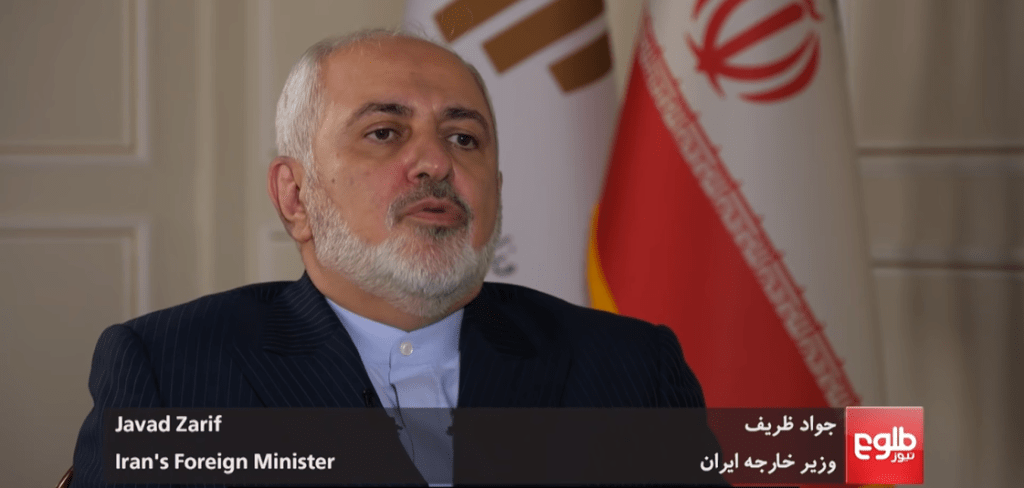
Iranian Foreign Minister Muhammad Javad Zarif, December 2020, during an interview with Lotfullah Najafizada of TOLO News
Iran’s Foreign Minister, Muhammad Javad Zarif, took part in an oral history project intended for internal use by the clerical dictatorship in February and on 25 April the audio was leaked—so goes the story. There is every reason to think this is a controlled leak, which is to say an information operation or a piece of strategic messaging—more pejoratively, propaganda or disinformation: choose the terminology as you will—intended to assist the Iranian theocracy as it works through its negotiations on the nuclear file with the new American administration of President Joe Biden. Still, there are some insights from this episode, as with an interview Zarif gave—focused on Afghanistan—in December. Continue reading
By Kyle Orton (@KyleWOrton) on 24 January 2021

Sakib Mahmuljin [image source]
By Kyle Orton (@KyleWOrton) on 20 January 2021

Last week, as one of his last acts in office, U.S. Secretary of State Mike Pompeo gave a speech about Iran’s collaboration with Al-Qaeda. It was unfortunate that Pompeo did this at this time and in this way, with such blatant political intent, because the factual content of Pompeo’s speech was unassailable: the Islamic Republic’s long relationship with Al-Qaeda does stretch back about three decades, the killing of Al-Qaeda’s deputy Abdullah Ahmed Abdullah (Abu Muhammad al-Masri) in Tehran in August 2020 is demonstrative of a shift in the strategic positioning of the organisation away from Pakistan to Iran, and even the part of Pompeo’s speech that got the most pushback—about Tehran’s contact with the 9/11 killers—is not controversial and is not new.
Unmentioned in Pompeo’s speech was one of the crucibles that forged this relationship, and forged Al-Qaeda into something more than a regional menace, namely the Bosnian war of 1992-5. Continue reading
By Kyle Orton (@KyleWOrton) on 16 November 2020
This article was originally published at European Eye on Radicalization

Credible reports over the last few days indicate that Al-Qaeda’s leader Ayman al-Zawahiri is dead, and there are even clearer reports that two of his most senior deputies have been killed. The terrorist network itself, however, will survive. Al-Qaeda has, in the last ten years, survived the killing of its charismatic founder Usama bin Laden, the upheaval of the “Arab spring”, and the rise of the Islamic State (IS)—all of them greater challenges than whatever short-term turbulence might attend the succession process.
Continue readingBy Kyle Orton (@KyleWOrton) on 5 February 2020

The Mujahideen Battalion (El-Mudžahid) in Bosnia in the early 1990s [image source]
This article was originally published at The Brief
By Kyle Orton (@KyleWOrton) on 26 October 2018
At the beginning of September, New America published a paper, based on recovered al-Qaeda documents, which concluded that there was “no evidence of cooperation” between the terrorist group and the Islamic Republic of Iran. New America’s study lauds itself for taking an approach that “avoids much of the challenge of politicization” in the discussion of Iran’s relationship with al-Qaeda. This is, to put it mildly, questionable.
A narrative gained currency in certain parts of the foreign policy community during the days of the Iraq war, and gained traction since the rise of the Islamic State (IS) in 2014, that Iran can be a partner in the region, at least against (Sunni) terrorism, since Tehran shares this goal with the West. Under President Barack Obama, this notion became policy: the US moved to bring Iran’s revolutionary government in from the cold, to integrate it into the international system. Continue reading

 Kyle Orton's Blog