By Kyle Orton (@KyleWOrton) on 27 May 2021
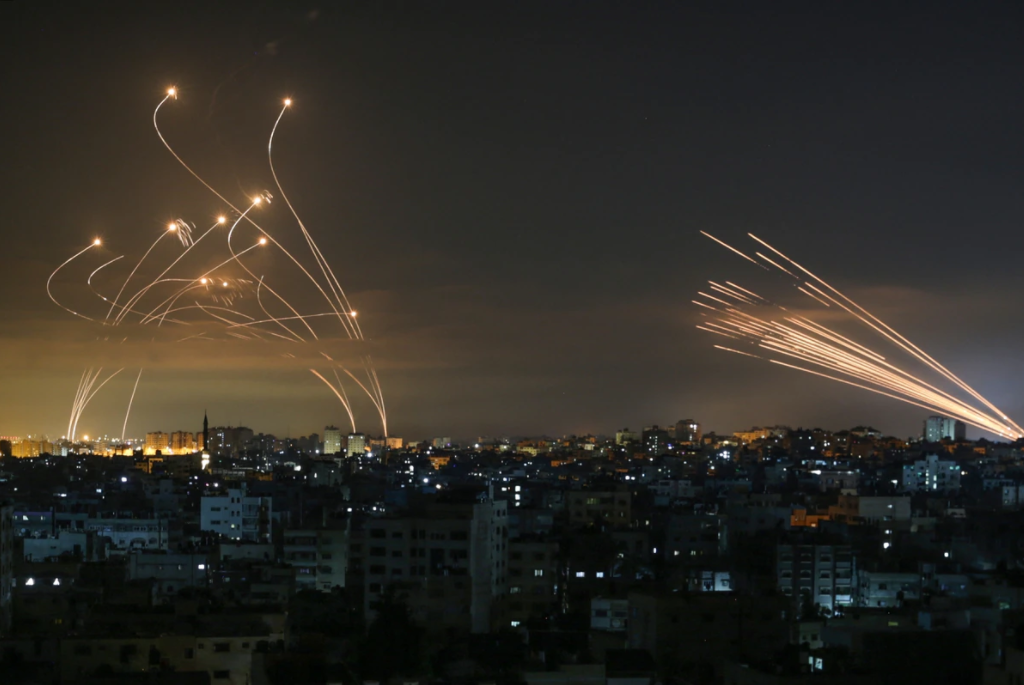
Israel’s Iron Dome missile defence system [left] activates over southern Israel against incoming HAMAS rockets [right], 14 May 2021
By Kyle Orton (@KyleWOrton) on 27 May 2021

Israel’s Iron Dome missile defence system [left] activates over southern Israel against incoming HAMAS rockets [right], 14 May 2021
By Kyle Orton (@KyleWOrton) on 3 May 2021
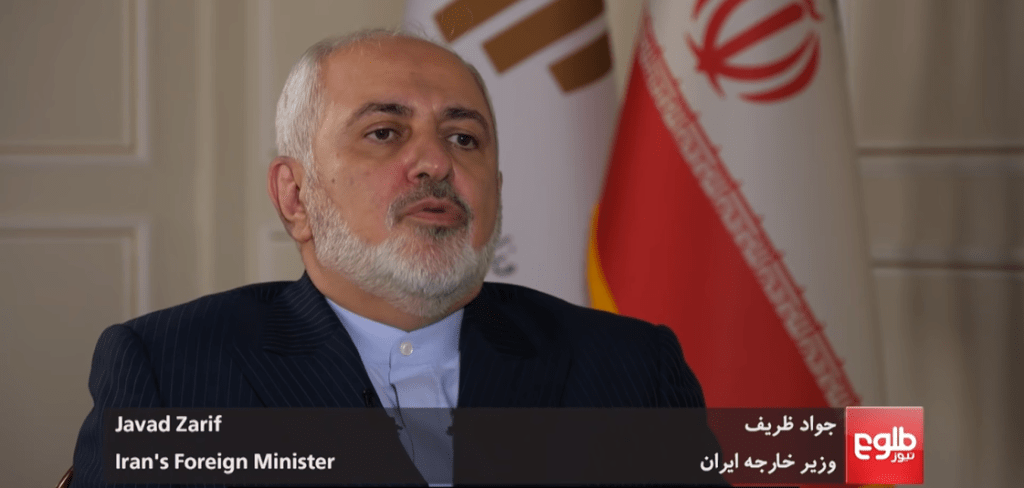
Iranian Foreign Minister Muhammad Javad Zarif, December 2020, during an interview with Lotfullah Najafizada of TOLO News
Iran’s Foreign Minister, Muhammad Javad Zarif, took part in an oral history project intended for internal use by the clerical dictatorship in February and on 25 April the audio was leaked—so goes the story. There is every reason to think this is a controlled leak, which is to say an information operation or a piece of strategic messaging—more pejoratively, propaganda or disinformation: choose the terminology as you will—intended to assist the Iranian theocracy as it works through its negotiations on the nuclear file with the new American administration of President Joe Biden. Still, there are some insights from this episode, as with an interview Zarif gave—focused on Afghanistan—in December. Continue reading
By Kyle Orton (@KyleWOrton) on 2 March 2021

A year ago, U.S. President Donald Trump gave the order to kill Qassem Soleimani, the de facto deputy leader of Iran. Arash Azizi’s The Shadow Commander: Soleimani, the U.S., and Iran’s Global Ambitions is an effort to explain who Soleimani was, how he rose to controlling the lives of millions of people well outside the borders of Iran, and how in the end he was brought down. Continue reading
By Kyle Orton (@KyleWOrton) on 7 January 2020
This article was originally published at European Eye on Radicalization

At 1 AM on 3 January, an American drone strike killed the head of Iran’s Quds Force, the division of the Islamic Revolutionary Guards Corps (IRGC) charged with exporting the Islamic revolution, and his Iraqi deputy, Jamal al-Ibrahimi (Abu Mahdi al-Muhandis). Sulaymani was the strategic driver of Iran’s expansionist policy in the Middle East, as well as the orchestrator of its terrorism and assassinations further afield. Unlike with the killing of Al-Qaeda’s Usama bin Laden in 2011 or the Islamic State’s Ibrahim al-Badri (Abu Bakr al-Baghdadi) in October, where the dynamics shifted little, Sulaymani’s death opens up questions about the direction in which the Middle East will now move. Continue reading
By Kyle Orton (@KyleWOrton) and Rob Clark (@RobertClark87) on 26 July 2019

A speedboat and a helicopter of the Iran’s Islamic Revolutionary Guards Corps Navy move around a British-flagged oil tanker Stena Impero, 21 July 2019. (Hasan Shirvani/Mizan News Agency via AP)
The series of provocations in the Gulf by the Islamic Republic of Iran, beginning with the sabotage of four vessels in mid-May, culminated last Friday in the illegal seizure by the Iranian Revolutionary Guard Corps Navy (IRGCN) of the British-flagged and operated Stena Impero oil tanker, followed shortly thereafter by the seizure of the Liberian-flagged, British operated MV Mesdar in the Strait of Hormuz. Only the Mesdar has been released. This episode has served to demonstrate the serious defence issues confronting Boris Johnson, the incoming United Kingdom (UK) Prime Minister, which have to be dealt with immediately and cannot be pushed off into the future when the domestic turbulence over Brexit has abated. Continue reading
By Kyle Orton (@KyleWOrton) on 10 May 2019

President Donald Trump speaks as John Bolton stands by in the Oval Office, 22 May 2018. OLIVER CONTRERAS-POOL/GETTY IMAGES
As tensions flared between the United States and Iran over the last ten days, a number of Washington’s Western allies have signalled their distance from the U.S. view, most dramatically in the case of Major-General Chris Ghika, Britain’s top commander in the coalition against the Islamic State (ISIS), who dismissed the U.S. intelligence assessment of an increased threat from Iran. This has since been walked back, but the fissures in the Western alliance over how to deal with Iran are real, and this has been compounded by differences within the U.S. government and the highly irregular nature of the Donald Trump administration, particularly its decision-making processes and public messaging. Continue reading
Published at The Arab Weekly
By Kyle Orton (@KyleWOrton) on 28 April 2019

A young boy rides his bicycle in Deraa // AFP
In military terms, the fall of Daraa, in south-western Syria, to Iranian and regime forces last July eliminated the last insurgent-held pocket not dominated by jihadists. Politically, it had profound effects, demonstrating American disengagement and Israel’s misperceptions of the Syrian landscape, particularly Russia’s role in it.
Recent signs of renewed insurgency in Daraa, however, underline how far from over Syria’s war is and how badly the West has mishandled the crisis. Continue reading
By Kyle Orton (@KyleWOrton) on 18 April 2019

Israeli opinion generally regards the country’s efforts to contain Iran, especially in Syria, as having been successful. In fact, the trendline runs the other way: Iran is constraining Israel, entrenching all around the Jewish state. Continue reading
By Kyle Orton (@KyleWOrton) on 9 April 2019

As the regime of Bashar Assad appears to be consolidating in Syria, many Israelis have concluded that their government’s handling of the crisis was generally laudable.
The most comprehensive statement of this view was given recently in Haaretz by Anshel Pfeffer (Netanyahu Outfoxed Russia, Iran and ISIS With His Cynical, Ruthless Syria Policy.) Every aspect of this is open to question. Continue reading
By Kyle Orton (@KyleWOrton) on 20 March 2019

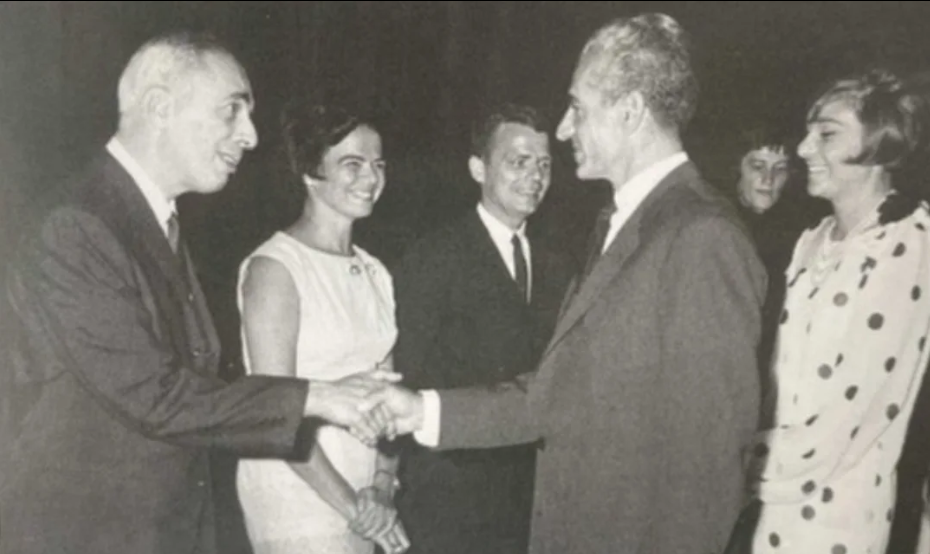
Abbas Milani’s The Shah gives a portrait of Iran’s last monarch, Muhammad Reza Pahlavi, and the impact that his downfall forty years ago continues to have in the Middle East, notably the emboldening of the Islamist movement. Continue reading