Category Archives: Iraq

The Jihadists’ Information War in Syria and Iraq

By Kyle Orton (@KyleWOrton) on July 22, 2014

In April, the International Centre for the Study of Radicalisation produced a report, ‘Measuring Importance and Influence in Syrian Foreign Fighter Networks,’ which examined the use of social media in recruiting people to the jihadist groups, referring almost solely to Syria at that time, but which applies equally to Iraq. I have now gotten around to reading it and its findings are extremely interesting.  Continue reading

Syria’s Rebellion on the Ropes

By Kyle Orton (@KyleWOrton) on July 9, 2014

3

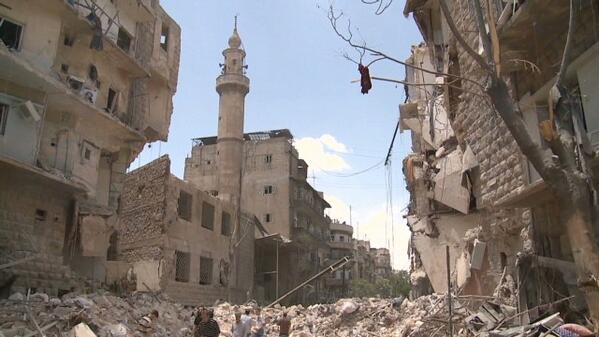
The devastated city of Aleppo

As we approach the forty month mark for the Syrian uprising the situation is grimmer than it has ever been. Not just the casualties: more than 200,000 people dead. Not just the physical devastation and mass-displacement of more than a third of the country. But now in military terms the rebellion is on the defensive in a way it has not been since it erupted at the end of 2011, after more than six months of peaceful protests.

Continue reading

The Anti-Interventionists Got What They Wanted in Syria and Iraq: Are They Happy Now?

By Kyle Orton (@KyleWOrton) on July 1, 2014

BBC map of ISIS’/Islamic State’s operational area

As we enter the fortieth month of Syria’s ordeal, and with the renegade Zarqawi’ite network in Iraq finally declaring that its virtual ministries are being uploaded into a fully restored Caliphate extending from Raqqa to Tikrit, the most depressing thought of all is that it did not have to be this way. Continue reading

Is Jordan Next To Fall To ISIS?

By Kyle Orton (@KyleWOrton) on June 29, 2014

Jordan’s King Abdullah: The West’s closest Arab ally—but for how long?

It has been a rough fortnight for Jordan. After the fall of Mosul, the Islamic State of Iraq and Syria (ISIS) announced an “unofficial” branch in Jordan and the Iraqi government surrendered its only legal border-crossing on the 110-mile frontier to tribal insurgents—opposed to ISIS, so far as can be told, but not without the danger they will be overwhelmed as has previously happened in areas like Fallujah, where the dam initially fell to local insurgents (albeit Ba’athists) and ISIS then pushed them out. Jordan has beefed up its border-defences but this has not stopped the speculation on whether Jordan, the “jewel in the ISIS crown,” will be the next domino to fall to the takfiris. Continue reading

To Save Iraq from ISIS: Get Rid Of Maliki, Support The Kurds And Syrian Rebels

By Kyle Orton (@KyleWOrton) on June 20, 2014

The Peshmerga (those who face death): the people's army of Iraqi Kurdistan

The Peshmerga (those who face death): the people’s army of Iraqi Kurdistan

President Obama met with Congressional leaders on Wednesday to brief them on a “comprehensive approach” to Iraq, which for now will not include airstrikes against the Islamic State of Iraq and Syria (ISIS) inside Iraq, “in part because”—as previously reported—”U.S. military officials lack sufficient information to hit targets that would shift momentum on the battlefield.” Obama has let this drag out so long that the Sahwa (Awakening), the Sunni Arabs who rose up against ISIS’s previous incarnations, al-Qaeda in Iraq (AQI) and the Islamic State of Iraq (ISI), are now either eliminated or mixed back in with ISIS and—crucially—other locally-focussed Sunni Islamist insurgent groups, notably the Sufi-Ba’athist Jaysh an-Naqshbandi. Defensible as this is, there are stronger reasons why the decision not to strike is correct.

Continue reading

After The Fall Of Mosul

By Kyle Orton (@KyleWOrton) on June 11, 2014

(2014-06-10)- 150,000 people flee Mosul

Traffic-jam as 150,000 people flee ISIS rule in Mosul

We might all hope to be vindicated so quickly. I wrote yesterday morning of the way the Iraqi government’s sectarianism and authoritarianism had created the space among Iraqi Sunni Arabs in which the Islamic State of Iraq and Syria (ISIS) could operate, and that I saw no way out of this, so one should expect escalating violence, chaos, and killing. By midday, Mosul, Iraq’s third city after Baghdad and Basra, had fallen to ISIS. Continue reading

Nouri al-Maliki Is Pushing Iraq Into The Abyss

By Kyle Orton (@KyleWOrton) on June 10, 2014

Iraqi Prime Minister Nouri al-Maliki

Whatever one thinks about the decision in 2003 to finish the war Saddam Hussein started by annexing Kuwait, serious people should be able to agree that the way the country was abandoned by the United States—first politically after 2009 and then militarily—was deeply irresponsible, not least because of the motives of this decision. Continue reading

The Tragedy of Tony Blair

By Kyle Orton (@KyleWOrton) on April 24, 2014

Tony Blair at Bloomberg on April 23

There’s a case to be made that Tony Blair is the most important figure in the development of the concept of “humanitarian intervention” since the end of the Cold War. When adumbrating his doctrine at the Chicago Economics Club in April 1999, Blair made very clear that this was no wild-eyed utopianism. Continue reading

Who Are The Khawarij?

By Kyle Orton (@KyleWOrton) on April 17, 2014
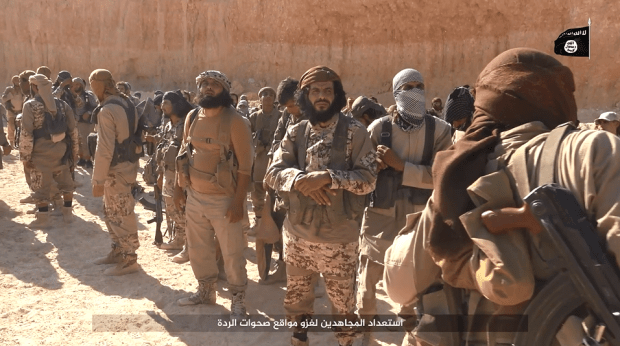
2016-11-10-is-closing-in-on-palmyra-p10

Since the Syrian rebellion went to war with the Islamic State of Iraq and Syria (ISIS) in January, there has been a parallel campaign of political warfare by the rebels and al-Qaeda’s branch in Syria, Jabhat al-Nusra, to delegitimize ISIS. This has often taken the form of referring to ISIS as Kharijites or the Khawarij.

This Khawarij are an ancient sect who broke from the Rashidun (Rightly-Guided) Caliphate in the name of righteous revolt in 658, and continued their campaign against the caliphate—by then in the hands of the Umayyads—for a century and more. Regarded as perhaps the first terrorists in Islamdom (by another definition it would be the Nizaris, a.k.a. “The Assassins”), the connotations of the Khawarij label are extremism and deviance, particularly a tendency to excommunicate (make takfir against) Muslims not only for sins that do not merit excommunication, but simply for reasons of political exclusivism. Continue reading

Book Review: Cruelty and Silence (1993) by Kanan Makiya

By Kyle Orton (@KyleWOrton) on April 7, 2014


Kanan Makiya, an Arab author who writes of the decline of the Arab world as a story where Arabs have the primary agency, can be disorienting to read in the modern context. The first part of Cruelty and Silence deals with the cruelty of the Arab world in general and the Saddam Hussein regime in particular, Continue reading