Category Archives: Islamic Militancy

Yemen and Al-Qaeda’s Long-Term Strategy

By Kyle Orton (@KyleWOrton) on May 10, 2016

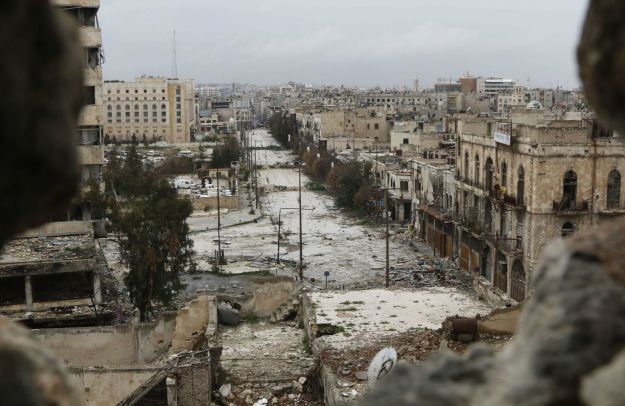
During al-Qaeda's occupation of al-Mukalla, Yemen, April 2015 to April 2016 (source)

During al-Qaeda’s occupation of al-Mukalla, Yemen, April 2015 to April 2016 (source)

In Yemen, at the end of last month, al-Qaeda in the Arabian Peninsula (AQAP) was cleared from al-Mukalla, their major urban stronghold. This ends a year of occupation and brings to a close what is effectively the third emirate or statelet AQAP has either set up or attempted to set up in Yemen since 2011. These projects offer some insights into al-Qaeda’s methodology in getting to an Islamic state, including its rebranding in opposition to the Islamic State (IS). Continue reading

Obituary: Abd al-Rahman Mustafa al-Qaduli (Abu Ali al-Anbari)

By Kyle Orton (@KyleWOrton) on March 25, 2016

1

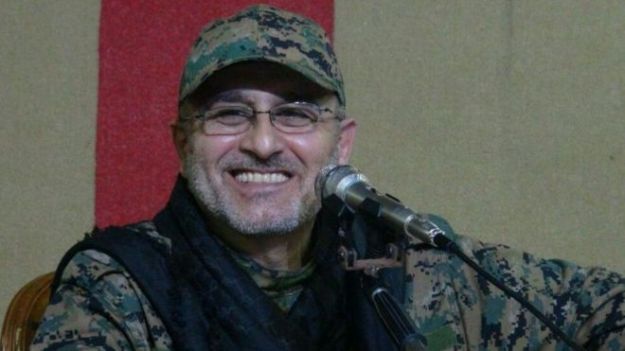
Abd al-Rahman al-Qaduli (Abu Ali al-Anbari) in an Islamic State video in May 2016

United States Secretary of Defense Ashton Carter announced this morning that he believed Abd al-Rahman Mustafa al-Qaduli, a senior leader of the Islamic State (IS), had been killed in a U.S. raid into Syria earlier this week. Al-Qaduli was “serving as a finance minister” and had been “responsible for some external affairs and plots,” said Carter. America is “systematically eliminating ISIL’s cabinet,” Carter went on, noting the alleged killing of Tarkhan Batirashvili (Abu Umar al-Shishani) two weeks ago, adding that al-Qaduli’s removal will “hamper” IS in conducting operations inside and outside its caliphate. Continue reading

Death of a Caliphate Founder and the Role of Assad

By Kyle Orton (@KyleWOrton) on March 10, 2016

Published at Middle East Eye.

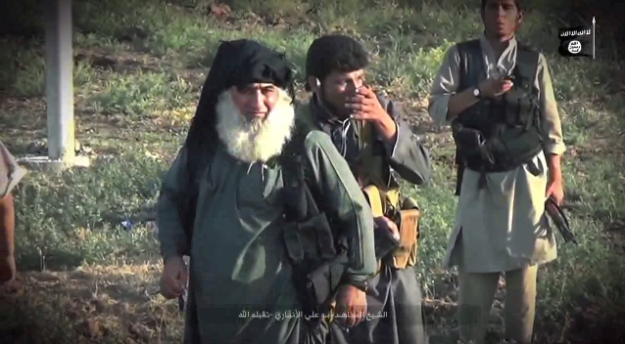
Amr al-Absi on the left

Amr al-Absi on the left

Amr al-Absi, one of the most senior Islamic State (IS) leaders, was killed in an airstrike on 3 March, according to reports on social media and by the SITE Intelligence Group. Al-Absi—better known as Abu Atheer al-Absi or just Abu al-Atheer—exemplified several key dynamics at work in Syria.

Atheer was among the jihadi-Salafists released by the regime of Bashar al-Assad at the beginning of Syria’s uprising in an attempt to make self-fulfilling the regime’s claim that the opposition were terrorists, and was also a seminal figure in making Syria so dangerous for journalists that it allowed Assad and IS to shape the coverage as if Syria was a binary choice between them.

Atheer is among the longstanding ultra-extremists who shape and define IS spiritually, and he was crucial in more concrete terms in IS infiltrating and expanding in Syria, particularly by bringing in foreigners who are among the most ideologically driven category of IS members. Continue reading

Russia is No Partner Against the Islamic State

By Kyle Orton (@KyleWOrton) on February 12, 2016

1

This morning, Russia ostensibly agreed to help the U.S. impose a ceasefire in Syria within a week—on the way to a negotiated settlement. This could not work right now, even if Russia intended it to. But Russia does not. Russia’s role since intervening in Syria in late September 2015 has been to bolster the regime of Bashar al-Assad and a primary tactic in that overarching strategic aim has been the attempt to destroy all opposition to Assad that the international community could possibly deal with, and to create a binary situation where there is only the regime and jihadi-Salafist terrorists, primarily the Islamic State (IS), and secondarily—in areas where they do not threaten key regime interests—Jabhat an-Nusra (al-Qaeda). Moscow will eventually turn on IS, but in the short-term Russia has engaged in indirect coordination with IS to weaken the rebels and push them out of key strategic areas, notably in eastern Aleppo where Russia bombed rebels out of the way who had been holding IS out for years. On Tuesday, Foreign Policy reported on another aspect of this Russia-IS collaboration that aims to empower the takfiris in the short-term as part of the long-term plan, also supported by Iran, to secure the Assad regime in power. Continue reading

Another Legacy of the Bosnian Jihad

By Kyle Orton (@KyleWOrton) on February 5, 2016

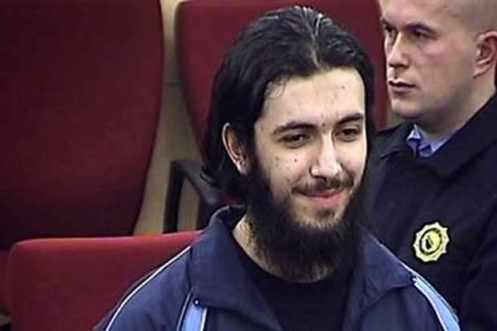
Mirsad Bektašević

Mirsad Bektašević (2005)

I recently wrote about the jihad in Bosnia. This much-neglected aspect of the war in the 1990s was crucial in shaping al-Qaeda, and global jihadism more broadly, providing this movement, and Clerical Iran, with a staging post in Europe, not least because Tehran’s spy-terrorist capabilities had been deployed to bring many of the jihadists into the country and train them in the first place. While Islamist militancy and terrorism were brought to Bosnia largely as imports, their entry was facilitated by the Party of Democratic Action (SDA), the ruling party to this day. While the war itself trained many jihadist “graduates,” almost all of whom were allowed to stay (or at least received Bosnian passports that gave them that right), the entry of extremist charities/missionaries to lead the rebuilding, many of them bankrolled by Saudi Arabia, entrenched the jihadists and spread their form of Islam in Bosnia after the war. As such, Bosnia became a hospitable operating environment for Islamist recruitment and training and both veterans of the war and people radicalized in Bosnia since have continued to show up in the ranks of international terrorism. It is of interest, therefore, to have an important old case re-emerge in a new way in the last few days, that of Mirsad Bektašević, which again highlighted Bosnia’s importance in the formulation of the infrastructure that underpins the jihadi-Salafist movement, the less-than-clear division between al-Qaeda and the Islamic State (IS) when it comes to the European facilitation networks, and the dangers of seeing Iran as a partner in stability. Continue reading

Paris Attackers Had Already Appeared in the Islamic State’s Propaganda

By Kyle Orton (@KyleWOrton) on January 25, 2016

1

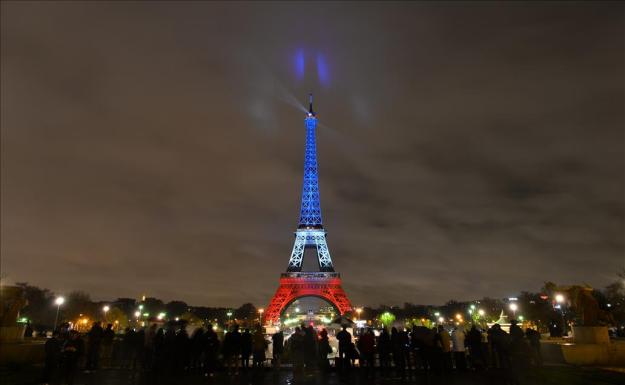
It has already been established that the on-the-ground leader of the Islamic State’s atrocities on Paris on November 13, Abdelhamid Abaaoud (Abu Umar al-Baljiki), had already been promoted in IS’s media. Abaaoud appeared in the February 2015 edition of IS’s Dabiq magazine. It now seems likely that at least one more of the Paris attackers, Foued Mohamed Aggad (Abu Fu’ad al-Faransi), had appeared in IS media already—the November 2014 video that was the fifth (of seven) in the series fronted by Mohammed Emwazi (“Jihadi John”), IS’s British executioner. The November 2014 video showed the slaughter of around twenty men, supposedly soldiers and airmen of the Assad regime, in the village of Dabiq, and the beheading of American aid worker Abdul-Rahman (Peter) Kassig. It is also possible that two further Paris attackers, Bilal Hadfi (Abu Mujahid al-Faransi) and Brahim Abdeslam (Abul-Qa’qa al-Baljiki), appeared in the November 2014 video. Continue reading

From Bosnia to Guantanamo

By Kyle Orton (@KyleWOrton) on January 23, 2016

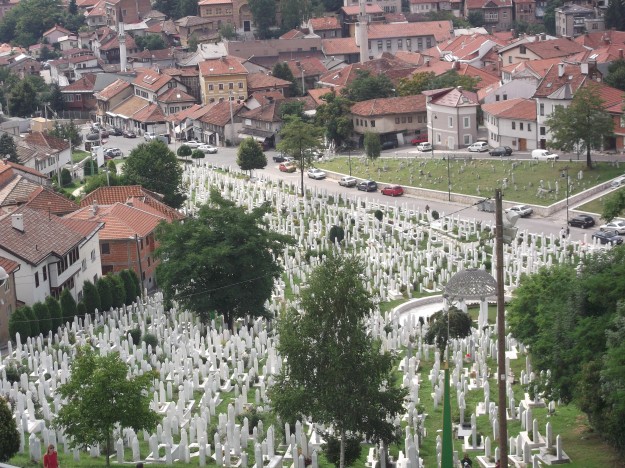
War cemetery in Sarajevo (personal picture, July 2011)

War cemetery in Sarajevo (personal photograph, July 2011)

It was announced on Thursday that Guantanamo inmates Tariq Mahmoud Ahmed as-Sawah and Abd al-Aziz Abduh Abdallah Ali as-Suwaydi had been transferred to Bosnia and Montenegro respectively. Sawah’s path to jihadi-Salafism allows a window into the Bosnian jihad, a much-underestimated factor in shaping al-Qaeda, its offshoots, and the wider jihadist movement. In that story is an examination of the role certain States have played in funding and otherwise helping the jihadists. It also leaves some questions about whether emptying Guantanamo of its dangerous inhabitants is the correct policy.
Continue reading

The Rise and Fall of Mohammed Emwazi

By Kyle Orton (@KyleWOrton) on January 20, 2016

Emwazi

Emwazi’s eulogy picture in Dabiq

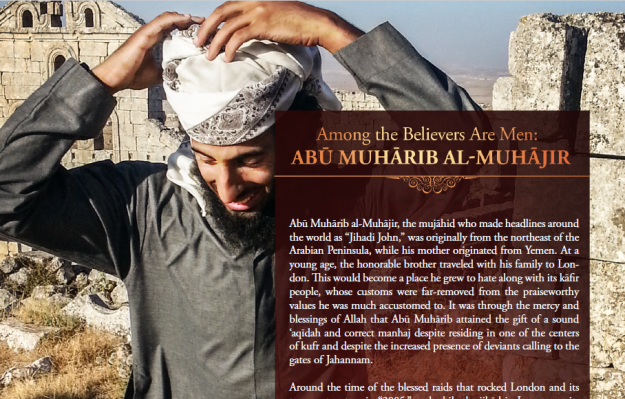
Yesterday, the Islamic State (IS) released their thirteenth issue of Dabiq. Among many things, it contained an admission of death for Mohammed Emwazi (“Jihadi John”). Referred to by his kunya, Abu Muharib al-Muhajir, Dabiq said (pp. 22-23) Emwazi had been hit by an “unmanned drone in the city of ar-Raqqah” on November 12, “destroying the car and killing him instantly.” The biography that Dabiq offered gave some intriguing details, confirming some surmises I had made about Emwazi when his identity was revealed last spring, including his early involvement in an al-Qaeda network in London sending fighters to al-Shabab in Somalia—the thing that brought him to the attention of the security services, confirming that the truth was the inverse of CAGE’s infamous claim that harassment by the MI5 had radicalized Emwazi—and that Emwazi had left Britain to do jihad in Syria in the company of another British citizen. Emwazi was also in the thick of it when IS broke from al-Qaeda and offers an interesting and rare example of a European IS fighter entrusted with an internal security role for the caliphate.
Continue reading

Response to Response: Yes, Saddam Laid the Groundwork for the Islamic State

By Kyle Orton (@KyleWOrton) on January 12, 2016

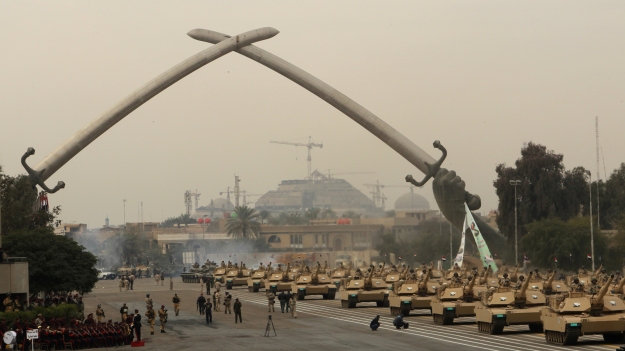
Iraqi army MIA1 Abrams tanks march under the victory Arch landmark during a parade to mark the 91st Army Day in Baghdad on January 6, 2012, weeks after US troops completed their pullout. The Armed Forces Day display by the fledgling 280,000-strong security force completely reformed after the US-led invasion of 2003. AFP PHOTO/ALI AL-SAADI (Photo credit should read ALI AL-SAADI/AFP/Getty Images)

The “Victory Arch,” which Saddam built after the war with Iran. (January 2012)

About three weeks ago I wrote a piece for The New York Times explaining the evolution of Saddam Hussein’s regime away from the hard-secularism of its Ba’athist origins, and how this had prepared the ground for the Islamic State (IS). I received much positive feedback, but the social media reaction was inevitable: little thought and much anger, particularly from people who view Iraqi history through a political prism and felt I was trying to exculpate George W. Bush. With rare exceptions, the critique could hardly be called thoughtful. So it is nice to finally have such a critique to deal with, from Samuel Helfont and Michael Brill in today’s Foreign Affairs. Continue reading

Islamic State Leaders Fall, Islamic State Remains

By Kyle Orton (@KyleWOrton) on December 30, 2015

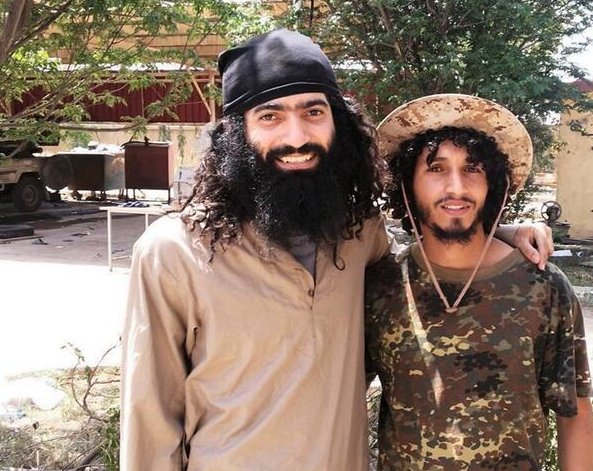
Charaffe al-Mouadan

Abdelhamid al-Abaaoud and Charaffe al-Mouadan

Last night, Steve Warren, the American colonel who is the spokesman for the international campaign against the Islamic State (IS), the U.S.-led Operation INHERENT RESOLVE, announced that between December 7 and December 27, ten IS “leaders” had been killed. Col. Warren adumbrated the positions of the IS leaders, allowing the conclusion that five had been part of IS’s external operations wing, which conducts international terrorism, and five were part of IS’s internal operations, i.e. part of the military operations and security infrastructure that helps IS maintain and expand its statelet in Syria and Iraq. Col. Warren presented this as an important blow to IS that had assisted in inflicting the recent territorial losses on IS. There is reason for scepticism on these points.  Continue reading