Category Archives: Islamic Militancy

The Fall of Islamic State’s Caliphate Won’t End the Foreign Attacks

By Kyle Orton (@KyleWOrton) on 28 July 2017

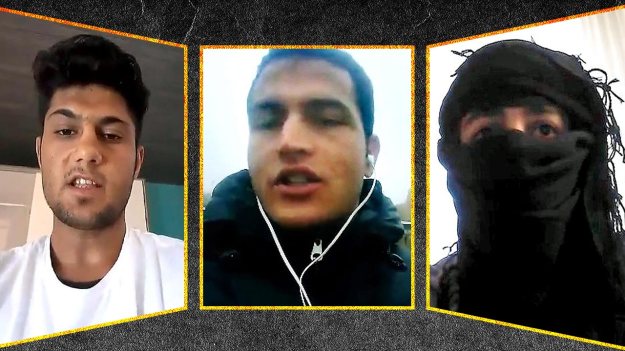
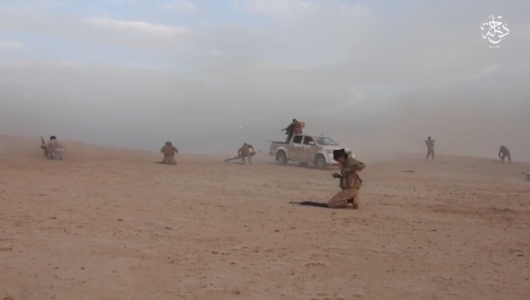
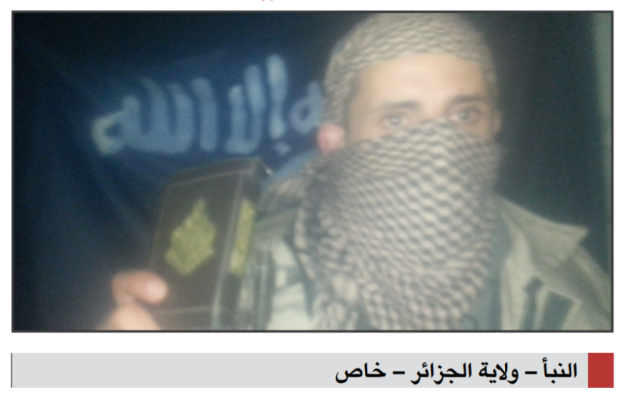
Screenshots from the bay’a-martyrdom videos of: Riaz Khan Ahmadzai (Muhammad Riyad), Anis Amri, Mohammad Daleel (source)

The Islamic State (IS) has escalated a campaign of global terrorism over the past few years, exactly as it was losing overt control of territory. In 2016, IS consolidated a model of guiding and claiming attacks in the West and elsewhere via is media channel, Amaq. The outlines of this have long been known. Now there is significant new detail thanks to a four part reporting series in the German newspaper BILD by Björn Stritzel, who contacted Amaq and posed over many months—in consultation with Germany security agencies—as a potential terrorist. Continue reading

Islamic State’s Attack in Iran Was a Bid For the Mantle of ‘Protector of the Sunnis’

Published at The Telegraph

By Kyle Orton (@KyleWOrton) on 7 June 2017

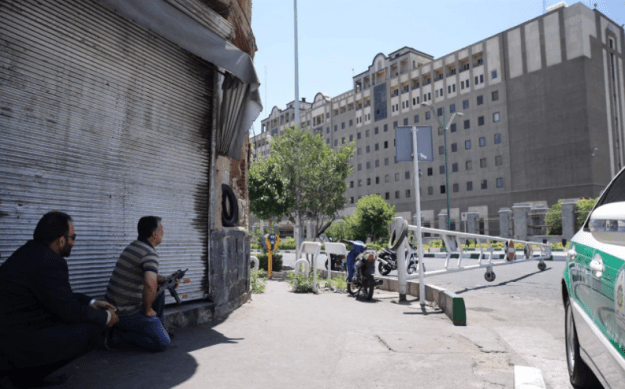
Armed terrorists stormed the Iranian parliament complex in Tehran (CREDIT: OMID VAHABZADEH/AFP/GETTY IMAGES)

In its choice of target and timing, ISIL has shown, once again, its skill in exploiting the rivalries of its enemies—setting them against one another to buy itself greater room for manoeuvre. Continue reading

Coalition on the Verge of Repeating the Mistakes of the Past Against the Islamic State

This article was published at BICOM

By Kyle Orton (@KyleWOrton) on 16 May 2017

Within the next month, the Islamic State (IS) will likely lose its grip on its Iraqi capital, Mosul, and the operation to drive it from its Syrian capital, Raqqa, will begin. The destruction of IS’s caliphate, however, is not even close to the end of the road for the movement, not least because of the manner in which it is being accomplished.

At its core the IS movement is waging a revolutionary war, and as Craig Whiteside, a fellow with The International Centre for Counter-Terrorism has explained, this means that the focus is on legitimacy. Military victories come and go but if IS is, over the long-term, gaining acceptance—whether from support, resignation, or fear—among the population it hopes to govern (the Sunni Arabs), then it is winning. It is for this reason that IS tries to embed political victories within its military defeats. Continue reading

Jihadist Terror Remains a Significant Problem for Britain

By Kyle Orton (@KyleWOrton) on 4 May 2017

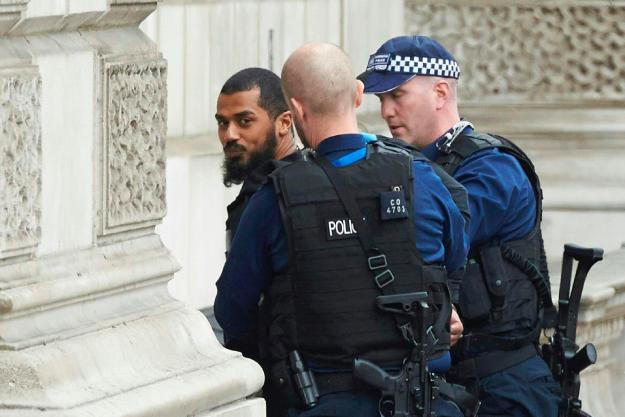
Khalid Mohamed Omar Ali being arrested (image source)

Over the past week, the authorities have disrupted two potential terrorist attacks in London. This follows the Westminster Bridge attack in March, which was claimed by the Islamic State (IS). Britain has been one of the most targeted states by IS’s campaign of global terror, and these latest incidents—whether or not they transpire to be IS-linked—underline the scale of the terrorist threat to Britain. Security forces prevented thirteen attacks in the U.K. between June 2013 and March 2017, and at any one time there are five-hundred live investigations into potential terrorist incidents, with 3,000 Britons believed to be capable of committing an act of domestic terrorism. Continue reading

How Powerful is the Islamic State in Saudi Arabia?

Originally posted at The Henry Jackson Society

By Kyle Orton (@KyleWOrton) on 27 April 2017

The U.S. Department of State designated Mubarak Mohammed Alotaibi, also transliterated as Mubarak Muhammad al-Utaybi, as a Specially Designated Global Terrorist (SDGT), because he has “committed, or pose[s] a significant risk of committing, acts of terrorism that threaten the security of U.S. nationals or the national security, foreign policy, or economy of the United States.” Al-Utaybi is a citizen of Saudi Arabia and is the “Syria-based deputy leader” of the Islamic State’s (IS) branch in the Saudi Kingdom. Continue reading

Russia and Iran Use Terrorism Against Western Interests

By Kyle Orton (@KyleWOrton) on 25 April 2017

The evidence is mounting that Vladimir Putin’s government supports the Taliban as a means of thwarting NATO interests in Afghanistan. Russia has long manipulated terrorists, internally and abroad, to suit its policy aims, but as Moscow solidifies its relationship with the Iranian revolution the Russian policy, particularly in Syria, has become something more like a conventional alliance—not least because those who run Tehran’s foreign policy and the clerical regime’s most powerful assets are themselves terrorists. Continue reading

Signs of Recovery for the Islamic State

By Kyle Orton (@KyleWOrton) on April 22, 2017

The operation to clear the Islamic State (IS) from its Iraqi capital, Mosul, began on 17 October and is now 188 days old. IS was announced cleared from east Mosul on 25 January, and the offensive that began on 19 February to clear the more densely-populated and difficult west Mosul has ostensibly swept IS from sixty percent of that area. Official sources claim IS now controls less than seven percent of Iraqi territory, down from forty percent in 2014. But yesterday, a car bomb struck Zuhur, the first attack of this kind in east Mosul since February, murdering at least four people. This is part of a pattern of attacks that suggests the Mosul operation itself was rushed and more importantly that IS is already recovering in liberated areas. Continue reading

Islamic State Newsletter Claims Algerian Suicide Bombing

By Kyle Orton (@KyleWOrton) on 9 April 2017

Picture published in Al-Naba 71 of Izzadeen Balqamri, the Islamic State suicide bomber in Constantine, Algeria, on 26 February 2017.

In the seventy-first edition of Al-Naba, the Islamic State’s English-language newsletter, published on 9 March 2017, the organisation claimed responsibility for the suicide bombing outside the police station in Constantine, Algeria, on 26 February. Al-Naba published a picture of the attacker and named him as Izzadeen Balqamri. Continue reading

Islamic State Expands its Foreign Attacks Capacity As the Caliphate Collapses

Published at The International Business Times

By Kyle Orton (@KyleWOrton) on 23 March 2017

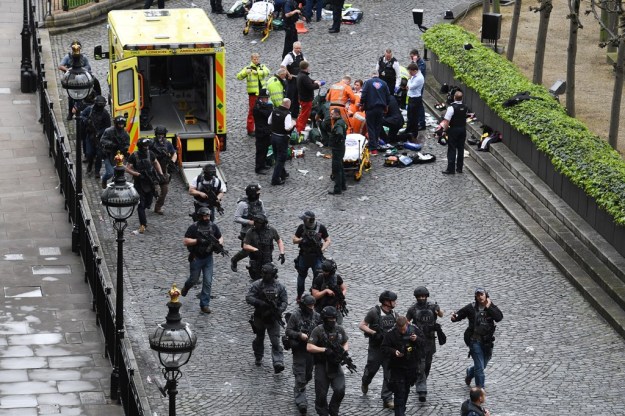
Aftermath of the Islamic State terrorist attack in Westminster, March 2017 (image source)

Just after 2:30pm yesterday afternoon, a terrorist mowed down pedestrians with a car on Westminster Bridge before jumping out near Parliament and stabbing a police officer to death. Three people were murdered, forty were injured, and the attacker was shot dead. The Islamic State (ISIS) has now claimed the attack.

The most important question is whether the terrorist had co-conspirators. Prime Minister Theresa May told Parliament this morning that it is “believed that this attacker acted alone”. It is crucial that this is not misread as saying that the attacker was a ‘lone wolf’. The arrests in Birmingham overnight suggest that this killer could have been part of a broader network, which would be consistent with the pattern of ISIS behaviour.

In a new report for the Henry Jackson Society, documents 152 foreign ISIS attacks in 34 countries since 2002, the vast majority in the past two years. In nearly three-quarters of the cases the attacks have a direct link to the organisation, and those without often have accomplices who assist in the atrocities in some way. Just 15% of the attacks have been by inspired individuals, who had no demonstrated connection to ISIS or anyone else in planning or executing their attack. Continue reading

The West Helped the Assad Regime and Its Allies Take Palmyra

By Kyle Orton (@KyleWOrton) on March 4, 2017

For the second March in a row, the Islamic State (IS) was driven from control of Palmyra this week in an operation led by Iranian ground forces and supported by Russian airstrikes—the actual instruments of power that remain to the government of Bashar al-Assad in Syria. The primary interest this time is that the United States-led international anti-IS coalition and its Operation INHERENT RESOLVE (OIR) provided crucial assistance to the regime. Continue reading