By Kyle Orton (@KyleWOrton) on 29 August 2018

Two ideas that have become quite prevalent are that the Islamic State is defeated or on its way to defeat and that the Syrian war is winding down. Both are gravely mistaken. Continue reading
By Kyle Orton (@KyleWOrton) on 29 August 2018
Two ideas that have become quite prevalent are that the Islamic State is defeated or on its way to defeat and that the Syrian war is winding down. Both are gravely mistaken. Continue reading
By Kyle Orton (@KyleWOrton) on 26 August 2018

Islamic State in Afghanistan (image source)
Attaullah Khogyani, a spokesman from Nangarhar province, says—and the spokesman for American forces in Afghanistan, Lt. Col. Martin O’Donnell, confirmed—that the leader of the Islamic State in Khorasan (ISK), Sad Arhabi, was killed in an airstrike in his province last night. It seems another ten ISK jihadists were killed alongside Arhabi. Continue reading
Book Review: Carter Malkasian, ‘Illusions of Victory’, Oxford University Press, 2017. pp. 280.
By Kyle Orton (@KyleWOrton) on 4 July 2018
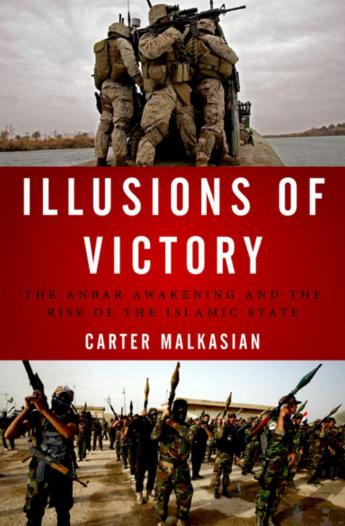
Carter Malkasian sets out in Illusions of Victory: The Anbar Awakening and the Rise of the Islamic State to upend the conventional understanding of the campaign against the Islamic State (IS) movement, known at the time as al-Qaeda in Iraq (AQI), in Anbar province of western Iraq. Continue reading
By Kyle Orton (@KyleWOrton) on 25 March 2018

Katibat al-Imam al-Bukhari (image source)
The United States Department of State designated Katibat al-Imam al-Bukhari (KIB), the Taliban-loyal insurgent unit in Syria, as a Specially Designated Global Terrorist (SDGT) on 22 March. Over the last few days, KIB and other insurgent groups have issued statements in response. Continue reading
By Kyle Orton (@KyleWOrton) on 9 February 2018
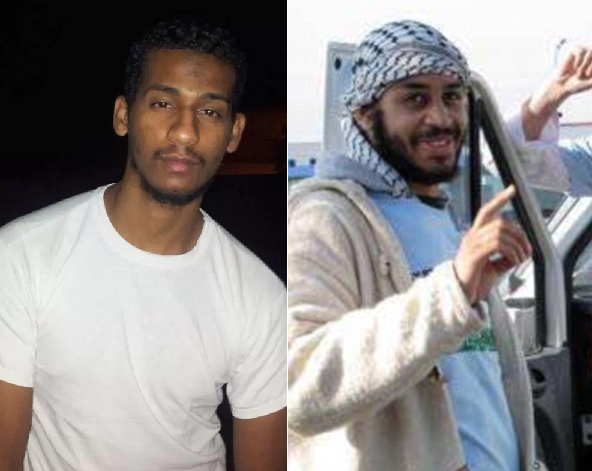
El Shafee Elsheikh (image source) and Alexanda Kotey (image source)
Last night, The New York Times reported and Reuters confirmed that two British Islamic State (IS) jihadists, El Shafee Elsheikh and Alexanda Kotey, both of them designated terrorists by the United States, have been arrested in Syria. Kotey and Elsheikh, along with the late Mohammed Emwazi (Abu Muharib al-Muhajir) and Aine Davis, formed a four-man cell that has become known as “The Beatles”—hence Emwazi being near-universally known as “Jihadi John”—that guarded, abused, and murdered hostages for IS from before the “caliphate” was founded in 2014. Continue reading
By Kyle Orton (@KyleWOrton) on 5 February 2018
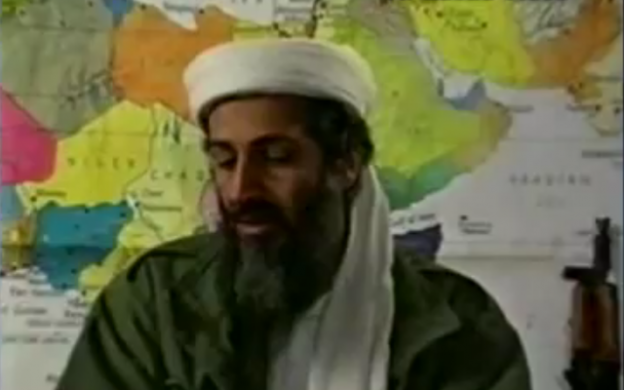
Usama bin Ladin in an al-Qaeda video (image source: CNN)
A letter released by the Office of the Director of National Intelligence (ODNI) on 20 May 2015, the “Letter to Abu Abdallah al-Hajj”, was written by an al-Qaeda leader on 17 December 2007. The letter, reproduced below with some editions in transliteration and some important sections highlighted bold, is interesting for several reasons. Continue reading
By Kyle Orton (@KyleWOrton) on 24 January 2018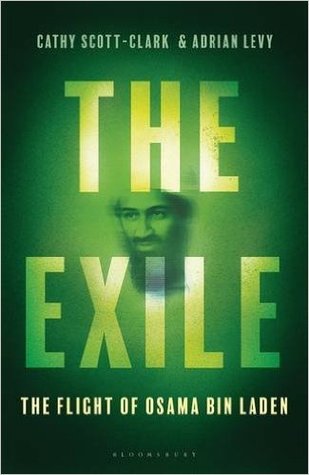
The new book by the investigative journalists Adrian Levy and Catherine Scott-Clark, The Exile: The Flight of Osama bin Laden, charts the career of al-Qaeda’s founder, Osama bin Laden, up to the day he became a household name—11 September 2001—through his downfall in 2011, to the end of 2016, when al-Qaeda was more powerful than ever. It is a thoroughly absorbing account, bringing to light vast tranches of new facts, including many intricate details of how al-Qaeda operated on a human, day-to-day level, and of those states and para-states that shielded the terror network, collaborated with it, and enabled it—and still do.
The gathering of the Bin Laden network in Sudan and then in the Taliban-held areas of Afghanistan in the 1990s is a familiar story, but the splits and debates among the Arab jihadists around Bin Laden, including the opposition of significant numbers of them to the 9/11 massacre, is perhaps less well known. The authors trace out how Bin Laden manipulated his own quasi-institutions to get his way. First, Bin Laden took on the plan of a man, Khalid Shaykh Muhammad (KSM), who was not even a member of al-Qaeda, and then, ahead of the crucial vote, packed the shura (consultation) council with ultra-zealous Egyptians by engineering a merger between al-Qaeda and Islamic Jihad, led by Ayman al-Zawahiri. Continue reading
By Kyle Orton (@KyleWOrton) on 19 December 2017
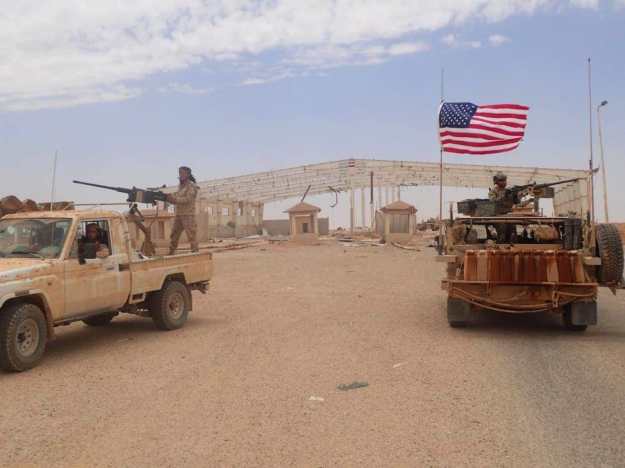
Maghaweer al-Thawra fighters next to American forces at at-Tanf. (Hammurabi’s Justice News/AP)
The U.S.-led Coalition against the Islamic State (IS) has killed several more leaders of the terrorist group, but continues to find that the campaign is hindered by the incompetence and/or complicity of the regime of Bashar al-Asad and his supporters in Iran and Russia. Continue reading
By Kyle Orton (@KyleWOrton) on 28 November 2017

Iyad al-Tubaysi (Abu Julaybib), Sami al-Uraydi (Abu Mahmud al-Shami)
Hay’at Tahrir al-Sham (HTS), a powerful jihadi group in northern Syria, formally broke from al-Qaeda’s command over the last year. In the morning of 27 November, HTS arrested the leaders of a splinter group from HTS that remained loyal to al-Qaeda. The arrests were first reported by pro-al-Qaeda media, and HTS has since released a statement explaining that, having found this al-Qaeda group unwilling to even engage in reconciliation talks, it placed “the heads of turmoil” before a “just shari’a court” to answer for spreading demoralizing lies about HTS. Continue reading
By Kyle Orton (@KyleWOrton) on 22 November 2017

Qassem Sulaymani, Hassan Nasrallah, Ali Khamene’i (c. 2000)
The leader of the Quds Force, the expeditionary unit of Iran’s Islamic Revolutionary Guard Corps (IRGC), Qassem Sulaymani, sent a public letter to Iran’s Supreme Leader, Ali Khamene’i, on 21 November. Sulaymani’s letter followed the apparent expulsion of the Islamic State from its last urban stronghold in Syria, al-Bukamal, on 19 November, by Quds Force-led troops—foreign Shi’a jihadists and the battered remnants of Bashar al-Asad’s army. Sulaymani informs Khamene’i that in overcoming the Islamic State and its caliphate, a “U.S.-Zionist-made” terrorist entity has been defeated. Sulaymani’s letter is reproduced below, with some noteworthy sections highlighted in bold. Continue reading

