Category Archives: Islamic Militancy

Islamic State and Female Fighters

By Kyle Orton (@KyleWOrton) on 8 November 2017

The Khansaa Brigade, the all-female Islamic State espionage network and morality enforcement police, based in Raqqa city (image source)

A debate has been ongoing among analysts since the summer about the view the Islamic State (IS) has of mujahidat (female fighters). IS now seems to have settled the matter in its newsletter, Al-Naba. Continue reading

Don’t Celebrate the Fall of Raqqa Just Yet

By Kyle Orton (@KyleWOrton) on 24 October 2017

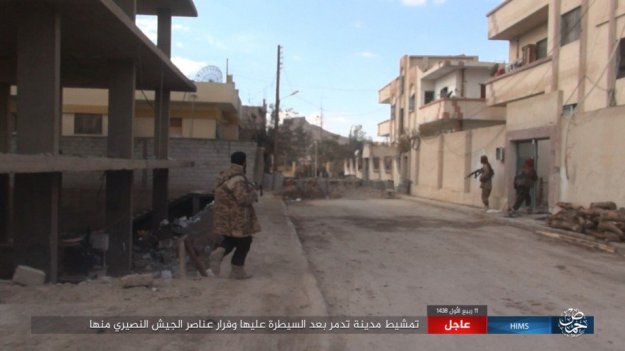
Raqqa city has been destroyed (image source)

The Islamic State (IS) captured Raqqa city, its first provincial capital, in January 2014. Six months later, IS declared its caliphate and Raqqa became its de facto capital. Last Tuesday, the partner force of the US-led anti-IS Coalition, the “Syrian Democratic Forces” (SDF), entered the city centre in Raqqa. A deal had evacuated most of the remaining jihadists over the prior weekend, though a determined core remained and still held about 10 per cent of the city. The caliphate is crumbling and the Coalition says IS has 6,500 fighters left. According to the Coalition, this puts IS “on the verge of a devastating defeat”. Unfortunately, there is no reason to believe this is true. To the contrary, IS is more powerful at this point, in theatre, even after the military reverses inflicted on it by the Coalition, than in the period after the “defeat” of 2008, and the outlook is more favourable now to IS. Moreover, IS now has an international reach, physically and ideologically, it did not previously possess. Continue reading

Coalition Risks Replacing the Islamic State With the Islamic Republic

By Kyle Orton (@KyleWOrton) on 14 September 2017

By recent reports, one could easily come away with the impression that war and instability across the Fertile Crescent are winding down. Predictions about what comes next, always a risky enterprise in the Middle East, are at a point of unique vulnerability. Chaos and violence for some considerable time to come look like a safe bet, though the timing and scale look more uncertain. Nonetheless, certain trendlines are visible, most clearly the emergence of a regional order, abetted by the international coalition’s campaign against the self-proclaimed Islamic State (ISIS), dominated by the Islamic Republic of Iran. Continue reading

The Leadership Structure of the Islamic State

By Kyle Orton (@KyleWOrton) on 6 August 2017

A year ago, I wrote a report documenting the biographies of Islamic State (IS) leaders and something of the structure of the organisation. Since then, the intricacies of the structure have been further revealed, even as it has somewhat crumbled in practice. The caliphate—the statelet built by IS—has been significantly degraded: the Iraqi “capital”, Mosul, has fallen, and operation to clear the Syrian “capital”, Raqqa, is underway. More significantly, upwards of 40% of those profiled have been killed, so it seemed an opportune moment for an update on who currently leads the world’s most infamous terrorist movement.
Continue reading

The Fall of Islamic State’s Caliphate Won’t End the Foreign Attacks

By Kyle Orton (@KyleWOrton) on 28 July 2017

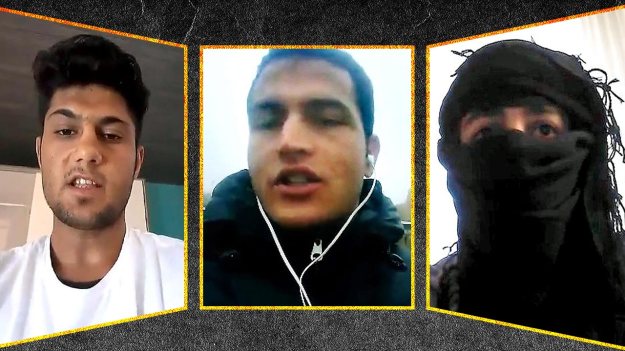
Screenshots from the bay’a-martyrdom videos of: Riaz Khan Ahmadzai (Muhammad Riyad), Anis Amri, Mohammad Daleel (source)

The Islamic State (IS) has escalated a campaign of global terrorism over the past few years, exactly as it was losing overt control of territory. In 2016, IS consolidated a model of guiding and claiming attacks in the West and elsewhere via is media channel, Amaq. The outlines of this have long been known. Now there is significant new detail thanks to a four part reporting series in the German newspaper BILD by Björn Stritzel, who contacted Amaq and posed over many months—in consultation with Germany security agencies—as a potential terrorist. Continue reading

Islamic State’s Attack in Iran Was a Bid For the Mantle of ‘Protector of the Sunnis’

Published at The Telegraph

By Kyle Orton (@KyleWOrton) on 7 June 2017

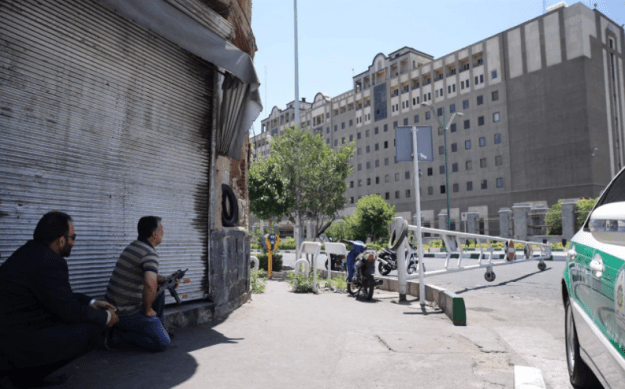
Armed terrorists stormed the Iranian parliament complex in Tehran (CREDIT: OMID VAHABZADEH/AFP/GETTY IMAGES)

In its choice of target and timing, ISIL has shown, once again, its skill in exploiting the rivalries of its enemies—setting them against one another to buy itself greater room for manoeuvre. Continue reading

Coalition on the Verge of Repeating the Mistakes of the Past Against the Islamic State

This article was published at BICOM

By Kyle Orton (@KyleWOrton) on 16 May 2017
Within the next month, the Islamic State (IS) will likely lose its grip on its Iraqi capital, Mosul, and the operation to drive it from its Syrian capital, Raqqa, will begin. The destruction of IS’s caliphate, however, is not even close to the end of the road for the movement, not least because of the manner in which it is being accomplished.

At its core the IS movement is waging a revolutionary war, and as Craig Whiteside, a fellow with The International Centre for Counter-Terrorism has explained, this means that the focus is on legitimacy. Military victories come and go but if IS is, over the long-term, gaining acceptance—whether from support, resignation, or fear—among the population it hopes to govern (the Sunni Arabs), then it is winning. It is for this reason that IS tries to embed political victories within its military defeats. Continue reading

Jihadist Terror Remains a Significant Problem for Britain

By Kyle Orton (@KyleWOrton) on 4 May 2017

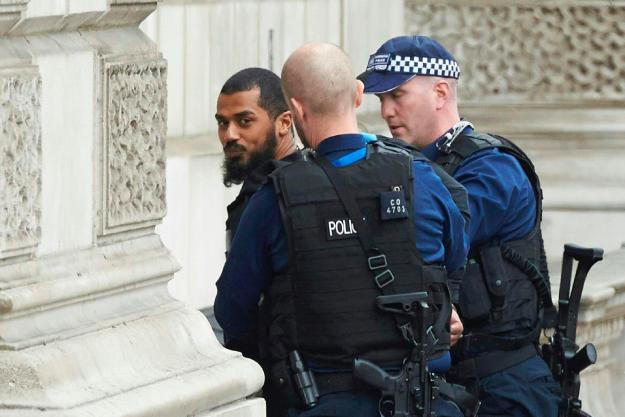
Khalid Mohamed Omar Ali being arrested (image source)

Over the past week, the authorities have disrupted two potential terrorist attacks in London. This follows the Westminster Bridge attack in March, which was claimed by the Islamic State (IS). Britain has been one of the most targeted states by IS’s campaign of global terror, and these latest incidents—whether or not they transpire to be IS-linked—underline the scale of the terrorist threat to Britain. Security forces prevented thirteen attacks in the U.K. between June 2013 and March 2017, and at any one time there are five-hundred live investigations into potential terrorist incidents, with 3,000 Britons believed to be capable of committing an act of domestic terrorism. Continue reading

How Powerful is the Islamic State in Saudi Arabia?

Originally posted at The Henry Jackson Society

By Kyle Orton (@KyleWOrton) on 27 April 2017

The U.S. Department of State designated Mubarak Mohammed Alotaibi, also transliterated as Mubarak Muhammad al-Utaybi, as a Specially Designated Global Terrorist (SDGT), because he has “committed, or pose[s] a significant risk of committing, acts of terrorism that threaten the security of U.S. nationals or the national security, foreign policy, or economy of the United States.” Al-Utaybi is a citizen of Saudi Arabia and is the “Syria-based deputy leader” of the Islamic State’s (IS) branch in the Saudi Kingdom. Continue reading

Russia and Iran Use Terrorism Against Western Interests

By Kyle Orton (@KyleWOrton) on 25 April 2017

The evidence is mounting that Vladimir Putin’s government supports the Taliban as a means of thwarting NATO interests in Afghanistan. Russia has long manipulated terrorists, internally and abroad, to suit its policy aims, but as Moscow solidifies its relationship with the Iranian revolution the Russian policy, particularly in Syria, has become something more like a conventional alliance—not least because those who run Tehran’s foreign policy and the clerical regime’s most powerful assets are themselves terrorists. Continue reading