Category Archives: Islamic Militancy

Signs of Recovery for the Islamic State

By Kyle Orton (@KyleWOrton) on April 22, 2017
The operation to clear the Islamic State (IS) from its Iraqi capital, Mosul, began on 17 October and is now 188 days old. IS was announced cleared from east Mosul on 25 January, and the offensive that began on 19 February to clear the more densely-populated and difficult west Mosul has ostensibly swept IS from sixty percent of that area. Official sources claim IS now controls less than seven percent of Iraqi territory, down from forty percent in 2014. But yesterday, a car bomb struck Zuhur, the first attack of this kind in east Mosul since February, murdering at least four people. This is part of a pattern of attacks that suggests the Mosul operation itself was rushed and more importantly that IS is already recovering in liberated areas. Continue reading
Islamic State Newsletter Claims Algerian Suicide Bombing

By Kyle Orton (@KyleWOrton) on 9 April 2017

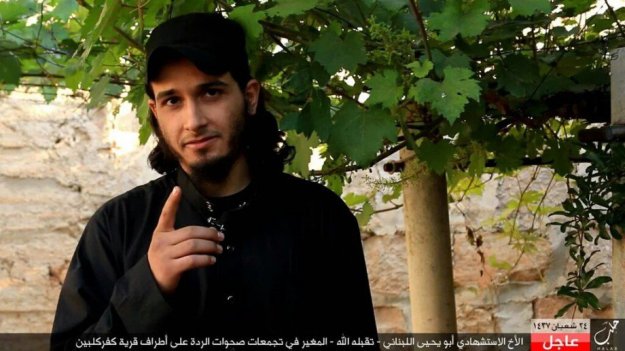
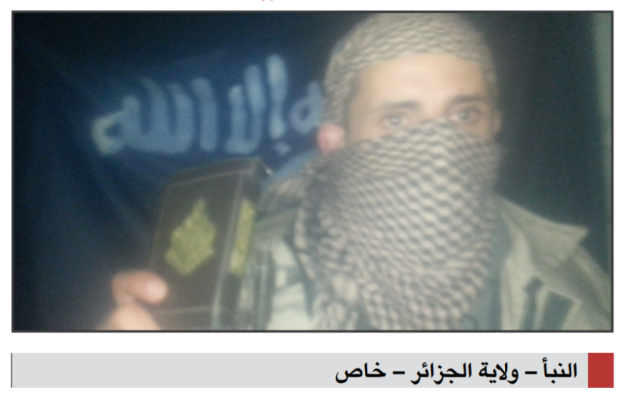
Picture published in Al-Naba 71 of Izzadeen Balqamri, the Islamic State suicide bomber in Constantine, Algeria, on 26 February 2017.

In the seventy-first edition of Al-Naba, the Islamic State’s English-language newsletter, published on 9 March 2017, the organisation claimed responsibility for the suicide bombing outside the police station in Constantine, Algeria, on 26 February. Al-Naba published a picture of the attacker and named him as Izzadeen Balqamri. Continue reading

Islamic State Expands its Foreign Attacks Capacity As the Caliphate Collapses

Published at The International Business Times

By Kyle Orton (@KyleWOrton) on 23 March 2017

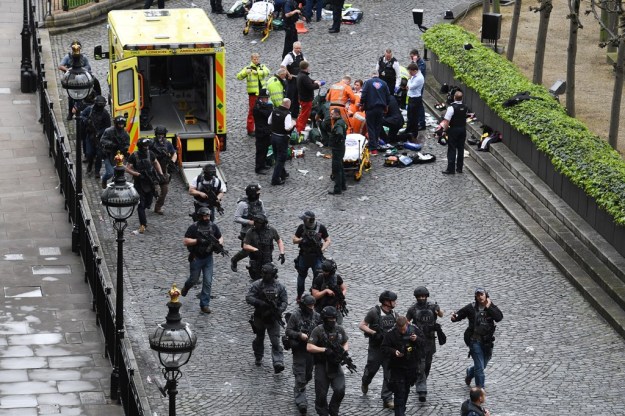
Aftermath of the Islamic State terrorist attack in Westminster, March 2017 (image source)

Just after 2:30pm yesterday afternoon, a terrorist mowed down pedestrians with a car on Westminster Bridge before jumping out near Parliament and stabbing a police officer to death. Three people were murdered, forty were injured, and the attacker was shot dead. The Islamic State (ISIS) has now claimed the attack.

The most important question is whether the terrorist had co-conspirators. Prime Minister Theresa May told Parliament this morning that it is “believed that this attacker acted alone”. It is crucial that this is not misread as saying that the attacker was a ‘lone wolf’. The arrests in Birmingham overnight suggest that this killer could have been part of a broader network, which would be consistent with the pattern of ISIS behaviour.

In a new report for the Henry Jackson Society, documents 152 foreign ISIS attacks in 34 countries since 2002, the vast majority in the past two years. In nearly three-quarters of the cases the attacks have a direct link to the organisation, and those without often have accomplices who assist in the atrocities in some way. Just 15% of the attacks have been by inspired individuals, who had no demonstrated connection to ISIS or anyone else in planning or executing their attack. Continue reading

The West Helped the Assad Regime and Its Allies Take Palmyra

By Kyle Orton (@KyleWOrton) on March 4, 2017

For the second March in a row, the Islamic State (IS) was driven from control of Palmyra this week in an operation led by Iranian ground forces and supported by Russian airstrikes—the actual instruments of power that remain to the government of Bashar al-Assad in Syria. The primary interest this time is that the United States-led international anti-IS coalition and its Operation INHERENT RESOLVE (OIR) provided crucial assistance to the regime. Continue reading

Islamic State Has Been Defeated in Al-Bab, But America Needs a New Direction in Syria

Published at The International Business Times and subsequently discussed on the IBTimes podcast

By Kyle Orton (@KyleWOrton) on February 27, 2017

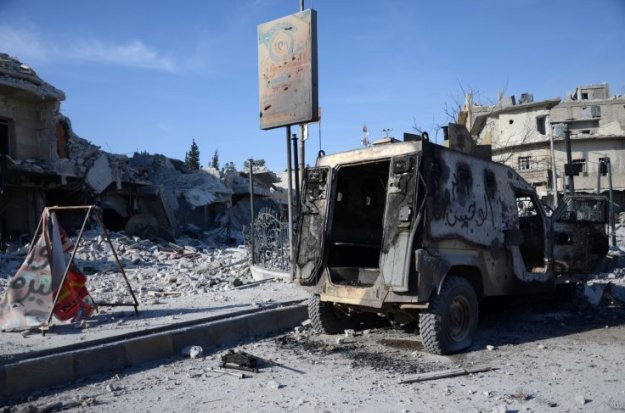
A burnt-out vehicle on a destroyed street in al-Bab on 23 February 2017 (Nazeer al-Khatib/AFP/Getty Images)

Turkey intervened in Syria in August 2016 with Operation Euphrates Shield (OES), which involved special forces, some regular troops, and the mobilisation of Syrian rebels to clear its border of terrorist threats by pushing ISIS (the Islamic State) away from the frontier and preventing the Syrian branch of the Kurdistan Workers’ Party (PKK) creating a state-let on its border that could be used as a harbour and launch-pad for attacks inside Turkey.

To secure this mission, on 13 November 2016 OES began an assault on al-Bab in the eastern countryside of Aleppo Province, just 15 miles from Turkey’s border and ISIS’ last major urban centre in Syria outside its capital, Raqqa. Some 102 days of combat later, on 23 February, al-Bab fell. What happens next could determine the course of the war as Turkey competes with the PKK to be the U.S.-led Coalition’s partner in clearing ISIS from Raqqa. Continue reading

Al-Qaeda Reshapes the Insurgency in Northern Syria

By Kyle Orton (@KyleWOrton) on February 7, 2017

Hay’at Tahrir al-Sham logo

A series of clashes broke out on 19 January between al-Qaeda’s rebranded Syrian branch, Jabhat Fatah al-Sham (JFS), and its heretofore close ally and portal into the Syrian rebellion, Ahrar al-Sham. By 23 January, JFS had expanded its targets, engaging in hostilities with mainstream rebel groups in the “Greater Idlib” area, and specifically trying—and succeeding—in dismantling the positions of Jaysh al-Mujahideen, a moderate group, west of Aleppo. The crisis continued to escalate, forcing many groups to merge with Ahrar al-Sham for protection, until 28 January, when a JFS-led merger was announced under the banner of Hay’at Tahrir al-Sham (HTS), or the Syrian Liberation Committee. HTS announced a ceasefire, and since then individuals and groups—including a significant number from Ahrar—have given allegiance to HTS. This radical reshaping of revolutionary dynamics in northern Syria has undoubtedly created antibodies going forward against al-Qaeda that could be capitalized on by the international community, but the present situation is highly favourable to al-Qaeda. Continue reading

The Flag of the Islamic State

By Kyle Orton (@KyleWOrton) on January 27, 2017

The Islamic State’s June 2014 declaration that the areas it controlled were the restored “Caliphate” was seen by many as a novel development. In fact, “the State” was declared in October 2006. The next month, the predecessor of the Islamic State (IS), Al-Qaeda in Mesopotamia (AQM), dissolved itself, and a month after that the claim to statehood was expanded upon—while being wilfully ambiguous about the caliphal pretensions—in the first speech by the then-emir, Hamid al-Zawi (Abu Umar al-Baghdadi). Similarly, though confusion remains on the point, it was in this same period that the symbol of the Islamic State, its black flag, was established.

Continue reading

The Coalition Strikes Down Al-Qaeda’s Leaders In Syria

By Kyle Orton (@KyleWOrton) on January 20, 2017

Muhsin al-Fadhli [top-left]; Abdul al-Sharikh (Sanafi an-Nasr) [bottom-left]; Radwan Nammous (Abu Firas al-Suri) [centre]; David Drugeon [top-right]; Rifai Taha (Abu Yasser al-Masri) [bottom-right]

Since September 2014, the U.S.-led Coalition has been targeting the leaders of Jabhat al-Nusra, al-Qaeda’s Syrian branch, which has since rebranded as Jabhat Fatah al-Sham (JFS). Below is a list of the Qaeda-linked individuals killed in Coalition air attacks since 2014. It will be updated and kept as a rolling record of the ongoing campaign. Continue reading

Ideologue Laments A Jihadist Joining the Islamic State

By Kyle Orton (@KyleWOrton) on January 9, 2017
2

On 6 January 2017, pro-al-Qaeda channels distributed a statement, with the picture above, written by Abu Mahmud al-Filistini.1 Abu Mahmud writes of a young jihadist, Abd al-Rahman, who had, after joining the Islamic State (IS), not been fully seduced by their ideology and had maintained contact with Abu Mahmud. At a certain point, however, Abd al-Rahman accepted IS’s ideology and recently killed himself in a suicide bombing against insurgent forces in Syria. It is not clear whether the insurgents referred to are rebels or Jabhat Fatah al-Sham (JFS), al-Qaeda’s rebranded Syrian branch, which was until recently known as Jabhat al-Nusra. The statement is reproduced below with some minor editions, for the sake of clarity, to transliterations and punctuation. Continue reading

The Assad Regime Admits to Manipulating the Islamic State

By Kyle Orton (@KyleWOrton) on January 6, 2017

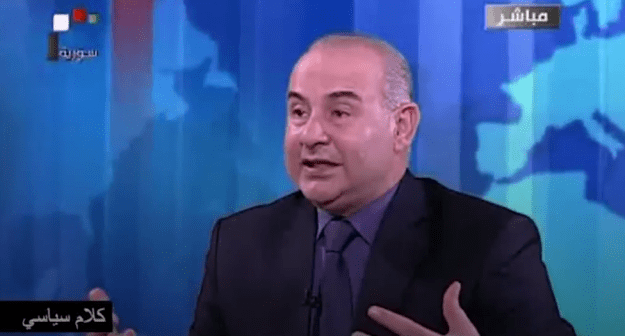
Khaled Abboud

From the beginning of the uprising in Syria in 2011, there have been accusations that Bashar al-Assad’s regime was in a de facto partnership with the Islamic State (IS) against the mainstream opposition. These accusations have a considerable basis in fact: during the entirety of the Anglo-American occupation of Iraq, Assad collaborated with IS jihadists in the destabilization of Iraq, killing thousands of Iraqi civilians and hundreds of American and British troops. Once the Syrian uprising was underway, the regime undertook various measures to bolster extremists in the insurgency. Assad and IS worked in tandem to leave Syria as a binary choice between themselves: Assad was sure this would rehabilitate him in the eyes of the world and transform his criminal regime into a partner of the international community in suppressing a terrorist insurgency, and IS wanted to rally Sunnis to its banner. The Secretary of the Syrian Parliament has now come forward to underline this. Continue reading