In his first speech as the then-Islamic State of Iraq’s (ISI’s) official spokesman in August 2011, Taha Falaha (Abu Muhammad al-Adnani) referred to several of the group’s “leaders” who had been killed. Among them was Abu Raghd, whose biography provides a glimpse of the role regional states—specifically Saddam Husayn’s Iraq and Bashar al-Assad’s Syria—played in facilitating the birth of the Islamic State (IS). Continue reading →
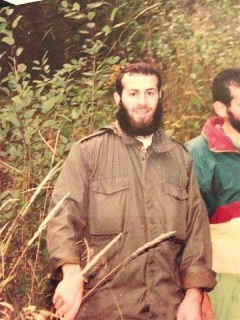
After the leaders of the Islamic State die—usually killed by their foes—short biographies tend to be circulated on internet forums that favour the group. One such obituary—with the above picture—was disseminated for Mustafa Ramadan Darwish (Abu Muhammad al-Lubnani), and is reproduced below with some editions to transliteration and some interesting sections highlighted in bold. Darwish was the first leader of the Islamic State’s military portfolio and the second overall deputy (between September 2004 and early 2005) to the movement’s founder, Ahmad al-Khalayleh (Abu Musab al-Zarqawi). One of the most interesting parts of Darwish’s profile is its addition of details on the jihadi networks linked to al-Qaeda and the first generation of the Islamic State that were operating in Iraq in the final years of Saddam Husayn’s rule, a topic touched on in other biographies of Islamic State leaders.Continue reading →
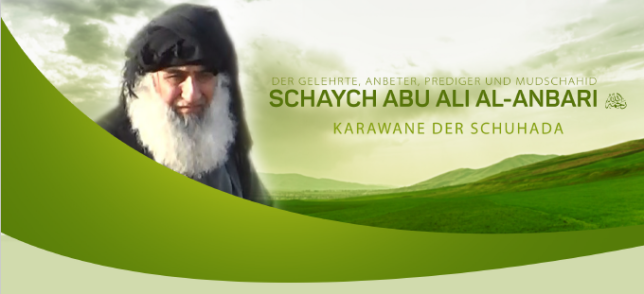
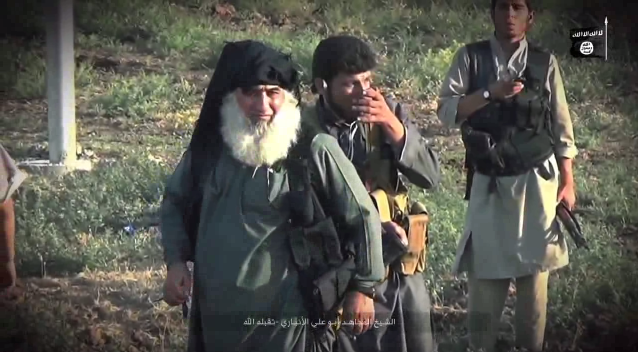
Obituary for Abdurrahman al-Qaduli in the German version of Rumiya, 11 November 2016
The forty-first edition of the Islamic State’s newsletter, al-Naba, released within the territory of the caliphate on 30 July 2016 and released online on 2 August, and the forty-third edition (released 13 and 16 August), contained a two-part obituary for Abd al-Rahman al-Qaduli (Abu Ali al-Anbari), the caliph’s deputy when he was killed on 24 March. The obituaries, entitled, “The Devout Scholar and Mujahid Preacher: Shaykh Abu Ali al-Anbari”,[1] make clear that al-Qaduli was one of the most consequential jihadists in the history of the Islamic State movement. Below is a translation, with some interesting and/or important sections highlighted in bold. The biography resolves some long-standing mysteries, and some of the claims are dubious in light of other evidence we have: these issues, and other points of context and explanation, are in the footnotes. The subheadings are mine, added to signpost the narrative and break it up into more manageable chunks. Continue reading →
Islamic State parade with captured equipment in Mosul, 23 June 2014 . (AP Photo, File)
The offensive to wrest the Iraqi capital of the Islamic State’s (IS) caliphate, Mosul, from the terror organization began on 17 October, led on the ground by Iraqi and Kurdish forces and supported from the air by the U.S.-led Coalition. While progress has been generally steady, IS has been able to mount a series of diversionary attacks, the most significant in Kirkuk City. Among those subsequently arrested for a role in planning the terrorism in Kirkuk is a cousin of Saddam Husayn, a micro-example of the influence of the fallen regime on the current situation in Iraq. Continue reading →
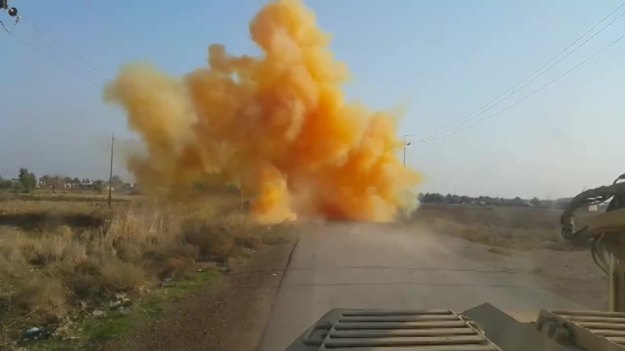
This year, the American-led anti-Islamic State (IS) Coalition has targeted members of the organization’s program to develop chemical weapons of mass destruction (CWMD). One reason for this is likely that the Coalition has been building toward—and now appears to be on the eve of—the operation to attempt to expel IS from its Iraqi capital, Mosul, and it isconsideredprobable that IS will use CWMD on its way down. Whether that can now be prevented, and how far IS ever got with its attempt to develop CWMD, might only be known once it is too late. Continue reading →
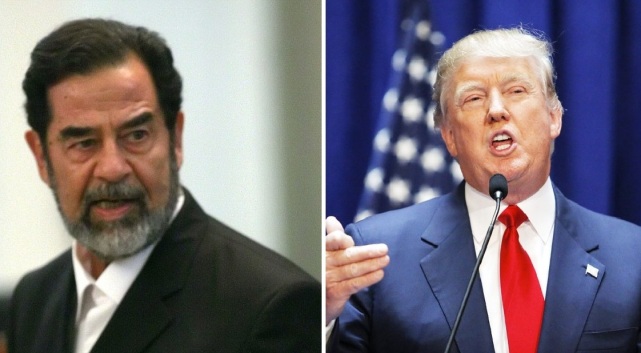
Last night Donald Trump unburdened himself of the view that Saddam Hussein was an efficient anti-terrorist operator. It is a statement Trump has made before, and it is one of such staggering ignorance—yet one which has such wide sympathy—that it seemed worth examining the multiple ways in which it was wrong. Continue reading →
This essay, written to tie together my work on the relationship between the Saddam Hussein regime and the Islamic State, was completed last summer and submitted to an outlet, where it entered a form of development hell. After giving up on that option late last year, the opportunity arose to get a shorter version published in The New York Times in December. But I procrastinated too long over what to do with the full essay and a recent change in my work situation means I no longer have the bandwidth to go through the process of finding it a new home, so here it is.
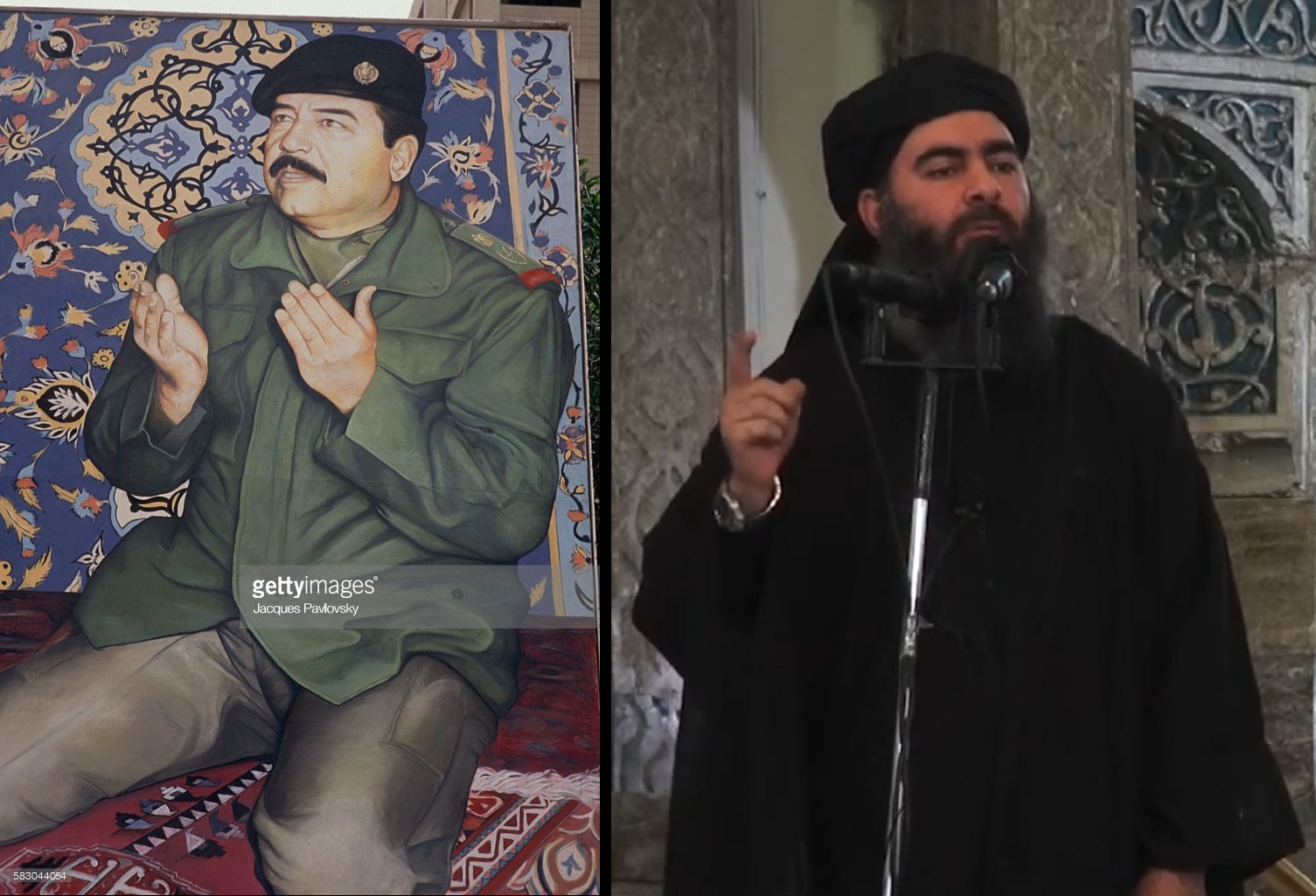
“Abu-Bakr al Baghdadi is a product of the last decade of Saddam’s reign,” argues Amatzia Baram, a scholar of Iraq. He is correct in at least three ways. First, in its last decade in power, the Iraqi Ba’ath regime transformed into an Islamist government, cultivating a more religious, sectarian population on which the Islamic State (ISIS) could draw. Part of Saddam Hussein’s “Faith Campaign” also involved outreach to Islamist terrorists, including al-Qaeda, which meant that the synthesis of Ba’athism and Salafism that fused into the Iraqi insurgency after the fall of Saddam was already well advanced by the time the Anglo-American forces arrived in Baghdad in 2003. Second, the ISIS leadership and military planning and logistics is substantially reliant on the intellectual capital grown in the military and intelligence services of the Saddam regime. And finally, the smuggling networks on which ISIS relies, among the tribes and across the borders of Iraq’s neighbours, for the movement of men and materiel, are directly inherited from the networks erected by the Saddam regime in its closing decade to evade the sanctions. The advantages of being the successor to the Saddam regime make ISIS a more formidable challenge than previous Salafi-jihadist groups, and one that is likely to be with us for some time.
Abd al-Rahman al-Qaduli (Abu Ali al-Anbari) in an Islamic State video in May 2016
United States Secretary of Defense Ashton Carter announced this morning that he believed Abd al-Rahman Mustafa al-Qaduli, a senior leader of the Islamic State (IS), had been killed in a U.S. raid into Syria earlier this week. Al-Qaduli was “serving as a finance minister” and had been “responsible for some external affairs and plots,” said Carter. America is “systematically eliminating ISIL’s cabinet,” Carter went on, noting the alleged killing of Tarkhan Batirashvili (Abu Umar al-Shishani) two weeks ago, adding that al-Qaduli’s removal will “hamper” IS in conducting operations inside and outside its caliphate. Continue reading →
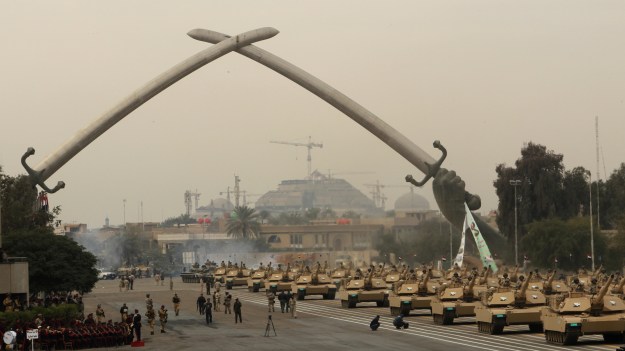
The “Victory Arch,” which Saddam built after the war with Iran. (January 2012)
About three weeks ago I wrote a piece for The New York Times explaining the evolution of Saddam Hussein’s regime away from the hard-secularism of its Ba’athist origins, and how this had prepared the ground for the Islamic State (IS). I received much positive feedback, but the social media reaction was inevitable: little thought and much anger, particularly from people who view Iraqi history through a political prism and felt I was trying to exculpate George W. Bush. With rare exceptions, the critique could hardly be called thoughtful. So it is nice to finally have such a critique to deal with, from Samuel Helfont and Michael Brill in today’s Foreign Affairs. Continue reading →
Whom should we blame for the Islamic State? In the debate about its origins, many have concluded that it arose from the American-led coalition’s errors after the 2003 invasion of Iraq. In fact, the groundwork for the emergence of the militant jihadist group was laid many years earlier by the government of Saddam Hussein.
The Arab nationalist Baath Party, which seized power in 1968 in a coup in which Mr. Hussein played a key role, had a firmly secular outlook. This held through the 1970s, even as religiosity rose among the Iraqi people. But soon after Mr. Hussein invaded Iran in 1980, it began to change.


 Kyle Orton's Blog