Category Archives: Syria

Assad’s Crimes Against Humanity and Trump’s Options in Syria

By Kyle Orton (@KyleWOrton) on February 7, 2017

Satellite picture of Sednaya prison, Syria (source)

Amnesty International released a report today, “Human Slaughterhouse,” documenting the conditions in Sednaya prison, run by the regime of Bashar al-Assad in Syria, which amount to extermination as a crime against humanity. In addition to the deliberately insanitary conditions, routinized torture and maltreatment, there has been—and continues to be—a systematic campaign of extra-judicial massacre in which perhaps 13,000 people have perished. These findings buttress previous findings, and come with some political implications as the new American administration seeks to chart its way forward in Syria. Continue reading
What to Expect in Syria in 2017

By Kyle Orton (@KyleWOrton) on January 25, 2017

Syria has broken down as a functioning entity. There were some who saw in the takeover of Aleppo City last month by the coalition of states and militias that supports Bashar al-Assad’s regime the beginning of the end of the war. The pro-Assad coalition will make further territorial gains in 2017, but peace—even the peace of the graveyard—is still a long way off, and unlikely to ever arrive while Assad remains in power. The West, unwilling and apparently unable to remove him, nonetheless has vital interests in Syria that cannot be outsourced and must be secured by navigating a fragmented state. Continue reading

The Coalition Strikes Down Al-Qaeda’s Leaders In Syria

By Kyle Orton (@KyleWOrton) on January 20, 2017

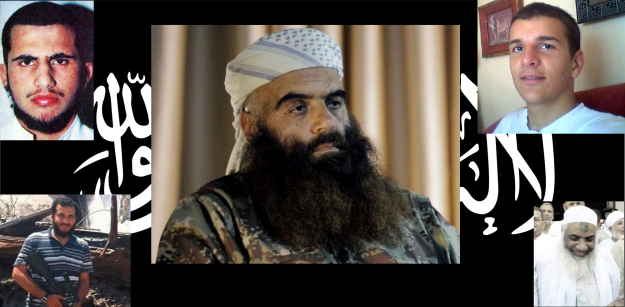
Muhsin al-Fadhli [top-left]; Abdul al-Sharikh (Sanafi an-Nasr) [bottom-left]; Radwan Nammous (Abu Firas al-Suri) [centre]; David Drugeon [top-right]; Rifai Taha (Abu Yasser al-Masri) [bottom-right]

Since September 2014, the U.S.-led Coalition has been targeting the leaders of Jabhat al-Nusra, al-Qaeda’s Syrian branch, which has since rebranded as Jabhat Fatah al-Sham (JFS). Below is a list of the Qaeda-linked individuals killed in Coalition air attacks since 2014. It will be updated and kept as a rolling record of the ongoing campaign. Continue reading

Clashes Erupt Between Al-Qaeda and the Syrian Rebellion

By Kyle Orton (@KyleWOrton) on January 19, 2017

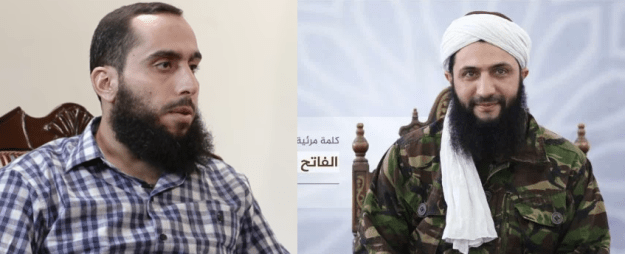
The leader of Ahrar al-Sham, Ali al-Umar (Abu Ammar); the leader of Jabhat Fatah al-Sham, Ahmad al-Shara (Abu Muhammad al-Jolani)

The leader of Ahrar al-Sham, Ali al-Umar (Abu Ammar); the leader of Jabhat Fatah al-Sham, Ahmad al-Shara (Abu Muhammad al-Jolani)

Clashes have erupted today between al-Qaeda’s Syrian branch, Jabhat Fatah al-Sham (JFS), and its heretofore-inseparable ally, Ahrar al-Sham. For the overall insurgency, the bodes ill, in the short-term, but there might be some long-term political advantages if JFS isolates itself from the wider opposition. Continue reading

International Taboo on Chemical Weapons Frays As U.S. Steps Back

By Kyle Orton (@KyleWOrton) on January 13, 2017

Yesterday, the United States Treasury Department imposed sanctions on eighteen senior officials in the regime of Bashar al-Assad. The sanctions come in response to reports in August and October 2016 by the Organization for the Prohibition of Chemical Weapons (OPCW), the United Nations investigative body, which found that found “the Syrian government, specifically the Syrian Arab Air Force, was responsible for three chlorine gas attacks in Talmenes on April 21, 2014, and in Qmenas and Sarmin on March 16, 2015.” This is three years after the Assad regime was spared punitive military strikes for its use of chemical weapons under a Russian-orchestrated “deal” that ostensibly disarmed Assad of such weapons. Continue reading

Ideologue Laments A Jihadist Joining the Islamic State

By Kyle Orton (@KyleWOrton) on January 9, 2017
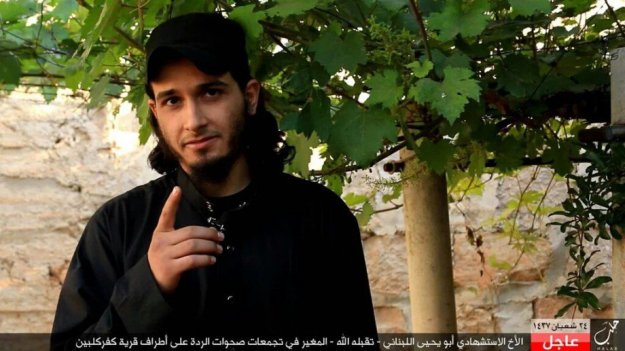
2

On 6 January 2017, pro-al-Qaeda channels distributed a statement, with the picture above, written by Abu Mahmud al-Filistini.1 Abu Mahmud writes of a young jihadist, Abd al-Rahman, who had, after joining the Islamic State (IS), not been fully seduced by their ideology and had maintained contact with Abu Mahmud. At a certain point, however, Abd al-Rahman accepted IS’s ideology and recently killed himself in a suicide bombing against insurgent forces in Syria. It is not clear whether the insurgents referred to are rebels or Jabhat Fatah al-Sham (JFS), al-Qaeda’s rebranded Syrian branch, which was until recently known as Jabhat al-Nusra. The statement is reproduced below with some minor editions, for the sake of clarity, to transliterations and punctuation. Continue reading

Al-Qaeda’s Leader Reiterates the Group’s Ideology, Intent to Strike the West

By Kyle Orton (@KyleWOrton) on January 7, 2017

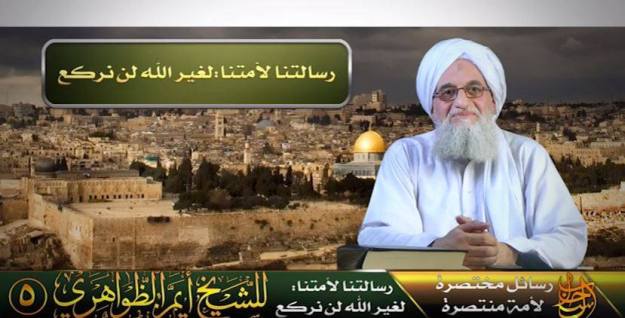
1

On 5 January 2017, the leader of al-Qaeda, Ayman al-Zawahiri, gave a speech, “To Other Than Allah, We Will Not Bow: Brief Messages To A Victorious Nation, Part 5”. Today, al-Qaeda channels put out an English translation. The emphasis of the speech was restating al-Qaeda’s creed and methodology, specifically as it differs from that of the Islamic State (IS). One noticeable point was al-Zawahiri’s admonition against IS’s genocidal approach to the Shi’a: lay Shi’is should not be harmed, al-Zawahiri says; rather, their leaders should be killed for misguiding them and the masses converted to Sunnism. Al-Zawahiri also reiterates that al-Qaeda remains focused on the West and determined to carry out terrorism against it—regardless of whatever short-term strategic calculations currently have al-Qaeda de-emphasizing this aspect of its worldview and conduct. The speech is reproduced below with some transliteration editions and some sections bolded for emphasis. Continue reading

The Assad Regime Admits to Manipulating the Islamic State

By Kyle Orton (@KyleWOrton) on January 6, 2017

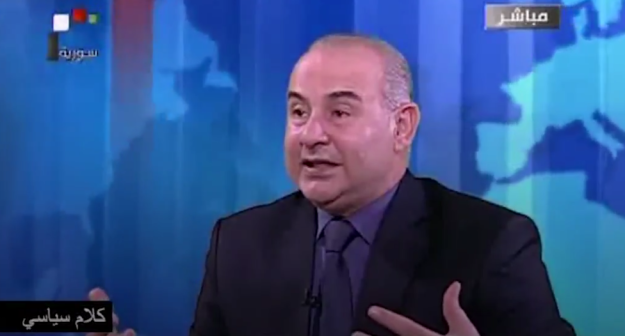
Khaled Abboud

From the beginning of the uprising in Syria in 2011, there have been accusations that Bashar al-Assad’s regime was in a de facto partnership with the Islamic State (IS) against the mainstream opposition. These accusations have a considerable basis in fact: during the entirety of the Anglo-American occupation of Iraq, Assad collaborated with IS jihadists in the destabilization of Iraq, killing thousands of Iraqi civilians and hundreds of American and British troops. Once the Syrian uprising was underway, the regime undertook various measures to bolster extremists in the insurgency. Assad and IS worked in tandem to leave Syria as a binary choice between themselves: Assad was sure this would rehabilitate him in the eyes of the world and transform his criminal regime into a partner of the international community in suppressing a terrorist insurgency, and IS wanted to rally Sunnis to its banner. The Secretary of the Syrian Parliament has now come forward to underline this. Continue reading

A Counterterrorism Policy in Syria That Helps Terrorists

Originally published at The Henry Jackson Society

By Kyle Orton (@KyleWOrton) on January 5, 2017

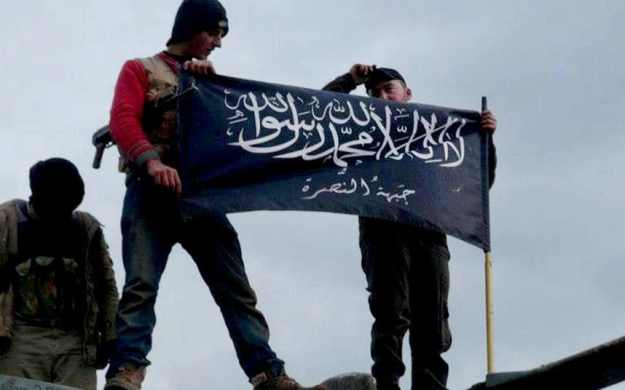
Jabhat al-Nusra jihadists wave their flag in Syria (Associated Press picture, source)

In the last week, the American-led Operation INHERENT RESOLVE, whose primary mission is to “degrade and ultimately destroy” the Islamic State (IS), has apparently conducted two airstrikes against senior members of Jabhat Fatah al-Sham (JFS), once known as Jabhat al-Nusra, al-Qaeda’s rebranded presence in Syria. In late 2016, the U.S. began an intensified targeting campaign against al-Qaeda and associated individuals; this appears to be a continuation of that policy, which provides some guidance about Western policy on Syria more broadly. Continue reading

Insurgent Leader Explains Why Aleppo Fell to Assad

By Kyle Orton (@KyleWOrton) on December 31, 2016

Abu al-Abed Ashidaa

Abu al-Abed Ashidaa

Abu al-Abed Ashidaa was, on 1 December 2016, appointed to lead all insurgent forces, under the banner of al-Jaysh al-Halab (The Army of Aleppo), in the besieged enclave of eastern Aleppo City. The city’s defences collapsed to the coalition of forces—namely Russia and Iran—supporting the regime of Bashar al-Assad on 12 December, and on 22 December the deportation of 40,000 people from the enclave to Idlib was completed. On 29 December, Abu al-Abed gave a speech explaining the reasons as he saw them for the fall of Aleppo City. Today, insurgent channels in Syria circulated an English summary, which is reproduced below with some editions in transliterations and some interesting sections highlighted in bold. Continue reading