Category Archives: Syria

In View of Vienna

By Kyle Orton (@KyleWOrton) on December 15, 2015

Published at NOW Lebanon.
1

So the Syrian opposition can unite. Foreign powers have been the major cause of rebel discord. Previous rebel unity initiatives like the Joint Command were pulled apart by the competition between the insurgency’s sponsors—Saudi Arabia and Qatar primarily—and the last rebel umbrella group, the Supreme Military Council, which was identified with Western power, collapsed after President Barack Obama decided not to punish Bashar al-Assad for the massive chemical weapons attack on the population of Ghouta. But under Saudi auspices, an opposition “team” was announced on December 10 after a three-day conference in Riyadh, which includes the political and military opposition and groups with varying ideologies and patrons. This is an achievement. Unfortunately, this team’s task is an impossible one: intended to partake in the Vienna process begun in October, ostensibly to negotiate an end to the war, Syria is not, at present, in a condition where a political agreement can be made and implemented, not least because the Assad regime and its supporters in Iran and Russia have doubled down, and the opposition continues to receive insufficient support to pressure the regime enough to force an agreement. Continue reading
As Syria’s Opposition Tries To Unite, Prospects For Peace Recede

By Kyle Orton (@KyleWOrton) on December 9, 2015

A version of this article was published at Middle East Eye.

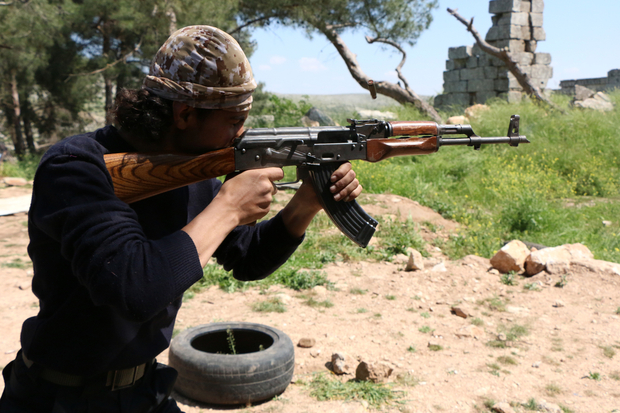
A rebel fighter from the Free Syrian Army's

A rebel fighter from the Free Syrian Army’s “First Battalion” takes part in military training on May 4, 2015, in rebel-held northern Rif Aleppo. (AFP, Baraa al-Halabi)

The Syrian opposition is meeting in Saudi Arabia between December 8 and 10 in an attempt to create a unified structure that can credibly sit across the table from the Bashar al-Assad regime in the internationally-organised peace talks in Vienna, and make a binding commitment on the path forward for Syria. Continue reading

Israel, Al-Qaeda, and The Daily Mail

By Kyle Orton (@KyleWOrton) on December 9, 2015

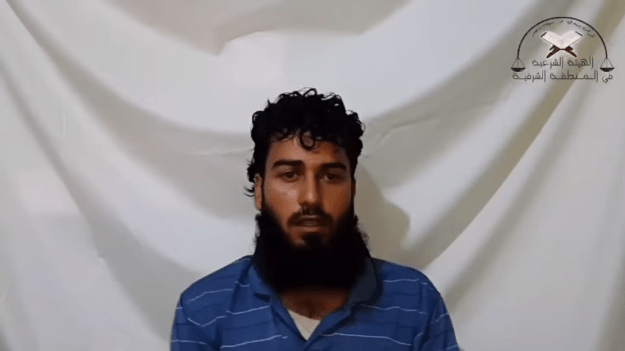
Sharif as-Safouri, a Free Syrian Army commander kidnapped by Jabhat an-Nusra and made to "confess" to receiving support, including weapons, from Israel in an August 2014 video.

Sharif as-Safouri, a Free Syrian Army commander kidnapped by Jabhat an-Nusra and made to “confess” to receiving support, including weapons, from Israel in an August 2014 video.

Last night The Daily Mail reported, after embedding with Israeli commandos, on Jerusalem’s ongoing effort to treat casualties of Syria’s horrific war. The Mail, however, put a spin on this story that not only reflected badly on the Jewish State, but feeds into a narrative cast by Iran and its allies to the effect that Israel is supporting Salafi militancy in Syria, specifically al-Qaeda, a propaganda campaign that has already had deadly consequences. Continue reading

If Assad Is Not Forced Out, ISIS Never Will Be

By Kyle Orton (@KyleWOrton) on December 3, 2015

A version of this article was published at The Independent.

1

Yesterday, the British House of Commons voted 397 to 223 to extend airstrikes against the Islamic State (ISIS) into Syria from Iraq. After the vote in August 2013 against military action to punish Syrian dictator Bashar al-Assad for the massive poison gas attack outside Damascus that killed 1,500 people in a few hours, this is undoubtedly a sign of a recovery in confidence of Britain’s international role, but it is only the beginning. Continue reading

Syria’s Many Moderate Rebels

By Kyle Orton (@KyleWOrton) on November 30, 2015

A version of this article was published at NOW Lebanon.

Rebels from the Southern Front in northwest Deraa, March 2015

Rebels from the Southern Front in northwest Deraa, March 2015

In early November, the Foreign Affairs Select Committee released a report challenging the British government’s proposal to extend airstrikes from Iraq into Syria against the Islamic State (IS). Among other things, the report asked for a proposed political path to ending the Syrian civil war, a necessary prerequisite to defeating IS. On Thursday, Prime Minister David Cameron released a response, part of which said:

Military action against ISIL will also relieve the pressure on the moderate opposition, whose survival is crucial for a successful transition to a more inclusive Syrian government. Syria has not been, and should not be, reduced to a choice between Assad or ISIL. Although the situation on the ground is complex, our assessment is that there are about 70,000 Syrian opposition fighters on the ground who do not belong to extremist groups.

This number has blown up into a major political row, with many Members of Parliament and pundits taking their personal unfamiliarity with Syria’s military landscape as evidence that it cannot be so. The Labour Opposition has made the number of non-extremist rebels a focal point of their challenge to the Prime Minister’s proposal for moving forward in Syria, and one of Cameron’s own Conservative MPs referred to the number as “magical”. The challenge to the number is part of a longer-term trend, where a narrative has become prevalent that there are no moderate opposition forces left in Syria. The corollary of this view is usually the argument that the West should side with the “secular” Assad regime as the “lesser evil” to put down a radical Islamist insurrection.

Sidestepping the ignorance that goes into believing a blatantly sectarian regime propped up by an international brigade of Shi’a jihadists is secular: What of this claim that there are no moderate rebels left? It isn’t true, as I recently made clear in a paper for The Henry Jackson Society. Continue reading

How Assad Funds the Islamic State

By Kyle Orton (@KyleWOrton) on November 29, 2015

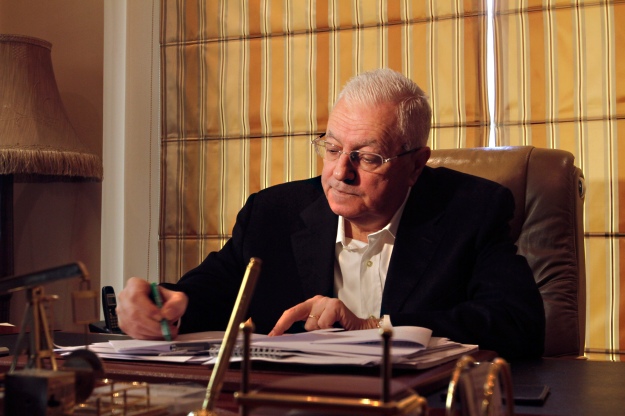
George Haswani (AP Photo)

George Haswani (AP Photo)

The United States Treasury Department’s Office of Foreign Assets Control (OFAC) sanctioned four individuals and six entities connected to the regime of Bashar al-Assad on November 25 for helping to transfer Syrian government funds to the Islamic State (IS), and for assisting in Russia-connected schemes to help the Assad regime evade the international sanctions imposed on it. While the sanctions freeze all assets of the individuals and entities that are under U.S. control and ban Americans from transactions with them, the most significant effect of these sanctions is political: the revelation of details about how Assad strengthens the Islamist terrorists he claims to oppose to discredit and destroy the rebellion against his regime. Continue reading

Destroying Islamic State, Defeating Assad: A Strategy for Syria

By Kyle Orton (@KyleWOrton) on November 25, 2015

1

Today, my first report with The Henry Jackson Society was published: “Destroying Islamic State, Defeating Assad: A Strategy for Syria“. Continue reading

The Islamic State Strikes Lebanon

By Kyle Orton (@KyleWOrton) on November 22, 2015

1-b

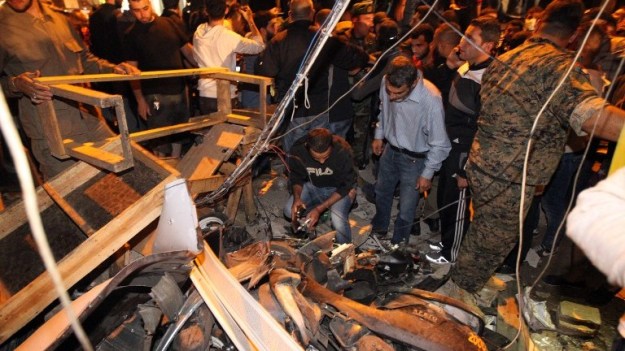
In Burj al-Barajna, a district of southern Beirut adjacent to Hizballah’s headquarters in Dahiya, at about 18:00 on 12 November 2015, a standing motorcycle laden with explosives was blown up outside a Shi’a mosque as a crowd of worshippers left after evening prayers. This was followed quickly by a suicide bomber blowing himself up among the crowd of Shi’a worshippers. A second suicide bomber blew himself up near a bakery, less than 500 yards away. Continue reading

Defeating the Islamic State Requires Sunni Allies

By Kyle Orton (@KyleWOrton) on November 20, 2015

Published at Left Foot Forward.

1

In the wake of the atrocity in Paris David Cameron has accelerated the push to extend British airstrikes against the Islamic State (ISIS) beyond Iraq into Syria. As Cameron put it:

It is in Syria, in Raqqa, that [ISIS] has its headquarters and it is from Raqqa that some of the main threats against this country are planned and orchestrated. Raqqa, if you like, is the head of the snake.

There is no doubt that this is so. The British government’s decision to war against ISIS—but only on the Iraqi side of an Iraq-Syria border that ISIS has abolished—makes no sense. This one-handed clapping is especially puzzling because ISIS’s most valued holdings are in Syria. From revenue streams—namely oil fields and populations that can be taxed/extorted—to ideological legitimacy and recruitment tools, such as holding the town of Dabiq where ISIS prophesises End Times will take place, drawing in a large stream of foreign fighters, ISIS’s centre of gravity is in Syria. Continue reading

The Riddle of Haji Bakr

By Kyle Orton (@KyleWOrton) on November 10, 2015

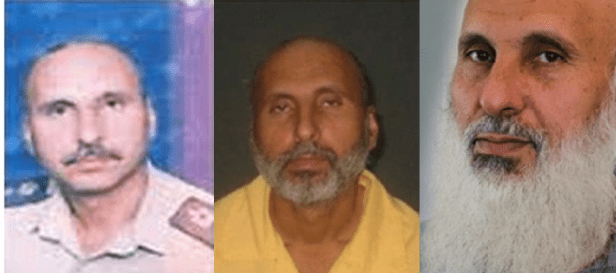
Samir al-Khlifawi (Haji Bakr): in Saddam's army, in American prison, as a commander of the Islamic State

Samir al-Khlifawi (Haji Bakr): in Saddam’s intelligence service, in American prison, as a commander of the Islamic State

In the last few months I’ve increasingly focussed on the former (Saddam) regime elements (FREs) within the Islamic State (IS). There’s now an entire section on this blog about it, and Aaron Zelin over at Jihadology recently gave me time to elaborate in a podcast.

In studying this topic there is one inescapable name: Samir Abd Muhammad al-Khlifawi, better-known by his pseudonym Haji Bakr, and sometimes by his kunya, Abu Bakr al-Iraqi. Al-Khlifawi is a former colonel in an elite intelligence unit of the Saddam Hussein regime—focussed on air defence at Habbaniya airbase, though what exactly that entails is murky. Al-Khlifawi was also apparently involved in weapons development.

Al-Khlifawi came to international attention in April when Christoph Reuter published an article in Der Spiegel naming al-Khlifawi as the “architect” of IS’s expansion into Syria, and the man who had been “pulling the strings at IS for years.” Continue reading