Al-Qaeda and Global Terror

This article was originally published at European Eye on Radicalisation

By Kyle Orton (@KyleWOrton) on 16 April 2019

Ahmad al-Shara (Abu Muhammad al-Jolani) [image source]

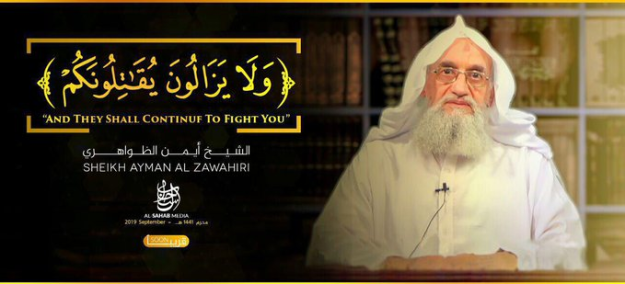
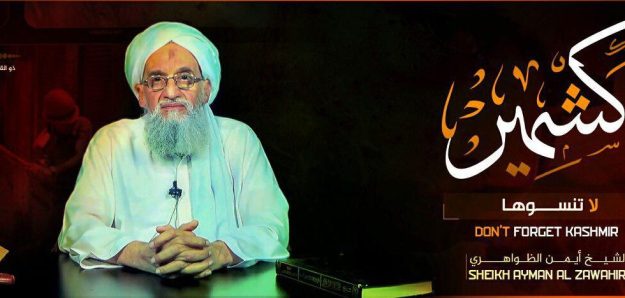
Several years ago, Al-Qaeda made a strategic decision to refrain from foreign terrorist operations, refocusing away from these global spectaculars towards integrating more closely into local conflicts. The 2014 rampage across Iraq and Syria by Al-Qaeda’s rebellious former Iraqi branch, the Islamic State (ISIS), provided both the opportunity and additional incentive for a long-mediated rebranding effort. However, there have recently been signs of a shift back towards external terror operations, just as ISIS undergoes a setback and Al-Qaeda has a chance to reassert its dominance over the jihadi scene. Continue reading

When Terrorism … Isn’t

By Kyle Orton (@KyleWOrton) on 15 April 2019

In February 1979, police in south-eastern Australia arrested six people. The suspects were members of the Croatian nationalist scene that agitated against Communist Jugoslavija and they had planned to commit a series of attacks against symbols of Marshal Tito’s regime that could have killed hundreds of Australians. Except they hadn’t, as Hamish McDonald, a journalist with the Sydney Morning Herald, shows in Framed (2012). Despite the “Croatian Six” being convicted for terrorism and spending a decade in prison, the reality of what had happened was nearly the exact opposite—and at least some powerful people in the Australian government knew or suspected as much from the get-go. Continue reading

Israel’s Policy in Syria Has Let Iran and Russia Entrench

By Kyle Orton (@KyleWOrton) on 9 April 2019

As the regime of Bashar Assad appears to be consolidating in Syria, many Israelis have concluded that their government’s handling of the crisis was generally laudable.

The most comprehensive statement of this view was given recently in Haaretz by Anshel Pfeffer (Netanyahu Outfoxed Russia, Iran and ISIS With His Cynical, Ruthless Syria Policy.) Every aspect of this is open to question. Continue reading

Islamic State Profiles the Leadership

By Kyle Orton (@KyleWOrton) on 6 April 2019

Islamic State flag in front of the main gate of Saddam Husayn’s palace in Tikrit, 5 April 2015 // AFP PHOTO / MOHAMMED SAWAF

A lengthy document—roughly sixty pages and 12,000 words—was published online on 21 February 2019 containing biographies of twenty-seven senior Islamic State (IS) officials, past and more recent. Those bios that are dated were written between October 2018 and the time of publication, with one exception that was written in the summer of 2018. The author claims to be an IS veteran. While longevity is difficult to prove, the fact that the author provides heretofore unseen images of some of the IS leaders suggests that at a minimum he is an IS operative. Continue reading

Stick or Twist: Israel’s Referendum on Netanyahu

Published at The Arab Weekly

By Kyle Orton (@KyleWOrton) on 31 March 2019

An Orthodox Jewish man looking at Israeli election campaign posters in Jerusalem, 27 March 2019 // Reuters

Israeli Prime Minister Benjamin Netanyahu was in attendance on 25 March when President Donald Trump signed the order recognising Israeli sovereignty over the Golan Heights, but had to leave soon after a rocket from Gaza hit a house north of Tel Aviv. These events—and other regional developments—are taking place less than two weeks from Israeli elections, where Netanyahu is neck-and-neck with his challenger. Continue reading

Islamic State Claims the Killing of a Canadian Citizen

By Kyle Orton (@KyleWOrton) on 30 March 2019

Al-Naba 175, page 8

Kirk Woodman, a Canadian geologist working for a Vancouver-based mining company, Progress Minerals Inc., was found dead in Oudalan province, north-east Burkina Faso, on 16 January 2019. Woodman had been kidnapped the previous day from a mining camp. Ouagadougou announced that Woodman had been killed the following day. Woodman’s body was described as “bullet-riddled”. It was noted by one outlet that Woodman had been taken in “a border region infiltrated by jihadis”, but not very much more has been said of the case in the last two months. On 28 March, the Islamic State (IS) claimed responsibility for the murder in the 175th edition of its weekly newsletter, Al-Naba. Continue reading

Jihadist Groups Capitalize on Far-Right Terrorism in New Zealand

By Kyle Orton (@KyleWOrton) on 29 March 2019

Al-Nur Mosque, Christchurch, New Zealand [image source]

In the wake of the terrorist atrocity against two mosques in Christchurch, New Zealand, on 15 March 2019, by Brenton Harrison, an Australian far-Right ideologue, jihadist groups released various statements seeking to exploit the event for their own purposes, an illustrative case of two extremisms feeding off one-another, a phenomenon known as “reciprocal radicalisation”, which seems likely to become more prevalent in the future. Continue reading

Islamic State Spokesman Dismisses Coalition Claims of Victory

By Kyle Orton (@KyleWOrton) on 21 March 2019

The spokesman for the Islamic State (IS), Abu Hassan al-Muhajir, gave his a speech on 18 March 2019, entitled, “He Was True to Allah and Allah Was True to Him” (or “He Was Honest/Sincere Towards God, so God Fulfilled His Wish”). This is the sixth speech given by Abu Hassan since he was announced in December 2016 as the replacement for Taha Falaha (Abu Muhammad al-Adnani). Abu Hassan’s true identity remains mysterious. An English translation was released by IS and is reproduced below with some editions in transliteration. Continue reading

The Shah, the Cold War, and the Islamists

By Kyle Orton (@KyleWOrton) on 20 March 2019

Abbas Milani’s The Shah gives a portrait of Iran’s last monarch, Muhammad Reza Pahlavi, and the impact that his downfall forty years ago continues to have in the Middle East, notably the emboldening of the Islamist movement. Continue reading

The Democrats and Corbynism

By Kyle Orton (@KyleWOrton) on 19 March 2019

When the Democratic Party faced a revolt from its ranks for daring to propose condemning anti-Semitism, the scene gave those of us in Britain deja vu. The American Left is following the same script that led to the rapid radicalization of the Labour Party, led by Jeremy Corbyn. It’s no longer a mere talking point, a form of shorthand for journalists: The Democratic Party’s Corbynization is here, and it tacks so closely to what happened in Britain that it’s important for Americans to understand where we’ve been — and where they’re headed. Continue reading