By Kyle Orton (@KyleWOrton) on November 23, 2016
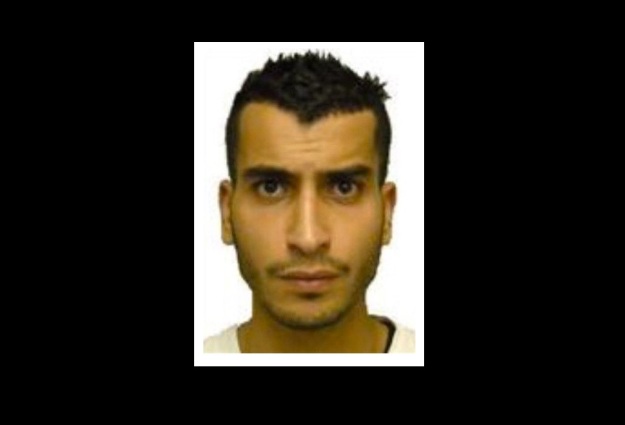
Abdelilah Himich (Abu Sulayman al-Firansi) [image source]
By Kyle Orton (@KyleWOrton) on November 23, 2016
Abdelilah Himich (Abu Sulayman al-Firansi) [image source]
By Kyle Orton (@KyleWOrton) on November 22, 2016
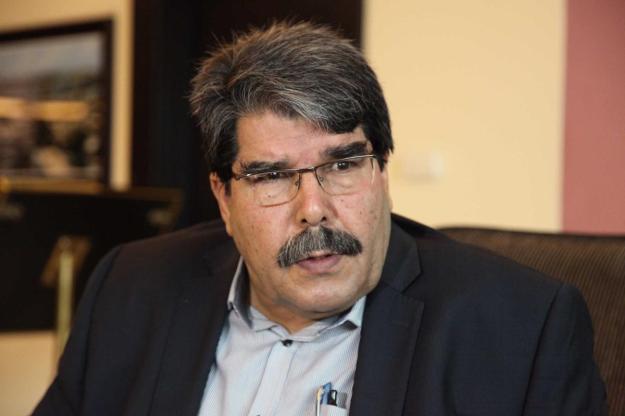
Saleh Muslim Muhammad
This morning, Turkey issued arrest warrants for forty-eight members of the Kurdistan Workers’ Party (PKK), which has fought a forty-year war against the Turkish state. The PKK is listed as terrorist by Ankara, Britain, the European Union, NATO, and the United States. Among those being sought is Saleh Muslim Muhammad, the leader of the Syrian branch of the PKK, known as the Democratic Union Party (PYD), whose armed wing—the People’s Protection Units (YPG)—happens to be the favoured Western instrument in combatting the Islamic State (IS) in Syria. The West has long denied or obfuscated the fact it is working with an organization that a NATO partner considers its nemesis and a long-standing threat to its national security. The Turks, it seems, are not content to let this ambiguity stand, and there are good reasons of Western self-interest why the alliance with the PKK deserves another look. Continue reading
UPDATE: It has subsequently become clear that the “Abu Abdullah al-Muhajir” who was killed in Syria on 18 November 2016 was not Muhammad al-Saghir, who is profiled below. The slain man, like al-Saghir a veteran of the war get the Soviets out of Afghanistan and an Egyptian jihadist with close links to al-Qaeda, also used the kunya “Abu Afghan al-Muhajir”.
By Kyle Orton (@KyleWOrton) on November 20, 2016

Abu Abdallah al-Muhajir (source)
A week ago, it became clear that the air war being waged by the U.S.-led Coalition, which primarily targets the Islamic State (IS), was going to expand its campaign against the leadership of Jabhat Fatah al-Sham (JFS), al-Qaeda’s rebranded branch in Syria. In the evening of 18 November 2016, the Coalition killed Abu Abdullah al-Muhajir, whose real name is Muhammad Ibrahim al-Saghir. Al-Saghir also uses the name Abd al-Rahman al-Ali. This killing would appear to be part of the Coalition’s new effort.
Al-Saghir has a long record as an important jihadi religious ideologue, though his exact relationship with al-Qaeda’s network remains unclear. Al-Saghir’s most lasting contribution to jihadi-salafism is as a key guide to the founder of IS, Ahmad al-Khalayleh. Continue reading
By Kyle Orton (@KyleWOrton) on November 20, 2016
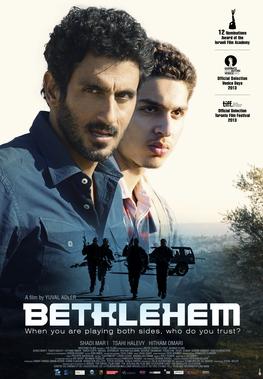
Bethlehem is one of the most compelling films I’ve seen in a long time. There are so few good spy films available that this is a welcome surprise. Unlike Burn After Reading, a genius film, the intention here is not to show things from the agency side, to demonstrate how wildly out of control things can get when you only have half-or-less of the facts. It is also not Charlie Wilson’s War, which shows the feats that intelligence agencies can accomplish when well-directed. Bethlehem is most like Breach, which showed the immense damage an individual spy can do. But instead of showing the effects the act of spying had, with the human characters secondary, Bethlehem tracks specifically the complex relationship that develops between handler and asset. Continue reading
By Kyle Orton (@KyleWOrton) on November 14, 2016
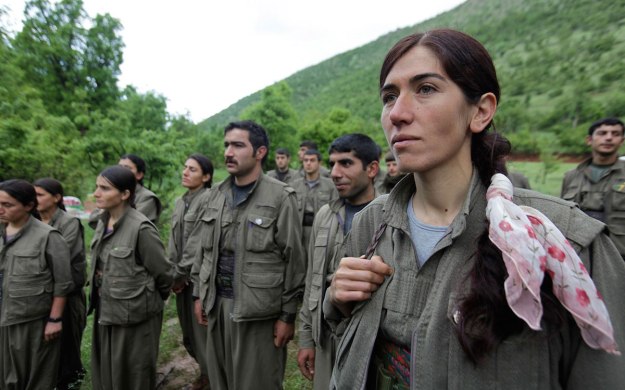
Kurdistan Workers’ Party (PKK) fighters in Dohuk in northern Iraq, 14 May 2013, Azad Lashkari/Reuters
Last week, a member of the Kurdish militia that is the primary instrument the U.S.-led Coalition is using in Syria to defeat the Islamic State (IS) was killed. Examining his biography underlined that this militia is the Syrian wing of the Kurdistan Workers’ Party (PKK), a Marxist-separatist group that is registered as a terrorist organization by the United States, the European Union, and Turkey. The Western powers continue to obfuscate, if not outright deny, this fact, but Coalition support for the PKK—questionable morally and legally in and of itself—is producing negative results on the ground that help IS over the long-term. Continue reading
By Kyle Orton (@KyleWOrton) on November 11, 2016
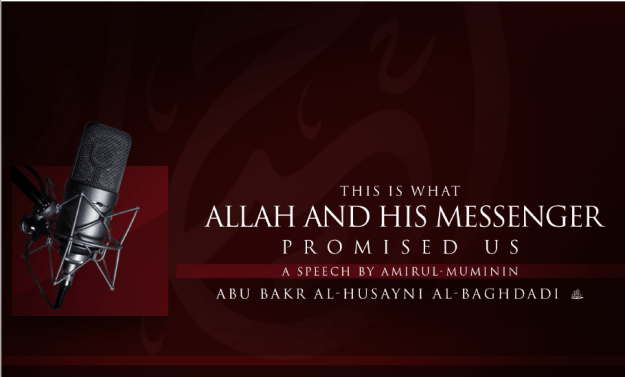
On 2 November 2016, a speech by the leader of the Islamic State, Ibrahim al-Badri (Abu Bakr al-Baghdadi), was released, entitled, “This Is What Allah and His Messenger Promised Us”. On 11 November, the third edition of IS’s English-language magazine, Rumiya, printed a transcript of the speech, which is reproduced below with some editions in transliteration, explanations added in square brackets, and notable or important sections shown in bold. Continue reading
By Kyle Orton (@KyleWOrton) on November 11, 2016

On the right: Abdullah al-Muhaysini (source)
The United States and therefore the international Coalition is about to step up its operations against Jabhat Fatah al-Sham (JFS), al-Qaeda’s recently rebranded Syrian branch. This is a necessary policy, but pursued in isolation—without replacing the capacities that JFS provides to the insurgency—this action will strengthen the coalition supporting the regime of Bashar al-Assad, the actors chiefly responsible for the humanitarian abomination in Syria that has deliberately given rise to the security menace of the Islamic State (IS) and the flow of refugees into Europe that has destabilized Western security. Assad’s coalition also includes the Islamic Republic of Iran, a more significant global terrorism threat than IS which has repeatedly attacked the West. Continue reading
By Kyle Orton (@KyleWOrton) on November 6, 2016
(source)
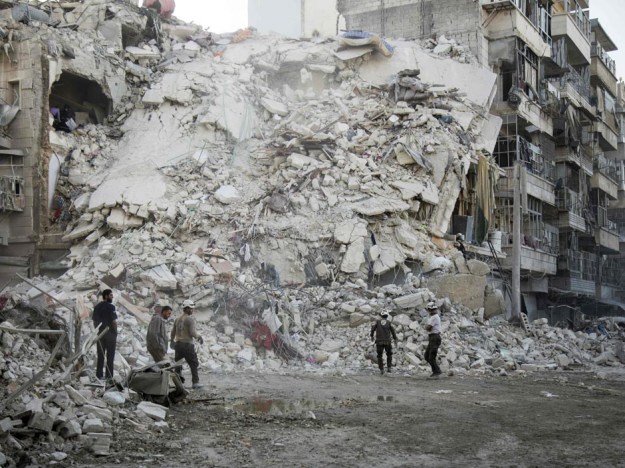
After some (perhaps wilful) confusion over the timing, the operation to expel the Islamic State (IS) from Raqqa City, its Syrian capital, got underway this morning, running concurrent with the effort to evict IS from its Iraqi capital, Mosul. There are deep concerns about the methods adopted in both cases. The ground forces the U.S.-led Coalition has chosen to support in Raqqa cannot lead to sustainable stability in Syria, something that is essential to defeat IS. While the Mosul operation has proceeded generally to plan, there are increasing signs of trouble within the operation itself and the most troubling aspect—the aftermath—still appears to be unplanned. Beyond this is the continued assault on Aleppo City by Bashar al-Assad’s regime and its Russian and Iranian patrons that is systematically destroying the forces needed if there is to be any settlement to Syria’s war that ends the space given to international terrorists. Continue reading
By Kyle Orton (@KyleWOrton) on November 4, 2016
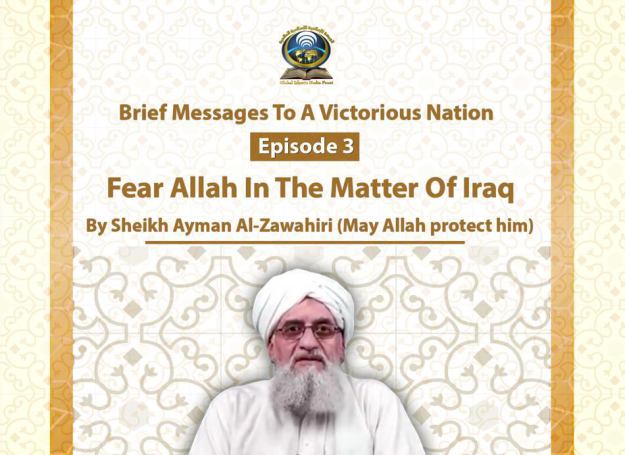
Al-Qaeda’s leader, Ayman al-Zawahiri, gave a speech on August 25, 2016, entitled, “Fear Allah in the Matter of Iraq” (or “Fear Allah in Iraq”). Released by al-Qaeda’s As-Sahab Media Foundation, the speech is the third installment of the “Brief Messages To A Victorious Nation” (or “Brief Messages To A Victorious Umma”) series. A translation of the speech was released by Al-Muwahideen Media, a pro-Qaeda channel, last month and is reproduced below with some editions in transliteration and important sections highlighted in bold. Continue reading
By Kyle Orton (@KyleWOrton) on November 2, 2016
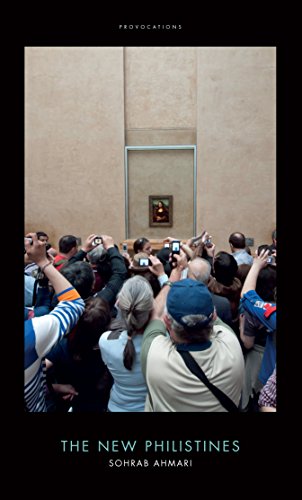
Sohrab Ahmari’s The New Philistines is a crisp and concise polemic. While the book’s focus is “a crisis in the art world,” Ahmari’s dissection of modern art’s failure has implications for the trajectory of the entire liberal Western project.
As Ahmari notes, the complaint that bad art is being considered good is as old as civilization. Ahmari argues persuasively, however, that what is going wrong now is “qualitatively worse than all that came before” because the custodians of our heritage have not redefined the standards of objective beauty and at least a search for truth but have discarded them.
In place of the old standards is a cult of identity politics—a mix of “radical feminism, racial grievance, anti-capitalism, and queer theory”—that has no need for truth-seeking; “truth” is only a means of inflicting upon people an order that is racist, sexist, and homophobic by design, according to the identitarians, which is why their pre-set answers and simply inept art is acceptable, because it advances the cause of challenging this unjust system.
Identity politicization is “one calamity among many” in the art world, yet it has implications far and wide. The identitarians’ own relativistic logic divides the human species into competing tribes whose only interest should be a search for power. With this, the identitarians lay bare their illiberal heart and the danger they pose well beyond the art world.
Ahmari has three chapters. The first covers the reopening of Shakespeare’s Globe and its takeover by the identitarians. The second examines Artforum, the leading contemporary arts magazine in the United States. And in the third Ahmari gives a tour of the London arts scene. Continue reading
 Kyle Orton's Blog