This post is drawn from a recent report I published profiling the leadership of the Islamic State.
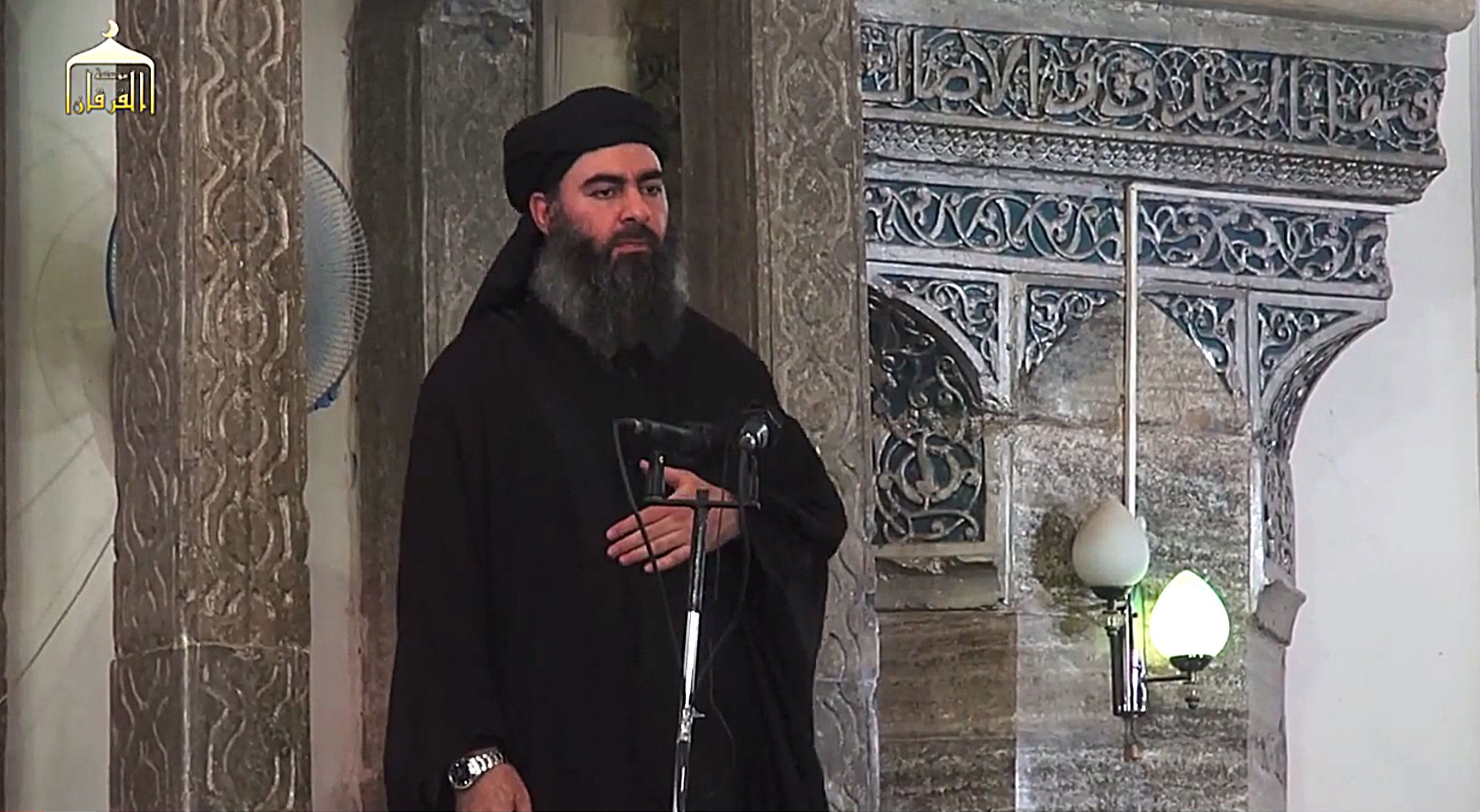
The leader of the Islamic State (IS) since 2010 has been Abu Bakr al-Baghdadi, previously known as Abu Dua or Abu Awad, and his real name—acknowledged by IS itself since the declaration of the so-called Caliphate in 2014—is Ibrahim Awwad Ibrahim Ali Muhammad al-Badri al-Samarrai.
This essay, written to tie together my work on the relationship between the Saddam Hussein regime and the Islamic State, was completed last summer and submitted to an outlet, where it entered a form of development hell. After giving up on that option late last year, the opportunity arose to get a shorter version published in The New York Times in December. But I procrastinated too long over what to do with the full essay and a recent change in my work situation means I no longer have the bandwidth to go through the process of finding it a new home, so here it is.
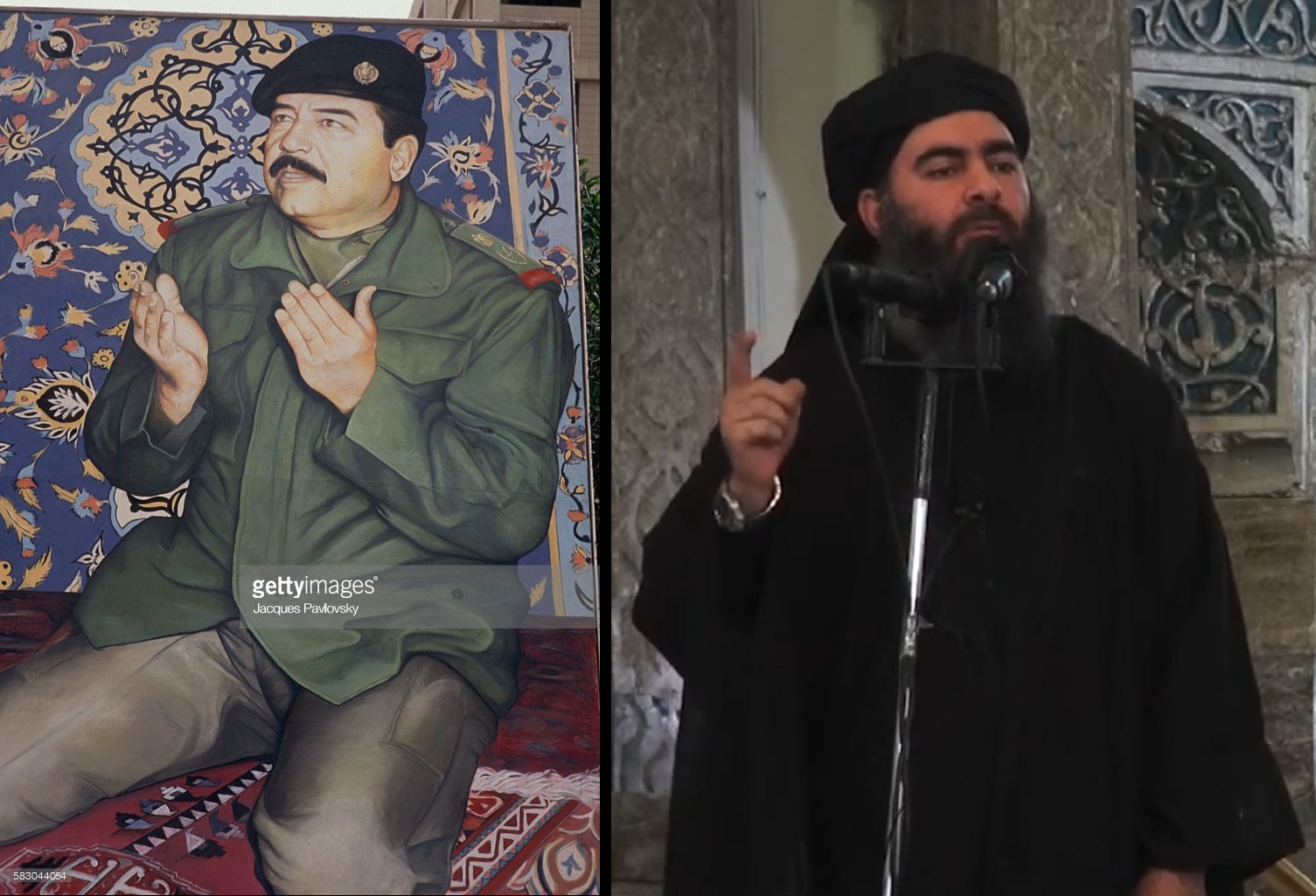
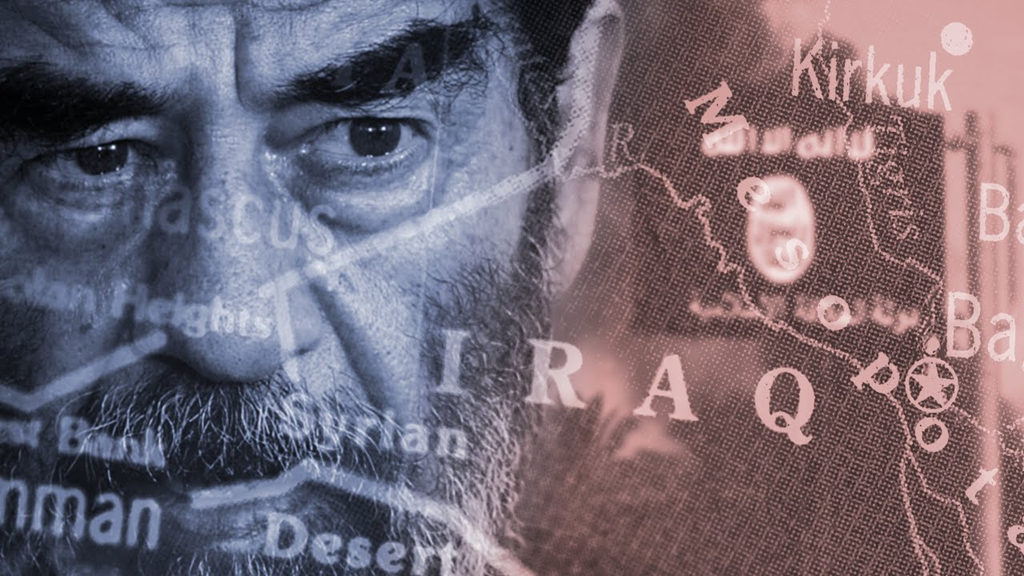
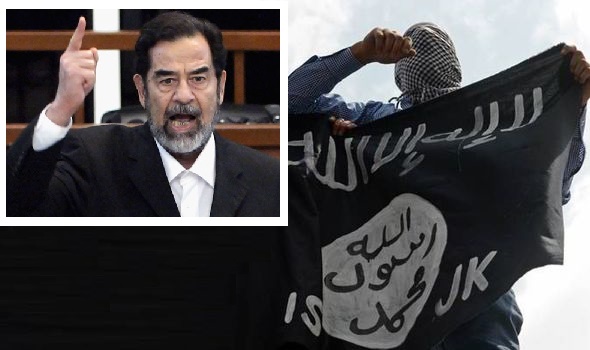
“Abu-Bakr al Baghdadi is a product of the last decade of Saddam’s reign,” argues Amatzia Baram, a scholar of Iraq. He is correct in at least three ways. First, in its last decade in power, the Iraqi Ba’ath regime transformed into an Islamist government, cultivating a more religious, sectarian population on which the Islamic State (ISIS) could draw. Part of Saddam Hussein’s “Faith Campaign” also involved outreach to Islamist terrorists, including al-Qaeda, which meant that the synthesis of Ba’athism and Salafism that fused into the Iraqi insurgency after the fall of Saddam was already well advanced by the time the Anglo-American forces arrived in Baghdad in 2003. Second, the ISIS leadership and military planning and logistics is substantially reliant on the intellectual capital grown in the military and intelligence services of the Saddam regime. And finally, the smuggling networks on which ISIS relies, among the tribes and across the borders of Iraq’s neighbours, for the movement of men and materiel, are directly inherited from the networks erected by the Saddam regime in its closing decade to evade the sanctions. The advantages of being the successor to the Saddam regime make ISIS a more formidable challenge than previous Salafi-jihadist groups, and one that is likely to be with us for some time.
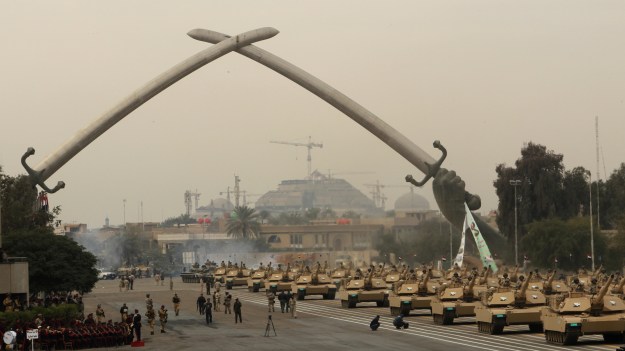
The “Victory Arch,” which Saddam built after the war with Iran. (January 2012)
About three weeks ago I wrote a piece for The New York Times explaining the evolution of Saddam Hussein’s regime away from the hard-secularism of its Ba’athist origins, and how this had prepared the ground for the Islamic State (IS). I received much positive feedback, but the social media reaction was inevitable: little thought and much anger, particularly from people who view Iraqi history through a political prism and felt I was trying to exculpate George W. Bush. With rare exceptions, the critique could hardly be called thoughtful. So it is nice to finally have such a critique to deal with, from Samuel Helfont and Michael Brill in today’s Foreign Affairs. Continue reading →
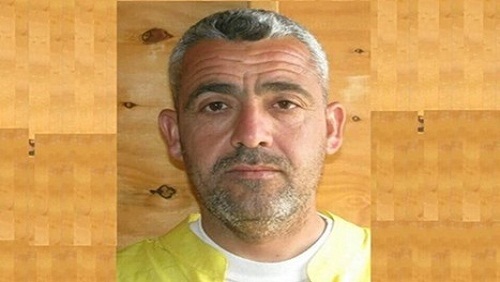
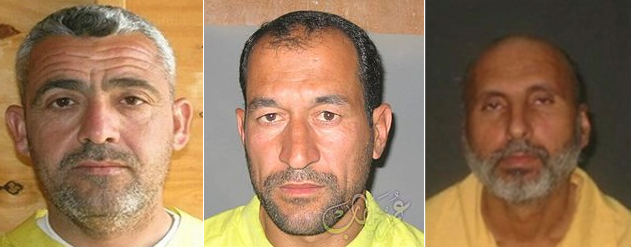
From top left clockwise: Fadel al-Hiyali, Ibrahim al-Badri (Abu Bakr al-Baghdadi), Adnan al-Bilawi, Samir al-Khlifawi (Haji Bakr), Adnan as-Suwaydawi (Abu Ayman al-Iraqi), Hamid az-Zawi (Abu Omar al-Baghdadi), Abu Hajr as-Sufi
Yesterday, Reuters had an article by Isabel Coles and Ned Parker entitled, “How Saddam’s men help Islamic State rule“. The article had a number of interesting points, but in its presentation of the movement of former (Saddam) regime elements (FREs) into the leadership structure of the Islamic State (IS) as a phenomenon of the last few years, it was a step backward: the press had seemed to be recognizing that the Salafization of the FREs within IS dates back to the Islamization of Saddam Hussein’s regime in its last fifteen years, notably in the 1990s after the onset of the Faith Campaign. Continue reading →
Fadel Ahmad Abdullah al-Hiyali (a.k.a. Abu Muslim al-Turkmani a.k.a. Haji Mutazz)
Fadel Ahmad Abdullah al-Hiyali, the overall deputy to the “caliph” Abu Bakr al-Baghdadi, who heads the Military Council of the Islamic State (ISIS) and is the direct commander of ISIS’s forces in Iraq, was killed in a drone strike in Mosul on August 18, according to a U.S. spokesman for the National Security Council yesterday. Al-Hiyali, who also goes by the pseudonyms Abu Muslim al-Turkmani, Abu Mutaz al-Qurayshi, and Haji Mutaz, was reported to have been travelling in a car with a media operative named Abu Abdullah when he was killed. Continue reading →
Left to Right: (1) Fadel al-Hiyali (Haji Mutazz or Abu Muslim al-Turkmani); (2) Adnan Ismail Najem al-Bilawi (Abu Abdulrahman al-Bilawi); (3) Samir al-Khlifawi (Haji Bakr)
Nearly a year ago I wrote that in crude terms the Islamic State’s (ISIS’s) “military strength comes from the remnants of Saddam Hussein’s military-intelligence apparatus and the Caucasus’ Salafi-jihadists.” Since then I have dug up some answers for why this is so that did not seem to be widely shared. This might be about to change.
After long neglect, the media has finally recognized the role of the FREs—former (Saddam) regime elements—within the Islamic State (ISIS). But the pendulum has now swung too far: Some reports are now claiming that the FREs have transformed the leader of the terror army, Abu Bakr al-Baghdadi, into nothing more than a front man for the Baathists.
These suppositions are mistaken. Most FREs within ISIS have not been ideologically Baathists for a long time. Continue reading →
Having presented the evidence that Saddam Hussein Islamized his foreign policy and then Islamized his regime, above all with the Islamic Faith Campaign, beginning in June 1993 that tried to fuse Ba’athism with Salafism, encouraging (and keeping under surveillance) a religious revival in Iraq that redounded to the benefit of the regime’s legitimacy and support, I wanted to look at what this history means for Iraq and the wider region now.
I pointed out in October that the “military strength” of the Islamic State (ISIS) “comes from the remnants of Saddam Hussein’s military-intelligence apparatus and the Caucasus’ Salafi-jihadists.” Continue reading →
The current leader of the Islamic State (IS), Ibrahim al-Badri (Abu Bakr al-Baghdadi), released his first “proper” speech on July 21, 2012. But this was, in fact, his second public statement: Al-Badri had mourned Usama bin Laden in an audio message released on 9 May 2011 and vowed “blood for blood and destruction for destruction”. The 2012 speech, entitled, “Allah Will Not Allow Except That His Light Should Be Perfected”, was released by Al-Furqan Media and an English transcript—reproduced below—was issued by Fursan al-Balagh Media. Some key parts are highlighted in bold. Continue reading →
A purported defector from the Islamic State, known only as “Abu Ahmad,” released testimony online on 5 April 2014 via the Syrian opposition news site al-Durar al-Shamiya under the heading, “The Concealed Truths About al-Baghdadi’s State”. Abu Ahmad describes himself as “one of the mujahideen in Khorasan [Afghanistan-Pakistan] and Iraq, and now in al-Sham [Syria],” and it is quite clear that Abu Ahmad has defected to al-Qaeda. On 25 September 2014, an English version of this testimony was posted on the Fund for Fallen Allies website. It has been reposted below—with some editions to transliteration and syntax—to avoid it being lost.Continue reading →

 Kyle Orton's Blog