On 10 August 2016, Aaron Driver, 24, detonated a bomb in the back of a taxi in Strathroy, Ontario, Canada, as the Royal Canadian Mounted Police (RCMP) closed in, wounding himself and the driver before the police opened fire and killed him. A convert and long-time supporter of the Islamic State—Driver was arrested for such support in June 2015—Driver had followed the pattern of many recent operatives of the Islamic State by making a martyrdom video declaring his allegiance to the caliph, Abu Bakr al-Baghdadi, which was sent to the IS “news agency” Amaq in preparation for his impending terrorism. This was among the communications intercepted by the FBI. Continue reading →
This post is drawn from a recent report I published profiling the leadership of the Islamic State.
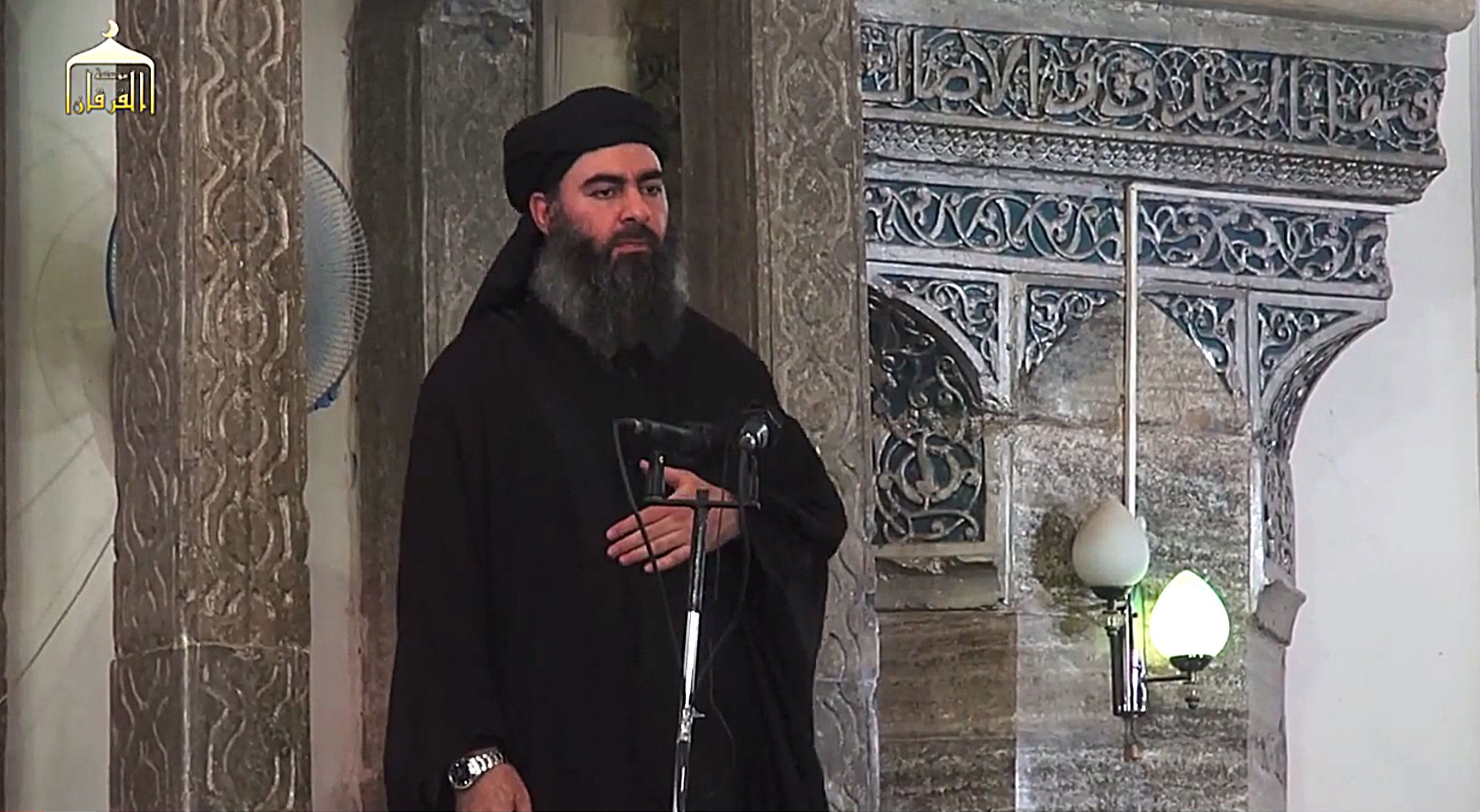
The leader of the Islamic State (IS) since 2010 has been Abu Bakr al-Baghdadi, previously known as Abu Dua or Abu Awad, and his real name—acknowledged by IS itself since the declaration of the so-called Caliphate in 2014—is Ibrahim Awwad Ibrahim Ali Muhammad al-Badri al-Samarrai.
A new report by me for the Henry Jackson Society (accessible here) is out today. It looks at those governing the statelet held by the Islamic State in parts of Syria and Iraq, and those who are orchestrating IS’s foreign terrorist attacks, including in Europe. The wave of attacks over Ramadan has been described as a “lone wolf” epidemic by many, but IS is coordinating this mayhem through its Amn al-Kharji, foreign intelligence service, and the report looks at who staffs this institution and the dangers of writing-off these attacks as the work of lone radicals with no connection to each other or IS. Continue reading →
Taha Falaha (Abu Muhammad al-Adnani) is the governor Islamic State-held territory in Syria and oversees the foreign attacks, a roster of duties which indicates that Falaha so powerful that he is effectively the caliph’s deputy after the demise of Abd al-Rahman al-Qaduli (Abu Ali al-Anbari) in March. Falaha is also IS’s official spokesman, and on 21 May 2016 he gave a very significant speech entitled, “That They Live By Proof”. The speech, released by Al-Hayat Media Centre, is reproduced below with some minor alterations in transliteration, some important sections highlighted in bold, and some notes added for explanation.
Falaha made three major points. First, Falaha was especially adamant that territorial control by IS should not be considered a measure of IS’s success: it lost all urban holdings and went into the deserts last time, after the strategic defeat in 2008, but it held to its cause and America withdrew, and this ideological cohesiveness and determination led it to be more powerful than ever within five years. Second, Falaha made use of the savage conduct of the coalition made up of the Assad regime, Iran, and Russia—and the Western indifference to same—to argue for Sunnis to see IS as a protective barrier against such sectarian foes. And, third, Falaha called for foreign attacks by Western Muslims, saying that if IS’s loyalists were unable to journey to IS-held areas this should not be considered a problem since attacks in the West are “more beloved to [IS] than the biggest act done [within the caliphate]”. Continue reading →
The leader of al-Qaeda, Ayman al-Zawahiri, released an audio statement on 8 May 2016. The speech was entitled, “Hasten to Syria,” “Go Forth to Syria,” or “March Forth to Syria,” depending on translation.[1] An English-language translation has been made available and is reproduced below, with some editions in transliteration and some important sections highlighted in bold.Continue reading →
This essay, written to tie together my work on the relationship between the Saddam Hussein regime and the Islamic State, was completed last summer and submitted to an outlet, where it entered a form of development hell. After giving up on that option late last year, the opportunity arose to get a shorter version published in The New York Times in December. But I procrastinated too long over what to do with the full essay and a recent change in my work situation means I no longer have the bandwidth to go through the process of finding it a new home, so here it is.
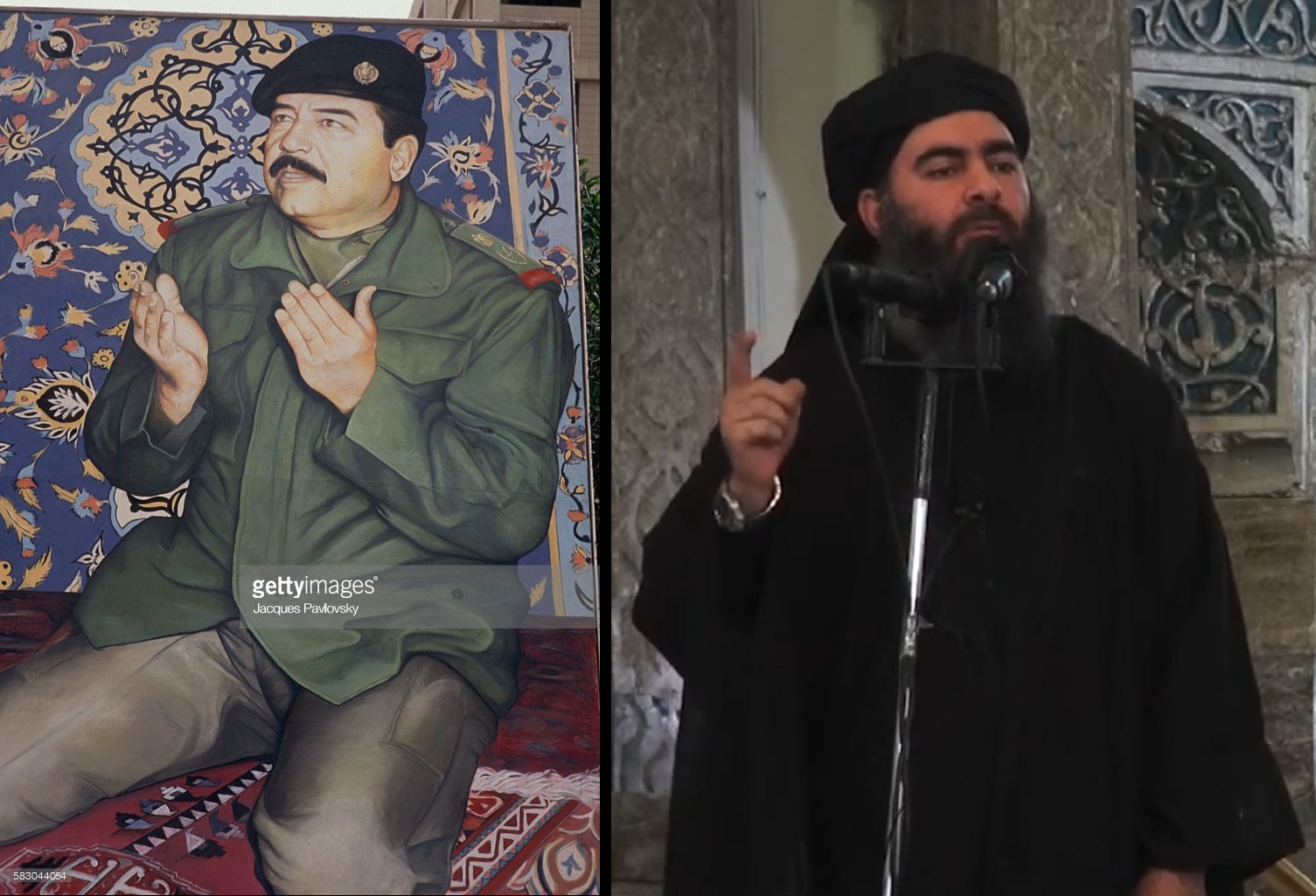
“Abu-Bakr al Baghdadi is a product of the last decade of Saddam’s reign,” argues Amatzia Baram, a scholar of Iraq. He is correct in at least three ways. First, in its last decade in power, the Iraqi Ba’ath regime transformed into an Islamist government, cultivating a more religious, sectarian population on which the Islamic State (ISIS) could draw. Part of Saddam Hussein’s “Faith Campaign” also involved outreach to Islamist terrorists, including al-Qaeda, which meant that the synthesis of Ba’athism and Salafism that fused into the Iraqi insurgency after the fall of Saddam was already well advanced by the time the Anglo-American forces arrived in Baghdad in 2003. Second, the ISIS leadership and military planning and logistics is substantially reliant on the intellectual capital grown in the military and intelligence services of the Saddam regime. And finally, the smuggling networks on which ISIS relies, among the tribes and across the borders of Iraq’s neighbours, for the movement of men and materiel, are directly inherited from the networks erected by the Saddam regime in its closing decade to evade the sanctions. The advantages of being the successor to the Saddam regime make ISIS a more formidable challenge than previous Salafi-jihadist groups, and one that is likely to be with us for some time.
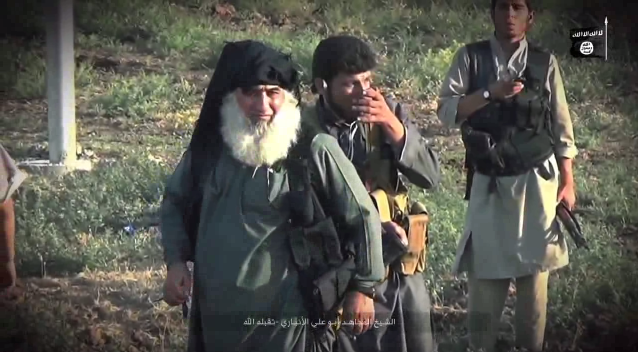
Abd al-Rahman al-Qaduli (Abu Ali al-Anbari) in an Islamic State video in May 2016
United States Secretary of Defense Ashton Carter announced this morning that he believed Abd al-Rahman Mustafa al-Qaduli, a senior leader of the Islamic State (IS), had been killed in a U.S. raid into Syria earlier this week. Al-Qaduli was “serving as a finance minister” and had been “responsible for some external affairs and plots,” said Carter. America is “systematically eliminating ISIL’s cabinet,” Carter went on, noting the alleged killing of Tarkhan Batirashvili (Abu Umar al-Shishani) two weeks ago, adding that al-Qaduli’s removal will “hamper” IS in conducting operations inside and outside its caliphate. Continue reading →
Amr al-Absi, one of the most senior Islamic State (IS) leaders, was killed in an airstrike on 3 March, according to reports on social media and by the SITE Intelligence Group. Al-Absi—better known as Abu Atheer al-Absi or just Abu al-Atheer—exemplified several key dynamics at work in Syria.
Atheer was among the jihadi-Salafists released by the regime of Bashar al-Assad at the beginning of Syria’s uprising in an attempt to make self-fulfilling the regime’s claim that the opposition were terrorists, and was also a seminal figure in making Syria so dangerous for journalists that it allowed Assad and IS to shape the coverage as if Syria was a binary choice between them.
Atheer is among the longstanding ultra-extremists who shape and define IS spiritually, and he was crucial in more concrete terms in IS infiltrating and expanding in Syria, particularly by bringing in foreigners who are among the most ideologically driven category of IS members. Continue reading →
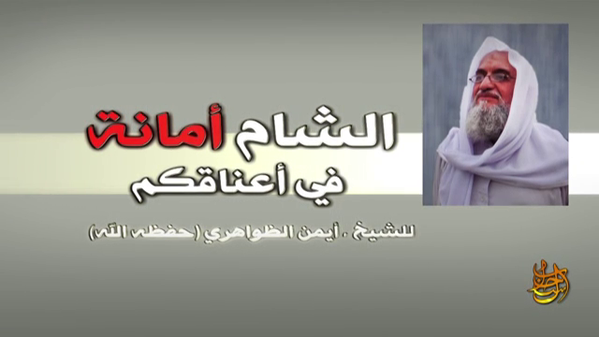
As-Sahab Foundation for Islamic Media Publication, al-Qaeda’s media outlet, produced an English translation of a speech by the organization’s leader, Ayman al-Zawahiri, on 13 January 2016. The speech was entitled, “Syria Is Entrusted Upon Your Necks”. The speech does focus on the West, particularly its de facto alliance with the pro-Assad coalition—namely Russia and Iran—and calls for the Syrian rebellion to unite with al-Qaeda to resist this conspiracy. What is more noticeable, however, is the two enemies on whom Dr. al-Zawahiri really focuses: Saudi Arabia and the Islamic State. The Saudis are accused—not without reason—of having been allied closely to the West and thwarting the jihadist projects at every turn. And al-Zawahiri makes a fierce ideological assault on the Islamic State, comparing them with the Khawarij and the Armed Islamic Group (GIA), whose conduct in Algeria in the 1990s and their justifications for it took Islamist extremism to new depths. The speech is reproduced below with some minor editions, to transliteration and punctuation, and some interesting and important sections highlighted in bold. Continue reading →




 Kyle Orton's Blog