By Kyle Orton (@KyleWOrton) on 20 June 2023

By Kyle Orton (@KyleWOrton) on 7 November 2019

Taha Falaha (Abu Muhammad al-Adnani) [right] appearing in an Islamic State video alongside Tarkhan Batirashvili (Abu Umar al-Shishani, 3 June 2017, displaying a scene from 2014 when IS demolished the borders between Iraq and Syria. Falaha was killed in August 2016. It is common for IS to hold back pictures and footage of its leaders for time-spans that can reach over a decade.
By Kyle Orton (@KyleWOrton) on 6 April 2019

Islamic State flag in front of the main gate of Saddam Husayn’s palace in Tikrit, 5 April 2015 // AFP PHOTO / MOHAMMED SAWAF
A lengthy document—roughly sixty pages and 12,000 words—was published online on 21 February 2019 containing biographies of twenty-seven senior Islamic State (IS) officials, past and more recent. Those bios that are dated were written between October 2018 and the time of publication, with one exception that was written in the summer of 2018. The author claims to be an IS veteran. While longevity is difficult to prove, the fact that the author provides heretofore unseen images of some of the IS leaders suggests that at a minimum he is an IS operative. Continue reading
By Kyle Orton (@KyleWOrton) on January 30, 2017
![Umar Hadid [right] (source)](https://kyleorton.co.uk/wp-content/uploads/2017/01/umar-hadid-1-right.jpg)
Umar Hadid [right] (source)
By Kyle Orton (@KyleWOrton) on January 30, 2017
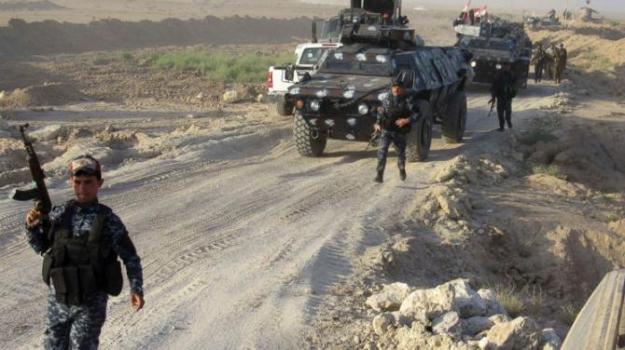
A profile of Umar Hadid, taken from the Islamic State’s “Distinguished Martyrs” series posted to a jihadist forum, is reproduced below with some interesting and important sections highlighted in bold. Hadid—variously known as Abu Khattab al-Falluji, Abu Khattab al-Ansari, and Abu Khattab al-Iraqi—was a native of Fallujah who took up Salafism in the late 1990s during the rule of Saddam Husayn, leading to clashes with the security forces and Hadid going into internal exile. After the fall of Saddam, Hadid quickly linked up with the elite circles of the nascent Islamic State movement, including its leader Ahmad al-Khalayleh (Abu Musab al-Zarqawi), his deputy Umar Yusef Jum’a (Abu Anas al-Shami), the military leader Mustafa Ramadan Darwish (Abu Muhammad al-Lubnani) and Abu Raghd who set up the Rawa Camp in Anbar Province, said to be the first terrorist training facility of the Iraqi jihad, and Abdallah Najem al-Jawari (Abu Azzam al-Iraqi), the chief financier and Anbar governor in 2004 before being appointed emir of Baghdad in 2005. Hadid was the leader of the insurgency in the two battles at Fallujah in 2004, being killed during the second of them. Continue reading
By Kyle Orton (@KyleWOrton) on January 28, 2017
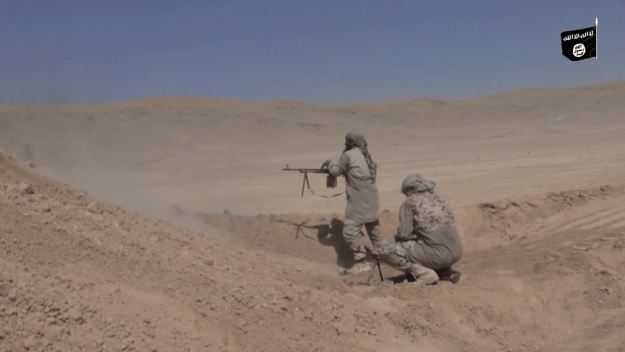
In his first speech as the then-Islamic State of Iraq’s (ISI’s) official spokesman in August 2011, Taha Falaha (Abu Muhammad al-Adnani) referred to several of the group’s “leaders” who had been killed. Among them was Abu Raghd, whose biography provides a glimpse of the role regional states—specifically Saddam Husayn’s Iraq and Bashar al-Assad’s Syria—played in facilitating the birth of the Islamic State (IS). Continue reading
 Kyle Orton's Blog