Tag Archives: Abu Muhammad al-Adnani

Islamic State Has Been Defeated in Al-Bab, But America Needs a New Direction in Syria

Published at The International Business Times and subsequently discussed on the IBTimes podcast

By Kyle Orton (@KyleWOrton) on February 27, 2017
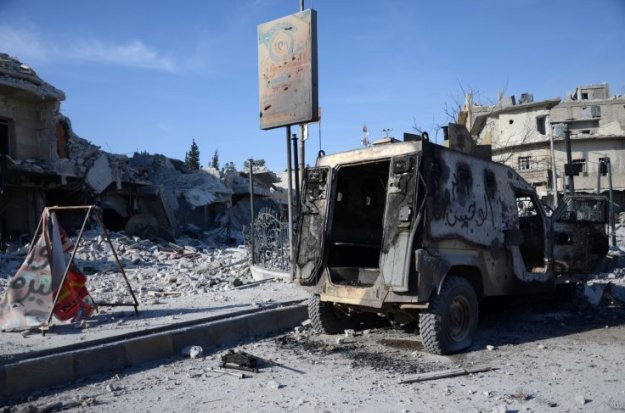
A burnt-out vehicle on a destroyed street in al-Bab on 23 February 2017 (Nazeer al-Khatib/AFP/Getty Images)

Turkey intervened in Syria in August 2016 with Operation Euphrates Shield (OES), which involved special forces, some regular troops, and the mobilisation of Syrian rebels to clear its border of terrorist threats by pushing ISIS (the Islamic State) away from the frontier and preventing the Syrian branch of the Kurdistan Workers’ Party (PKK) creating a state-let on its border that could be used as a harbour and launch-pad for attacks inside Turkey.

To secure this mission, on 13 November 2016 OES began an assault on al-Bab in the eastern countryside of Aleppo Province, just 15 miles from Turkey’s border and ISIS’ last major urban centre in Syria outside its capital, Raqqa. Some 102 days of combat later, on 23 February, al-Bab fell. What happens next could determine the course of the war as Turkey competes with the PKK to be the U.S.-led Coalition’s partner in clearing ISIS from Raqqa. Continue reading

How the Islamic State Claims Terrorist Attacks

By Kyle Orton (@KyleWOrton) on February 4, 2017

2

With the attempted terrorist attack using machetes at the Louvre museum in Paris yesterday by Abdullah Reda al-Hamamy, whose social media history shows statements at least sympathetic to the Islamic State (IS), it raises once again the question, making no assumptions about al-Hamamy’s motives, of how connected the organization headquartered in Raqqa is to the attacks taking place around the world under IS’s banner—and how we would know.

As IS’s attacks outside of the statelet it has built in Iraq and Syria increased in frequency over the last year, a rather routinized mechanism has developed for attributing blame: IS claims the atrocities—or attempted atrocities—through Amaq News Agency. Continue reading

The Man Who Planned the Islamic State’s Takeover of Mosul

By Kyle Orton (@KyleWOrton) on January 31, 2017

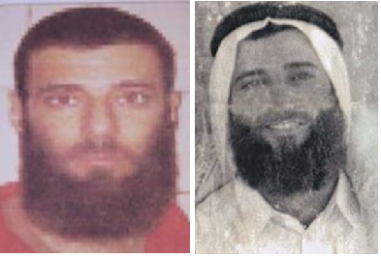
Adnan al-Bilawi

Adnan al-Bilawi

Adnan Ismail Najem al-Bilawi al-Dulaymi (Abu Abdulrahman al-Bilawi), the leader of the Islamic State’s Military Council when he was killed on the eve of the Mosul offensive that he had planned in June 2014, was eulogized by IS’s official spokesman, Taha Falaha (Abu Muhammad al-Adnani), explaining his importance to the organization. Below is a profile of al-Bilawi and the section of Falaha’s speech dedicated to al-Bilawi. Continue reading

Abdallah Najem al-Jawari: A Key Early Leader of the Islamic State

By Kyle Orton (@KyleWOrton) on January 28, 2017

1

Abdallah Najem al-Jawari (Abu Azzam al-Iraqi) was something like the Islamic State (IS) movement’s first Finance Minister and a senior regional official, first in his native Anbar—he was from Fallujah—and later in Baghdad. Joining the group quickly after the collapse of the Saddam Husayn regime, al-Jawari was killed in 2005. Al-Jawari remains among those commemorated by IS as founders who set the stage for the current rise of “the State”.
Continue reading

The Caliph’s First Deputy

By Kyle Orton (@KyleWOrton) on January 28, 2017

numan-al-zaydi

When Ibrahim al-Badri (Abu Bakr al-Baghdadi) became the leader of the then-Islamic State of Iraq (ISI) in May 2010, his deputy was man named Numan al-Zaydi, who went under various pseudonyms: Abu Ibrahim al-Ansari, Abu Sulayman al-Nasser, and Al-Nasser Lideen Allah Abu Sulayman. Al-Zaydi was killed in February 2011. Continue reading

Profile of Abu Raghd: On the Origins of the Iraqi Jihad

By Kyle Orton (@KyleWOrton) on January 28, 2017

2016-11-10-is-closing-in-on-palmyra-p13

In his first speech as the then-Islamic State of Iraq’s (ISI’s) official spokesman in August 2011, Taha Falaha (Abu Muhammad al-Adnani) referred to several of the group’s “leaders” who had been killed. Among them was Abu Raghd, whose biography provides a glimpse of the role regional states—specifically Saddam Husayn’s Iraq and Bashar al-Assad’s Syria—played in facilitating the birth of the Islamic State (IS). Continue reading

Jihadist Profile of Abu Bakr al-Baghdadi

By Kyle Orton (@KyleWOrton) on January 23, 2017

A short biography of the “Caliph” of the Islamic State (IS), Ibrahim al-Badri (Abu Bakr al-Baghdadi), was leaked online by the group in July 2013. A rough translation is reproduced below.

Continue reading

The Seeds of the Islamic State in Saddam’s Iraq

By Kyle Orton (@KyleWOrton) on January 22, 2017

Mustafa Ramdan Darwish (Abu Muhammad al-Lubnani)

Mustafa Ramdan Darwish (Abu Muhammad al-Lubnani)

After the leaders of the Islamic State die—usually killed by their foes—short biographies tend to be circulated on internet forums that favour the group. One such obituary—with the above picture—was disseminated for Mustafa Ramadan Darwish (Abu Muhammad al-Lubnani), and is reproduced below with some editions to transliteration and some interesting sections highlighted in bold. Darwish was the first leader of the Islamic State’s military portfolio and the second overall deputy (between September 2004 and early 2005) to the movement’s founder, Ahmad al-Khalayleh (Abu Musab al-Zarqawi). One of the most interesting parts of Darwish’s profile is its addition of details on the jihadi networks linked to al-Qaeda and the first generation of the Islamic State that were operating in Iraq in the final years of Saddam Husayn’s rule, a topic touched on in other biographies of Islamic State leaders. Continue reading

Ideologue Laments A Jihadist Joining the Islamic State

By Kyle Orton (@KyleWOrton) on January 9, 2017
2

On 6 January 2017, pro-al-Qaeda channels distributed a statement, with the picture above, written by Abu Mahmud al-Filistini.1 Abu Mahmud writes of a young jihadist, Abd al-Rahman, who had, after joining the Islamic State (IS), not been fully seduced by their ideology and had maintained contact with Abu Mahmud. At a certain point, however, Abd al-Rahman accepted IS’s ideology and recently killed himself in a suicide bombing against insurgent forces in Syria. It is not clear whether the insurgents referred to are rebels or Jabhat Fatah al-Sham (JFS), al-Qaeda’s rebranded Syrian branch, which was until recently known as Jabhat al-Nusra. The statement is reproduced below with some minor editions, for the sake of clarity, to transliterations and punctuation. Continue reading

Islamic State Likely To Increase Terrorism Against Turkey

By Kyle Orton (@KyleWOrton) on January 7, 2017

Abdulkadir Masharipov (source)

It was an hour into 2017 that the Islamic State (IS) carried out its first act of mass-murder: an IS jihadist attacked the Reina nightclub in Istanbul, massacring thirty-nine people. IS has been attacking Turkey with increasing frequency over the last two years and, since Turkey intervened directly in Syria in August, IS’s media output has elevated the Turks into a priority target for terrorism. The public claim of responsibility by IS for the Reina attack suggests that we are moving into a new era in terms of how IS treats Turkey. Turkey’s increasingly warm relations with Russia have angered many Muslims around the world, providing jihadists an incentive and opportunity, and providing al-Qaeda political space it seemed to have lost to co-opt the Syrian rebellion. It is therefore likely that more bloodshed is to come for Turkey. Continue reading