Tag Archives: Abu Musab al-Zarqawi

The Third Deputy of the Islamic State: Muhammad Khalaf Shakar

By Kyle Orton (@KyleWOrton) on 12 November 2017

Muhammad Shakar had, according to his martyr biography, “become influenced by Salafism in 1997-98 while serving as a part of [Saddam] Hussein’s Special Republican Guard”.[1] Quitting the military and returning to his home in Mosul, Shakar was harassed by the regime until he went to join Ansar al-Islam in the mountains of Kurdistan.[2]

Shakar, known as Abu Talha al-Ansari or Abu Talha al-Mawsuli, joined the predecessor to Islamic State either just before or just after Saddam fell, and he was arrested in Mosul on 14 June 2005. Continue reading

The Islamic State Planned For Sectarian War in Iraq From the Beginning

By Kyle Orton (@KyleWOrton) on 13 October 2017

The Iraqi Kurdish authorities arrested Mustafa Haji Muhammad Khan (Hassan Ghul) on 23 January 2004. Khan had been dispatched to Iraq by Nashwan Abd al-Baqi (Abd al-Hadi al-Iraqi), one of the key military officials of al-Qaeda “central” (AQC), to function as AQC’s intermediary with Ahmad al-Khalayleh (Abu Musab al-Zarqawi), the founder of the Islamic State movement. Khan replaced Abdallah al-Kurdi, the first envoy sent by Abd al-Baqi. Al-Kurdi had failed to establish any footing to do his job effectively, but Khan, a battle-hardened jihadist from Baluchistan, earned a measure of respect from al-Khalayleh and facilitated a productive conversation between AQC and al-Khalayleh. Al-Khalayleh, possessed of a pathological anti-Shi’ism, wrote a seventeen-page memo to Usama bin Laden explaining his strategy to defeat the Americans by starting a total war between the sects in Iraq. That memo, in digital form, was given to Khan, and Khan had it in his possession when he was captured. A translation of the letter is given below with some interesting sections highlighted in bold.[1] Continue reading

How the Islamic State’s Founder Justified Murdering Shi’a Civilians

By Kyle Orton (@KyleWOrton) on 5 October 2017

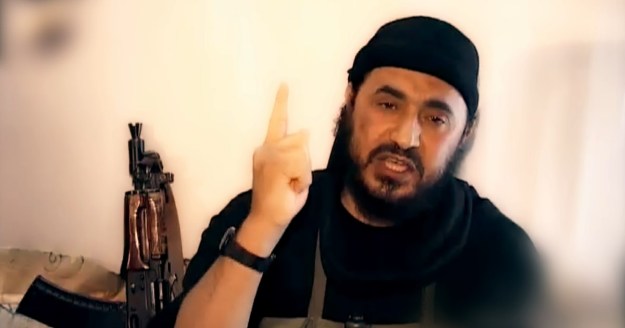
Ahmad al-Khalayleh (Abu Musab al-Zarqawi)

The Islamic State’s founder, Ahmad al-Khalayleh (Abu Musab al-Zarqawi), took the anti-Shi’ism within jihadi-salafism, and moved it to ideological centre-stage in his campaign to implement a shari’a regime in Iraq. In a speech on 18 May 2005, “The Return of Ibn al-Alqami’s Grandchildren”, al-Khalayleh cast the Shi’a as the internal enemies of Islam. Al-Alqami, a Shi’a, was the vast vizier of the Abbasid caliphate and allegedly opened the gates to allow the Mongols to sack Baghdad in 1258. In al-Khalayleh’s telling, the Iraqi Shi’a repeated this in 2003 by welcoming the Americans—a piece of sectarian incitement first used by Saddam Husayn. Al-Khalayleh makes reference to Shi’a figures conspiring in the American project for a New Iraq, something unalterably opposed not only by al-Khalayleh but most Iraqi Sunnis and their “resistance” groups, who objected to their loss of primacy in the aftermath of Saddam, flatly rejecting the demographic facts of Iraq that grant them a smaller share of power than they feel is their due. This political grievance is secondary to al-Khalayleh, however. Al-Khalayleh advances a cosmic, theological argument. To al-Khalayleh, the existence of the Shi’a is a standing affront to the “true” faith and a temptation for Sunnis to fall into apostasy, and since the need to defend the faith itself is above the protection of human life, the shedding of the blood of Shi’a civilians licit. This is the intellectual universe in which al-Khalayleh and his successors dwell. Excerpts from the speech are republished below. Continue reading

One More Time on Saddam and the Islamic State

Originally published at The Henry Jackson Society

By Kyle Orton (@KyleWOrton) on 2 September 2017

The most recent issue of Perspectives on Terrorism had a paper by Ronen Zeidel entitled, ‘The Dawa’ish: A Collective Profile of IS Commanders’, which was “the first attempt to provide a comprehensive collective profile of commanders and leaders of the Islamic State (IS)”. Based on “an inventory of over 600 names”, the paper assessed the nationality, ethnicity, and tribal origins not just of the very senior IS commanders, but those lower down, a novel and much-needed line of investigation. Zeidel found that these commanders of the IS movement are or were overwhelmingly Iraqi and Sunni Arab, with an important Turkoman contingent.

Zeidel’s findings are important for drawing attention again to the local-revolutionary character of an organisation that gets a great deal of attention for its foreign fighters and external attacks, especially in the West, but which only a recently acquired global reach—and, indeed, only recently needed to: until 2011, the West was easily reachable since it had troops on the ground in Iraq, so the incentive to invest resources in creating a foreign terrorist apparatus was minimal.

One small part of Zeidel’s work has created something of a storm, however. Zeidel gives the occupation held by these commanders and, for those where this was known, 72% of them were former regime elements (FREs) from the dictatorship of Saddam Husayn. This reignited the argument over how important the FREs have been to IS. Continue reading

The Syrian Regime Helped the Islamic State Murder Americans

By Kyle Orton (@KyleWOrton) on 26 August 2017

The Asad family regime in Syria has long been known to have had a key role in the formation and sustenance of the Islamic State (IS) and its predecessors. Without the Asad regime’s assistance, the IS movement could not have hoped to pose such a challenge to the Iraqi government, regional states, and Western interests and citizens. This has been underlined in a series of Federal Court rulings in the United States that have brought together evidence on this matter. In April, another such ruling found the Asad regime liable in the murder of three more Americans. Continue reading

The Top American in the Islamic State Attacks the Top American in Al-Qaeda

By Kyle Orton (@KyleWOrton) on 20 July 2017

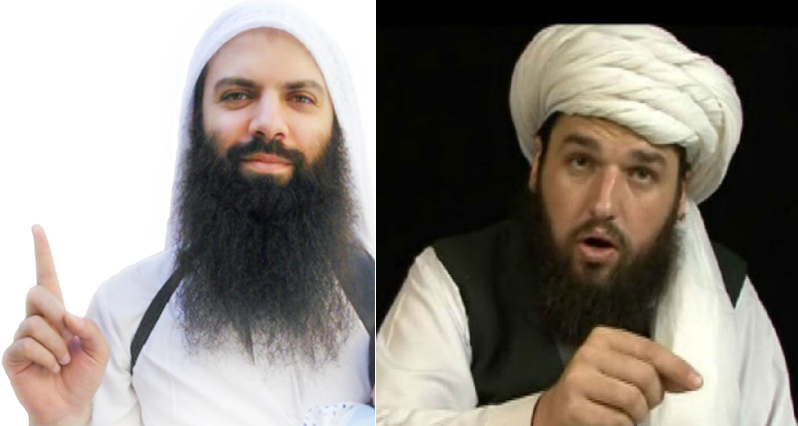
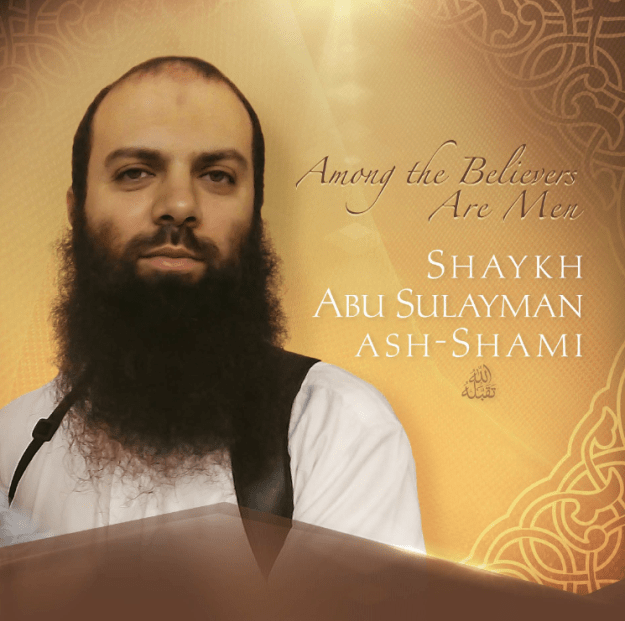
A couple of months ago, the Islamic State revealed that one of its most senior officials in the crucial media department until his death in January 2017 was an American, Ahmad Abousamra, known by various kunyas, including Abu Sulayman al-Shami and Abu Maysara al-Shami. Looking around afterwards, I came across an article by Abousamra condemning Adam Gadahn, another American, who was part of the core leadership of Al-Qaeda—one of the handful of men around Usama bin Laden and then Ayman al-Zawahiri—until he was killed in January 2015.

Continue reading

When Usama Bin Laden Defended the Islamic State

By Kyle Orton (@KyleWOrton) on 17 July 2017

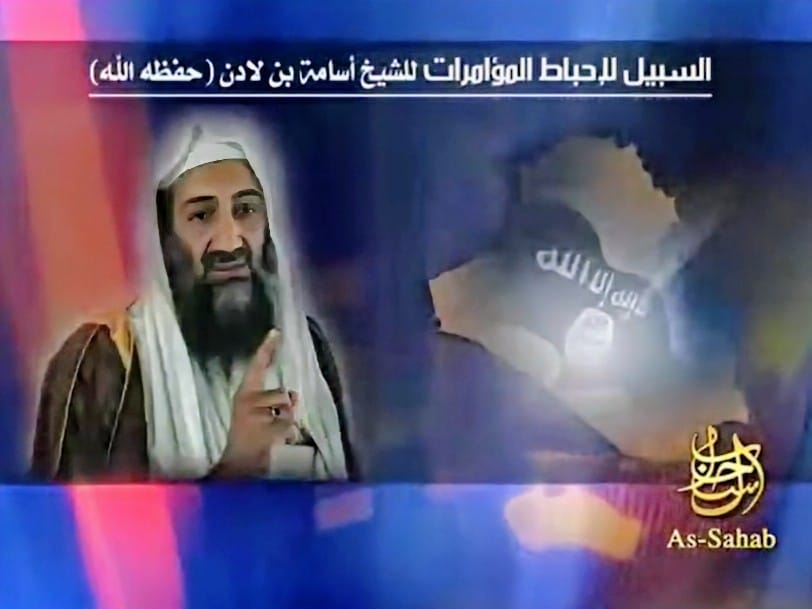
Usama bin Laden gave a speech lasting nearly an hour on 29 December 2007, entitled, “The Way to Foil the Conspiracies”. A translation of the speech is published below.

Continue reading

American Sanctions Hit Islamic State’s Finances, Propaganda, and Terrorism

By Kyle Orton (@KyleWOrton) on 16 June 2017

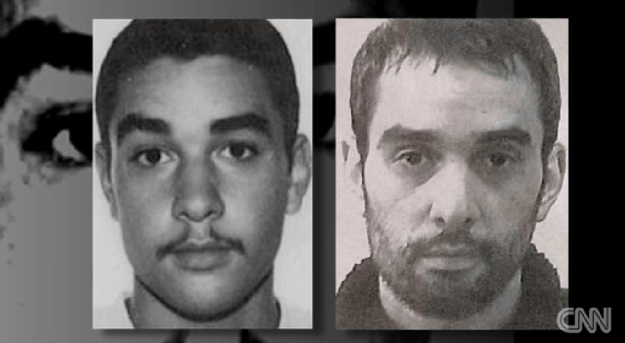
Usama Atar, older picture and most recent (picture via CNN)

Just three days after the U.S. government sanctioned two Islamic State (IS or ISIS) operatives for their role in helping the jihadists develop chemical weapons of mass destruction, another raft of sanctions were issued on 15 June against four IS members occupying varying positions within the organization from finance to propaganda to orchestrating the foreign attacks. Continue reading

How Powerful is the Islamic State in Saudi Arabia?

Originally posted at The Henry Jackson Society

By Kyle Orton (@KyleWOrton) on 27 April 2017

The U.S. Department of State designated Mubarak Mohammed Alotaibi, also transliterated as Mubarak Muhammad al-Utaybi, as a Specially Designated Global Terrorist (SDGT), because he has “committed, or pose[s] a significant risk of committing, acts of terrorism that threaten the security of U.S. nationals or the national security, foreign policy, or economy of the United States.” Al-Utaybi is a citizen of Saudi Arabia and is the “Syria-based deputy leader” of the Islamic State’s (IS) branch in the Saudi Kingdom. Continue reading

Rumiyah Profiles Ahmad Abousamra, A Senior American in the Islamic State

By Kyle Orton (@KyleWOrton) on 8 April 2017

The eighth edition of the Islamic State’s magazine, Rumiyah (Rome), was released on 5 April 2017, and contained an obituary for one of the architects of the magazine itself. Named by his kunyas, Abu Sulayman al-Shami, Abu Sulayman al-Halabi, and Ahmad Abdul-Badi Abu Samrah, the jihadist referred to is Ahmad Abousamra, a U.S.-Syrian dual citizen. Abousamra is quite possibly the most senior American ever to have been in IS’s ranks, and the Rumiyah article gives a very interesting glimpse more generally of IS’s hierarchy, particularly the importance of its media and the late emir of that department, Abu Muhammad al-Furqan. The Rumiyah article is reproduced below with some editions in transliteration, occasional explanatory notes, and interesting or important aspects highlighted. Continue reading