By Kyle Orton (@KyleWOrton) on 22 August 2023
By Kyle Orton (@KyleWOrton) on 26 May 2020
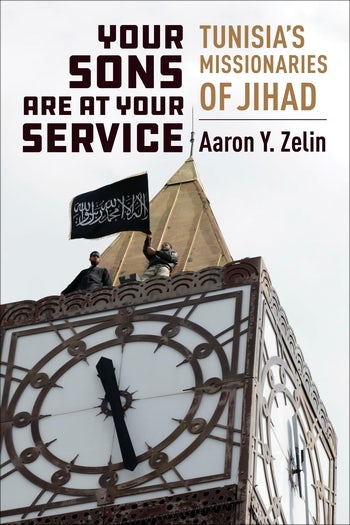
Early in his new book, Your Sons Are At Your Service: Tunisia’s Missionaries of Jihad, The Washington Institute’s Aaron Zelin quotes a pair of sociologists who note that ‘where theories are plentiful … ideas are vacuous’. The book is in many ways the antithesis of this approach. It is not without theoretical content; where social movement theory arises as a means of understanding jihadism, say, the author gives an overview of the literature to contextualise it for the reader. But the general approach is historical, empirical, and detail-rich, so that by the time Zelin summarises his findings in the various sections there can be no doubt about the evidentiary basis. Continue reading
By Kyle Orton (@KyleWOrton) on 20 July 2019
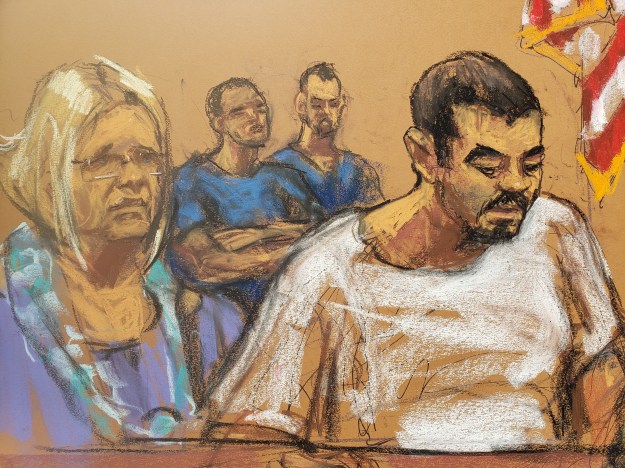
Sketch of Ruslan Asainov // Image credit: Jane Rosenberg/Reuters
In the Eastern District of New York, on 19 July, a criminal complaint was unsealed against Ruslan Maratovich Asainov, described in the press release as a “naturalized U.S. citizen born in Kazakhstan”. According to the release, Asainov is to be charged with providing and attempting to provide “material support, including training, services, and personnel” to a terrorist group, namely the Islamic State (IS), which he joined in 2013 and rose through the ranks to become an emir. Asainov was captured by the “Syrian Democratic Forces” (SDF), the Coalition’s anti-IS Kurdish partner force, and handed over to the FBI, before being returned to America this month. The maximum penalty for these charges is twenty years imprisonment, and it is likely the U.S. government will be seeking additional charges in the indictment. The case raises an interesting question over the gaps in knowledge about IS. Continue reading
By Kyle Orton (@KyleWOrton) on 10 May 2019
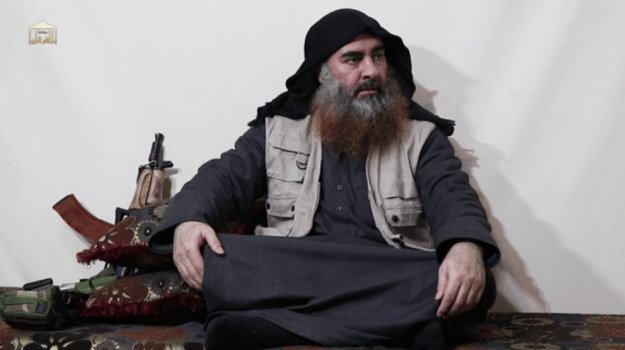
The leader of the Islamic State, Ibrahim al-Badri (Abu Bakr al-Baghdadi) appearing in an Islamic State propaganda video, “In the Hospitality of Amir al-Mu’mineen, 29 April 2019
The leader of the Islamic State (IS), Ibrahim al-Badri (Abu Bakr al-Baghdadi), appeared in an eighteen-minute video on 29 April, the first time Al-Ibrahim has appeared since 4 July 2014 when he gave the Friday prayer at the Nuri Mosque in Mosul, days after IS had announced the restoration of the caliphate. Al-Ibrahim has given semi-regular speeches over the years, but with these two exceptions they have been audio addresses. The video was released by IS’s premier media outlet, Al-Furqan Media Foundation, which is also the group’s oldest media platform. An English translation was released by IS’s Halummu outlet and is republished below with some interesting and/or important sections, plus names of IS operatives, highlighted in bold. Continue reading
By Kyle Orton (@KyleWOrton) on 6 August 2017

A year ago, I wrote a report documenting the biographies of Islamic State (IS) leaders and something of the structure of the organisation. Since then, the intricacies of the structure have been further revealed, even as it has somewhat crumbled in practice. The caliphate—the statelet built by IS—has been significantly degraded: the Iraqi “capital”, Mosul, has fallen, and operation to clear the Syrian “capital”, Raqqa, is underway. More significantly, upwards of 40% of those profiled have been killed, so it seemed an opportune moment for an update on who currently leads the world’s most infamous terrorist movement.
Continue reading
By Kyle Orton (@KyleWOrton) on 29 July 2017
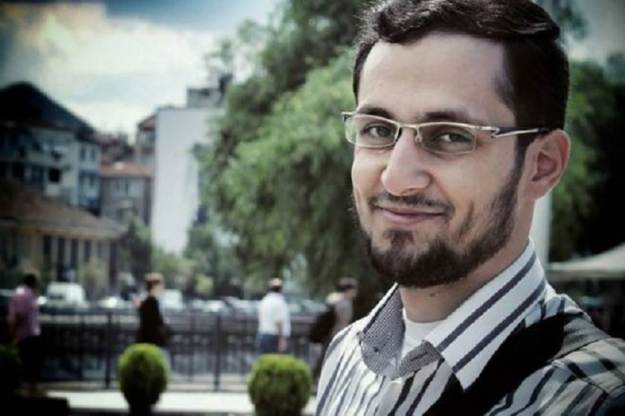
Baraa Kadek (Riyan Meshal) [image source]
By Kyle Orton (@KyleWOrton) on 20 July 2017
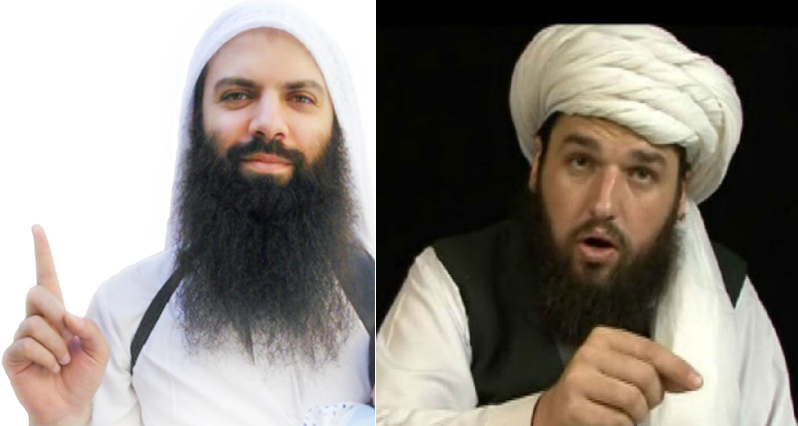
A couple of months ago, the Islamic State revealed that one of its most senior officials in the crucial media department until his death in January 2017 was an American, Ahmad Abousamra, known by various kunyas, including Abu Sulayman al-Shami and Abu Maysara al-Shami. Looking around afterwards, I came across an article by Abousamra condemning Adam Gadahn, another American, who was part of the core leadership of Al-Qaeda—one of the handful of men around Usama bin Laden and then Ayman al-Zawahiri—until he was killed in January 2015.
Originally published at The Henry Jackson Society
By Kyle Orton (@KyleWOrton) on 9 April 2017
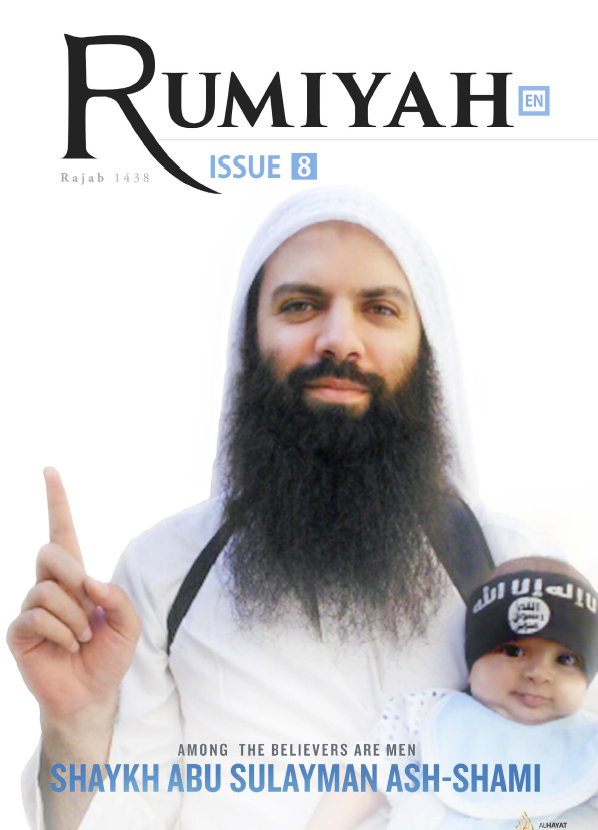
The eighth edition of the Islamic State’s magazine, Rumiyah (Rome), was released on 5 April 2017, and contained an obituary for one of the architects of the magazine itself. Named by his kunyas, Abu Sulayman al-Shami, Abu Sulayman al-Halabi, Abu Maysara al-Shami, and Ahmad Abdul-Badi Abu Samrah, the jihadist referred to is Ahmad Abousamra, a U.S.-Syrian dual citizen. Abousamra is quite possibly the most senior American ever to have been in IS’s ranks, and the Rumiyah article gives a very interesting glimpse more generally of IS’s hierarchy. Continue reading
By Kyle Orton (@KyleWOrton) on 8 April 2017
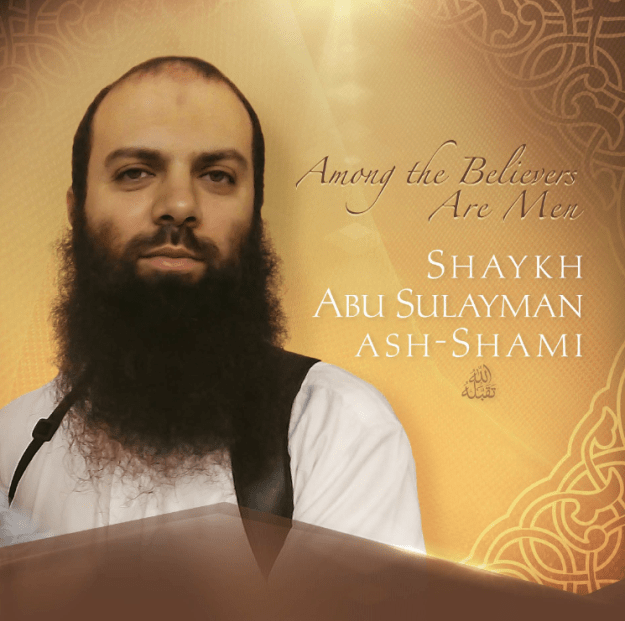
The eighth edition of the Islamic State’s magazine, Rumiyah (Rome), was released on 5 April 2017, and contained an obituary for one of the architects of the magazine itself. Named by his kunyas, Abu Sulayman al-Shami, Abu Sulayman al-Halabi, and Ahmad Abdul-Badi Abu Samrah, the jihadist referred to is Ahmad Abousamra, a U.S.-Syrian dual citizen. Abousamra is quite possibly the most senior American ever to have been in IS’s ranks, and the Rumiyah article gives a very interesting glimpse more generally of IS’s hierarchy, particularly the importance of its media and the late emir of that department, Abu Muhammad al-Furqan. The Rumiyah article is reproduced below with some editions in transliteration, occasional explanatory notes, and interesting or important aspects highlighted. Continue reading
 Kyle Orton's Blog