Tag Archives: Afghanistan

An Ideological Founder of Islamic State is Killed in Syria

UPDATE: It has subsequently become clear that the “Abu Abdullah al-Muhajir” who was killed in Syria on 18 November 2016 was not Muhammad al-Saghir, who is profiled below. The slain man, like al-Saghir a veteran of the war get the Soviets out of Afghanistan and an Egyptian jihadist with close links to al-Qaeda, also used the kunya “Abu Afghan al-Muhajir”.

By Kyle Orton (@KyleWOrton) on November 20, 2016

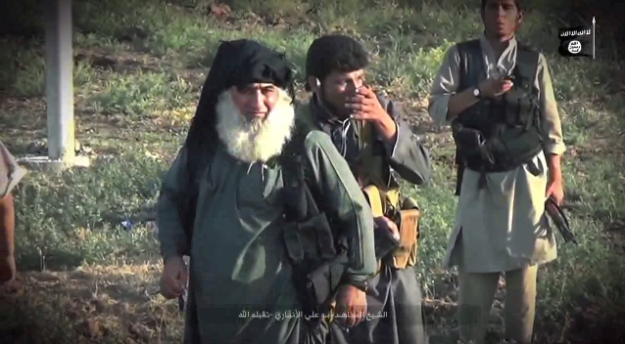
Abu Abdallah al-Muhajir (source)

A week ago, it became clear that the air war being waged by the U.S.-led Coalition, which primarily targets the Islamic State (IS), was going to expand its campaign against the leadership of Jabhat Fatah al-Sham (JFS), al-Qaeda’s rebranded branch in Syria. In the evening of 18 November 2016, the Coalition killed Abu Abdullah al-Muhajir, whose real name is Muhammad Ibrahim al-Saghir. Al-Saghir also uses the name Abd al-Rahman al-Ali. This killing would appear to be part of the Coalition’s new effort.

Al-Saghir has a long record as an important jihadi religious ideologue, though his exact relationship with al-Qaeda’s network remains unclear. Al-Saghir’s most lasting contribution to jihadi-salafism is as a key guide to the founder of IS, Ahmad al-Khalayleh. Continue reading

Martyr for the Cause

By Kyle Orton (@KyleWOrton) on October 20, 2016

Mohamedou Ould Salahi

Mohamedou Ould Salahi, a Mauritanian, was released from Guantanamo Bay back to his home country on Monday. This comes as part of Barack Obama’s effort to drive the number of inmates at the detention centre down as far as possible before his Presidency ends. Salahi is the first detainee transferred since the mass-exodus in August, leaving sixty men at Guantanamo, nineteen of them already approved for transfer. Salahi is among the many detainees who claims he is innocent and that he has been maltreated in custody, and he has written a book, Guantánamo Diary, to that effect. The known facts about Salahi’s pre-detainment behaviour suggest caution should be exercised in accepting his version of events. Continue reading

The Demise of Ahmad Mabruk: Al-Qaeda in Syria and American Policy

By Kyle Orton (@KyleWOrton) on October 4, 2016

Ahmad Mabruk in Jabhat al-Nusra's "Heirs of Glory" video, March 2016. (Source: The Long War Journal)

Ahmad Mabruk in Jabhat al-Nusra’s “Heirs of Glory” video, March 2016. (Source: The Long War Journal)

Ahmad Salama Mabruk (Abu Faraj al-Masri) was an al-Qaeda veteran, close to the organization’s leadership. The United States killed Mabruk in Syria on 3 October 2016 in a drone strike near Jisr al-Shughour in northern Syria. This is the second time in a month the U.S. has killed off a senior al-Qaeda jihadist, and sheds some light on the strength of the U.S. policy in Syria. Continue reading

Ahrar al-Sham and Al-Qaeda

By Kyle Orton (@KyleWOrton) on August 12, 2016

The Islamic State’s (IS) weekly newsletter, al-Naba, interviewed a high-ranking al-Qaeda defector, Abu Ubayda al-Lubnani, across two issues in February and March 2016. Abu Ubayda announced his defection from al-Qaeda to IS in April 2014 via al-Battar and Abu Ubayda’s name appeared on a list of prominent clerics supporting IS’s caliphate declaration that was circulated not long after the declaration. Abu Ubayda is described by al-Naba—as best as can be told accurately—as having been a member of al-Qaeda’s Shura or Consultation Council, a training officer in its Military Committee, and a counter-intelligence officer. Abu Ubayda is advertised as speaking about many secret aspects of al-Qaeda.

Among the topics Abu Ubayda covers is the alleged infiltration and manipulation of al-Qaeda by foreign intelligence services, specifically Pakistan’s Inter-Services Intelligence (ISI), which is not only a violation of jihadist doctrine by collaborating with an “infidel” and illegitimate state but led to the deaths of a number of senior al-Qaeda leaders.

Perhaps the most intriguing aspect of what Abu Ubayda has to say relates to al-Qaeda’s attempt to take advantage of the Syrian revolution. This persistent campaign has followed a pattern of disguising al-Qaeda’s presence and attempting to influence and eventually co-opt the rebellion against Bashar al-Assad’s regime. One lever al-Qaeda relied upon, according to Abu Ubayda, was Ahrar al-Sham, an organization that disclaims all connections to al-Qaeda and dissimulates about its ideology. Whatever Ahrar’s dominant ideology, it is simply a fact that it has served as the bridge between the foreign-led jihadists and Syrian Islamists, and its connections to al-Qaeda are evident enough. Abu Ubayda suggests Ahrar’s connections to al-Qaeda are even deeper than they appear. Continue reading

Obituary: Abd al-Rahman Mustafa al-Qaduli (Abu Ali al-Anbari)

By Kyle Orton (@KyleWOrton) on March 25, 2016

1

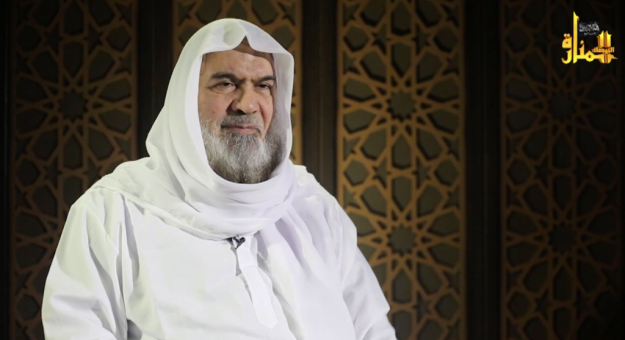
Abd al-Rahman al-Qaduli (Abu Ali al-Anbari) in an Islamic State video in May 2016

United States Secretary of Defense Ashton Carter announced this morning that he believed Abd al-Rahman Mustafa al-Qaduli, a senior leader of the Islamic State (IS), had been killed in a U.S. raid into Syria earlier this week. Al-Qaduli was “serving as a finance minister” and had been “responsible for some external affairs and plots,” said Carter. America is “systematically eliminating ISIL’s cabinet,” Carter went on, noting the alleged killing of Tarkhan Batirashvili (Abu Umar al-Shishani) two weeks ago, adding that al-Qaduli’s removal will “hamper” IS in conducting operations inside and outside its caliphate. Continue reading

Iran’s Partnership with al-Qaeda and Unanswered Questions

By Kyle Orton (@KyleWOrton) on September 19, 2015

Imad Mughniyeh and Osama bin Laden

Imad Mughniyeh and Osama bin Laden

The Islamic Republic of Iran released five senior al-Qaeda terrorists in March, ostensibly as part of a prisoner exchange for an Iranian diplomat kidnapped in Yemen by al-Qaeda in the Arabian Peninsula (AQAP). But the murky circumstances in which al-Qaeda’s leaders were “held” in Iran and other inconsistencies cast some doubt on this version of events, and draw attention to some old questions about Iran’s support for al-Qaeda and its affiliates and offshoots. Continue reading

Al-Qaeda Central in Syria

By Kyle Orton (@KyleWOrton) on September 14, 2015

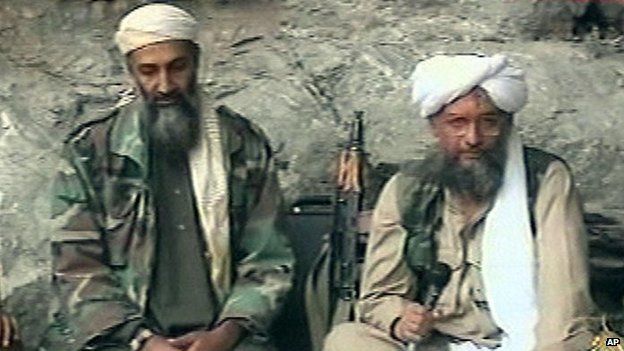
Osama bin Laden and Ayman az-Zawahiri (2001)

Usama bin Ladin and Ayman az-Zawahiri (2001)

A couple of days ago, a leader Jabhat an-Nusra issued a statement condemning Ahrar a-Sham. The statement is actually rather milder than initial reports suggested. Nusra is mostly annoyed at Ahrar for working with Turkey and Qatar to acquire money and weapons. Nusra is also displeased that Ahrar, at the instigation of Ankara and Doha, asked Nusra to publicly break its al-Qaeda link. Nusra also felt Ahrar was too willing to publicly distance itself from Salafi-jihadism to gain war materiel. This will no doubt help intensify the debate about Ahrar’s ostentatious “moderation” over the last eighteen months, and what the West should do about Ahrar.

In this post, however, I’d like to focus on the statement’s author, Abu Firas as-Suri, or more precisely on what he represents. Abu Firas is part of a group of (known) agents of al-Qaeda Central (AQC) who were sent into Syria in mid-2013 to mediate the dispute between Nusra and then-ISIS (now the Islamic State, I.S.), and when that failed the AQC veterans stayed, erected a veritable bureaucracy, and sought to forestall Nusra “going local”. Below are mini-profiles of these AQC veterans. Continue reading

Intra-Jihadi Competition, Iran, and Western Staying Power in Afghanistan

By Kyle Orton (@KyleWOrton) on September 1, 2015

1

The Taliban on August 31 finally confessed all: its leader, Mullah Muhammad Omar, had been dead since April 23, 2013. The Taliban admitted that Mullah Omar had passed from this veil of tears on July 30 but had been distinctly vague about when. Omar’s death was kept secret because of “jihadi considerations,” namely the “testing” time the mujahideen were having with the “foreign invaders,” the Taliban says. While the Taliban places the emphasis on its struggle with NATO, the reality is that NATO is drawing down and the Taliban’s burgeoning foe is the Islamic State (I.S.). The Taliban is tied to al-Qaeda’s faltering brand, and conditions are militating to help I.S., not al-Qaeda, in “Khorasan”. Continue reading

A Case Study of the Islamic State as the Saddam Regime’s Afterlife: The Fedayeen Saddam

By Kyle Orton (@KyleWOrton) on August 31, 2015

Published at Baghdad Invest

Fedayeen Saddam

Saddam Hussein created the Fedayeen Saddam in 1994 as a paramilitary Praetorian unit. The Fedayeen were initially charged with protecting the regime from a repeat of the revolts that followed Saddam’s eviction from Kuwait by acting as a pre-emptive counter-insurgency force. Over time this internal security mission became increasingly about enforcing the Islamic law. Saddam had begun Islamizing his regime in the late 1980s, and intensified this in the early 1990s, attempting to create a synthesis of Ba’athism and Salafism to buttress his legitimacy. Saddam had begun Islamizing his foreign policy as early as 1982-83, making alliances with all manner of Islamist terrorists, thousands of whom came to Iraq for training in the 1990s, where they attended camps run by the Fedayeen. In the Fedayeen—connected to the global Islamist terrorist movement, combining elements of Ba’athism with an increasingly-stern Salafism—is a microcosm of the Saddam regime’s mutation into the Islamic State (ISIS). Continue reading

Leaving Afghanistan to Iran Won’t Bring Stability—nor Keep ISIS Out

By Kyle Orton (@KyleWOrton) on August 26, 2015

Published at National Review

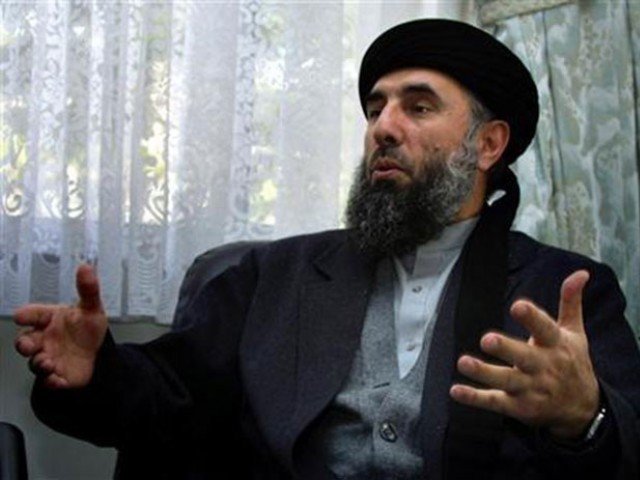
Gulbuddin Hekmatyar, one of the three major insurgent leaders in Afghanistan, a close ally of Iran

Gulbuddin Hekmatyar, one of the three major insurgent leaders in Afghanistan, a close ally of Iran

The admission by the Taliban on July 30 that its leader, Mullah Muhammad Omar, had died was widely seen as good news for the Islamic State (ISIS) against its jihadist competitors. But while ISIS’s growing power in Afghanistan over the last year has garnered significant attention, the rise of Iran’s influence in the country has been less noted. Worse, in the light of the nuclear agreement with the U.S., Iran’s expanded influence is held by some observers to be a stability-promoting development. This is a dangerous fantasy that has already been falsified in the Fertile Crescent, where the synergetic growth of Iran and ISIS promotes chaos and radicalism—to the advantage of both and the disadvantage of the forces of moderation and order. Continue reading