Tag Archives: al-Hashd al-Shabi

Raqqa Doesn’t Want to Be Liberated By the West’s Partners

By Kyle Orton (@KyleWOrton) on 30 May 2017

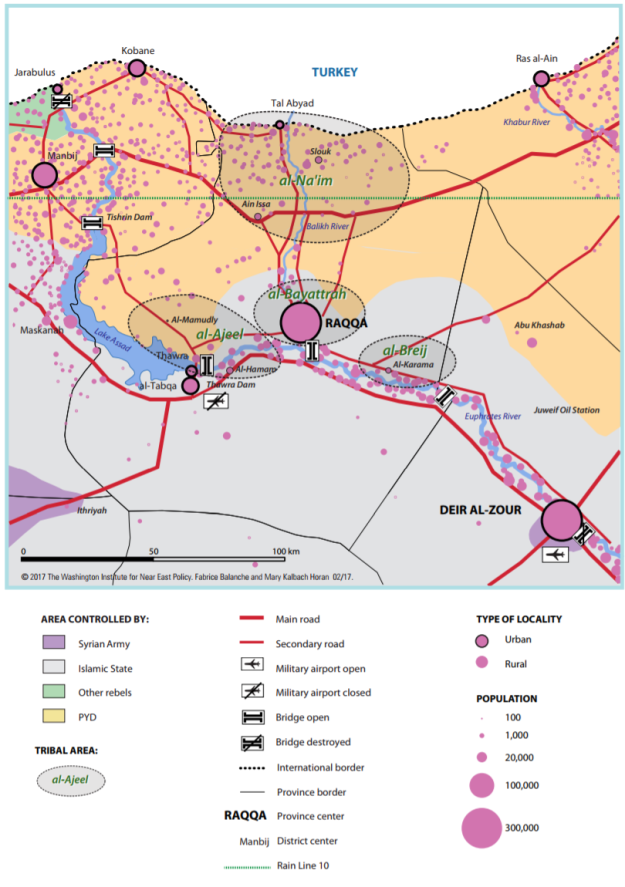
Map of the tribes around Raqqa city (source: WINEP report)

We are now on the eve of the operation to evict the Islamic State (IS) from its Syrian capital, Raqqa, and, as expected, the United States will partner with the Syrian Democratic Forces (SDF), the front-group for the Democratic Union Party (PYD) and its armed wing, the People’s Protection Units (YPG), which President Donald Trump’s administration has committed to directly arming.

Many of the doubts voiced about this course relate to Turkey, since the PYD/YPG is—despite continued efforts to obfuscate the fact—the Syrian department of the Kurdistan Workers’ Party (PKK), the premier internal security threat to Turkey for many decades. The discussion then tends to fall into one of two grooves. Continue reading

Signs of Recovery for the Islamic State

By Kyle Orton (@KyleWOrton) on April 22, 2017

The operation to clear the Islamic State (IS) from its Iraqi capital, Mosul, began on 17 October and is now 188 days old. IS was announced cleared from east Mosul on 25 January, and the offensive that began on 19 February to clear the more densely-populated and difficult west Mosul has ostensibly swept IS from sixty percent of that area. Official sources claim IS now controls less than seven percent of Iraqi territory, down from forty percent in 2014. But yesterday, a car bomb struck Zuhur, the first attack of this kind in east Mosul since February, murdering at least four people. This is part of a pattern of attacks that suggests the Mosul operation itself was rushed and more importantly that IS is already recovering in liberated areas. Continue reading

America Pushes Back Against Iranian Subversion on the Gulf

Originally posted at The Henry Jackson Society

By Kyle Orton (@KyleWOrton) on 17 March 2017

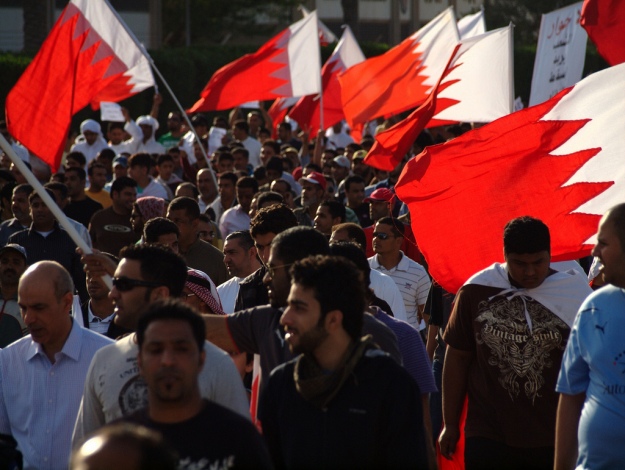
Protesters march through Manama, Bahrain in March 2011 (Photo from Al-Jazeera)

The U.S. State Department today imposed sanctions on two men, Ahmad Hasan Yusuf (Abu Maryam, Sajjad Hassan Nasir al-Zubaydi) and Alsayed Murtadha Majeed Ramadhan Alawi (Murtadha Majeed Ramadan al-Sindi), labelling them Specially Designated Global Terrorists (SDGT). Both men are members of a group, Saraya al-Ashtar or al-Ashtar Brigades (AAB) that has conducted terrorism in Bahrain and is part of the Iranian revolution’s long reach in the region. Continue reading

Outcome Uncertain as American Involvement in Syria Deepens

By Kyle Orton (@KyleWOrton) on March 10, 2017

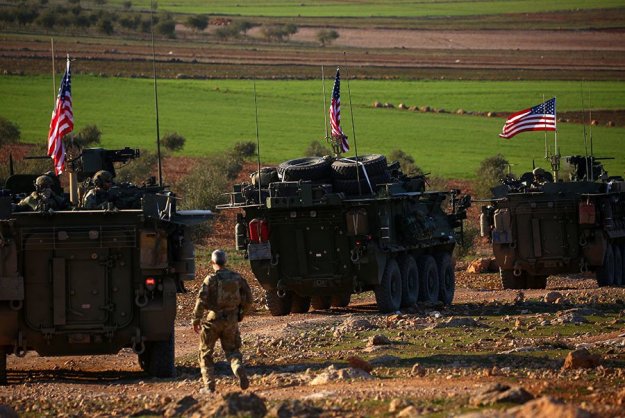
American ground forces are getting more deeply entangled in Syria as the offensive to push the Islamic State (IS) out of its de facto capital city, Raqqa, approaches. It remains unclear exactly which actors in Syria these troops will be assisting, though there are more and more indications that their mission will redound to the benefit of the regime of Bashar al-Assad and his allies, Iran and Russia. Continue reading

The Coalition’s Flawed Endgame Strategy for the Islamic State

By Kyle Orton (@KyleWOrton) on November 6, 2016

After some (perhaps wilful) confusion over the timing, the operation to expel the Islamic State (IS) from Raqqa City, its Syrian capital, got underway this morning, running concurrent with the effort to evict IS from its Iraqi capital, Mosul. There are deep concerns about the methods adopted in both cases. The ground forces the U.S.-led Coalition has chosen to support in Raqqa cannot lead to sustainable stability in Syria, something that is essential to defeat IS. While the Mosul operation has proceeded generally to plan, there are increasing signs of trouble within the operation itself and the most troubling aspect—the aftermath—still appears to be unplanned. Beyond this is the continued assault on Aleppo City by Bashar al-Assad’s regime and its Russian and Iranian patrons that is systematically destroying the forces needed if there is to be any settlement to Syria’s war that ends the space given to international terrorists. Continue reading

Coalition Prepares the Ground for Mosul Offensive


By Kyle Orton (@KyleWOrton) on October 9, 2016

U.S.-led Coalition airstrikes against the Islamic State (AFP)

Raqqa is Being Slaughtered Silently (RBSS) is an activist group working from within the capital of the Islamic State (or so-called capital of the so-called Islamic State, if you prefer) to bring news to the outside world of the horrors therein. For this they have paid a heavy price. On 22 September, RBSS published a list on Twitter of eighteen Islamic State (IS) operatives who had been killed by the U.S.-led Coalition between 20 August and 21 September 2016. This list, presented below with some notes and context, shows the preparations being made for the rapidly-approaching offensive on IS’s Iraqi capital. Continue reading

The End of the Islamic State by Christmas?

By Kyle Orton (@KyleWOrton) on September 5, 2016

1

Last week it was reported by The Daily Beast that United States defence and political leaders believe they can at least begin the operation to remove the Islamic State (IS) from its Iraqi capital, Mosul, before President Barack Obama leaves office on 20 January 2017. This seems unlikely. More to the point, if it is true it is highly dangerous, both in the short-term and especially over the long-term. Continue reading

Sectarian Provocations in Fallujah Undermine the Offensive Against the Islamic State

By Kyle Orton (@KyleWOrton) on June 13, 2016

Published at The New Arab.

Qassem Suleimani and Jamal Ebrahimi (Abu Mahdi al-Muhandis) touring a battlefront in Fallujah

Qassem Suleimani and Jamal Ebrahimi (Abu Mahdi al-Muhandis) touring a battlefront in Fallujah

The Iraqi government announced an operation to clear the Islamic State (IS) out of Fallujah on the evening of 22 May. In the intervening three weeks, IS have lost numerous villages and towns around Fallujah and Iraqi counterterrorism forces are said to have entered Fallujah proper in the south.

As the first major city IS took on its way to proclaiming a caliphate in June 2014, the pace of the operation is not the most troubling element. What is disturbing—and what may ultimately undo any military success against IS—is the overtly sectarian nature of the offensive, led not by professional troops loyal to Baghdad, but by militias loyal to Iran and the extremist ideology of Tehran’s clerical regime. Continue reading

Kamel Sachet and Islamism in Saddam’s Security Forces

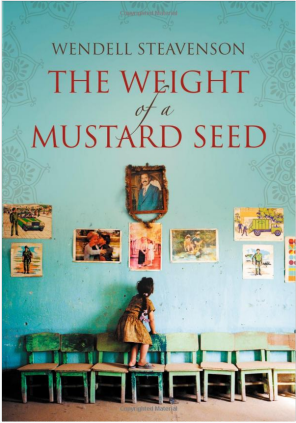
1Book Review: The Weight of a Mustard Seed: The Intimate Life of an Iraqi Family During Thirty Years of Tyranny (2009) by Wendell Steavenson

By Kyle Orton
(@KyleWOrton) on October 24, 2015

Wendell Steavenson’s The Weight of a Mustard Seed—the title drawn from a verse of the Qur’an about the difference between attaining heaven and hell—comprises five years of research about Kamel Sachet Aziz al-Janabi, one of Saddam Hussein’s favourite and most senior generals.

Born in 1947, Kamel Sachet joined the Iraqi police straight from school in the mid-1960s and joined the army in 1975. Sachet was soon in the Special Forces, training in mountain warfare in Germany in 1978, taking part in joint exercises with Iranian Special Forces during the time of the Shah—learning Farsi along the way—and then being part of the Iraqi Special Forces advanced party sent to invade Iran after Ruhollah Khomeini’s takeover. Sachet would later be part of the elite forces sent to secure Saddam’s occupation of Kuwait. After Saddam was evicted from Kuwait, Sachet, who had been slipping deeper and deeper into religious zeal from the early 1980s, was made governor of Maysan where he ran a de facto Salafi commune. Sachet was eventually removed from this post by regime internal intrigue, and was moved to a job in the office of the president. For reasons never definitively established, Sachet was murdered on Saddam Hussein’s orders on the first day of Operation DESERT FOX in December 1998.

Kamel Sachet’s story is an interesting one for what it says about the Saddam regime’s changing attitude toward Islamism as it ran its course, reversing the hard-secular outlook that prevailed at varying degrees of intensity from the late 1960s to the early 1980s, and transforming into an Islamist State in the last fifteen years of the regime. Continue reading

Why Solely Backing the PYD Against the Islamic State is a Mistake

By Kyle Orton (@KyleWOrton) on October 20, 2015

Published at NOW Lebanon.

1

The Pentagon-run train-and-equip (T&E) program had intended to take Syrian rebels, stop them from being rebels by preventing them from fighting the Assad regime, and repurpose them into an American-directed strike force against the Islamic State (ISIS). Unsurprisingly, there were few takers and the program ended in disaster and humiliation. In the wake of this failure, President Barack Obama has turned away from the Arab rebels and looked to the Syrian Kurds to fight ISIS. This is a strategy that is not only doomed to fail—since Sunni Arabs taking responsibility for their local security is the only way to sustainably defeat ISIS—but would, if implemented, make the ISIS problem worse. A report from Amnesty International this week documenting crimes, including ethnic cleansing, by the armed Kurdish forces against Arabs and Turkmens in northern Syria also provides an occasion to look more closely at a force with a history of regime collaboration, political extremism, and terrorism. Continue reading