This post is drawn from a recent report I published profiling the leadership of the Islamic State.
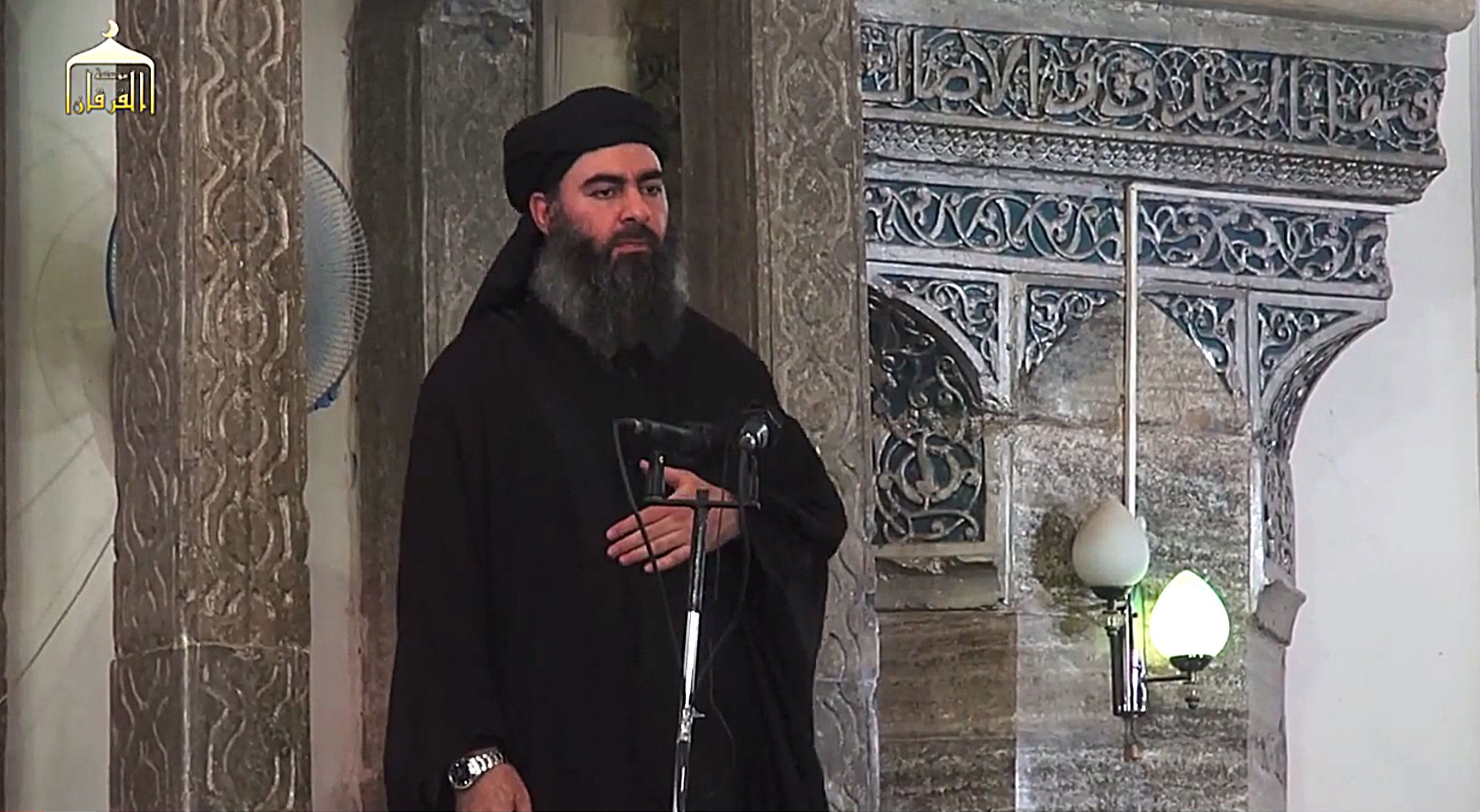
The leader of the Islamic State (IS) since 2010 has been Abu Bakr al-Baghdadi, previously known as Abu Dua or Abu Awad, and his real name—acknowledged by IS itself since the declaration of the so-called Caliphate in 2014—is Ibrahim Awwad Ibrahim Ali Muhammad al-Badri al-Samarrai.
This essay, written to tie together my work on the relationship between the Saddam Hussein regime and the Islamic State, was completed last summer and submitted to an outlet, where it entered a form of development hell. After giving up on that option late last year, the opportunity arose to get a shorter version published in The New York Times in December. But I procrastinated too long over what to do with the full essay and a recent change in my work situation means I no longer have the bandwidth to go through the process of finding it a new home, so here it is.
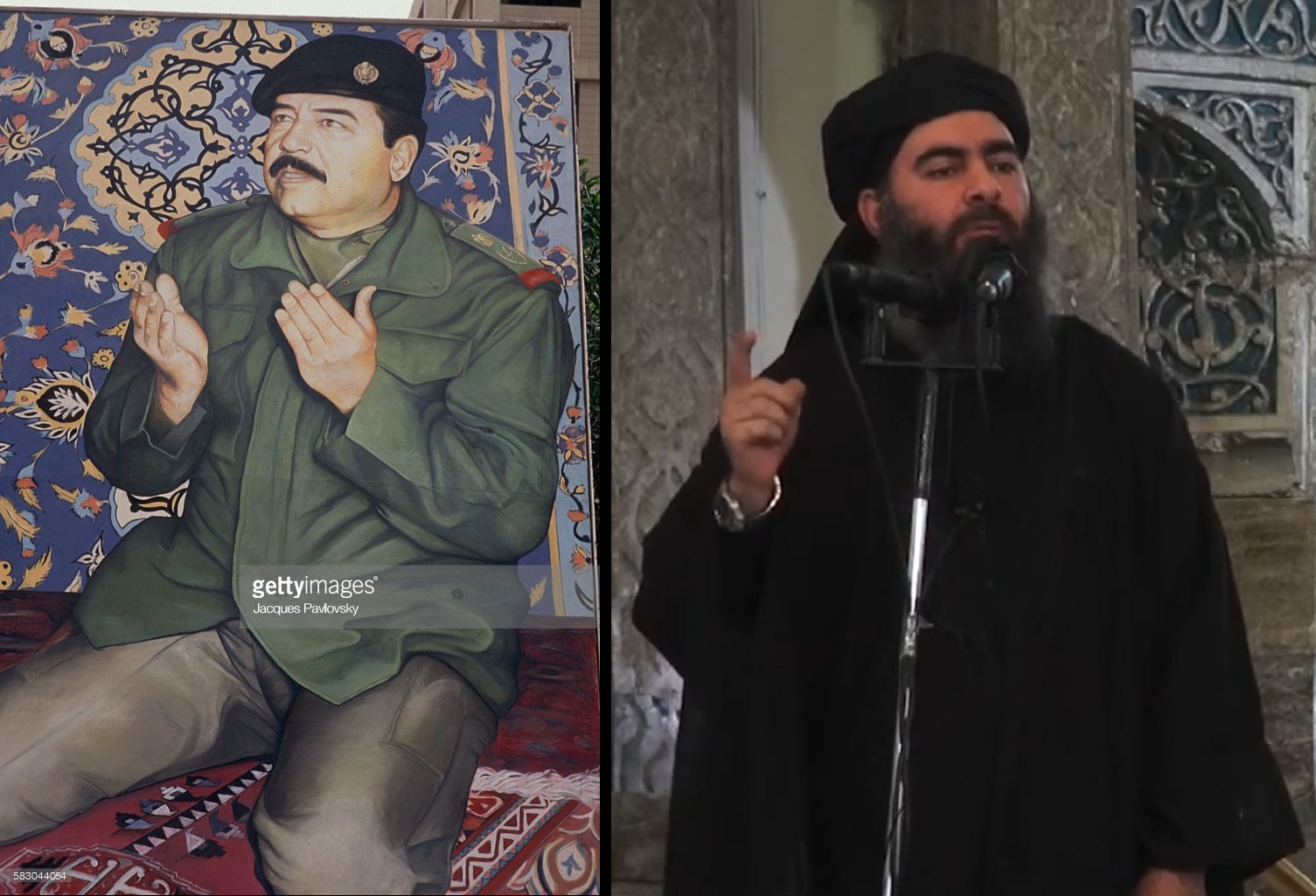
“Abu-Bakr al Baghdadi is a product of the last decade of Saddam’s reign,” argues Amatzia Baram, a scholar of Iraq. He is correct in at least three ways. First, in its last decade in power, the Iraqi Ba’ath regime transformed into an Islamist government, cultivating a more religious, sectarian population on which the Islamic State (ISIS) could draw. Part of Saddam Hussein’s “Faith Campaign” also involved outreach to Islamist terrorists, including al-Qaeda, which meant that the synthesis of Ba’athism and Salafism that fused into the Iraqi insurgency after the fall of Saddam was already well advanced by the time the Anglo-American forces arrived in Baghdad in 2003. Second, the ISIS leadership and military planning and logistics is substantially reliant on the intellectual capital grown in the military and intelligence services of the Saddam regime. And finally, the smuggling networks on which ISIS relies, among the tribes and across the borders of Iraq’s neighbours, for the movement of men and materiel, are directly inherited from the networks erected by the Saddam regime in its closing decade to evade the sanctions. The advantages of being the successor to the Saddam regime make ISIS a more formidable challenge than previous Salafi-jihadist groups, and one that is likely to be with us for some time.
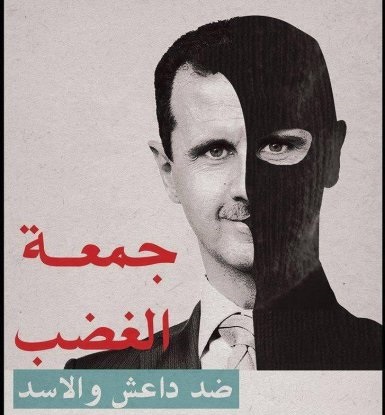
Last week, a judgment in United States District Court in Washington, D.C., awarded nearly $350 million to the families of two Americans killed in Jordan in 2005 by the predecessor organization to the Islamic State (ISIS). The important point of the case was who the court found liable: the regime of Bashar al-Assad, currently presenting itself to the world as the last line of defense to a terrorist takeover of Syria. This case highlights a neglected history, which began in 2002, where the Assad regime underwrote ISIS and fostered its growth, first to destabilize post-Saddam Iraq and later Lebanon, and since 2011 to discredit and destroy the uprising against Assad in Syria. Continue reading →
At midnight on Friday a ceasefire began in Syria. It was billed as a prelude to negotiations that restart on 7 March, and which are supposed to lead to a political transition that will end Syria’s war. The chances of success on either front are slim.
This was the second February ceasefire attempt—the first, on 19 February, failed without even the pretence of starting. The pretence is still being maintained this time around, but the structural problems with the ceasefire’s design—namely that it allows the regime of Bashar al-Assad and his supporters to continue their war against the Syrian population, while restraining the opposition from defending itself—ensure that it will fail and the West’s purported allies within the opposition will be worse-off, both during the period of faux-ceasefire and afterwards.
The Geneva III peace process was a dangerously misconceived effort. After Russia’s intervention in Syria on 30 September the Assad regime was simply too strong. With no US willingness to change the balance of power inside Syria it meant that either the process was preserved and ‘peace’ was redefined as regime victory, or the process was surrendered and peace on some more humane terms was sought by empowering the rebellion to enforce such terms on the regime in future negotiations. The US chose the process.
The US’s emphasis on process over substance can be seen in all kinds of ways. Continue reading →
William McCants’ The ISIS Apocalypse: The History, Strategy, and Doomsday Vision of the Islamic State is an immensely readable addition to the literature on the most powerful terrorist-insurgent group in the world. McCants covers the Islamic State, often referred to as ISIS, from its inception in Taliban Afghanistan in 1999 to its migration to Iraq in 2002, and through its various stages before its blitzkrieg from Syria across central Iraq in June 2014, which brought ISIS to global attention. McCants shows that ISIS’s evolution is not just a religio-socio-political and military phenomenon, but an intellectual one. ISIS has built the foundations of its statelet on the lessons learned by Salafi-jihadists from their previous battlefronts, such as Afghanistan, Chechnya, and Algeria, and their various mistakes, many of them ISIS’s own. Continue reading →
In August 2015’s Perspectives on Terrorism, Truls Tønnessenwrites about the evolution of the leadership of what is now the Islamic State (I.S.) from its origins in al-Qaeda in Iraq (AQI) under the heading, “Heirs of Zarqawi or Saddam?” Tonnessen makes the obvious point that AQI’s leadership was largely comprised of foreign Salafi-jihadists with al-Qaeda histories, while I.S. is led by Iraqis, most of them former (Saddam) regime elements (FREs). But Tonnessen’s argument that I.S.’s leaders had not been AQI members is mistaken (they had), which erodes his arguments that AQI’s influence diminished over time as I.S. formed from various mergers, and that this diminution of influence came about because I.S.’s post-2010 leadership purged the veteran AQI elements within I.S. (I.S.’s leaders are veteran AQI elements.) The main difference between AQI’s leaders and I.S.’s is that AQI’s leaders had background connections to al-Qaeda Central (AQC) networks, and I.S.’s largely do not. While Tonnessen sees Jabhat al-Nusra as linked to these shifting dynamics, this argument does not stack up. Ultimately, Tonnessen’s contention that I.S.’s leaders are more heirs of Saddam than Zarqawi fails in the terms Tonnessen presents it. Continue reading →
The Islamic Republic of Iran released five senior al-Qaeda terrorists in March, ostensibly as part of a prisoner exchange for an Iranian diplomat kidnapped in Yemen by al-Qaeda in the Arabian Peninsula (AQAP). But the murky circumstances in which al-Qaeda’s leaders were “held” in Iran and other inconsistencies cast some doubt on this version of events, and draw attention to some old questions about Iran’s support for al-Qaeda and its affiliates and offshoots. Continue reading →
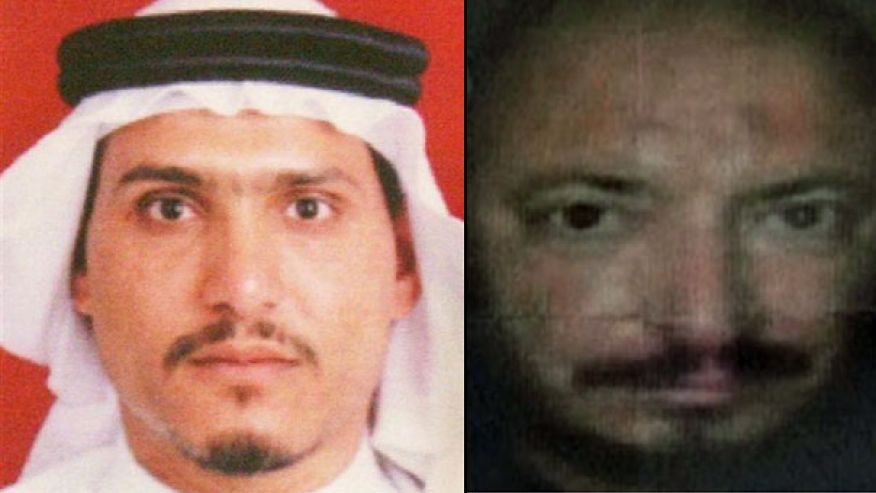
Abu Ayyub al-Masri and Abu Omar al-Baghdadi: ISIS’s co-leaders, 2006-10
In the Jerusalem Post on Sunday, Seth Frantzman wrote in opposition to the idea that the ex-military-intelligence officials of the Saddam Hussein regime had contributed significantly to the success of the Islamic State (ISIS) in taking over large swathes of Syria and Iraq. Much of what Frantzman says, about the overestimation of ISIS and Iran’s growing Imperium pushing Sunnis into ISIS’s camp, is unarguable, but he is in error about the time-frame of the ex-Saddamists’ migration into ISIS and underestimates their impact. Continue reading →
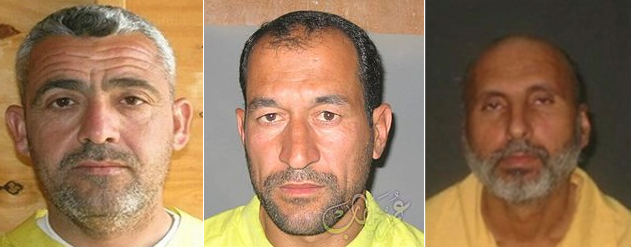
Left to Right: (1) Fadel al-Hiyali (Haji Mutazz or Abu Muslim al-Turkmani); (2) Adnan Ismail Najem al-Bilawi (Abu Abdulrahman al-Bilawi); (3) Samir al-Khlifawi (Haji Bakr)
Nearly a year ago I wrote that in crude terms the Islamic State’s (ISIS’s) “military strength comes from the remnants of Saddam Hussein’s military-intelligence apparatus and the Caucasus’ Salafi-jihadists.” Since then I have dug up some answers for why this is so that did not seem to be widely shared. This might be about to change.
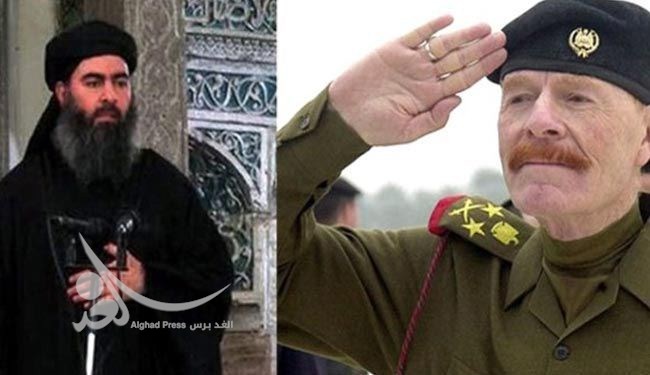
Izzat Ibrahim ad-Douri, Saddam Hussein’s long-time deputy, was reported dead (again) on April 17. An audio message on May 15 disproved this. Douri was the implementer of the Saddam regime’s Islamization program in its later years and a key architect of the insurgency after the regime was overthrown, which helped pave the way for the Islamic State (ISIS). ISIS has now turned on Douri and his associates, but ISIS could not have risen to its current stature without Douri’s help. Continue reading →



 Kyle Orton's Blog